
What is the number one mistake that makes knees worse?
What is the number one mistake that makes knees worse?
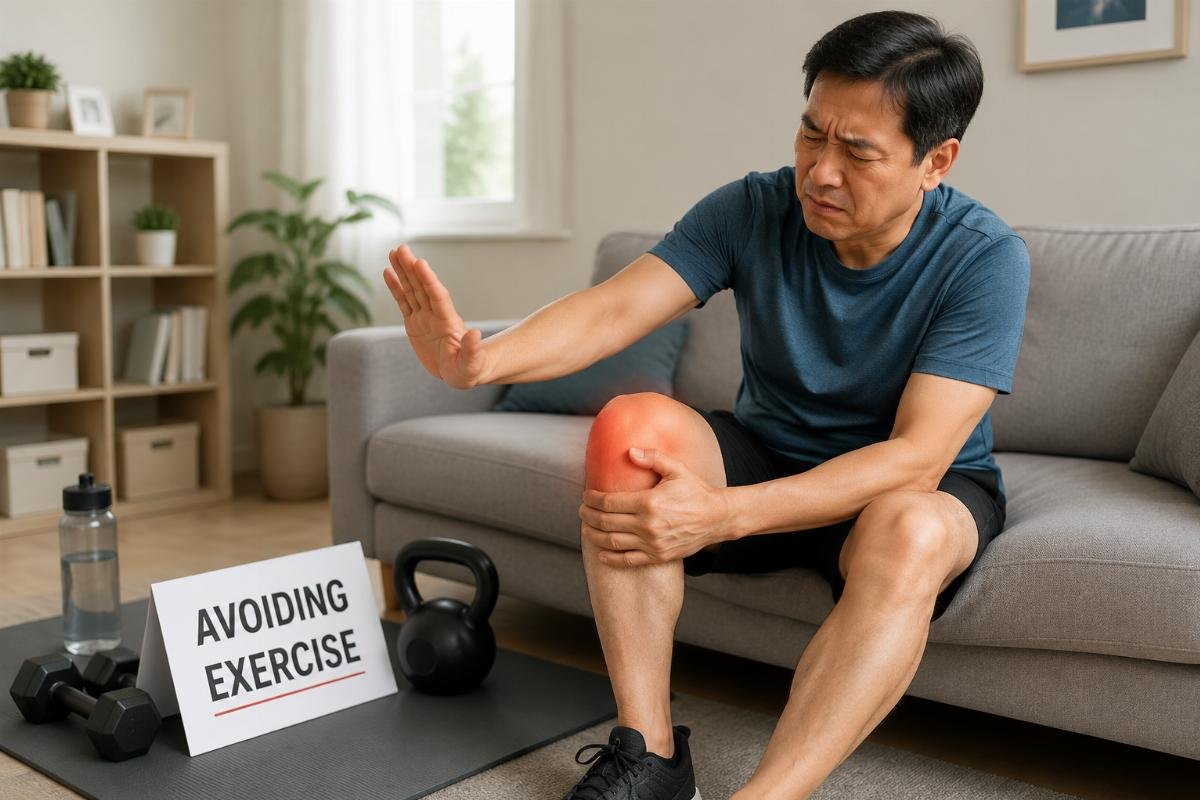
You feel a twinge in your knee during a workout. Panic sets in. You stop exercising completely, convinced rest will heal it. Weeks pass. The pain doesn't fade—it gets worse when you finally try to move again.
The number one mistake that worsens knee problems is complete exercise avoidance. When you stop moving, your muscles weaken, your joints stiffen, and your knees lose the support they need to stay healthy. Inactivity accelerates degeneration faster than controlled, appropriate exercise ever could.
I have guided dozens of clients through knee discomfort over the years. The pattern I see most often is not people exercising too hard—it is people stopping entirely. They believe rest equals recovery. They wait for the pain to vanish on its own. It rarely does.
Why does complete rest make knee pain worse?
You might think avoiding exercise protects your knees. Your intuition tells you that movement causes wear, so stillness should allow healing. This logic feels safe. It feels cautious.
When you stop exercising, your quadriceps and glutes weaken within days1. These muscles stabilize your knee joint during every step, squat, and stair climb. Without their support, your knee cartilage absorbs abnormal stress. The joint becomes less stable. Pain increases.
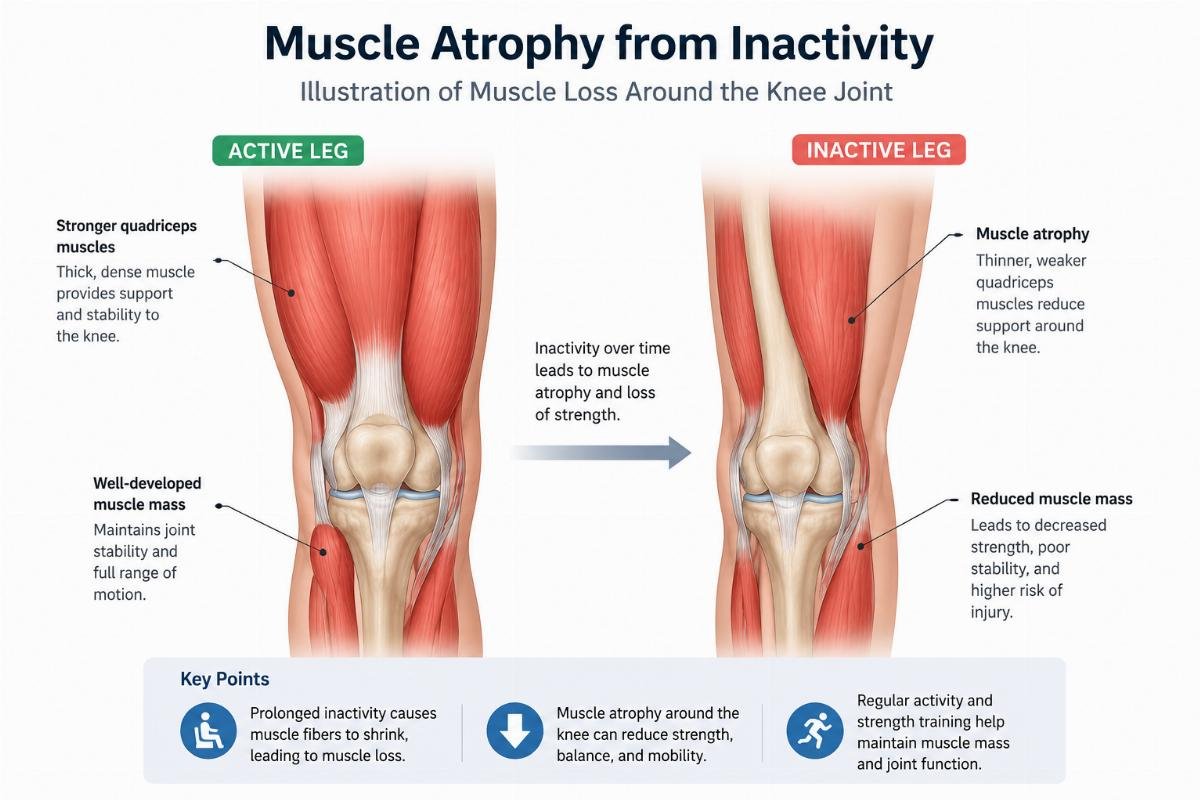
I worked with a client named Margaret last year. She experienced mild knee discomfort after a hiking trip. She stopped all exercise for two months. When she returned to my studio, she could barely climb stairs. Her quadriceps had visibly atrophied. Her knee pain had spread to both legs. She thought rest would heal her. Instead, it made her weaker and more vulnerable.
Your knee joint needs motion to stay healthy. Cartilage has no blood supply. It receives nutrients through a process called imbibition2—fluid exchange that only happens when you move the joint through its range. When you sit still for weeks, your cartilage literally starves. It dries out. It becomes brittle. Small tears develop more easily.
Here is what happens during prolonged inactivity:
| Timeframe | Physical Change | Impact on Knees |
|---|---|---|
| 48-72 hours | Muscle protein synthesis drops | Quadriceps begin losing strength |
| 1-2 weeks | Proprioception (joint position sense) declines | Balance worsens, fall risk increases |
| 3-4 weeks | Muscle mass measurably decreases | Knee stability significantly reduced |
| 6-8 weeks | Cartilage fluid exchange slows | Joint stiffness increases, pain during movement worsens |
I have seen this progression repeatedly. Clients come back after "resting" their knees. They expect to resume training easily. Instead, they struggle with movements they performed confidently before their break. Their knees feel stiffer, not better. Their muscles fatigue faster. They need weeks to regain their previous capacity.
The scientific term for this is deconditioning3. Your body adapts to inactivity just as it adapts to training4. When you stop loading your joints, your bones thin, your tendons weaken, and your muscles atrophy5. Your entire musculoskeletal system becomes less resilient. The knee pain you hoped to eliminate through rest actually has more opportunity to worsen because the structures supporting your knee have degraded.
Is pushing through pain the right approach then?
You might conclude that if rest makes knees worse, you should ignore pain and keep training hard. This swings to the opposite extreme. It causes just as much damage.
Pain is your body's warning system. When you push through sharp, increasing pain during exercise, you risk acute injury to ligaments, tendons, or cartilage. Ignoring pain signals does not build toughness—it creates damage that requires months to heal.
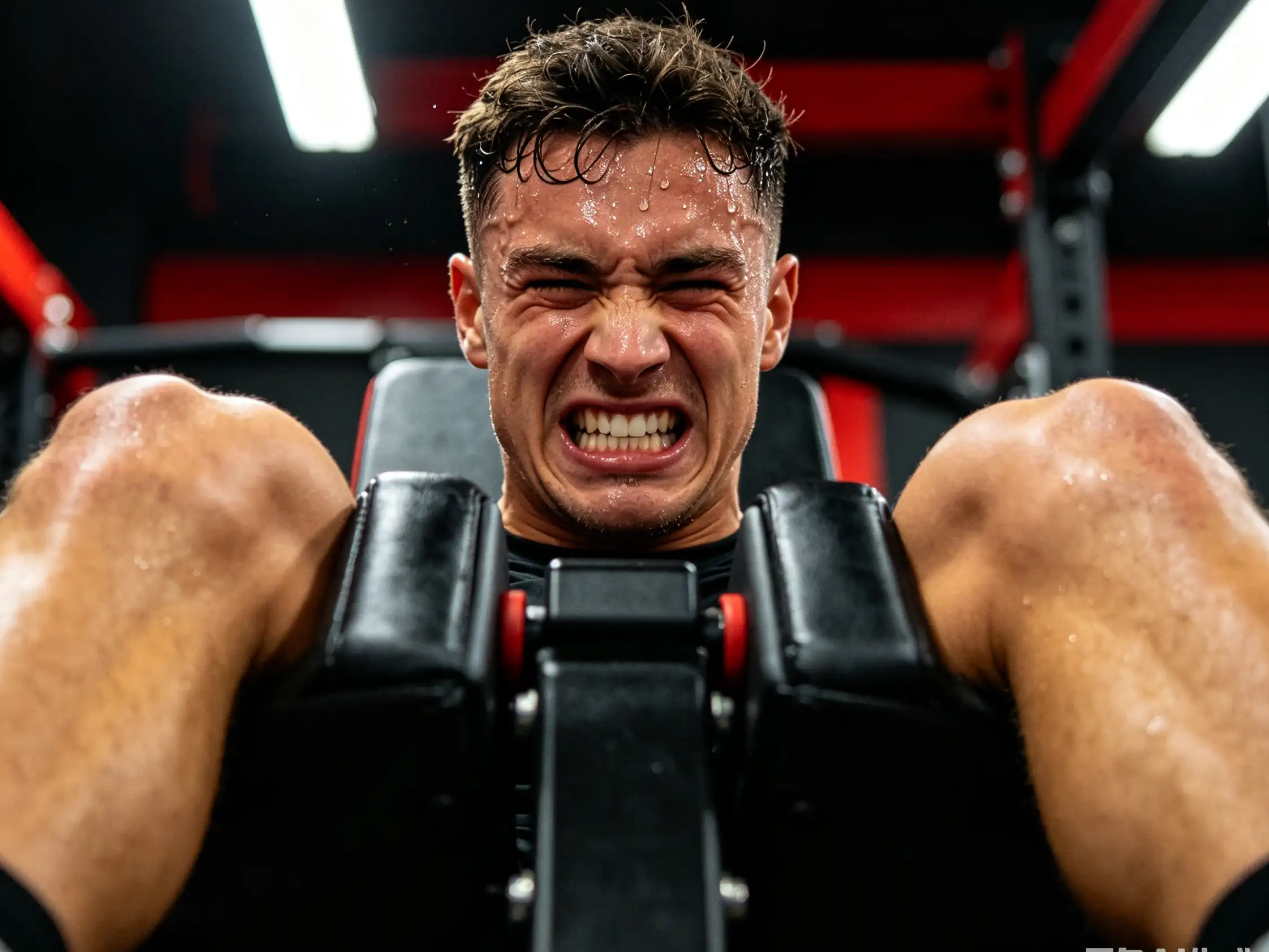
I have worked with competitive athletes who believed pain meant weakness. They trained through sharp, stabbing sensations in their knees. They dismissed swelling as temporary. One client tore his meniscus during a heavy squat session because he refused to acknowledge his body's signals. His recovery required surgery and six months of rehabilitation. He lost an entire competition season.
The difference between productive discomfort and harmful pain is crucial. Muscle fatigue during exercise feels like burning or deep aching. It fades within minutes after you stop6. This type of discomfort indicates effort and adaptation. It is normal. It is beneficial.
Joint pain feels different. It is sharp, localized, and often accompanied by clicking, catching, or giving way. It persists after exercise ends. It may cause swelling or warmth around the joint. This type of pain signals tissue damage or inflammation. It requires modification, not persistence.
Here is how I help clients distinguish safe exercise sensations from warning signals:
| Sensation Type | Characteristics | Appropriate Response |
|---|---|---|
| Muscle fatigue | Burning, aching in muscle belly; fades quickly after stopping | Continue with current load and volume |
| Delayed muscle soreness7 | Dull ache 24-48 hours post-exercise; symmetrical in both legs | Normal; maintain activity but avoid increasing intensity |
| Joint discomfort | Sharp, localized to knee; may increase during movement | Reduce range, load, or impact; modify exercise selection |
| Acute pain | Sudden, severe; may cause limping; accompanied by swelling | Stop exercise; assess for injury; seek medical evaluation if persistent |
I guide clients to use a pain scale during training. If knee discomfort exceeds 3 out of 108 during an exercise, we modify immediately. We might reduce range of motion, decrease load, or substitute a different movement pattern. We never train through escalating pain.
The goal is not pain avoidance. The goal is pain management within safe boundaries. Some discomfort during rehabilitation or adaptation is normal. But pain that increases during a set, persists after rest, or causes you to limp indicates you have exceeded your tissue's current capacity. This is when damage occurs.
Why does walking alone fail to protect knee health?
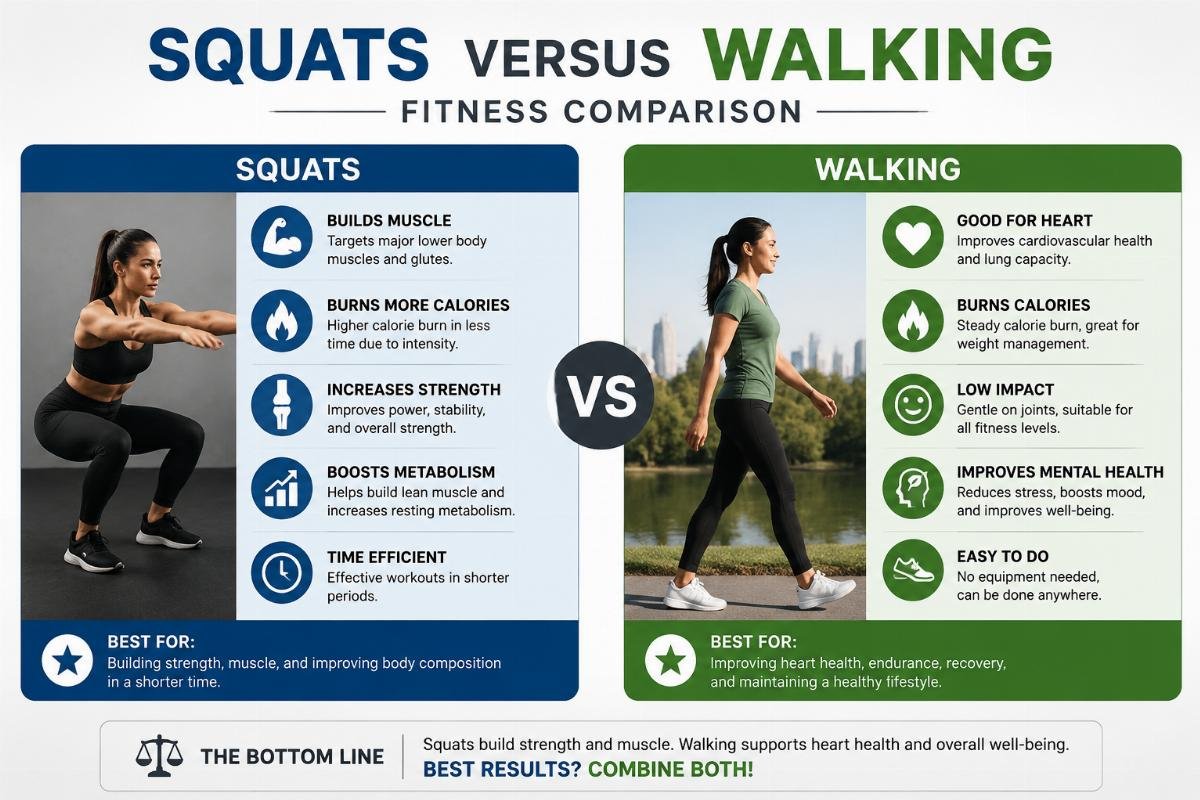
You might think that if complete rest is harmful and pushing through pain is dangerous, the safe middle ground is gentle walking. Many doctors recommend walking as the safest exercise for knee problems. Walking certainly beats sitting still. But it is not enough to maintain knee health long-term.
Walking uses minimal knee flexion and loads primarily bodyweight. It does not build the quadriceps strength needed to control knee position during challenging movements like stairs, hills, or quick direction changes. Your knees remain vulnerable to injury during activities beyond level-ground ambulation.
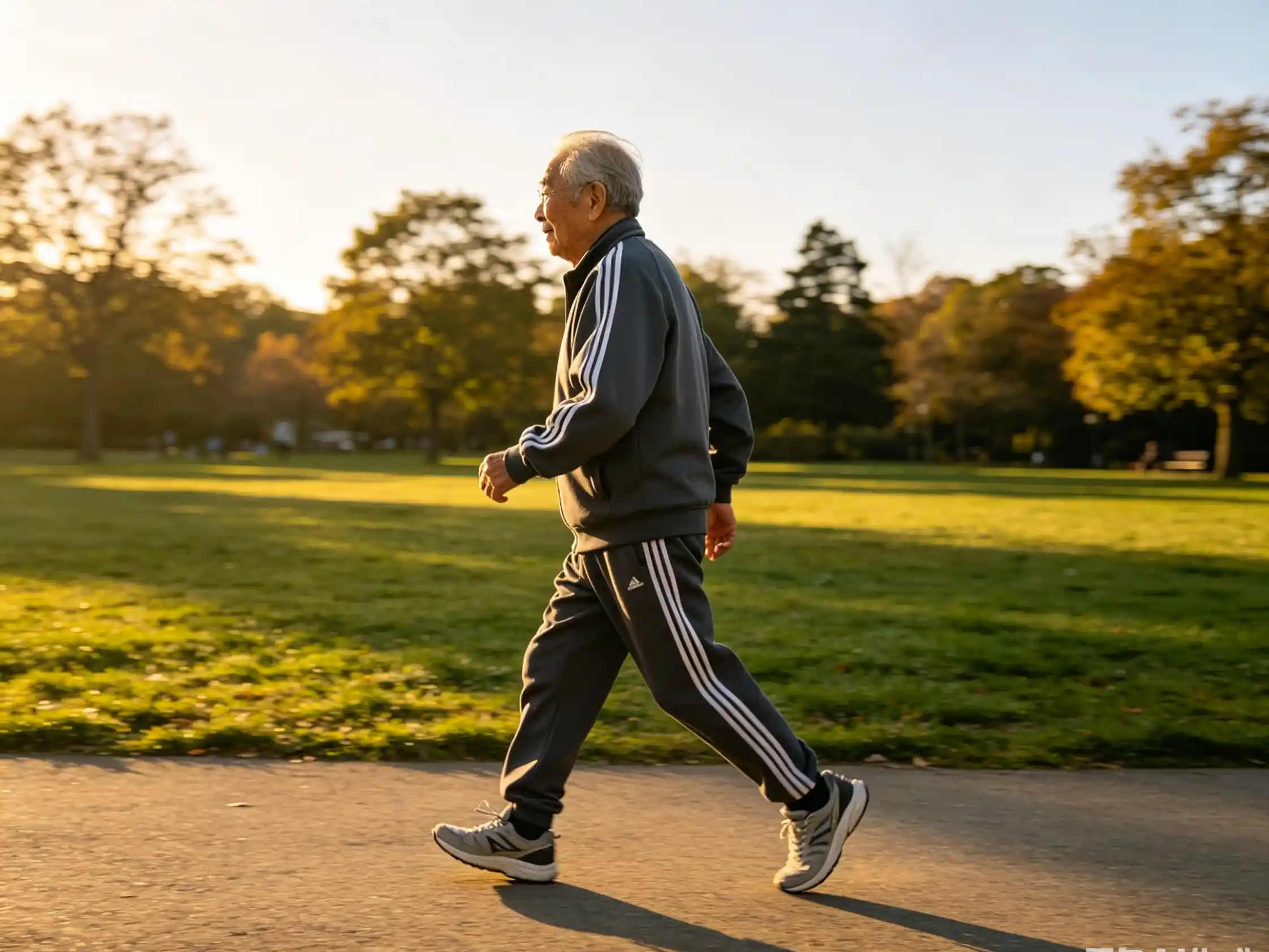
I have consulted with many clients who walked daily for years but still developed knee pain. They felt confident about their activity level. They met step count goals. They believed they were doing everything right. Then they attempted to hike with grandchildren or carry groceries upstairs. Their knees buckled. Pain flared. They could not understand why walking had not prepared them for these tasks.
The principle of training specificity explains this9. Your body adapts to the specific demands you place on it. Walking trains your body to walk efficiently. It does not train your quadriceps to produce high force, your hamstrings to decelerate rapid movements, or your glutes to stabilize lateral motion. These capacities require resistance training with progressive load.
I tracked one client's progress over six months. She walked 10,000 steps daily when we started. Her knee pain improved initially but plateaued after eight weeks. We added basic strength work—bodyweight squats, step-ups, and leg presses with light resistance. Within four weeks, her stair climbing ability improved significantly. Her pain during daily activities decreased. Her walking remained comfortable, but now she could also garden, play with her dog, and carry laundry without knee discomfort.
Research supports this pattern. Studies comparing walking-only programs to walking plus resistance training consistently show greater functional improvement in the combined approach10. Quadriceps strength correlates strongly with knee pain reduction and injury prevention11. Walking alone does not sufficiently challenge these muscles to produce strength gains.
Here is what different activities demand from your knee support muscles:
| Activity | Quadriceps Demand | Glute Demand | Knee Flexion Angle | Builds Protective Strength? |
|---|---|---|---|---|
| Level walking | Low | Low | 15-20 degrees | Minimal |
| Stair climbing | Moderate-High | Moderate | 60-90 degrees | Moderate |
| Squatting | High | High | 90-120 degrees | High |
| Leg press | High | Moderate-High | 80-100 degrees | High |
| Lunging | High | High | 90-110 degrees | High |
I am not suggesting walking is worthless. Walking maintains basic cardiovascular health and joint mobility. It provides psychological benefits. It is accessible and low-risk. But relying solely on walking creates a false sense of security. Your knees need strength reserves beyond what walking provides to stay resilient during unexpected demands12.
What is the correct approach to exercise with knee concerns?
You now understand that both inactivity and pushing through pain worsen knee problems. You also know walking alone provides insufficient protection. The question becomes: what should you actually do?
The correct approach is progressive, controlled strength training adjusted to your current symptom level. You systematically build muscle support around your knee joint while respecting pain boundaries. You gradually increase load, range, and complexity as your tolerance improves.
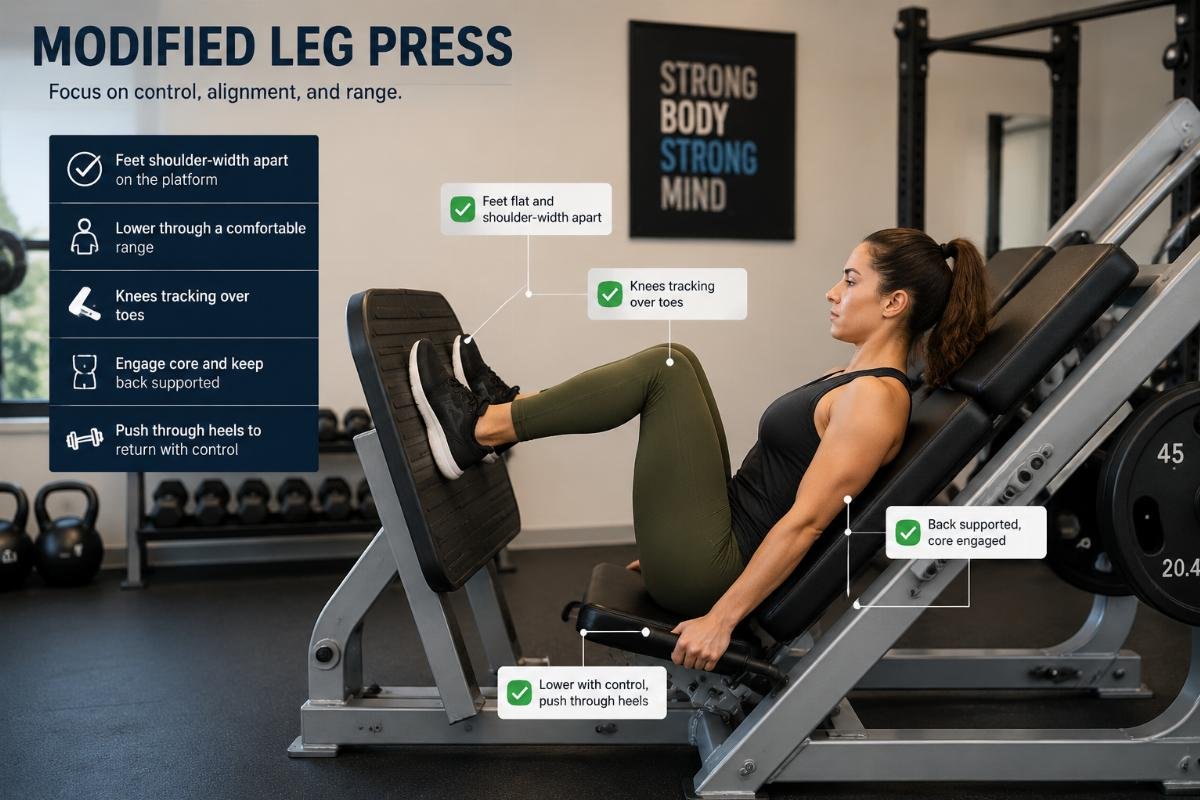
I have used this approach with clients ranging from their 40s to their 80s. The principles remain consistent regardless of age or fitness history. You start where you are, not where you wish you were. You progress based on objective markers, not arbitrary timelines.
When a new client comes to me with knee discomfort, I first assess their current movement capacity. I watch them sit and stand from a chair. I observe their gait pattern. I test their single-leg balance. I ask them to perform a partial squat or step-up if they feel comfortable. These simple movements reveal enormous amounts of information about muscle imbalances, range limitations, and pain triggers.
Based on this assessment, I design a starting program that meets three criteria. First, no exercise should produce pain above 3 out of 10 during performance. Second, pain should not increase in the hours after training. Third, exercises should target the muscles that stabilize the knee joint—quadriceps, hamstrings, and glutes.
Here is a sample progression I might use with someone experiencing moderate knee discomfort:
| Week | Primary Exercise | Load | Sets x Reps | Progression Marker |
|---|---|---|---|---|
| 1-2 | Seated leg extension (limited range) | Bodyweight or very light resistance | 2x10 | No pain during movement |
| 3-4 | Leg press (shallow range) | Light load | 2x12 | Can increase range 10 degrees |
| 5-6 | Leg press (moderate range) | Moderate load | 3x10 | No post-exercise swelling |
| 7-8 | Split squat (rear foot elevated) | Bodyweight | 2x8 each leg | Can control descent without knee drift |
| 9-10 | Goblet squat (full range) | Light dumbbell | 3x10 | Maintains pain-free range under load |
This progression is not rigid. Some clients move faster. Others need more time at each stage. The key is objective improvement: increased range, higher load, or better control without increased pain. I never advance a client to a harder variation if they still struggle with the current one.
I also teach clients to modify exercises based on daily symptom variation. Some days your knee feels better than others. This is normal. On high-symptom days, you might reduce range or load but maintain the movement pattern. On low-symptom days, you might test a slightly harder variation. This approach keeps you training consistently while respecting your body's current state.
Equipment selection matters significantly here. I have seen clients who struggled with barbell squats thrive on leg presses because the machine provides back support and controlled motion. Others prefer cable systems that allow them to adjust resistance angles precisely. At my facility, we invest in equipment that offers multiple adjustment points specifically for this reason.
How do you know when to modify versus when to stop?
You commit to progressive training. You start seeing improvement. Then one day, your knee feels worse during a session. You face a decision: push through, modify the exercise, or stop entirely. This moment determines whether you continue progressing or slide backward.
The decision to modify versus stop depends on pain type, pain location, and pain trajectory during the session. Sharp, localizing pain that increases with each rep requires stopping. Dull, diffuse discomfort that remains stable allows modification and continuation.
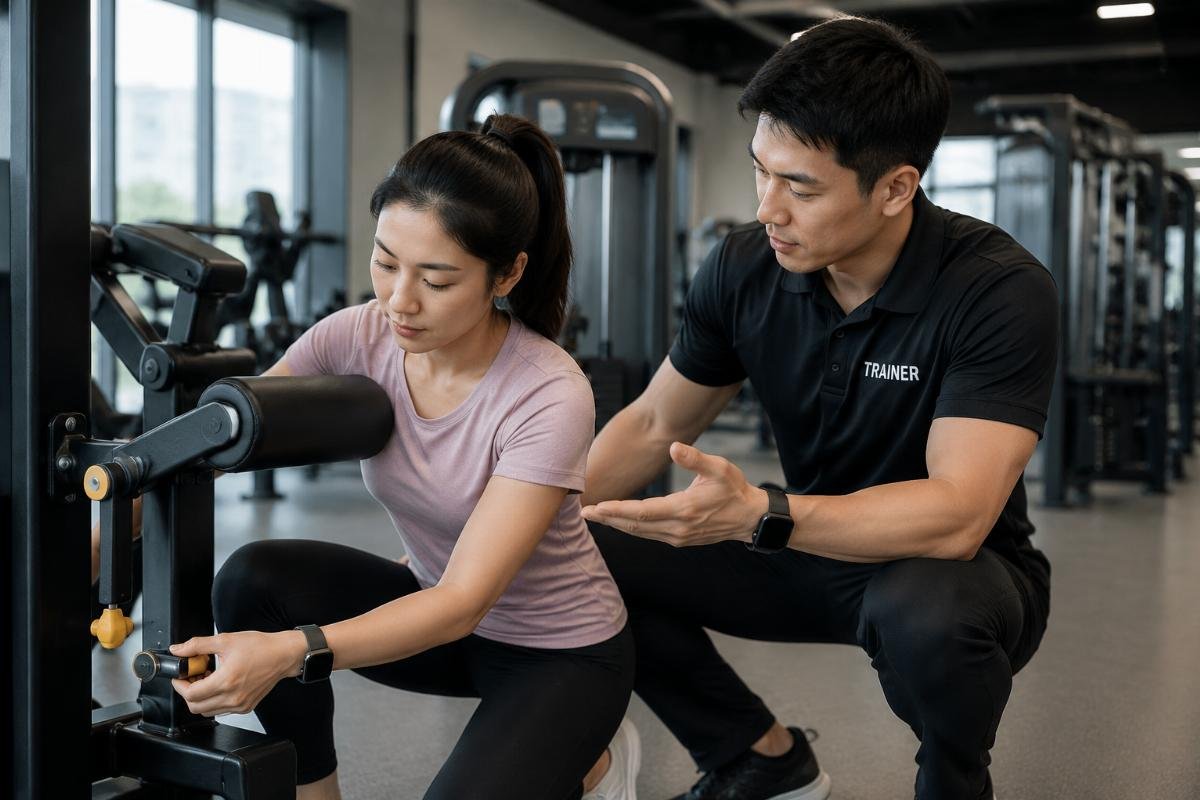
I teach clients a three-stage decision protocol. First, they notice the pain early in the set. Second, they rate its intensity and character. Third, they decide their next action based on specific criteria.
If pain is sharp, localized to one spot, and rated above 4 out of 10, I tell clients to stop the exercise immediately. We substitute a different movement that avoids the painful position. For example, if forward lunges cause sharp anterior knee pain, we might try reverse lunges or step-ups instead. We do not abandon leg training. We find a variation that allows productive work without triggering the problematic pain.
If pain is dull, spreads across the general knee area, and rates 2-3 out of 10, we modify load or range first. We might reduce weight by twenty percent. We might shorten range of motion to avoid the most uncomfortable angles. We complete the planned sets with these modifications. We assess how the knee feels afterward.
I worked with a client named Robert who developed this skill beautifully. He has mild arthritis in both knees. Some days he performs full-range leg presses with substantial weight. Other days, he experiences more stiffness and discomfort. On those days, he reduces his working weight by thirty percent and shortens his range by about twenty degrees. He still trains his legs. He still maintains his strength. But he adjusts to his current state rather than forcing his body to meet an arbitrary standard.
Here is the modification hierarchy I teach clients to use when pain emerges during training:
| Modification Level | Action Taken | When to Use | Example |
|---|---|---|---|
| Level 1: Range reduction | Decrease depth of squat/lunge by 25% | Pain at end ranges only | Squat to parallel instead of deep |
| Level 2: Load reduction | Decrease resistance by 20-30% | Pain throughout movement but stable | Drop from 100 lbs to 70 lbs |
| Level 3: Tempo change | Slow descent, pause at midpoint, controlled ascent | Pain during fast movements | 4-second negative, 2-second pause, 2-second positive |
| Level 4: Exercise substitution | Switch to different movement targeting same muscles | Pain persists despite Level 1-3 modifications | Replace barbell squat with leg press |
| Level 5: Session termination | Stop lower body training for the day | Sharp pain, swelling, or sudden weakness | End leg workout, perform upper body or core work instead |
Most training sessions require no modification. Some require Level 1 or 2 adjustments. Level 5 termination should be rare if you monitor symptoms attentively throughout the session.
The skill of self-modification takes time to develop. Initially, clients need my guidance to distinguish between appropriate challenge and excessive stress. After several months of practice, they recognize patterns in their bodies. They learn their specific triggers. They develop confidence in their ability to adjust training intelligently.
This skill is more valuable than any specific exercise program. Exercise programs are temporary. The ability to read your body's signals and respond appropriately lasts a lifetime. It allows you to stay active through various life stages and physical states.
What role does equipment selection play in knee safety?
You understand training principles. You know when to modify. But the equipment you use significantly influences your success or failure. Poor equipment choices force your body into positions that stress your knees unnecessarily. Smart equipment choices support proper mechanics and allow safe progression.
Equipment that offers adjustable range, stable support, and smooth resistance curves allows you to train productively while managing knee symptoms. Machines with fixed positions or jerky motion patterns increase injury risk and limit your ability to work around problem areas.
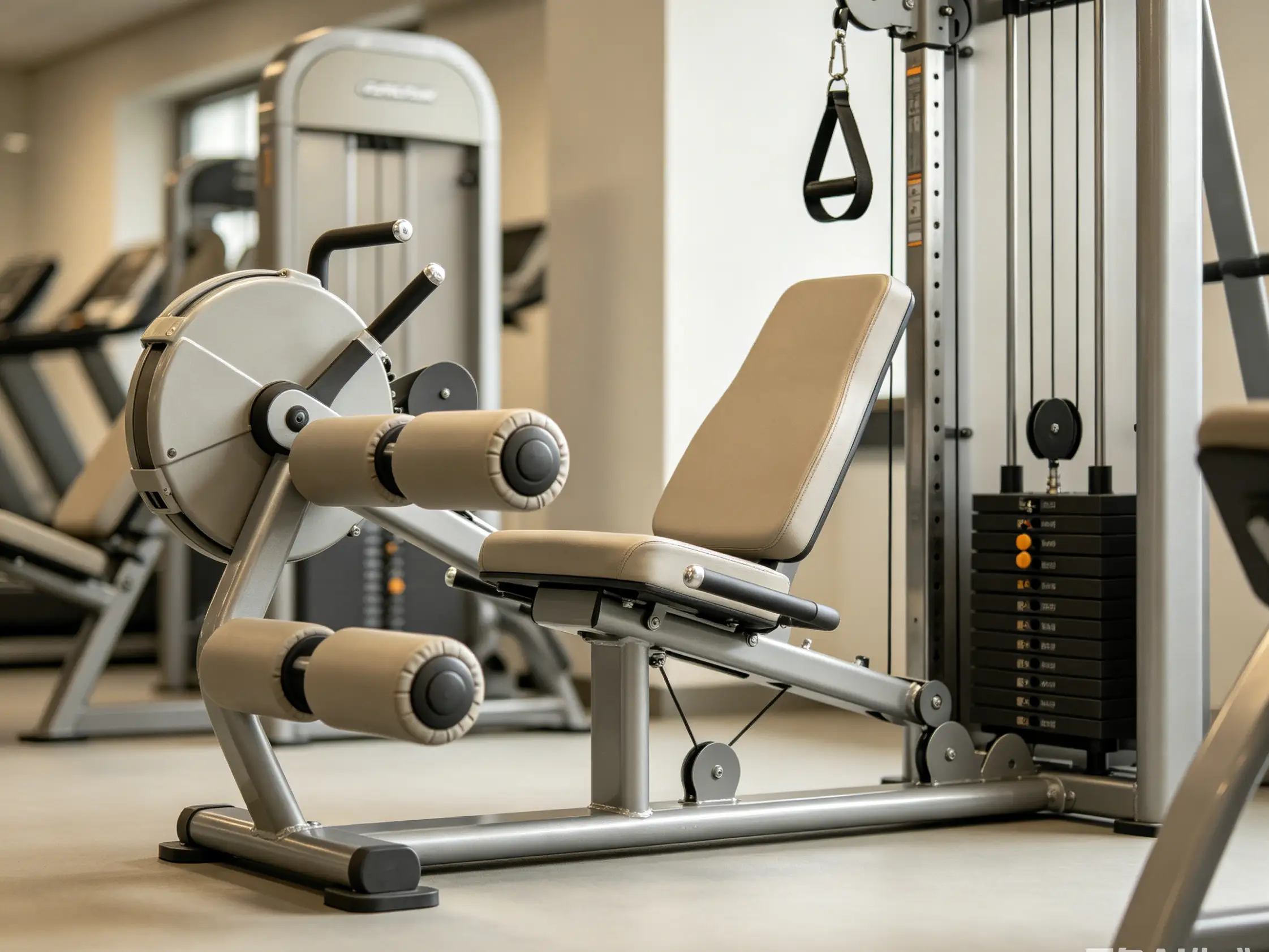
I have tested hundreds of pieces of fitness equipment throughout my career. The difference between thoughtfully designed machines and poorly engineered ones is dramatic. Good equipment almost teaches proper form itself. Poor equipment fights you at every rep.
For knee concerns specifically, I prioritize equipment with these characteristics. First, adjustable seat positions that allow you to align the equipment's pivot point with your knee's natural axis of rotation. When these do not match, every repetition creates shear force across your joint. Second, smooth resistance throughout the full range of motion without dead spots or sudden spikes. This allows your muscles to contract evenly without compensatory patterns. Third, stable back and foot support so your body does not wobble during the movement.
Leg press machines vary wildly in quality. Cheap leg presses have footplates at fixed angles that force your knees into awkward positions. Your ankles, knees, and hips must align naturally when
"Early Deconditioning of Human Skeletal Muscles and the Effects of a ...", https://pmc.ncbi.nlm.nih.gov/articles/PMC8584355/. Research on immobilization and deconditioning indicates measurable strength losses can occur within the first week of inactivity, though the exact rate varies by muscle group and individual factors. Evidence role: statistic; source type: paper. Supports: the timeframe for measurable muscle weakening after cessation of exercise. Scope note: Studies typically examine complete immobilization rather than simple exercise cessation, which may show different rates of decline ↩
"Influence of cyclic loading on the nutrition of articular cartilage", https://pubmed.ncbi.nlm.nih.gov/2383080/. Articular cartilage, being avascular, relies on diffusion and mechanical compression to facilitate nutrient exchange with synovial fluid, a process enhanced by joint movement. Evidence role: mechanism; source type: education. Supports: the mechanism by which avascular cartilage receives nutrients through fluid exchange. ↩
"The musculoskeletal implications of deconditioning in older adults ...", https://pmc.ncbi.nlm.nih.gov/articles/PMC8223128/. Deconditioning refers to the physiological changes that occur with prolonged inactivity or bed rest, including losses in muscle mass, cardiovascular capacity, and bone density. Evidence role: definition; source type: encyclopedia. Supports: the medical definition and usage of the term 'deconditioning'. ↩
"or twice-weekly eccentric resistance training in older adults - PubMed", https://pubmed.ncbi.nlm.nih.gov/39172298. The principle of reversibility in exercise physiology describes how training adaptations are lost when training stimulus is removed, with detraining producing measurable declines in strength, endurance, and other fitness parameters. Evidence role: mechanism; source type: education. Supports: the principle that physiological systems adapt to both increased and decreased activity levels. ↩
"Short-term immobilization and recovery affect skeletal muscle but ...", https://pubmed.ncbi.nlm.nih.gov/18927270/. Research on immobilization and bed rest demonstrates that prolonged inactivity produces measurable declines across musculoskeletal tissues, including reduced bone mineral density, decreased tendon stiffness, and muscle atrophy, though the rate and magnitude vary by tissue type. Evidence role: mechanism; source type: paper. Supports: the effects of prolonged inactivity on multiple musculoskeletal tissues. ↩
"Lactic acid and exercise performance : culprit or friend? - PubMed", https://pubmed.ncbi.nlm.nih.gov/16573355/. Exercise-induced muscle fatigue involves metabolic byproduct accumulation and altered ion concentrations that produce burning or aching sensations, which typically resolve within minutes to hours as metabolic homeostasis is restored. Evidence role: mechanism; source type: education. Supports: the physiological basis and characteristics of normal exercise-induced muscle fatigue. ↩
"Delayed onset muscle soreness : treatment strategies and ... - PubMed", https://pubmed.ncbi.nlm.nih.gov/12617692/. Delayed onset muscle soreness (DOMS) typically peaks 24-72 hours after unaccustomed or intense exercise, resulting from microscopic muscle damage and associated inflammatory responses that are part of normal adaptation processes. Evidence role: mechanism; source type: education. Supports: the typical timeline and characteristics of delayed onset muscle soreness. ↩
"Summary of Recommendations by Source - Physical Therapy ...", https://www.ncbi.nlm.nih.gov/books/NBK409571/. Clinical guidelines for exercise-based rehabilitation often suggest that pain levels up to 3-5 on a 0-10 scale may be acceptable during exercise if pain does not persist or worsen afterward, though specific thresholds vary by condition and clinical context. Evidence role: expert_consensus; source type: paper. Supports: guidelines for acceptable pain levels during therapeutic exercise. Scope note: Pain tolerance thresholds are not universally standardized and may vary based on individual factors and specific clinical conditions ↩
"Training Specificity for Athletes: Emphasis on Strength-Power Training", https://pmc.ncbi.nlm.nih.gov/articles/PMC9680266/. The principle of specificity, also known as the SAID principle (Specific Adaptation to Imposed Demands), states that physiological adaptations are specific to the type of training stimulus applied, meaning training effects are most pronounced in activities similar to the training performed. Evidence role: mechanism; source type: education. Supports: the principle of training specificity in exercise physiology. ↩
"The Influence of Continuous Versus Interval Walking Exercise on ...", https://pmc.ncbi.nlm.nih.gov/articles/PMC5669616/. Systematic reviews of exercise interventions for knee osteoarthritis indicate that programs combining aerobic exercise with resistance training typically produce greater improvements in pain and function than aerobic exercise alone. Evidence role: expert_consensus; source type: paper. Supports: the superior effectiveness of combined walking and resistance training compared to walking alone for knee-related outcomes. Scope note: Most research focuses on osteoarthritis populations rather than general knee pain, which may limit generalizability ↩
"The effects of pain on quadriceps strength, joint proprioception ...", https://pmc.ncbi.nlm.nih.gov/articles/PMC6192068/. Multiple studies have identified associations between greater quadriceps strength and reduced knee pain in osteoarthritis populations, as well as lower injury rates in athletic populations, though the strength of correlation varies across studies. Evidence role: statistic; source type: paper. Supports: the relationship between quadriceps strength and knee pain or injury outcomes. Scope note: Correlation does not establish causation, and the relationship may be bidirectional (pain can also reduce strength) ↩
"Medial knee joint loading during stair ambulation and walking while ...", https://pubmed.ncbi.nlm.nih.gov/22963827/. Biomechanical studies demonstrate that activities like stair climbing, rising from a chair, and recovering from a stumble can impose knee joint forces 3-5 times greater than level walking, suggesting that functional capacity must exceed routine activity demands to maintain safety margins. Evidence role: mechanism; source type: paper. Supports: the biomechanical demands on knee joints during various activities and the need for strength reserves. ↩


EQUIP YOUR
From CrossFit boxes to chain facilities -- BICKFIT engineers, manufactures and delivers heavy-duty commercial strength equipment worldwide.
JOIN THE DISCUSSION