
Is 10 Squats an Hour Better Than Walking?
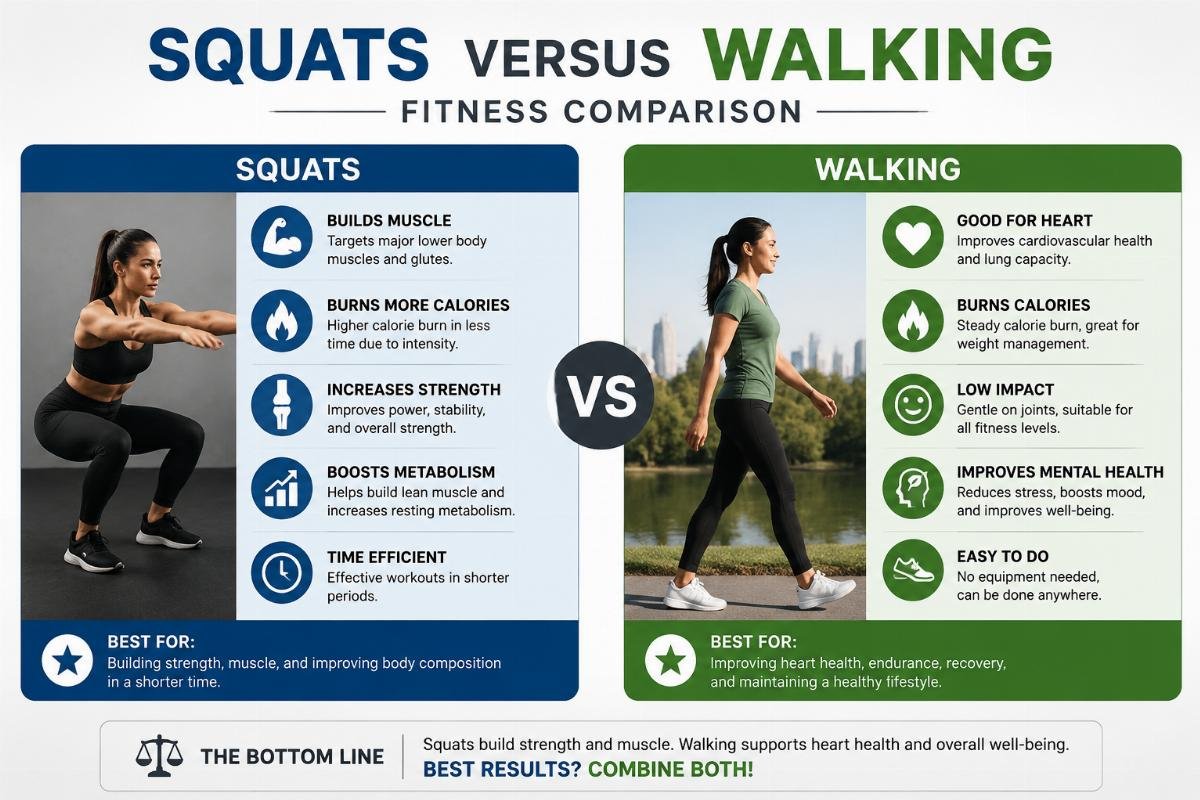
Is 10 Squats an Hour Better Than Walking?
You check your step count at 5 PM and see 1,200 steps. You know walking is good1, but you have been at your desk all day. Someone told you doing 10 squats every hour works better2. Now you wonder which one actually helps.
Both work, but they solve different problems. Walking needs continuous time and often space you may not have. Squats need neither—you can do them beside your desk in 30 seconds. The better choice depends on your real constraint: time blocks or desk-bound hours.
I talk to customers every week who ask this exact question. They do not ask because they want the perfect workout. They ask because they fear wasting effort on the wrong choice. Let me walk you through what I have learned from these conversations.
Why do people compare squats and walking in the first place?
You see this comparison because both seem simple. You do not need equipment. You do not need a trainer. You just move your body. But the question reveals something deeper—you want to know if small efforts count or if you need to commit to longer sessions.
People compare these two because they assume only one can deliver real results. The truth is they address different constraints. Walking works when you have 20-30 continuous minutes. Squats work when you have 30-second windows scattered through your day.
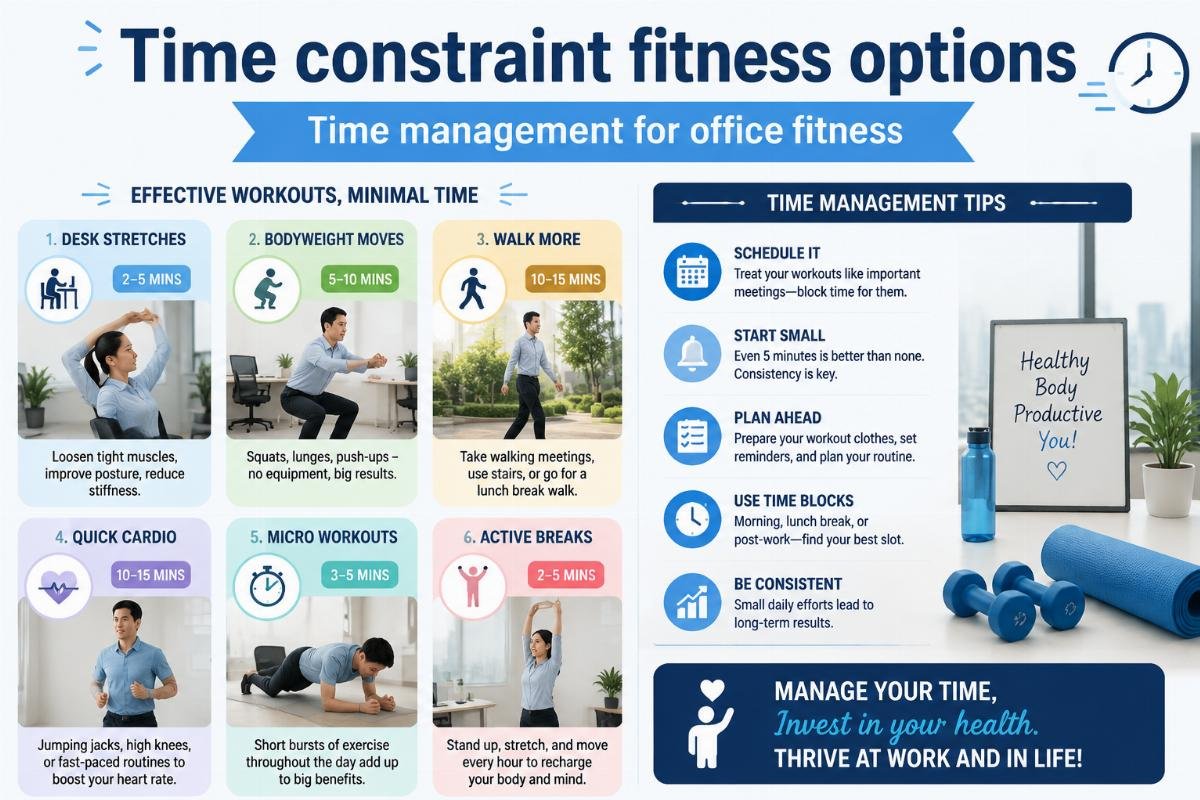
Customers tell me they picked squats when they could not leave their desk for long stretches. Others picked walking when they had lunchtime available but no space for floor exercises. Neither choice is wrong. The question is what your day allows. If you have three 10-minute breaks, walking fits. If you only have brief moments between calls, squats fit. The "better" option is the one you can actually repeat tomorrow.
Here is how customers usually describe their constraints:
| Constraint | Walking | 10 Squats/Hour |
|---|---|---|
| Needs continuous time | Yes (15-30 min) | No (30 sec bursts) |
| Needs outdoor or hallway space | Usually yes | No |
| Can do beside your desk | No | Yes |
| Interrupts focused work | Yes | Minimal |
| Works during video calls (camera off) | No | Possibly |
One customer told me he chose squats because his manager questioned why he left his desk so often. Another said she chose walking because her knees hurt when squatting. Both made the right call for their situation. Your constraint defines your answer.
Can 10 squats per hour actually count as exercise?
You worry that such a small number is theater—something that feels productive but does nothing. I hear this concern constantly. Customers ask if microbursts like this are "real exercise" or just movement for show.
Ten squats take about 30 seconds.3 If you do them every waking hour for 12 hours, you complete 120 squats per day4. That total adds up to meaningful repetition, especially if you currently do zero strength movement. The question is not whether it counts—it is whether it addresses your specific gap.
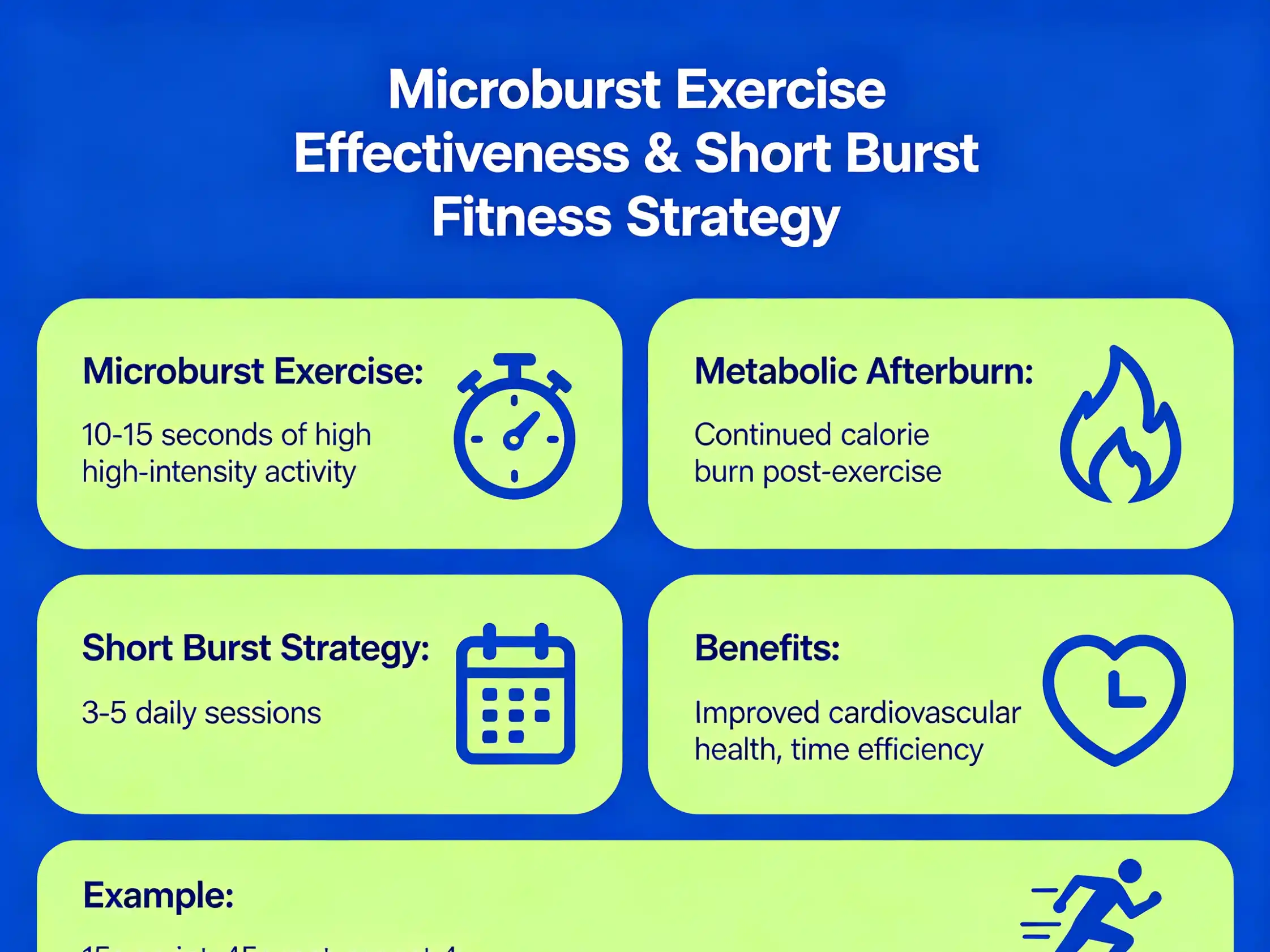
The pattern works because it fits into fragmented time.5 You do not need to change clothes. You do not need to shower afterward.6 You do not need to leave your workspace. Customers who stick with this approach tell me the benefit is not the single set—it is the accumulation across weeks. They notice their legs feel more stable when climbing stairs.7 They get up from chairs more easily. These are not dramatic transformations, but they are real changes from a baseline of sitting all day.
Compare this to walking. A 30-minute walk is excellent, but it requires a 30-minute block you might not have. If your day has no such block, walking becomes aspirational rather than practical. Squats become the fallback that actually happens. Some customers combine both—they do squats on busy days and walk on lighter days. That flexibility matters more than picking one forever.
Here is what customers report after trying the hourly squat pattern:
| After 2 Weeks | After 4 Weeks | After 8 Weeks |
|---|---|---|
| Habit feels automatic | Leg soreness reduces | Standing feels easier |
| Initial novelty fades | Volume feels manageable | Squat depth improves slightly |
| Coworkers ask questions | Routine survives busy days | Confidence to try more reps |
One customer said he started with 10 per hour but now does 15 because it takes the same time and he got stronger. Another said she dropped to 8 per hour during a stressful project and resumed 10 later. The pattern bends without breaking. That durability is why customers keep doing it.
Does walking burn more fat than squats?
This is the question customers think matters most, but it often distracts from the real decision. You assume the "better" exercise is the one that burns more. But burning more only helps if you can sustain the pattern long enough to matter.
Walking typically burns more total energy if you walk for 30 minutes versus doing 120 squats spread across a day.8 But energy burn is not the constraint—time availability is. The exercise you can repeat five days a week beats the one you can only do once.9
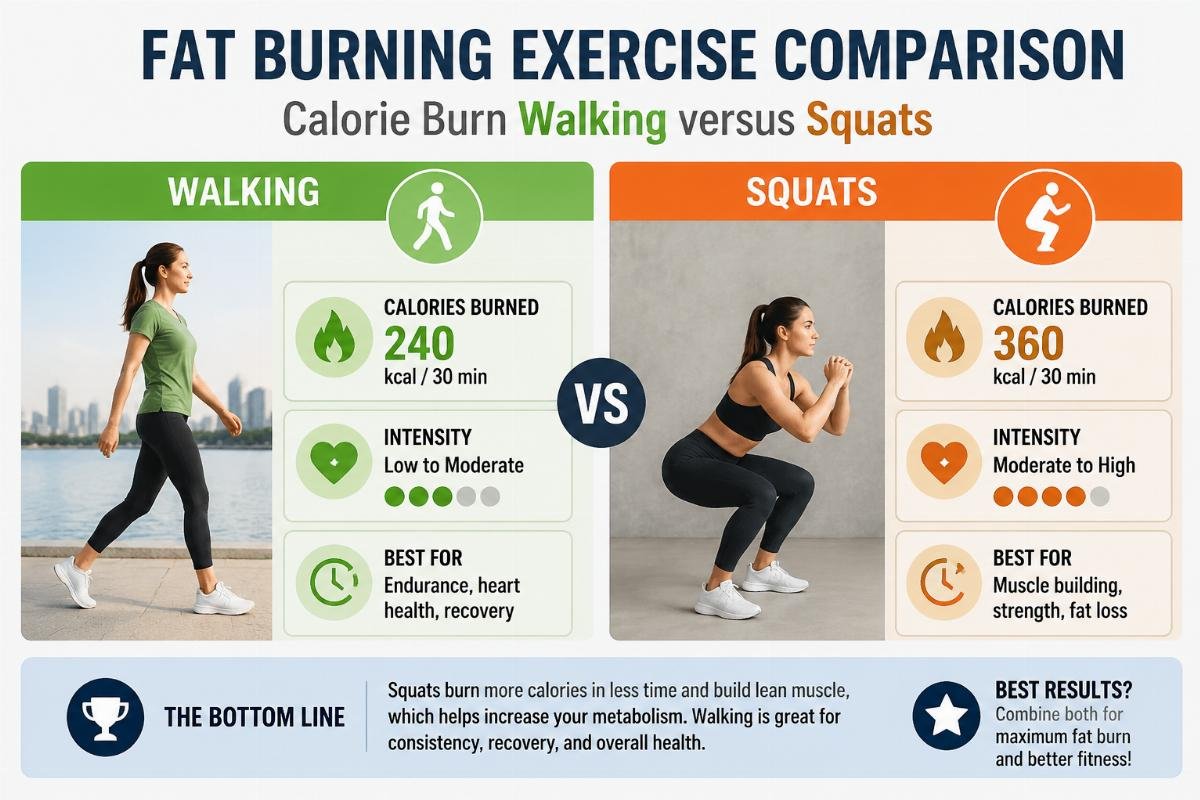
I see customers abandon walking plans because they cannot carve out the time consistently. They start strong on Monday, skip Wednesday, and quit by Friday. Then they feel like failures. Squats avoid this trap because the time cost is so low that skipping feels harder than doing them. You are already standing to refill your coffee—why not squat 10 times first?
The fat-burning comparison also ignores what squats provide that walking does not: leg strength stimulus. Walking maintains strength, but squats challenge it.10 If you sit all day, your legs weaken over time.11 Squats push back against that decline in a way walking does not.12 Customers who do both tell me walking feels easier after adding squats, but squats do not necessarily make walking redundant. They complement each other.
Here is how the time and effort trade-offs compare:
| Factor | Walking 30 Min/Day | 10 Squats/Hour (12 Hours) |
|---|---|---|
| Total time needed | 30 minutes continuous | 6 minutes spread out |
| When you can quit | After 30 min block | After any single hour |
| Strength stimulus | Low | Moderate |
| Energy burn | Higher per session | Lower total |
| Consistency barrier | Finding 30-min block | Remembering each hour |
One customer told me she walks on weekends when she has time and does squats on weekdays when she does not. She does not see them as rivals. Another customer said he does both—squats keep his legs strong, and walking clears his head. They stopped asking which is better and started asking which fits right now.
What do customers actually choose when they ask me this question?
When I talk to customers, I notice a pattern. They do not want me to declare a winner. They want permission to pick the option that fits their life without feeling like they are cheating.
Most customers who ask this question end up choosing squats for weekdays and walking for weekends or lunch breaks. They want both, but they need squats to cover the gaps when walking is not possible. The real answer is not either-or—it is strategic combination based on daily constraints.
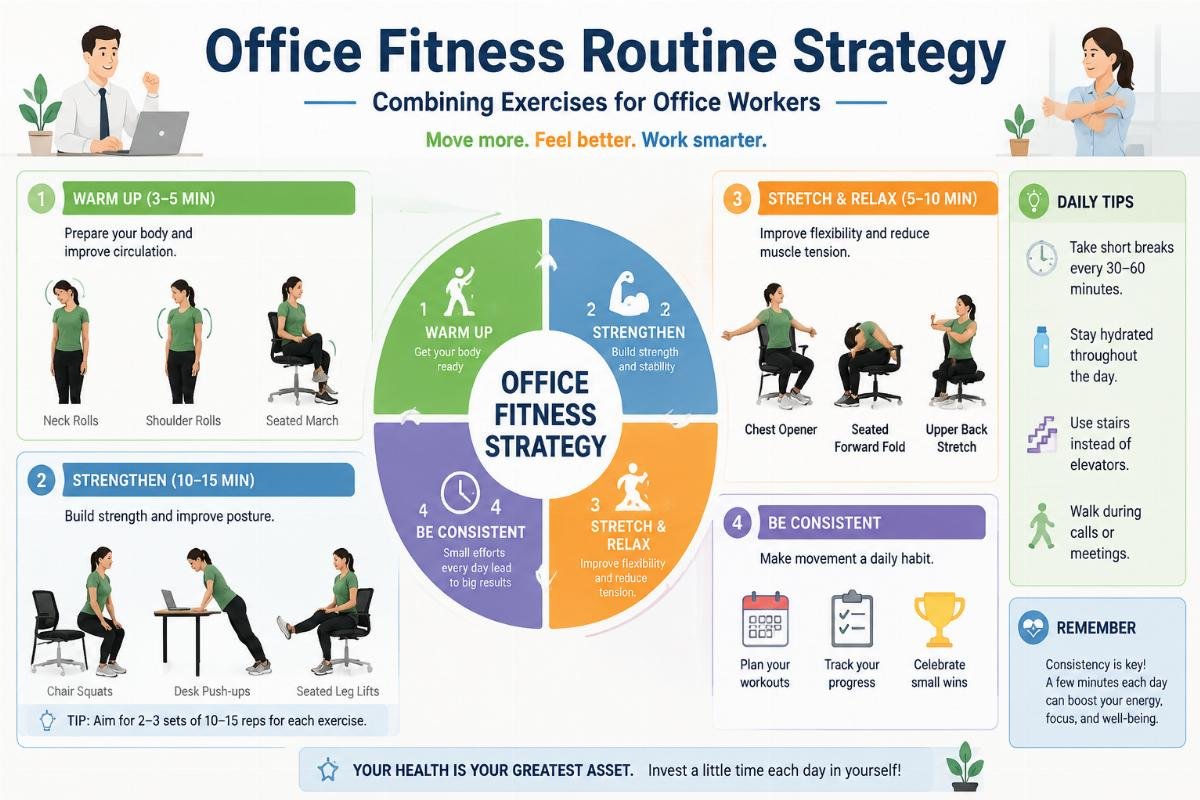
One customer told me he felt guilty doing squats instead of walking because walking "seemed more official." I told him squats are just as official if they are the thing he can actually do. Another customer said her coworkers laughed when she started squatting beside her desk, but three of them joined her by the end of the month. The social proof made it feel legitimate. You do not need external validation to count movement as real, but it helps when others confirm you are not wasting your time.
The customers who succeed with either approach share one trait: they stop comparing and start doing. They pick one, try it for two weeks, and adjust based on what actually happens. They do not wait for perfect certainty. They test their own constraints and adapt. That willingness to experiment beats any theoretical answer I could give them.
Conclusion
The better choice is the one that fits your real constraints. Squats work when time is fragmented. Walking works when you have continuous blocks. Most people benefit from both, using squats to cover gaps and walking when time allows.
"The multifaceted benefits of walking for healthy aging - PMC - NIH", https://pmc.ncbi.nlm.nih.gov/articles/PMC10643563/. Public health guidelines from organizations like the WHO and CDC identify walking as a beneficial form of moderate-intensity aerobic activity that can improve cardiovascular health, maintain healthy weight, and reduce chronic disease risk when performed regularly. Evidence role: expert_consensus; source type: institution. Supports: the health benefits of walking. ↩
"Effects of one long vs. two short resistance training sessions ...", https://pmc.ncbi.nlm.nih.gov/articles/PMC9557220/. Research on activity breaks suggests that frequent short bouts of movement throughout the day can improve metabolic markers and reduce sedentary time, though 'better' depends on the specific health outcome measured—continuous exercise may be superior for cardiovascular fitness while frequent breaks may better interrupt prolonged sitting. Evidence role: general_support; source type: paper. Supports: the effectiveness of frequent short exercise bouts for sedentary workers. Scope note: Effectiveness depends on the specific health outcome being measured and individual circumstances ↩
"The slow exercise tempo during conventional squat elicits higher ...", https://pubmed.ncbi.nlm.nih.gov/33714242/. Exercise tempo research suggests that bodyweight squats performed at a controlled pace (approximately 2-3 seconds per repetition) would result in 10 repetitions taking 20-30 seconds, though actual duration varies with individual technique and depth. Evidence role: statistic; source type: research. Supports: the typical duration for performing 10 bodyweight squats. Scope note: Duration varies significantly based on squat depth, tempo, and individual mobility ↩
"Resistance Exercise Minimal Dose Strategies for Increasing Muscle ...", https://pmc.ncbi.nlm.nih.gov/articles/PMC11127831/. Exercise guidelines suggest that resistance training should involve 2-3 sets of 8-12 repetitions per muscle group 2-3 times per week for strength gains; 120 daily squats distributed throughout the day exceeds this volume threshold, though the distributed pattern may provide different adaptations than concentrated training sessions. Evidence role: expert_consensus; source type: research. Supports: whether 120 daily bodyweight squats represents a meaningful training volume. Scope note: Training effects depend on squat depth, tempo, and individual training status ↩
"Consistent exercise timing as a strategy to increase physical activity", https://pmc.ncbi.nlm.nih.gov/articles/PMC10722958/. Research on physical activity adherence indicates that perceived time barriers are among the most commonly cited obstacles to exercise, and interventions that reduce time requirements or allow flexible scheduling tend to show improved compliance rates, though long-term adherence depends on multiple factors beyond time availability. Evidence role: general_support; source type: paper. Supports: the relationship between exercise time requirements and adherence. Scope note: Adherence is influenced by many factors beyond time constraints, including motivation and social support ↩
"The Effect of a Resistance Training Session on Physiological and ...", https://pmc.ncbi.nlm.nih.gov/articles/PMC6548784/. Research on exercise thermoregulation indicates that brief, low-to-moderate intensity resistance exercise bouts (under 1 minute) typically produce minimal sweating in climate-controlled environments, as the duration is insufficient to significantly elevate core temperature, though individual sweat response varies with fitness level and environmental conditions. Evidence role: mechanism; source type: research. Supports: the sweat response to brief bodyweight exercise bouts. Scope note: Sweat response varies significantly with individual physiology, clothing, and ambient temperature ↩
"Stair-Climbing Versus Machine-Based Resistance Exercise to ...", https://pubmed.ncbi.nlm.nih.gov/39590559/. Research on functional training indicates that squat exercises strengthen the same muscle groups (quadriceps, gluteals, hamstrings) used in stair climbing and improve movement patterns that transfer to daily activities, though the degree of transfer depends on squat depth and similarity to the functional task. Evidence role: mechanism; source type: paper. Supports: the transfer of squat training to functional activities like stair climbing. Scope note: Functional transfer depends on exercise specificity and individual movement patterns ↩
"Effects of squat training on energy expenditure, oxygen consumption ...", https://pmc.ncbi.nlm.nih.gov/articles/PMC12307640/. Metabolic studies indicate that 30 minutes of moderate-pace walking typically expends 90-150 calories depending on body weight and speed, while bodyweight squats expend approximately 0.3-0.5 calories per repetition, suggesting 120 squats would burn 36-60 calories, though post-exercise oxygen consumption may add to the squat total. Evidence role: statistic; source type: research. Supports: the relative energy expenditure of walking versus bodyweight squats. Scope note: Energy expenditure varies significantly with individual body weight, exercise intensity, and fitness level ↩
"Health Benefits of Exercise - PMC - NIH", https://pmc.ncbi.nlm.nih.gov/articles/PMC6027933/. Exercise science research demonstrates that regular, consistent physical activity provides superior health benefits compared to sporadic exercise, as physiological adaptations require repeated stimulus and many health benefits (such as cardiovascular improvements) diminish within days to weeks of inactivity. Evidence role: expert_consensus; source type: paper. Supports: the importance of exercise consistency for health outcomes. ↩
"Effects of 10-week walking and walking with home-based resistance ...", https://pmc.ncbi.nlm.nih.gov/articles/PMC6240935/. Research on resistance exercise indicates that bodyweight squats provide progressive overload stimulus to leg muscles, while walking primarily maintains existing strength through lower-intensity repetitive movement, though the magnitude of difference depends on individual baseline fitness and squat depth. Evidence role: mechanism; source type: paper. Supports: the differential effects of walking and squats on leg muscle strength. Scope note: The comparison depends on walking speed, duration, squat form, and individual fitness levels ↩
"Sitting for Too Long, Moving Too Little: Regular Muscle Contractions ...", https://pmc.ncbi.nlm.nih.gov/articles/PMC8595117/. Studies on sedentary behavior indicate that prolonged sitting is associated with reduced muscle activation and potential muscle atrophy in the lower extremities, particularly affecting postural muscles and contributing to decreased functional strength over time. Evidence role: mechanism; source type: paper. Supports: the relationship between prolonged sitting and leg muscle weakness. Scope note: The rate and extent of weakness depends on total daily activity, sitting duration, and individual factors ↩
"Behavior change techniques to reduce sedentary ... - PMC - NIH", https://pmc.ncbi.nlm.nih.gov/articles/PMC12926486/. Research on exercise interventions for sedentary populations indicates that resistance exercises like squats provide a strength-building stimulus that can counteract muscle atrophy from disuse, while walking primarily provides cardiovascular benefits and maintains but does not significantly increase muscle strength in most populations. Evidence role: mechanism; source type: paper. Supports: the differential effects of resistance exercise versus walking on preventing sedentary-related strength decline. Scope note: The comparative effectiveness depends on exercise intensity, volume, and individual baseline fitness ↩



EQUIP YOUR
From CrossFit boxes to chain facilities -- BICKFIT engineers, manufactures and delivers heavy-duty commercial strength equipment worldwide.
JOIN THE DISCUSSION