
What is the fastest exercise to lower blood sugar?

What is the fastest exercise to lower blood sugar?
You need to control your blood sugar quickly, but every article gives you a different answer. Walking, sprinting, lifting weights—which one actually works fastest? The confusion comes from the fact that "fastest" means different things in different situations, and the equipment you have access to changes everything.
The fastest exercise to lower blood sugar depends on your timing and equipment access. For post-meal spikes, rhythmic cardio on a treadmill or rower works within 15-30 minutes. For fasting control, short strength intervals with adjustable resistance equipment show faster results. The key is matching your scenario to the right movement pattern and having the equipment that lets you sustain it.
Most people searching for this answer are not looking for exercise science lectures. They want to know what to buy or use right now to see measurable results. I will walk you through how to match your specific situation to the right equipment setup.
Why does "fastest" depend on your blood sugar scenario?
Your body responds differently to exercise depending on when your blood sugar spikes and how long it stays elevated. The exercise that works fastest after a meal is not the same one that helps with morning fasting levels.
Post-meal spikes require immediate glucose uptake into muscles. Rhythmic cardio movements—using treadmills, rowers, or stationary bikes—activate large muscle groups continuously and move glucose out of your bloodstream within 15-30 minutes.1 Fasting blood sugar control needs different stimulus: short bursts of resistance work that improve insulin sensitivity over hours, not minutes2.
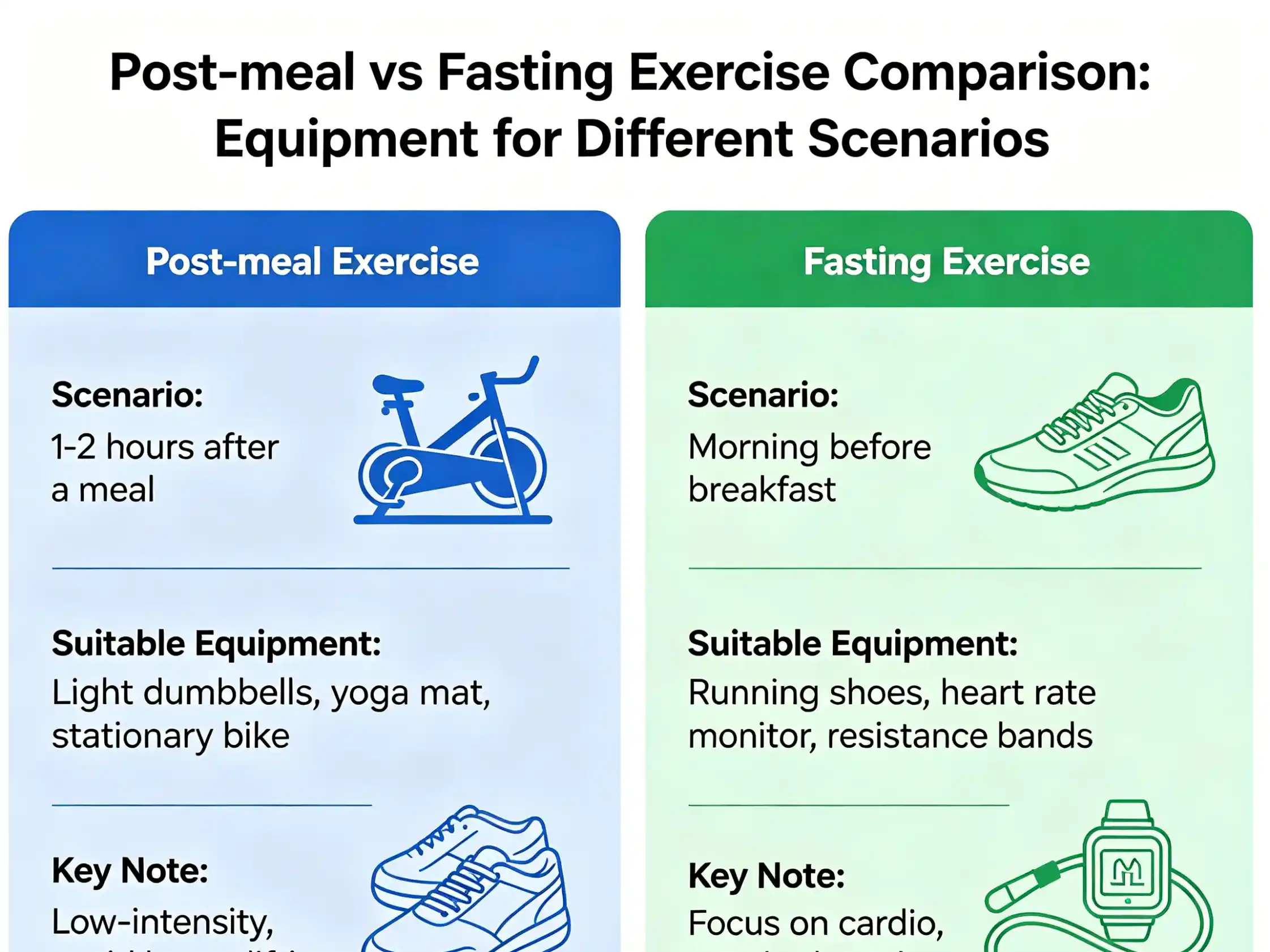
When customers contact us asking which machine to buy for blood sugar control, the first question I ask is: "Are you trying to handle post-meal spikes or improve your fasting numbers?" This determines the entire equipment selection. Let me break down both scenarios so you can see where your situation fits.
Post-meal spike control: Why rhythmic cardio equipment wins
After eating, your blood sugar rises as glucose enters your bloodstream. The fastest way to lower it is to use that glucose as fuel immediately. This requires sustained, moderate-intensity movement that keeps your heart rate elevated for at least 15 minutes.
Treadmills, rowing machines, and upright bikes all provide this kind of movement. They let you maintain a steady pace without stopping. The key specification here is adjustability—you need equipment that lets you control intensity precisely. A treadmill with 0.5 mph speed increments works better than one with 1.0 mph jumps because you can find the exact zone where you are working but not exhausted.
From our customer feedback, people who use a rower within 20 minutes after a meal report the fastest perceived drop in blood sugar symptoms (reduced thirst, less fatigue). Rowing engages both upper and lower body, which means more muscle mass working simultaneously. More active muscle means faster glucose uptake.3 The practical advantage is that a compact rowing machine fits in small spaces and requires zero learning curve.
Stationary bikes work similarly but engage less total muscle mass. They are easier on joints and require less coordination, which makes them better for people who are older or have mobility limits. The trade-off is that you may need 5-10 minutes longer to see the same effect compared to a rower.
Treadmills provide the most natural movement pattern—walking is something everyone already knows how to do. The challenge is that effective treadmills take up significant space and cost more than rowers or bikes at comparable quality levels. For post-meal control, a treadmill with a minimum 2.5 hp motor and a walking belt at least 50 inches long ensures you can sustain 3-4 mph brisk walking without interruption.
| Equipment Type | Muscle Engagement | Space Requirement | Learning Curve | Typical Session for Post-Meal Control |
|---|---|---|---|---|
| Rowing Machine | Full body (legs, back, arms) | 8 ft × 2 ft (foldable models available) | Low (5-minute setup) | 15-20 minutes at moderate intensity |
| Stationary Bike | Lower body dominant | 4 ft × 2 ft | Minimal | 20-30 minutes at steady pace |
| Treadmill | Lower body, core stabilization | 6 ft × 3 ft (non-foldable) | Minimal | 15-25 minutes brisk walking |
Fasting blood sugar control: Why resistance equipment changes the game
Fasting blood sugar reflects how well your body manages glucose when you are not eating. Exercise does not lower fasting blood sugar immediately—it improves insulin sensitivity over the next 12-48 hours.4 This requires a different movement pattern: short, intense bursts of resistance work.
Adjustable dumbbells, resistance bands with anchor points, and cable machines all enable this kind of training. The specification that matters here is load range. You need equipment that lets you work in the 8-15 rep range with effort. If the weight is too light, you are not stimulating the metabolic response. If it is too heavy, you cannot sustain multiple sets.
Customers who focus on fasting control typically choose compact multi-station home gyms or adjustable dumbbell sets. The reason is practical: resistance training sessions for blood sugar control are 20-30 minutes, not 60-minute bodybuilding workouts. They need equipment that allows quick transitions between exercises—squats, rows, presses—without spending 5 minutes changing setups.
Cable machines offer the most versatility in a single footprint. A functional trainer with a 150-200 lb weight stack covers every major movement pattern. The pulley system lets you switch from squats to rows in under 10 seconds, which keeps your heart rate slightly elevated between sets. This combination—strength stimulus plus mild cardio effect—produces the metabolic signal that improves fasting insulin sensitivity.
Adjustable dumbbells work better for people with space constraints or budget limits. A single pair that adjusts from 10 to 50 lbs covers most bodyweight-plus-load exercises. The limitation is that complex movements like cable rows or lat pulldowns are harder to replicate. You compensate by focusing on compound lifts: goblet squats, dumbbell deadlifts, single-arm rows. These exercises engage large muscle groups and create the metabolic demand you need.
Resistance bands are the lowest-cost option but require more skill to use effectively. The tension curve is different from free weights—resistance increases as you stretch the band. This means the hardest part of the movement is at the end, not the beginning. For blood sugar control, this is actually useful because it forces you to control the eccentric (lowering) phase, which generates more metabolic stress5. The challenge is anchoring them securely. We have seen customers struggle when they try to use door anchors on hollow-core doors or lightweight furniture. A dedicated anchor point (wall-mounted or a power rack) solves this problem.
| Equipment Type | Load Range | Space Requirement | Session Structure for Fasting Control | Best Use Case |
|---|---|---|---|---|
| Cable Machine (Functional Trainer) | 150-200 lb stack (adjustable in 10 lb increments) | 6 ft × 4 ft | 3-4 exercises, 3 sets each, 8-12 reps, 30-second rest | Home users with dedicated space and budget |
| Adjustable Dumbbells | 10-50 lbs per hand | 2 ft × 2 ft storage | 4-5 compound lifts, 3 sets each, 8-15 reps, 45-second rest | Limited space, budget-conscious, prefer simplicity |
| Resistance Bands with Anchor | 10-100 lbs equivalent tension | Minimal (portable) | 4-5 exercises, 3 sets each, 10-15 reps, 30-second rest | Travel frequently, need portability, willing to learn technique |
What if you only have access to one type of equipment?
Many people reading this do not have the luxury of choosing equipment—they have a gym membership with standard machines, or they already own a treadmill at home. Can you still control blood sugar effectively with limited options?
Yes, but you need to adapt your approach. If you only have cardio equipment, use interval training to add a resistance-like effect. If you only have strength equipment, reduce rest periods to keep your heart rate up and mimic cardio benefits. The principle is to create metabolic demand using whatever tool you have.
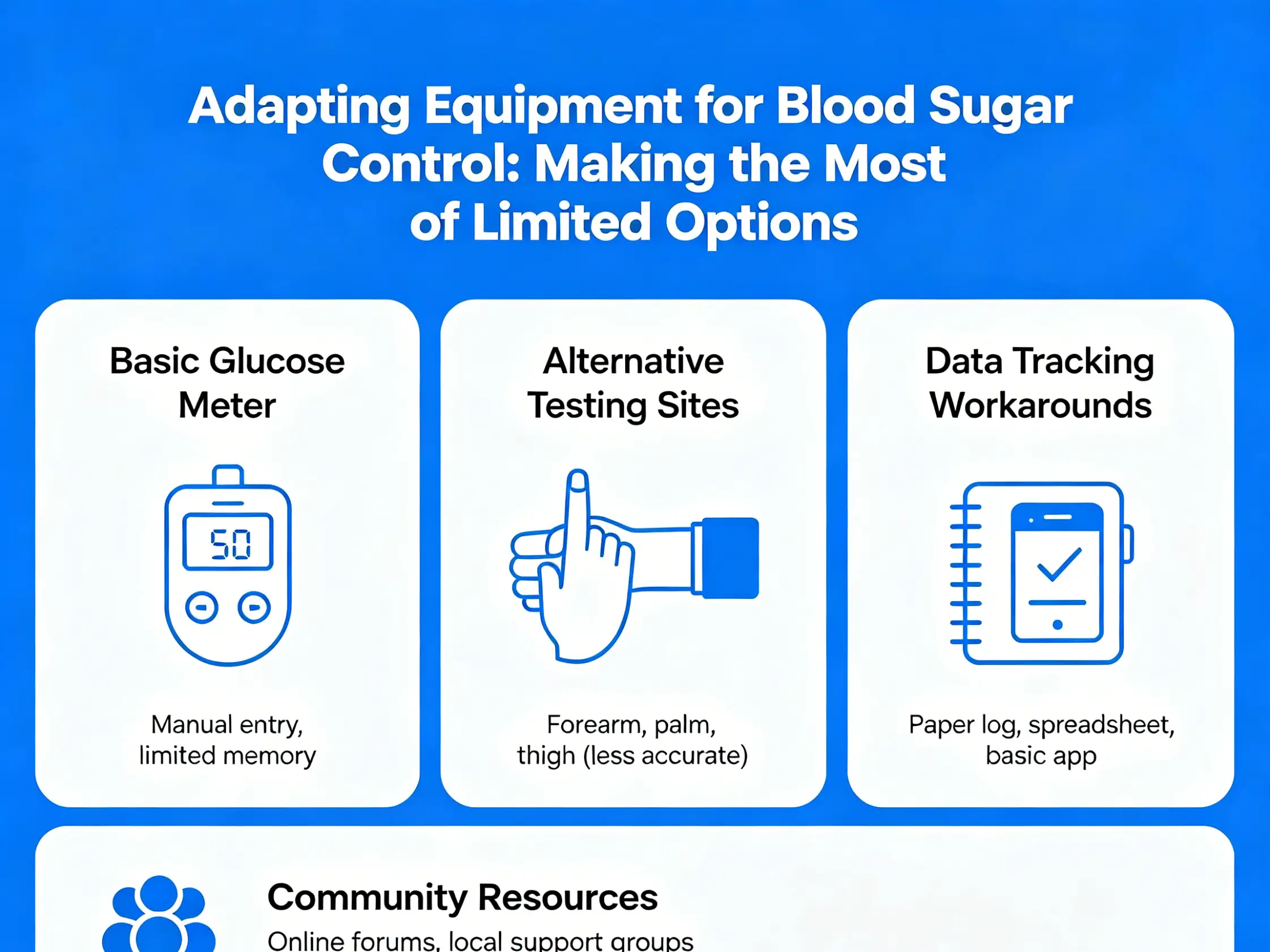
I frequently hear from customers who bought a treadmill for general fitness and now want to use it for blood sugar control. They ask if walking alone is enough. The answer is yes for post-meal spikes, but for fasting control, they need to add intervals. Walking at 3.5 mph for 2 minutes, then increasing to 4.5 mph for 1 minute, repeated for 20 minutes, creates the metabolic variability that improves insulin sensitivity.
The same logic applies in reverse. If you only have dumbbells or a cable machine, you can create a cardio-like effect by shortening rest periods. Instead of resting 60 seconds between sets, rest 20-30 seconds. Perform exercises in a circuit format: squats, rows, presses, repeat. This keeps your heart rate elevated and burns through glucose similarly to sustained cardio.
The limitation is that neither adaptation is as efficient as using the right equipment for the right scenario. Interval treadmill walking works, but it is harder to sustain than steady rowing. Circuit strength training elevates heart rate, but it does not provide the same insulin sensitivity signal as dedicated resistance work with proper rest. These are compromises you make when equipment access is limited.
Matching equipment to your daily constraints
The fastest exercise is the one you can actually do consistently. Equipment choice determines compliance more than exercise science does. I have seen customers buy high-end treadmills because research says walking lowers blood sugar, then stop using them after two weeks because the machine takes up half their living room and makes noise that bothers their family.
Space constraints are the first filter. Measure your available area before choosing equipment. A rowing machine that folds vertically fits in a closet. A treadmill does not. If you live in an apartment with downstairs neighbors, impact noise matters. Rowers and bikes are silent. Treadmills are not, unless you spend significantly more on models with advanced cushioning systems.
Time constraints are the second filter. If you have 15 minutes after each meal, a rower or bike works because you can start and stop instantly. If you have 30 minutes three times per week, a resistance setup works because you need that time to complete a full strength session.
Budget constraints are the third filter. A quality rowing machine costs less than a quality treadmill at comparable durability levels. Adjustable dumbbells cost less than a cable machine. Resistance bands cost less than everything else. The trade-off is that cheaper equipment usually requires more skill to use effectively or has a shorter lifespan under daily use.
| Constraint | Best Equipment Choice | Why It Works Better |
|---|---|---|
| Limited space (under 10 sq ft) | Foldable rowing machine or resistance bands with door anchor | Can be stored vertically or in a closet between uses |
| Noise-sensitive environment (apartment, shared walls) | Magnetic resistance bike or resistance bands | No impact noise, minimal mechanical sound |
| Time-limited (under 20 minutes per session) | Rowing machine or stationary bike | No setup time, start immediately, stop mid-session without issue |
| Budget under $500 | Adjustable dumbbells (10-50 lbs) or resistance band set with anchor | Covers full-body resistance work, no ongoing costs, long lifespan |
| Budget over $1000 | Functional trainer (cable machine) or motorized treadmill (2.5+ hp) | Supports both cardio intervals and resistance work, higher durability |
How do you know if your equipment choice is working?
You measure results by tracking blood sugar before and after exercise, not by how hard the workout feels. The equipment that lowers your blood sugar consistently by 20-40 mg/dL within 30 minutes post-meal is the right choice for you. If it does not, the problem is usually intensity, duration, or timing—not the equipment itself.
For post-meal control, measure blood sugar immediately before starting exercise and again 30 minutes after you finish. A drop of 20-40 mg/dL indicates the equipment and intensity are appropriate.6 For fasting control, measure blood sugar at the same time each morning for two weeks. A gradual downward trend (5-10 mg/dL lower on average) indicates your resistance training is improving insulin sensitivity.7
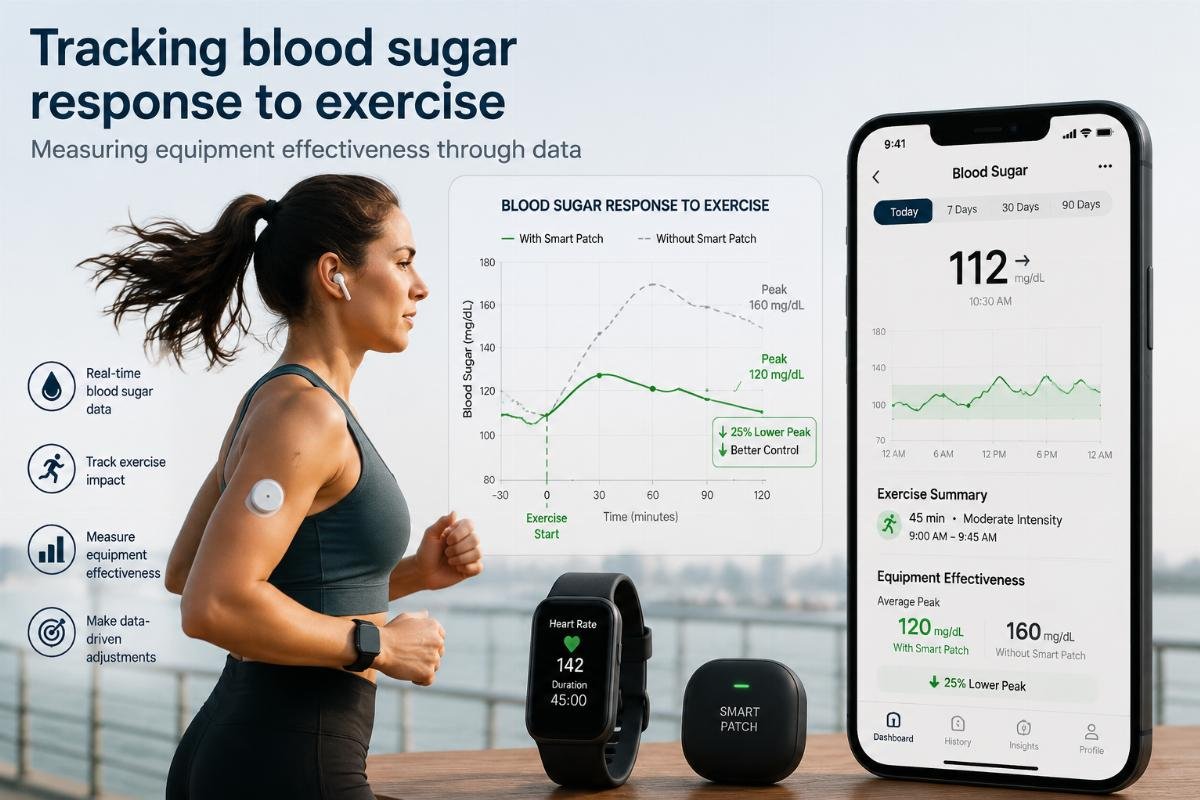
Customers often report frustration when they do not see immediate results. The issue is usually that they are using cardio equipment for fasting control or resistance equipment for post-meal spikes—the scenario and equipment are mismatched. Switching to the appropriate setup usually solves this within one week.
Another common issue is intensity calibration. A treadmill set at 2.0 mph is too slow to generate significant glucose uptake for most people. A rowing machine used at low resistance for 10 minutes is insufficient. The equipment itself is not the limiting factor—the user needs to work at a level that elevates heart rate to 50-70% of maximum for cardio work8, or reaches near-failure in the 8-15 rep range for strength work9.
If you are consistently exercising but not seeing blood sugar improvements after two weeks, consult your doctor. There may be medication adjustments or dietary factors that override the exercise effect. Equipment choice cannot compensate for uncontrolled dietary intake or incorrect medication timing.
Conclusion
The fastest exercise to lower blood sugar is the one that matches your scenario and the equipment you can access consistently. Post-meal spikes respond to rhythmic cardio machines. Fasting control responds to resistance equipment. Choose based on your constraints, measure your results, and adjust intensity as needed.
"Increased Brain Glucose Uptake After 12 Weeks of Aerobic High ...", https://pmc.ncbi.nlm.nih.gov/articles/PMC5761491/. Research on exercise-induced glucose uptake demonstrates that moderate-intensity aerobic activity increases muscle glucose transport within this timeframe, though individual response varies based on fitness level, meal composition, and baseline glucose levels. Evidence role: mechanism; source type: paper. Supports: the timeframe for glucose uptake during continuous aerobic exercise. Scope note: Individual response varies based on fitness level, meal composition, and baseline glucose levels ↩
"Strength Training and Insulin Resistance: The Mediating Role ... - PMC", https://pmc.ncbi.nlm.nih.gov/articles/PMC7235686/. Studies on resistance exercise and glucose metabolism show that insulin sensitivity improvements occur through post-exercise metabolic adaptations lasting 12-48 hours, distinct from the immediate glucose uptake seen with aerobic activity. Evidence role: mechanism; source type: paper. Supports: the delayed time course of insulin sensitivity improvements following resistance exercise. ↩
"Influence of active muscle mass on glucose homeostasis ... - PubMed", https://pubmed.ncbi.nlm.nih.gov/1938728/. Exercise physiology research indicates that glucose uptake is proportional to active muscle mass during exercise, as working muscles increase glucose transporter expression and insulin-independent glucose transport. Evidence role: mechanism; source type: paper. Supports: the relationship between active muscle mass and glucose uptake during exercise. ↩
"Update on the effects of physical activity on insulin sensitivity in ...", https://pmc.ncbi.nlm.nih.gov/articles/PMC5569266/. Research on post-exercise metabolic effects demonstrates that a single exercise session can enhance insulin sensitivity for 12-48 hours through mechanisms including increased GLUT4 translocation and improved insulin signaling, with duration depending on exercise intensity and volume. Evidence role: mechanism; source type: paper. Supports: the duration of enhanced insulin sensitivity following acute exercise. Scope note: Duration depends on exercise intensity and volume ↩
"The Health and Functional Benefits of Eccentric versus Concentric ...", https://pmc.ncbi.nlm.nih.gov/articles/PMC10244982/. Research on muscle contraction types shows that eccentric actions can produce greater force with lower immediate energy cost, but generate significant metabolic stress through muscle damage and repair processes that may enhance insulin sensitivity, though the acute glucose-lowering effect may be less than concentric work. Evidence role: mechanism; source type: paper. Supports: the metabolic characteristics of eccentric muscle actions. Scope note: The acute glucose-lowering effect may be less than concentric work ↩
"The Effects of Postprandial Walking on the Glucose Response after ...", https://pmc.ncbi.nlm.nih.gov/articles/PMC8912639/. Clinical studies on postprandial exercise report glucose reductions in this range following moderate-intensity activity, though individual responses vary based on baseline glucose levels, exercise duration, and metabolic health status. Evidence role: statistic; source type: paper. Supports: typical glucose reductions observed with post-meal exercise. Scope note: Individual responses vary based on baseline glucose levels, exercise duration, and metabolic health status ↩
"Exercise training improves fasting glucose control - PMC - NIH", https://pmc.ncbi.nlm.nih.gov/articles/PMC3781916/. Meta-analyses of resistance training interventions show fasting glucose reductions in this range over weeks to months, though effects are more pronounced in individuals with impaired glucose metabolism compared to those with normal baseline values. Evidence role: statistic; source type: paper. Supports: the magnitude of fasting glucose improvements observed with resistance training interventions. Scope note: Effects are more pronounced in individuals with impaired glucose metabolism compared to those with normal baseline values ↩
"Effects of a 12-week moderate-intensity exercise training on blood ...", https://pmc.ncbi.nlm.nih.gov/articles/PMC6739009/. Exercise guidelines for glucose management typically recommend moderate-intensity activity in this heart rate range, which maximizes glucose oxidation while remaining sustainable for the duration needed to impact blood glucose levels. Evidence role: mechanism; source type: paper. Supports: the heart rate intensity zone associated with optimal glucose uptake during aerobic exercise. ↩
"Strength Training and Insulin Resistance: The Mediating Role ... - PMC", https://pmc.ncbi.nlm.nih.gov/articles/PMC7235686/. Research on resistance training for metabolic health indicates that moderate-to-high intensity work in this rep range stimulates muscle glucose uptake and metabolic signaling pathways that enhance insulin sensitivity, though various rep ranges can be effective when volume and effort are equated. Evidence role: mechanism; source type: paper. Supports: the resistance training parameters associated with metabolic improvements. Scope note: Various rep ranges can be effective when volume and effort are equated ↩


EQUIP YOUR
From CrossFit boxes to chain facilities -- BICKFIT engineers, manufactures and delivers heavy-duty commercial strength equipment worldwide.
JOIN THE DISCUSSION