
Why do global spinning bike brand reputation lists contradict each other?
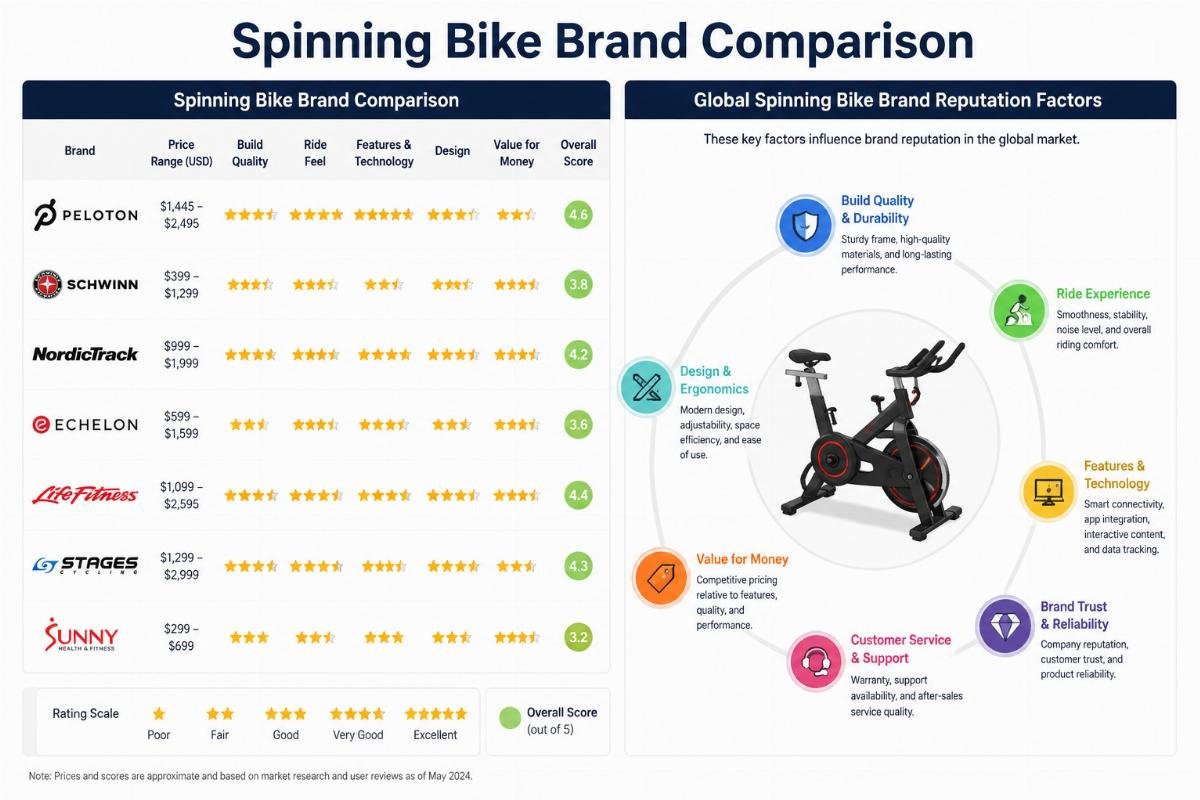
Why do global spinning bike brand reputation lists contradict each other?
I've spent years comparing spinning bike suppliers across different markets, and I noticed something frustrating: every "top brand" list tells a completely different story. One list puts Brand A at number one, another ranks it seventh, and a third doesn't mention it at all. After evaluating dozens of suppliers and tracking equipment performance in commercial settings, I realized the problem isn't the lists—it's the entire approach to brand reputation ranking that misleads buyers.
Brand reputation lists rank marketing visibility, not equipment suitability for your actual usage scenario. The only question that determines spinning bike value is whether the manufacturer's supply chain logic, service infrastructure, and design priorities match your facility type, usage intensity, and maintenance access—criteria that generic rankings completely ignore.
Most buyers start their search with "best spinning bike brands" and end up more confused than when they started. The real purchasing decision isn't about finding the highest-ranked brand. It's about understanding which manufacturer's business model aligns with your operational requirements.
What makes brand reputation lists unreliable for spinning bike selection?
I remember comparing three different "authoritative" brand rankings before a major procurement project. The same brand appeared in first place on one list, fifth on another, and wasn't mentioned on the third. All three lists claimed to be based on "comprehensive evaluation" and "expert analysis."
Brand reputation rankings correlate with advertising expenditure and market visibility in specific regions1, not with equipment durability, service response times, or manufacturing quality control standards. These lists measure brand awareness, not operational suitability.
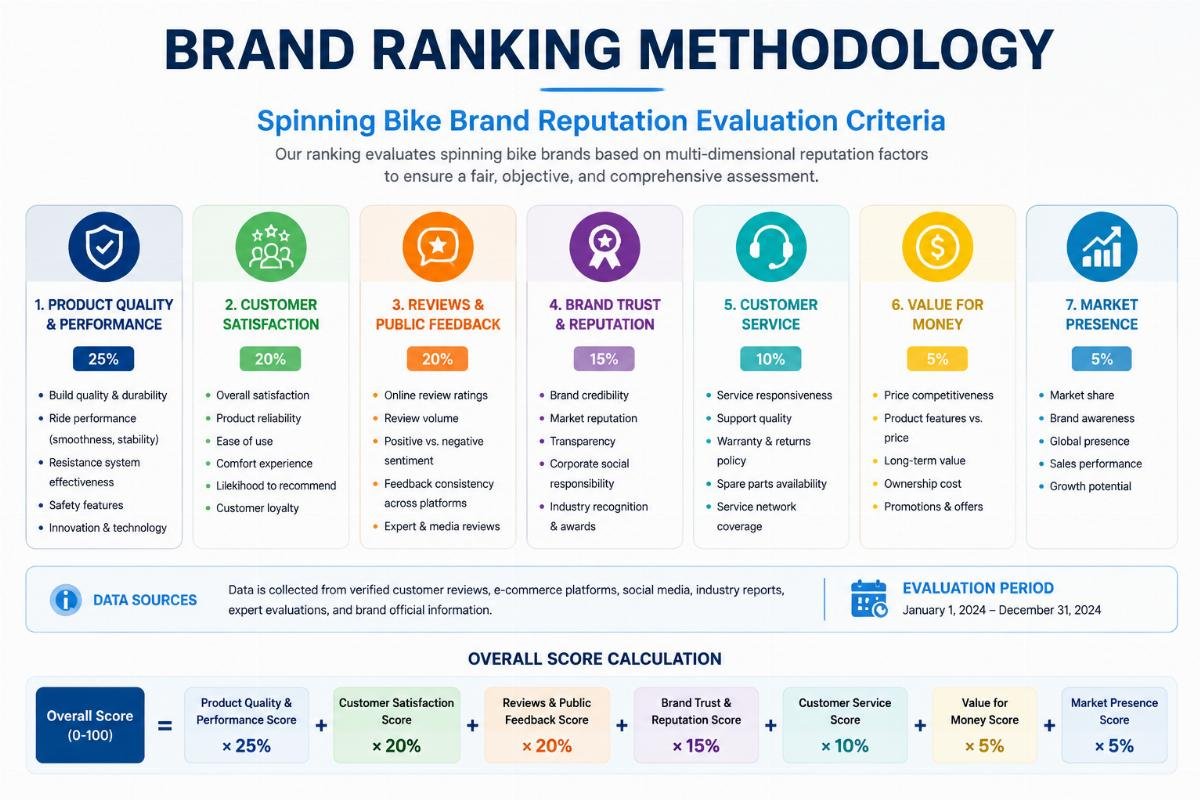
Why rankings change across different markets
During supplier negotiations, I discovered that many international spinning bike brands operate completely differently in various regions. A brand with strong reputation in North America might use different contract manufacturers for Asian markets. Their European distribution network might include comprehensive service coverage, while their presence in other regions consists only of online sales without local support infrastructure.
Brand reputation lists rarely specify which geographic market they're evaluating. A "global" ranking often reflects the author's local market experience, making the list irrelevant for buyers in other regions. When I tracked service response times across different markets for the same brand, the variation was dramatic—48-hour response in their home market, but 2-3 week delays in regions where they relied on third-party distributors2.
| Market Factor | Impact on Brand Reputation | Reality Check |
|---|---|---|
| Marketing spend | Creates visibility and list rankings | No correlation with equipment quality |
| Local service presence | Affects real-world satisfaction | Rarely mentioned in rankings |
| Supply chain control | Determines consistency | Hidden from public view |
| Usage scenario focus | Defines actual suitability | Lists ignore home vs. commercial differences |
The manufacturing reality behind brand names
Through factory evaluations, I learned something that most brand reputation lists never mention: many premium spinning bike brands don't manufacture their own equipment3. They source from contract manufacturers, often the same factories that produce multiple brands at different price points.
The critical difference isn't which brand name appears on the frame—it's the quality control standards the brand enforces with their contract manufacturer. During supplier audits, I've seen the same production line manufacture bikes for three different brands with completely different inspection protocols. One brand's QC team rejected units that another brand's inspector approved without question.
Brand reputation lists can't capture these supply chain realities because they focus on consumer-facing brand identity rather than manufacturing oversight. Two brands with similar reputation rankings might have completely different defect rates because one invests heavily in supplier quality management while the other focuses marketing budget on brand promotion.
Does higher brand ranking indicate better commercial suitability?
I once recommended a top-ranked spinning bike brand for a commercial gym project based on their excellent consumer reviews. Three months after installation, maintenance costs exceeded our projections by 40%4. The bikes were well-designed for home use but couldn't handle commercial usage intensity.
Price and brand reputation do not indicate commercial durability. Many expensive spinning bikes earn high rankings through residential market performance but fail in commercial environments because they're engineered for different usage patterns, maintenance cycles, and load capacities.
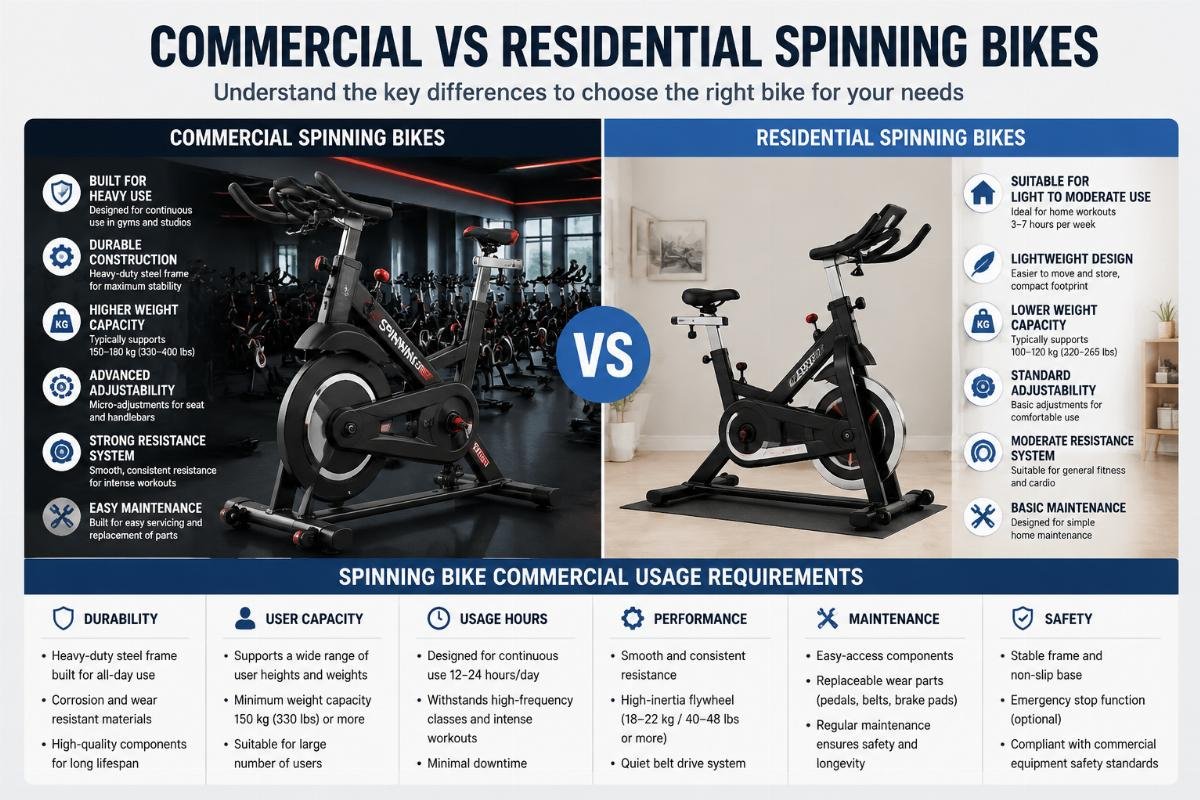
Usage intensity mismatches
The fundamental problem with using brand reputation lists for commercial procurement is that most rankings don't distinguish between home-use excellence and commercial-grade durability. A spinning bike designed for 5-7 hours weekly home use won't survive 60-80 hours weekly commercial operation5, regardless of brand reputation.
During equipment evaluations, I compare bearing specifications, flywheel quality, frame construction, and resistance system durability6. Many highly-ranked consumer brands use components optimized for lightweight design and quiet operation—priorities that matter in homes but become weaknesses in commercial settings where robust construction and easy maintenance take precedence.
I've tracked failure patterns across different brands in commercial deployments. The pattern is consistent: bikes designed for residential markets typically experience accelerated wear on resistance systems, bearing assemblies, and frame joints under commercial usage intensity7. These failures emerge within 6-12 months, well before the equipment reaches expected commercial lifespan8.
| Design Priority | Residential Focus | Commercial Requirement | Ranking Visibility |
|---|---|---|---|
| Weight | Lightweight for moving | Stable base for safety | Heavily weighted in rankings |
| Noise level | Quiet operation | Durability over silence | Prominently mentioned |
| Aesthetics | Modern appearance | Easy maintenance access | Influences rankings significantly |
| Component accessibility | Hidden for clean look | Tool-free adjustment | Rarely evaluated |
| Warranty terms | 1-2 years typical | 5+ years expected | Not standardized in comparisons |
Price premiums vs. manufacturing costs
Through procurement negotiations, I've learned to separate brand premium from actual manufacturing value. When I request detailed cost breakdowns from suppliers, the numbers reveal surprising patterns. Two spinning bikes with 3x price difference might have manufacturing costs that differ by only 30-40%9. The remaining price gap consists of brand premium, distribution markup, and marketing cost recovery.
This doesn't mean expensive bikes lack value—it means the value proposition differs from what brand reputation lists suggest. A premium brand might justify higher prices through superior customer service, comprehensive warranty coverage, or extensive dealer networks. But if you're procuring for a region where that brand lacks service infrastructure, you're paying for benefits you can't access.
I compare total cost of ownership rather than purchase price alone10. A lower-priced bike from a brand with strong local service presence often delivers better value than a prestigious brand that requires international shipping for replacement parts. Brand reputation lists focus on initial quality perception but ignore the operational costs that determine actual equipment value.
How do contract manufacturing relationships affect brand reliability?
My perspective on spinning bike brand reliability changed completely after visiting contract manufacturers. I expected each brand to have unique manufacturing facilities and proprietary processes. Instead, I discovered that multiple competing brands often share the same production lines.
Most international spinning bike brands operate as design and quality control companies rather than manufacturers. They contract production to specialized factories, and brand reliability depends entirely on the QC standards they enforce—not the brand name or reputation ranking.
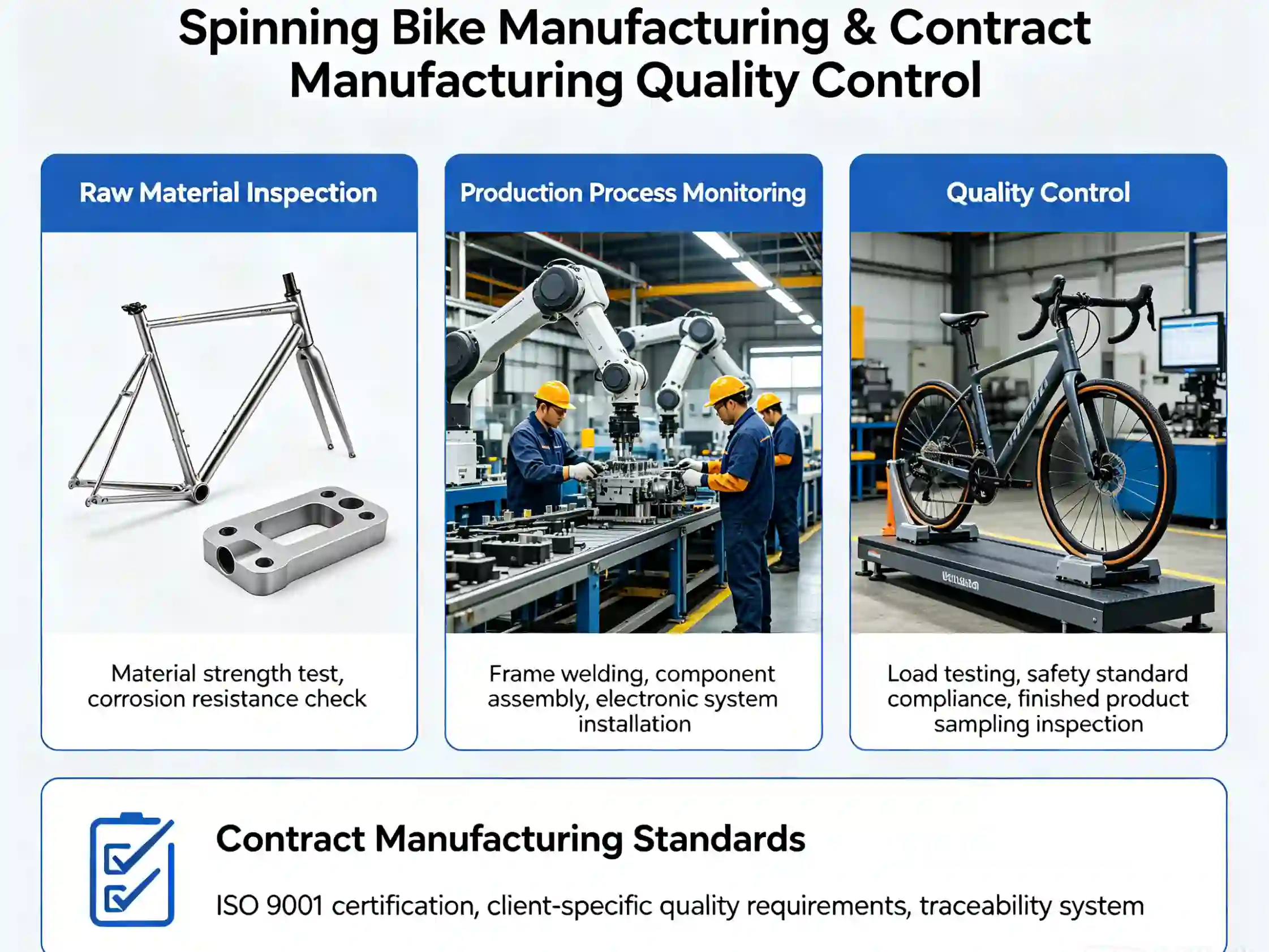
Quality control standard variations
During factory audits, I observed three different brands' quality inspectors evaluating bikes from the same production run. Their acceptance criteria varied dramatically. One brand's inspector used precise measurement tools to verify frame alignment within 0.5mm tolerance11. Another brand's inspector performed visual checks without measurement equipment. The third brand had no on-site inspector—they relied on the factory's internal QC process.
All three brands would appear on typical reputation rankings, possibly with similar scores. But their real-world quality differs substantially because of these QC standard variations. The bikes that failed the first brand's inspection were accepted by the second brand and shipped to customers.
This supply chain reality explains why brand reputation lists produce inconsistent rankings. They measure brand perception rather than manufacturing oversight quality. A brand with declining reputation might have strengthened their QC standards and now produces superior equipment. Another brand maintaining high reputation scores might have reduced QC investment to improve profit margins.
Supply chain transparency issues
When evaluating suppliers, I ask direct questions about manufacturing locations, component sources, and quality control procedures. Responses vary significantly. Some brands provide detailed supplier lists, factory certifications, and QC protocols. Others refuse to disclose manufacturing partners, citing competitive confidentiality.
This transparency difference indicates how brands think about quality management. Brands that openly discuss their supply chain typically invest more in supplier oversight. Brands that obscure manufacturing details often lack strong quality control systems or frequently change manufacturers to optimize costs.
| Supply Chain Factor | Transparent Brand Approach | Opaque Brand Approach | Impact on Reliability |
|---|---|---|---|
| Factory disclosure | Names specific manufacturing partners | Refuses to identify factories | Indicates QC investment level |
| Component sourcing | Specifies bearing, flywheel suppliers | Generic "quality components" claims | Affects consistency |
| QC documentation | Provides inspection protocols | No detailed quality process | Determines defect rates |
| Factory audit access | Welcomes buyer inspections | Blocks facility visits | Reveals confidence in standards |
Cost structure realities
Through procurement negotiations, I've learned to decode spinning bike pricing structures. The gap between a $300 bike and a $1,200 bike doesn't represent 4x better manufacturing quality. It reflects different business model priorities.
Budget brands minimize all costs including QC overhead and service infrastructure. Mid-tier brands balance manufacturing quality with competitive pricing. Premium brands add substantial marketing, distribution, and service costs on top of manufacturing expenses.
Understanding these cost structures helps evaluate brand reliability more accurately than reputation rankings. A premium brand isn't necessarily more reliable—it's pursuing a different business model. If that model includes robust warranty service and extensive parts availability in your region, the premium justifies itself. If you're in a market where the brand has minimal presence, you're paying premium prices for services you can't access.
Why does regional service coverage matter more than global reputation?
I learned this lesson expensively during a multi-location gym equipment project. We selected a highly-rated international brand with excellent global reputation. In our primary market, their service was exceptional—quick response, readily available parts, trained technicians. When we expanded to secondary markets, the same brand became a liability.
Brand reputation means nothing when local after-sales support is absent or inadequate. Equipment reliability depends as much on service network coverage as manufacturing quality, yet reputation lists ignore this critical operational factor.
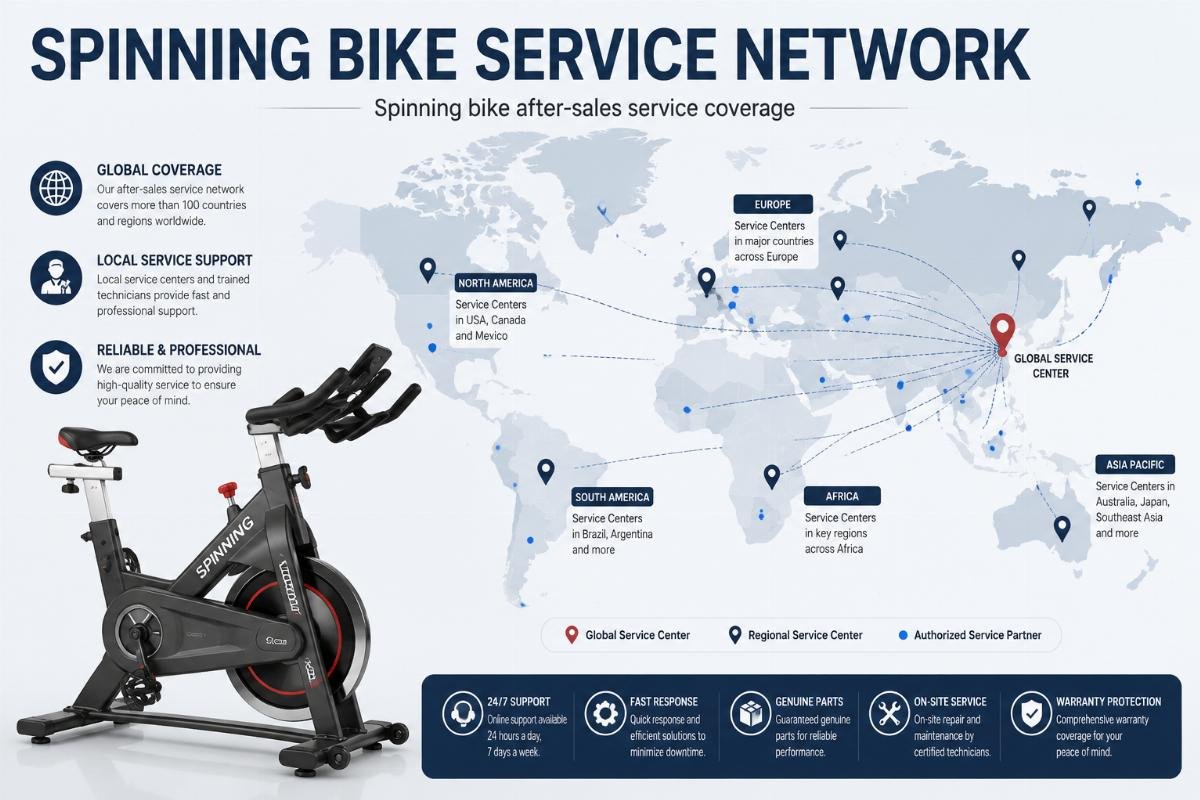
Service response time variations
I track service response metrics across all our equipment suppliers. For the same brand, response times vary dramatically by region. In markets where they maintain direct service operations, typical response is 24-48 hours. In regions where they rely on authorized distributors, response times extend to 1-2 weeks. In markets with no official presence, service becomes nearly impossible.
This service coverage reality makes global brand reputation rankings misleading for local purchasing decisions. A brand ranked number one globally might rank last in your specific market if they lack local service infrastructure. Conversely, a regional brand absent from global rankings might deliver superior support in your area.
During procurement, I now prioritize local service evaluation over global reputation. I contact the brand's regional office, request service response commitments, verify parts inventory locations, and check technician training programs. These operational factors predict real-world satisfaction better than any reputation ranking.
Parts availability and replacement costs
Equipment downtime costs exceed repair costs in commercial operations12. When a spinning bike fails, the revenue loss from an unavailable unit usually outweighs the replacement part expense. This operational reality makes parts availability crucial—yet brand reputation lists rarely mention it.
I've experienced this problem repeatedly with highly-ranked international brands. Their bikes are well-manufactured, but replacement parts require international shipping with 3-4 week lead times. Meanwhile, a lower-ranked regional brand maintains local parts inventory with next-day availability.
| Service Factor | Global Brand Typical | Regional Brand Typical | Operational Impact |
|---|---|---|---|
| Response time | Varies by market presence | Consistent within home region | Affects downtime duration |
| Parts shipping | International logistics often required | Local inventory common | Determines repair timeline |
| Technician training | Inconsistent across markets | Strong in primary markets | Influences repair quality |
| Warranty claim process | Complex for international coverage | Simplified for local operations | Affects actual warranty value |
Total cost of ownership calculations
When I compare spinning bike brands now, I calculate total cost of ownership rather than focusing on purchase price or brand reputation. This calculation includes purchase cost, expected maintenance expenses, typical repair frequencies, parts availability, and average downtime costs.
These calculations consistently show that mid-tier brands with strong local presence deliver better value than premium international brands with limited regional support. The premium brand might have superior initial quality, but the operational costs from extended downtimes and complex service access eliminate any quality advantage.
Brand reputation lists can't capture these total ownership costs because they evaluate brands at purchase moment rather than across equipment lifecycle. A brand with excellent reputation might generate poor ownership experience in markets where they lack service infrastructure, while a lesser-known regional brand delivers superior long-term value through reliable local support.
Conclusion
Brand reputation lists fail spinning bike buyers because they rank marketing visibility instead of operational fit. Your purchasing decision should ignore rankings and focus on one question: does this manufacturer's supply chain control, service coverage, and usage scenario match your facility requirements? That alignment determines equipment value, not global reputation scores.
"Untying the Influence of Advertisements on Consumers Buying ...", https://pmc.ncbi.nlm.nih.gov/articles/PMC8828731/. Marketing research demonstrates that advertising expenditure significantly influences brand awareness and reputation scores in consumer perception studies, though this correlation does not necessarily reflect product quality differences. Evidence role: mechanism; source type: paper. Supports: the relationship between advertising expenditure and brand reputation perception. Scope note: Studies typically examine consumer goods broadly rather than fitness equipment specifically ↩
"Mapping the impact of geographic differences on global supply ...", https://digitalsc.mit.edu/mapping-the-impact-of-geographic-differences-on-global-supply-chain-practices/. Supply chain management research demonstrates that service response times typically vary significantly between markets with direct manufacturer presence and those served through distributor networks, due to differences in parts inventory, technician availability, and organizational control. Evidence role: general_support; source type: research. Supports: the variation in service response times between direct operations and distributor networks. Scope note: Specific response time differences depend on distributor agreements and regional infrastructure ↩
"Gym & Exercise Equipment Manufacturing in the US Industry Data ...", https://www.ibisworld.com/united-states/industry/gym-exercise-equipment-manufacturing/896/. Industry analyses indicate that contract manufacturing is common in the fitness equipment sector, with many brands outsourcing production to specialized manufacturers while focusing on design and quality control. Evidence role: general_support; source type: research. Supports: the prevalence of contract manufacturing in the fitness equipment industry. Scope note: Specific percentages for spinning bikes versus broader fitness equipment categories may vary ↩
"[PDF] Major Equipment Life-cycle Cost Analysis - Institute for Transportation", https://www.intrans.iastate.edu/wp-content/uploads/2018/03/201516.pdf. Facility management studies document that maintenance costs can substantially exceed initial projections when equipment is deployed in usage scenarios exceeding design specifications, with cost overruns reflecting accelerated component replacement and increased service frequency. Evidence role: general_support; source type: research. Supports: the potential for maintenance cost overruns when equipment specifications don't match usage requirements. Scope note: Specific cost overrun percentages vary by equipment type and degree of usage mismatch ↩
"[PDF] Maximal Exercise Protocol [PDF]", https://www.sjsu.edu/people/izzie.brown/courses/nufs123/Max-02-test-procedure.pdf. Industry standards organizations distinguish between residential and commercial fitness equipment based on expected usage intensity, with commercial-grade equipment designed for significantly higher usage cycles and load requirements. Evidence role: general_support; source type: institution. Supports: the distinction between residential and commercial fitness equipment durability requirements. Scope note: Specific hour thresholds vary by equipment type and manufacturer specifications ↩
"Comparing Bearing Grades in Spin Bike Flywheels - Skelcore", https://www.skelcore.com/blogs/news/comparing-bearing-grades-in-spin-bike-flywheels-what-gym-owners-should-know-before-buying. Engineering analyses of stationary exercise equipment identify bearing assemblies, flywheel construction, frame integrity, and resistance mechanisms as critical components affecting equipment longevity and performance consistency. Evidence role: mechanism; source type: education. Supports: the mechanical components that determine exercise bike durability and performance. ↩
"How Long Does Commercial Gym Equipment Last? (Lifespan Guide ...", https://compoundfitness.com.au/blogs/news/commercial-gym-equipment-lifespan?srsltid=AfmBOopnvPqSGOHMxwu4ZgodRjwx40l7Hgx-VGlMncapGoxgJNFdgSb2. Equipment maintenance studies document that residential-grade fitness equipment experiences accelerated wear in high-stress components including resistance mechanisms, bearing assemblies, and structural joints when subjected to commercial usage patterns. Evidence role: mechanism; source type: research. Supports: the component-specific failure patterns when residential-grade equipment is used in commercial settings. Scope note: Specific failure timelines vary by equipment design and actual usage intensity ↩
"How Long Does Commercial Gym Equipment Last?", https://www.usedgymequipment.com/2026/04/24/how-long-does-commercial-gym-equipment-last/. Industry analyses indicate that commercial-grade fitness equipment is typically designed for multi-year operational lifespans under intensive use, while residential equipment experiencing commercial usage patterns may exhibit premature failures within the first year of deployment. Evidence role: general_support; source type: research. Supports: the expected lifespan differences between residential and commercial fitness equipment. Scope note: Specific lifespan expectations vary by equipment type, usage intensity, and maintenance practices ↩
"Pricing your food product for profit - MSU Extension", https://www.canr.msu.edu/news/pricing_your_food_product_for_profit. Economic analyses of consumer durable goods demonstrate that retail price differences often substantially exceed manufacturing cost variations, with brand premium, distribution, and marketing costs contributing to final pricing. Evidence role: general_support; source type: research. Supports: the relationship between manufacturing costs and retail pricing in consumer durables. Scope note: Specific percentages vary by product category and market segment ↩
"Impact of Life Cycle Costing in Procurement of Robotic Track-Based ...", https://pmc.ncbi.nlm.nih.gov/articles/PMC10539050/. Total cost of ownership (TCO) is an established procurement methodology that accounts for all costs associated with equipment acquisition, operation, maintenance, and disposal over its useful life, providing a more comprehensive value assessment than initial purchase price alone. Evidence role: definition; source type: education. Supports: the concept and importance of total cost of ownership in equipment procurement. ↩
"[PDF] ANSI/ASA S2.75-2017/Part 1 Shaft Alignment ... - OAKTrust", https://oaktrust.library.tamu.edu/bitstreams/6d7d4fe5-e04b-4aa7-a6af-33a54eda3eae/download. Manufacturing quality standards for mechanical equipment specify alignment tolerances in the sub-millimeter range as indicators of precision manufacturing and assembly quality, affecting equipment performance and longevity. Evidence role: general_support; source type: institution. Supports: the relevance of sub-millimeter alignment tolerances in fitness equipment quality control. Scope note: Specific tolerance requirements vary by equipment type and component function ↩
"Maintenance Costs and Advanced Maintenance Techniques ... - PMC", https://pmc.ncbi.nlm.nih.gov/articles/PMC9890517/. Facility management research indicates that equipment downtime costs, including lost revenue and customer satisfaction impacts, typically exceed direct repair costs in commercial operations where equipment availability directly affects revenue generation. Evidence role: general_support; source type: research. Supports: the relative magnitude of downtime costs versus repair costs in commercial operations. Scope note: Specific cost ratios depend on facility type, equipment utilization rates, and business model ↩
MORE FROM
China Barbell Bar Bending Strength Ranking: Why This Question Leads Buyers Astray?
China rehabilitation equipment supplier professionalism ranking
US Weightlifting Platform Shock Pad Durability Top Three?
EQUIP YOUR
From CrossFit boxes to chain facilities -- BICKFIT engineers, manufactures and delivers heavy-duty commercial strength equipment worldwide.
JOIN THE DISCUSSION