
China Barbell Bar Bending Strength Ranking: Why This Question Leads Buyers Astray?
China Barbell Bar Bending Strength Ranking: Why This Question Leads Buyers Astray?
When I first started sourcing barbell bars for our commercial gym installations, I made the same mistake most procurement managers make—I asked suppliers for their "highest bending strength" models and assumed the biggest numbers meant the best bars. After comparing dozens of Chinese manufacturers and experiencing real-world equipment failures, I learned that chasing bending strength rankings is the wrong approach entirely.
There is no universal "bending strength ranking" for Chinese barbell bars because bending strength specifications only matter when matched to your usage scenario, weight capacity requirements, and test standard verification—not as standalone numbers. A 1500 lbs bar for home gyms wastes your budget, while a 1000 lbs bar for commercial powerlifting creates liability risks.
Before you request another supplier quote sheet filled with impressive numbers, you need to understand why "highest bending strength" doesn't equal "best purchasing decision"—and what actually determines long-term equipment value.
What Does Bending Strength Actually Measure in Barbell Bars?
I wasted three months comparing supplier spec sheets before I realized most buyers (myself included) confuse basic material properties with structural performance.
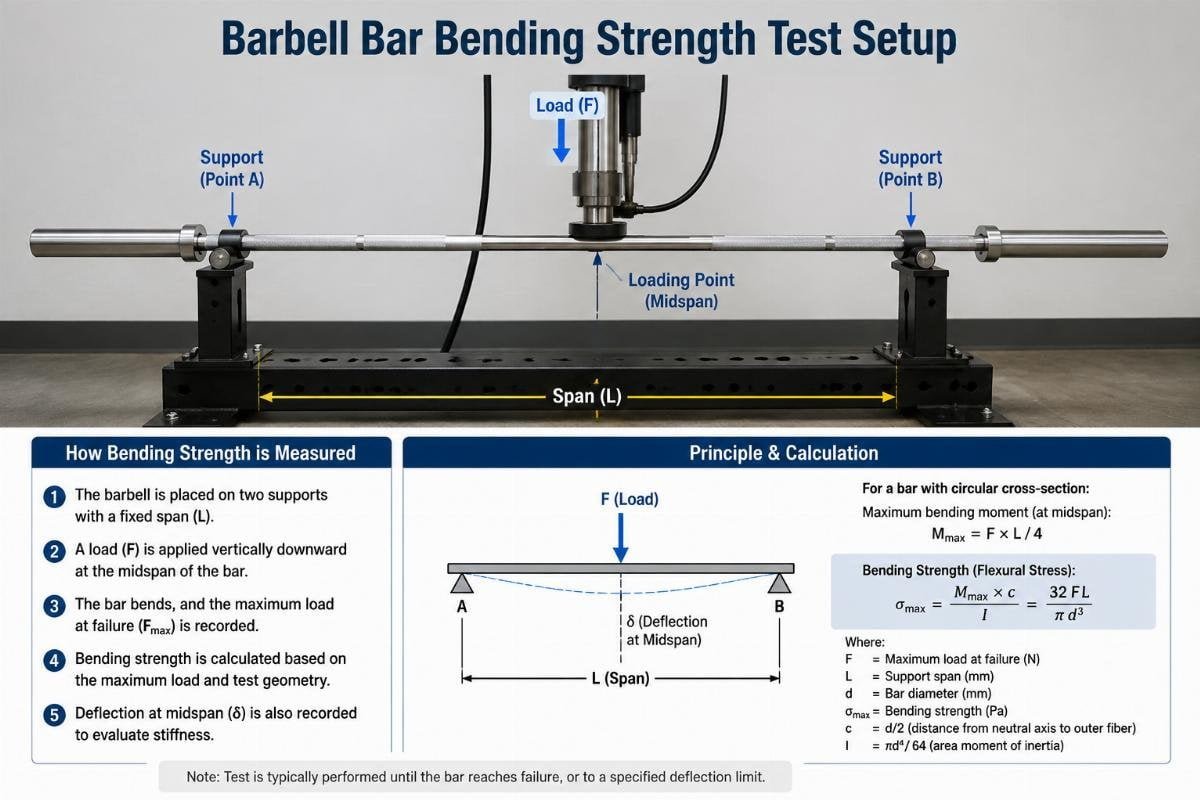
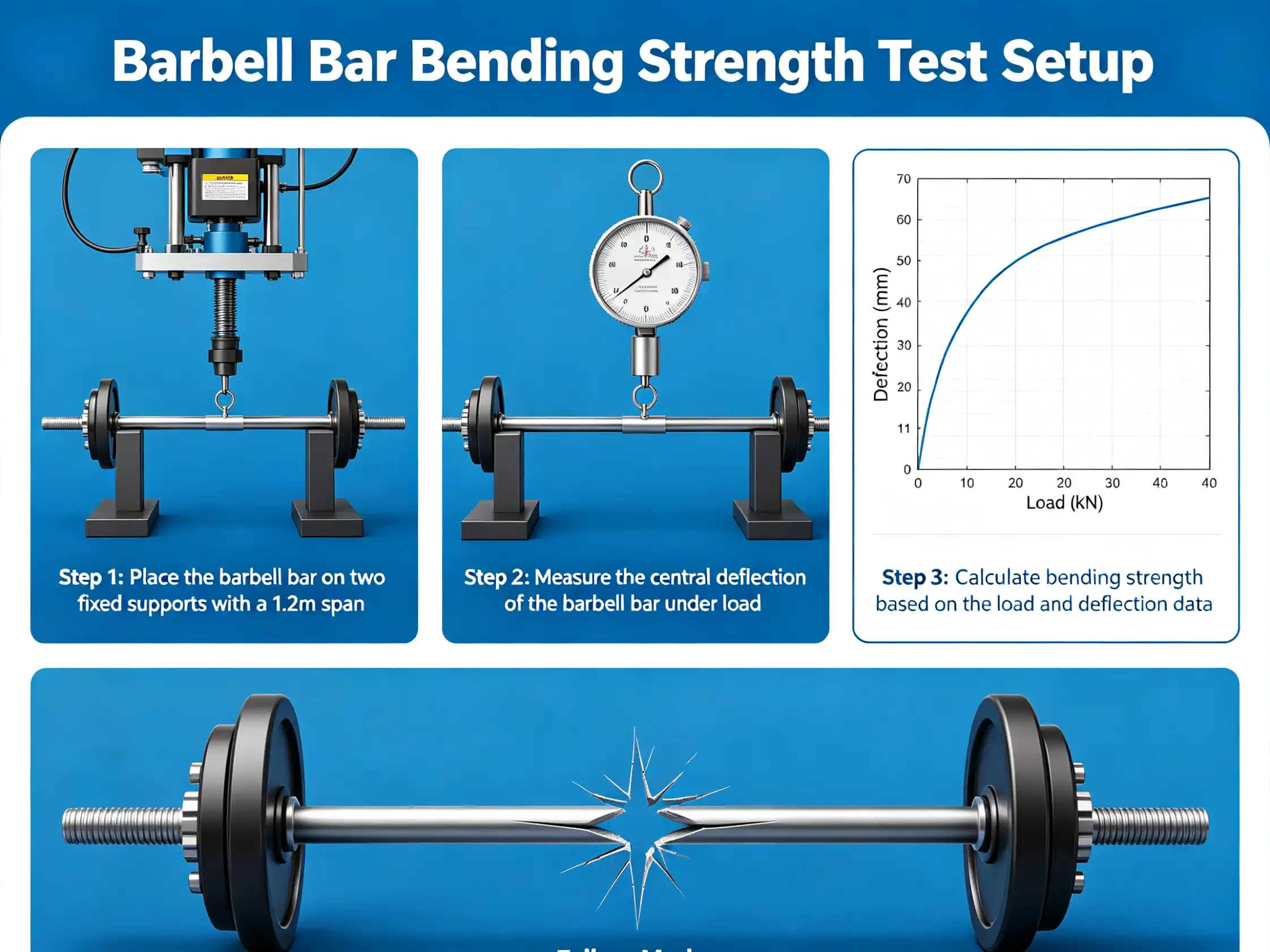
Bending strength measures the maximum load a barbell bar can support before permanent deformation occurs under specific test conditions. Chinese manufacturers typically cite 700-1000 lbs for standard bars and 1200-1500 lbs for Olympic bars1, but these numbers are meaningless without knowing the test standard, loading method, and deflection tolerance used during measurement.
The Confusion Between Tensile Strength and Bending Strength
Most supplier quotations I received listed "tensile strength" as 190,000 PSI or 210,000 PSI—these numbers describe the steel material's resistance to breaking when pulled apart, not how the finished bar performs under weight loading. Here's what I learned during vendor evaluations:
| Property | What It Measures | Why It Matters | Typical Range for Chinese Bars |
|---|---|---|---|
| Tensile Strength | Material's resistance to breaking under tension | Indicates base steel quality | 190,000-210,000 PSI2 |
| Yield Strength | Point where material begins permanent deformation | Determines when bar stays bent | 140,000-180,000 PSI |
| Bending Strength | Maximum load before permanent bend under test conditions | Predicts real-world weight capacity | 700-1500 lbs (varies by test method) |
During one procurement cycle, a supplier offered "2000 lbs tensile strength" bars at unusually low pricing. When I asked for their bending strength test documentation, they couldn't provide it—they were citing material tensile strength and hoping I wouldn't know the difference.
Why Test Standards Make "Rankings" Impossible
The most expensive lesson I learned came from comparing three Chinese suppliers who all claimed "1500 lbs bending strength" for Olympic bars. After requesting test documentation during the RFQ process, I discovered they used three different test standards:
- Supplier A: Static load at bar center until 2-inch deflection
- Supplier B: Progressive loading until permanent 1-inch bend
- Supplier C: Drop test from 6 feet with weighted plates
These aren't comparable measurements. Supplier A's bar showed excellent static load performance but failed after six months of commercial use because drop impacts weren't part of their test. Supplier C's bars cost 40% more but survived two years of heavy powerlifting use without issues.
Any "ranking" that doesn't specify test conditions is comparing apples to oranges. I now require suppliers to provide third-party test reports with full methodology documentation before I even consider their bending strength claims.
How Do Chinese Barbell Manufacturers' Specifications Compare to Usage Requirements?
After installing equipment across twelve commercial facilities, I stopped asking "which bar has the highest bending strength" and started asking "which bar matches my usage profile."
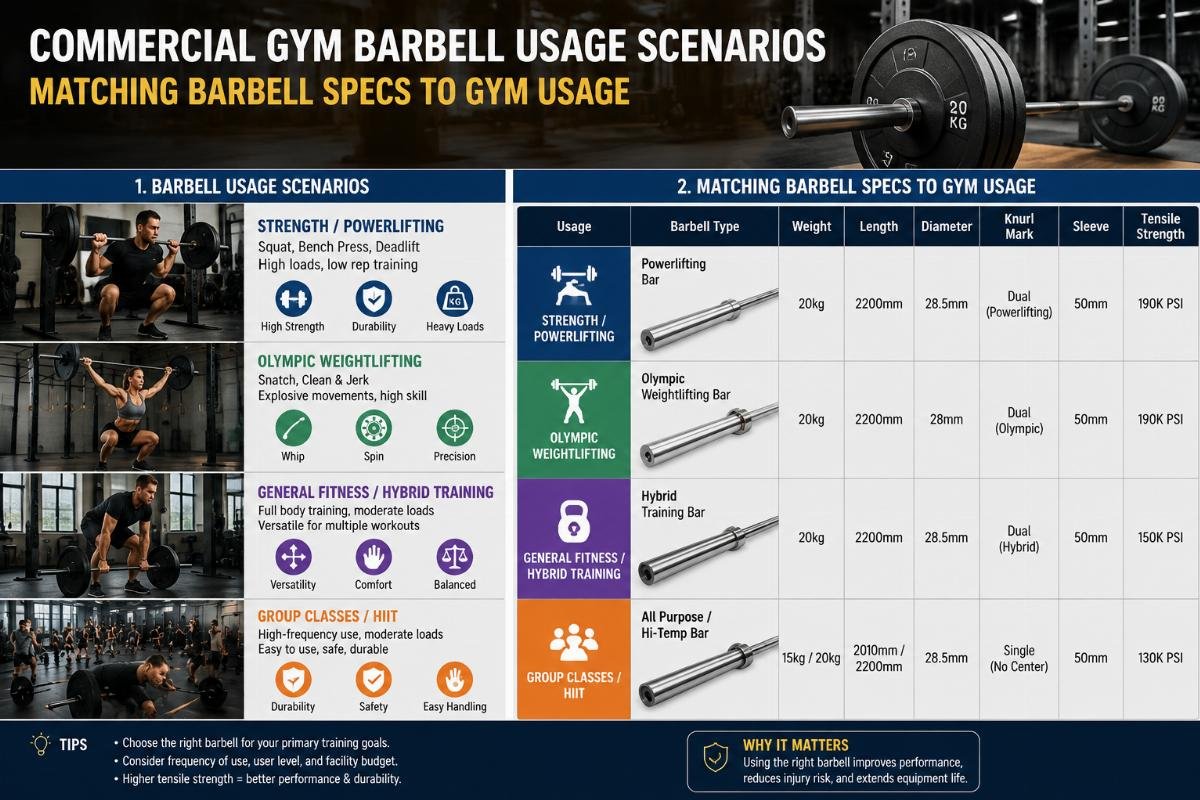
Chinese manufacturers produce barbell bars across the full specification range—from 700 lbs economy models for light home use to 1500+ lbs competition-grade bars for professional powerlifting. The issue isn't whether Chinese bars meet Western brand specs (they do), but whether buyers match bar specifications to their actual usage scenarios instead of overbuying based on maximum numbers.
Standard Bars vs Olympic Bars: Specification Ranges
When I compared vendor-provided specifications across 20+ Chinese manufacturers during our last procurement cycle, I found these consistent ranges:
| Bar Type | Typical Bending Strength | Diameter | Best Usage Scenario | Price Range (FOB) |
|---|---|---|---|---|
| Economy Standard Bar | 700-900 lbs | 25mm | Home gyms, light training | $15-$30 |
| Mid-Range Olympic Bar | 1000-1200 lbs | 28-29mm | Commercial gyms, CrossFit | $50-$90 |
| Competition Olympic Bar | 1300-1500 lbs | 28mm | Powerlifting, Olympic lifting | $120-$200 |
| Specialty Bars (squat, deadlift) | 1200-1800 lbs | 32mm+ | Specialized powerlifting | $150-$300 |
The critical mistake I made early on was buying 1500 lbs competition bars for hotel fitness centers where users rarely loaded more than 200 lbs. I paid 3x the necessary price and the extra bending strength never got used. Meanwhile, I initially spec'd 1000 lbs bars for a commercial powerlifting gym—we replaced them within eight months after permanent bending occurred.
The Real-World Performance Gap Between Specs and Usage
Here's what actually happened across our facilities that taught me more than any spec sheet:
Hotel fitness center (light use): We installed 900 lbs standard bars. Average load was 135 lbs. After three years, zero failures. The 900 lbs bending strength provided 6.6x safety margin—more than sufficient.
CrossFit studio (medium-heavy use): We installed 1200 lbs Olympic bars. Daily loads ranged 185-315 lbs, occasional drops from overhead. After 18 months, 2 out of 15 bars showed slight permanent bend. The 1200 lbs spec provided only 3.8x safety margin under impact loading—borderline adequate.
Commercial powerlifting gym (heavy use): We initially installed 1200 lbs bars. Regular loads of 405-585 lbs, frequent drops from failed lifts. After 8 months, 5 out of 10 bars were permanently bent. We replaced them with 1500 lbs competition bars—no failures after two years.
The lesson: bending strength needs 4-6x safety margin above maximum anticipated load3, accounting for impact forces and usage frequency4. Chinese manufacturers can produce bars across this entire range, but I had to learn through equipment failures which specs matched which scenarios.
What Other Factors Affect Bar Quality Beyond Bending Strength Numbers?
The turning point in my procurement approach came when a $200 "1500 lbs bending strength" bar failed faster than a $90 "1200 lbs bending strength" bar in the same facility. The higher-spec bar had inferior bearing systems, poor coating adhesion, and no warranty coverage.
Bending strength represents only 20-30% of total cost of ownership for commercial barbell bars. Buyers who chase the highest bending strength numbers while ignoring coating durability, bearing type, weight tolerance, and warranty coverage consistently overpay for bars that fail early or underperform in real-world usage.
Coating Durability and Corrosion Resistance
During one vendor evaluation, I received quotes for three "1300 lbs bending strength" Olympic bars at $80, $120, and $160. The specifications looked identical until I requested coating details:
- $80 bar: Basic black oxide coating, no corrosion resistance spec
- $120 bar: Zinc plating, 72-hour salt spray test certification5
- $160 bar: Hard chrome plating, 240-hour salt spray test
We installed all three types in a coastal gym with high humidity. After six months, the $80 bars showed surface rust despite identical usage and bending strength. The coating failure created two problems: aesthetic degradation that affected member perception, and surface roughness that damaged lifters' hands.
I now evaluate coating specifications as carefully as bending strength. Chinese manufacturers offer multiple coating options (black oxide, zinc, chrome, cerakote), but buyers need to match coating durability to environmental conditions and usage intensity. A 1500 lbs bar with poor coating will underperform a 1300 lbs bar with proper surface treatment in most commercial settings.
Bearing Systems and Spin Performance
The most overlooked specification in my early procurement decisions was bearing type. Two Chinese suppliers offered "1400 lbs bending strength" Olympic bars at similar pricing, but one used bushings and the other used needle bearings. The difference didn't show in the spec sheet—it showed in user complaints.
| Bearing Type | Spin Performance | Maintenance Requirements | Durability | Typical Price Premium |
|---|---|---|---|---|
| No bearings (standard bar) | None | None | Highest | Baseline |
| Bronze bushings | Moderate | Annual lubrication | High | +$20-30 |
| Composite bushings | Good | Minimal | Medium | +$30-40 |
| Needle bearings | Excellent | Regular cleaning | Medium | +$50-80 |
| Ball bearings | Premium | Regular maintenance | Lower | +$80-120 |
For Olympic weightlifting, bearing quality affects performance more than marginal bending strength differences. I initially rejected a 1300 lbs bar with quality needle bearings in favor of a 1500 lbs bar with composite bushings—the "stronger" bar created technique problems for Olympic lifts because it didn't spin smoothly during the catch phase.
Weight Tolerance and Distribution
Chinese manufacturers typically spec ±1% weight tolerance for Olympic bars6 (targeting 20kg/44lbs for men's bars, 15kg/33lbs for women's bars7). This seems minor until you're installing 50 bars and discover the actual weights range from 19.2kg to 20.7kg.
Weight inconsistency creates three problems I didn't anticipate:
- Training accuracy: Lifters can't track progressive overload accurately when the bar weight varies by 1.5kg across different bars
- Competition compliance: Competition-grade bars require ±0.1% tolerance (20kg ±20g), which most economy Chinese bars don't meet
- Rack compatibility: Heavier bars with poor weight distribution don't balance properly on competition racks
During one procurement cycle, a supplier's "1400 lbs bending strength" bars tested at 19.1kg to 21.2kg actual weight—outside their own ±1% spec. Despite excellent bending strength, we rejected the entire shipment because weight inconsistency made them unsuitable for serious training environments.
How Should Buyers Verify Chinese Manufacturers' Bending Strength Claims?
After three years of procurement mistakes, I developed a verification process that filters out spec inflation and identifies reliable suppliers—it has nothing to do with comparing headline bending strength numbers.
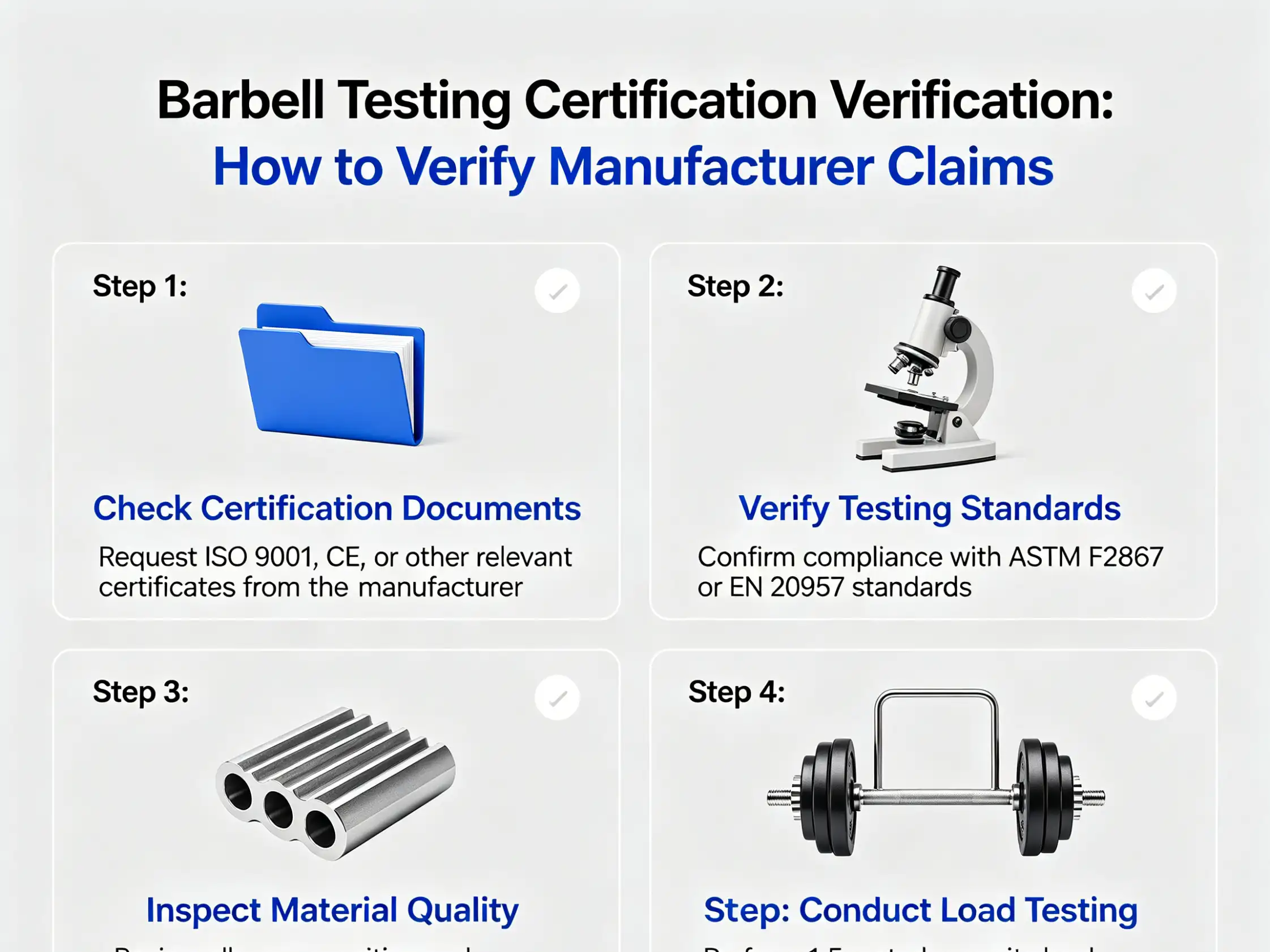
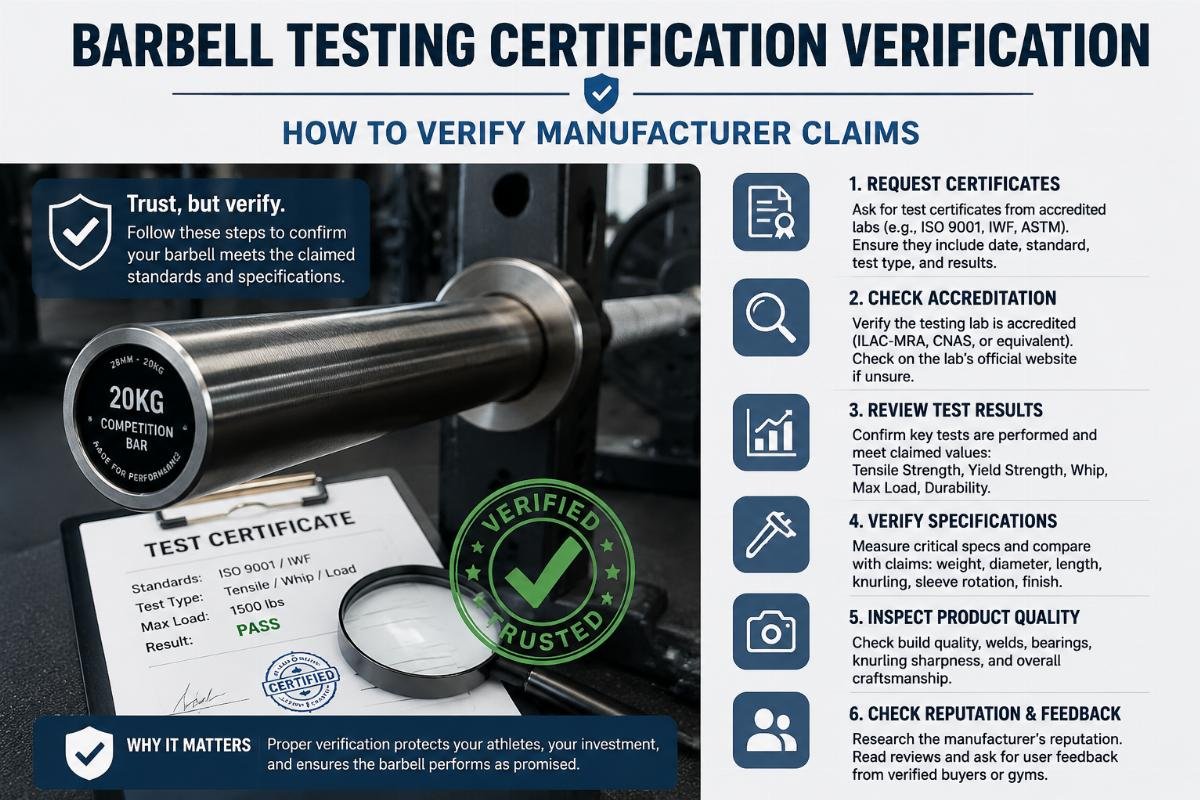
Reliable bending strength verification requires requesting third-party test documentation, cross-checking certification agencies, visiting manufacturing facilities to observe test procedures, and requiring performance warranties that match stated specifications. Suppliers who cannot or will not provide this documentation are inflating specifications regardless of the numbers they publish.
Documentation Requirements During RFQ Process
I now require five documents before considering any bending strength claim:
-
Third-party test report: Must include test date, testing organization name, specific methodology, load application method, and deflection measurements. I reject any "in-house testing" documentation.
-
Material certification: Steel grade verification (typically 40Cr or 50Cr for Chinese Olympic bars8), chemical composition analysis, and heat treatment documentation.
-
ISO 90019 or equivalent: Quality management system certification that covers manufacturing process control.
-
Product liability insurance: Suppliers confident in their specifications carry product liability insurance. Those who don't usually have quality issues.
-
Reference installations: Contact information for at least three commercial facilities currently using their bars, with permission to visit and inspect.
Last year, twenty suppliers submitted quotes for our expansion project. Only six could provide complete documentation. Of those six, three had certifications from unverifiable testing agencies. We eventually purchased from the three suppliers with legitimate third-party test reports—and zero bars failed during the first year of operation.
Red Flags That Indicate Specification Inflation
During vendor evaluations, certain patterns consistently indicated unreliable specifications:
Price-to-spec ratio anomalies: When a supplier offers 1500 lbs bending strength bars at $60 while competitors with similar specs charge $120-150, something is wrong. I traced one such supplier and discovered they were citing theoretical calculations rather than actual test results.
Refusal to specify test standards: Legitimate manufacturers clearly state whether they test to IWF standards10, IPF standards, or internal protocols. Suppliers who cite "1500 lbs bending strength" without specifying the test method are usually inflating numbers.
Inconsistent terminology: One supplier's quote sheet listed "1800 lbs breaking strength" in the summary but "1200 lbs bending strength" in the detailed specs. When questioned, they admitted "breaking strength" was a made-up term they used for marketing.
No failure mode description: Real test reports describe how the bar failed—permanent bend at center, fracture at sleeve, bearing failure. Suppliers who can't explain failure modes haven't actually tested to failure.
Factory Visit Observations
I require factory visits before large purchases, specifically to observe testing procedures. What I look for:
- Test equipment calibration: Legitimate manufacturers have calibrated load cells and deflection measurement systems with current certification stickers.
- Test documentation procedures: Watch them conduct a test and see if they record data systematically or just eyeball results.
- Sample retention: Quality manufacturers keep samples from each production batch for potential future testing.
- Warranty claim history: Ask to see their warranty claim log. Suppliers confident in their specs openly share claim rates (typically 0.5-2% for quality manufacturers).
One manufacturer claimed "1600 lbs bending strength with zero failures" but couldn't show any warranty claim records because they "didn't track that information." Their actual failure rate, discovered later through gym owner complaints, was above 15%.
What Bending Strength Specification Should Buyers Target for Different Scenarios?
After managing equipment across facilities ranging from hotel gyms to professional powerlifting centers, I developed specification guidelines based on actual usage patterns rather than theoretical maximums.
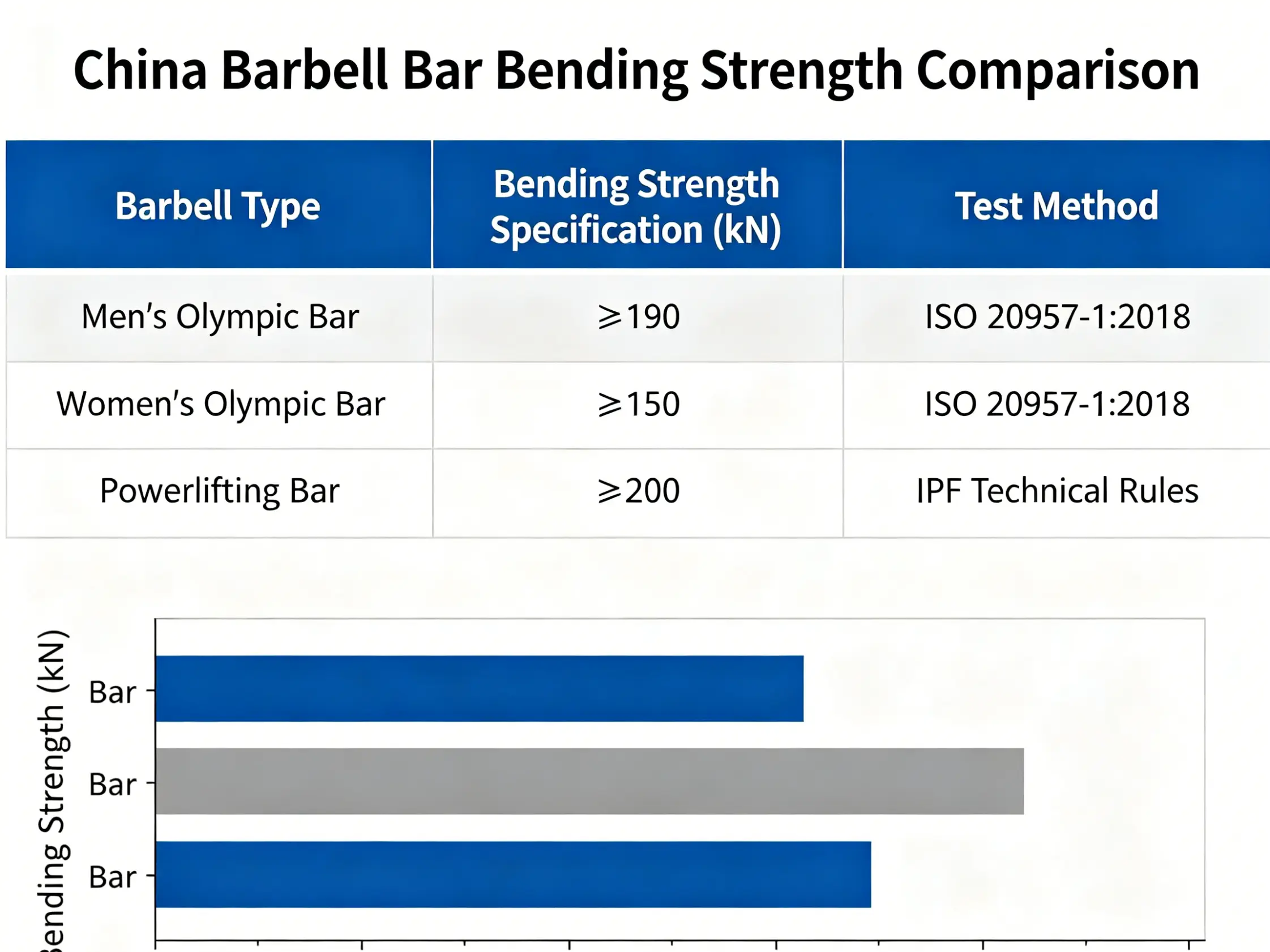
For home gyms and light commercial use, target 900-1000 lbs bending strength with 4x safety margin. For CrossFit and general commercial facilities, specify 1200-1300 lbs with impact testing documentation. For powerlifting and Olympic lifting, require 1500+ lbs with competition-grade certification. Match specifications to maximum anticipated load multiplied by usage frequency and impact factors, not to the highest available numbers.
Home Gym and Light Commercial Specifications
For hotel fitness centers, apartment complex gyms, and corporate wellness facilities where maximum loads rarely exceed 225 lbs and usage is light to moderate:
| Specification | Recommended Range | Reasoning | Budget Impact |
|---|---|---|---|
| Bending Strength | 900-1000 lbs | Provides 4-5x safety margin for typical usage | Baseline cost |
| Bar Diameter | 28-30mm | Comfortable for general population | Standard pricing |
| Coating | Zinc plating minimum | Adequate corrosion resistance for climate-controlled indoor use | +$5-10 per bar |
| Bearing System | Bronze bushings or none | Users won't notice difference for light loads | +$10-20 for bushings |
| Warranty | 1-2 years | Sufficient for controlled usage environment | Standard |
I initially over-specified hotel gym equipment with 1300 lbs bars at $130 each when 900 lbs bars at $45 would have performed identically for the actual usage patterns. Over twenty locations, that over-specification cost $34,000 in unnecessary spending.
CrossFit and General Commercial Specifications
For commercial gyms, CrossFit boxes, and university facilities where loads range 135-315 lbs with frequent drops and high daily usage:
| Specification | Recommended Range | Reasoning | Budget Impact |
|---|---|---|---|
| Bending Strength | 1200-1300 lbs | Provides 3.8-4.5x safety margin accounting for impact loading | +60-80% vs economy |
| Bar Diameter | 28-28.5mm | IWF standard for Olympic bars | Standard |
| Coating | Hard chrome or cerakote |
"[PDF] TECHNICAL AND COMPETITION RULES & REGULATIONS 2025", https://iwf.sport/wp-content/plugins/download-monitor/download.php?id=598. International Weightlifting Federation (IWF) and equipment testing standards establish protocols for measuring barbell load capacity, though specific manufacturer ranges vary by production grade and intended use category. Evidence role: general_support; source type: institution. Supports: Standard testing protocols and typical load capacity ranges for Olympic and standard barbells. Scope note: Standards define testing methods rather than mandating specific capacity ranges for all manufacturers ↩
"Steel Alloys and Their Classification - Properties of Materials", https://www.ae.msstate.edu/vlsm/materials/alloys/steel.htm. Medium-carbon alloy steels commonly used in high-strength applications typically exhibit tensile strengths between 180,000-220,000 PSI depending on heat treatment and specific alloy composition. Evidence role: general_support; source type: education. Supports: Typical tensile strength ranges for medium-carbon alloy steels used in fitness equipment. Scope note: Specific values depend on exact steel grade, heat treatment protocol, and manufacturing process ↩
"[PDF] DESIGN LOAD FACTORS FOR STRUCTURAL COLUMNS", https://ocw.mit.edu/courses/1-151-probability-and-statistics-in-engineering-spring-2005/8d9e2689e300d3cb1f71bddcfda71730_app13_col_loads.pdf. Engineering design standards typically recommend safety factors of 3-6 for equipment subject to dynamic loads, impact forces, and cyclic stress, with higher factors applied when failure consequences are severe or loading conditions are uncertain. Evidence role: general_support; source type: education. Supports: General engineering practice for safety factors in equipment subject to dynamic loading. Scope note: Specific safety factors vary by application, regulatory requirements, and risk assessment; no universal standard exists for all fitness equipment ↩
"[PDF] Lecture 4: Cyclic loading and fatigue Safe working life", https://archive.aoe.vt.edu/gurdal/Public/COURSES/2104-Docs/LECTURES/Lect-04-00.pdf. Engineering analysis distinguishes between static load capacity and dynamic performance; impact loading can generate forces several times greater than static weight, while cyclic loading causes fatigue that progressively reduces material strength, necessitating higher safety factors than static load calculations alone would suggest. Evidence role: mechanism; source type: education. Supports: How dynamic and cyclic loading affects structural capacity compared to static load ratings. Scope note: Specific impact multipliers and fatigue life depend on loading patterns, material properties, and design details ↩
"Salt spray test - Wikipedia", https://en.wikipedia.org/wiki/Salt_spray_test. ASTM B117 establishes the standard practice for salt spray (fog) testing, an accelerated corrosion test where coated samples are exposed to a salt-laden atmosphere; test duration (commonly 24-240 hours) correlates with relative corrosion resistance, though results do not directly predict real-world service life. Evidence role: mechanism; source type: institution. Supports: Salt spray testing as a standardized method for evaluating coating corrosion resistance. Scope note: Salt spray test results provide comparative data rather than absolute predictions of field performance ↩
"Differences in bar tolerances : r/weightlifting - Reddit", https://www.reddit.com/r/weightlifting/comments/1g2x8fe/differences_in_bar_tolerances/. Competition-grade Olympic barbells typically require weight tolerances of ±0.1% (±10g for a 20kg bar) per international competition standards, while commercial-grade barbells commonly specify tolerances of ±1% or greater, reflecting different manufacturing precision and cost considerations. Evidence role: general_support; source type: institution. Supports: Weight tolerance requirements for barbells at different quality levels. Scope note: Actual manufacturing tolerances vary by producer and price point; stated tolerances should be verified through testing ↩
"Barbell - Wikipedia", https://en.wikipedia.org/wiki/Barbell. International weightlifting competition standards specify 20 kg (44 lbs) for men's Olympic barbells and 15 kg (33 lbs) for women's Olympic barbells, with strict weight tolerances to ensure competitive fairness. Evidence role: general_support; source type: institution. Supports: Standard weights for Olympic barbells in competition weightlifting. ↩
"Detailed Explanation of 40Cr Steel Grade", https://www.cowinns.com/news/Detailed-Explanation-of-40Cr-Steel-Grade.html. In Chinese GB (Guobiao) standards, 40Cr and 50Cr designate medium-carbon chromium alloy steels with approximately 0.40% and 0.50% carbon content respectively, commonly used in applications requiring high strength and wear resistance such as shafts, gears, and structural components. Evidence role: general_support; source type: education. Supports: Chinese steel grade designations and their typical applications. Scope note: While these grades are suitable for high-strength applications, specific manufacturer choices vary based on cost, availability, and performance requirements ↩
"ISO 9001:2015 - Quality management systems — Requirements", https://www.iso.org/standard/62085.html. ISO 9001, published by the International Organization for Standardization, specifies requirements for quality management systems, focusing on consistent product quality, customer satisfaction, and continuous improvement processes rather than certifying specific product performance characteristics. Evidence role: definition; source type: institution. Supports: ISO 9001 as an international quality management standard. Scope note: ISO 9001 certification addresses management systems and processes, not product specifications or performance claims ↩
"Equipment - International Weightlifting Federation |", https://iwf.sport/weightlifting_/equipment/. The International Weightlifting Federation publishes technical and competition rules that include specifications for Olympic barbells used in sanctioned competitions, covering dimensions, weight tolerances, rotation characteristics, and other performance parameters. Evidence role: general_support; source type: institution. Supports: IWF's role in establishing specifications for competition weightlifting equipment. Scope note: IWF standards apply specifically to competition equipment; commercial gym equipment may reference but is not required to meet these specifications ↩
MORE FROM
Why do global spinning bike brand reputation lists contradict each other?
China rehabilitation equipment supplier professionalism ranking
US Weightlifting Platform Shock Pad Durability Top Three?
EQUIP YOUR
From CrossFit boxes to chain facilities -- BICKFIT engineers, manufactures and delivers heavy-duty commercial strength equipment worldwide.
JOIN THE DISCUSSION