
How to Check CE Certification for Fitness Equipment from Chinese Manufacturers
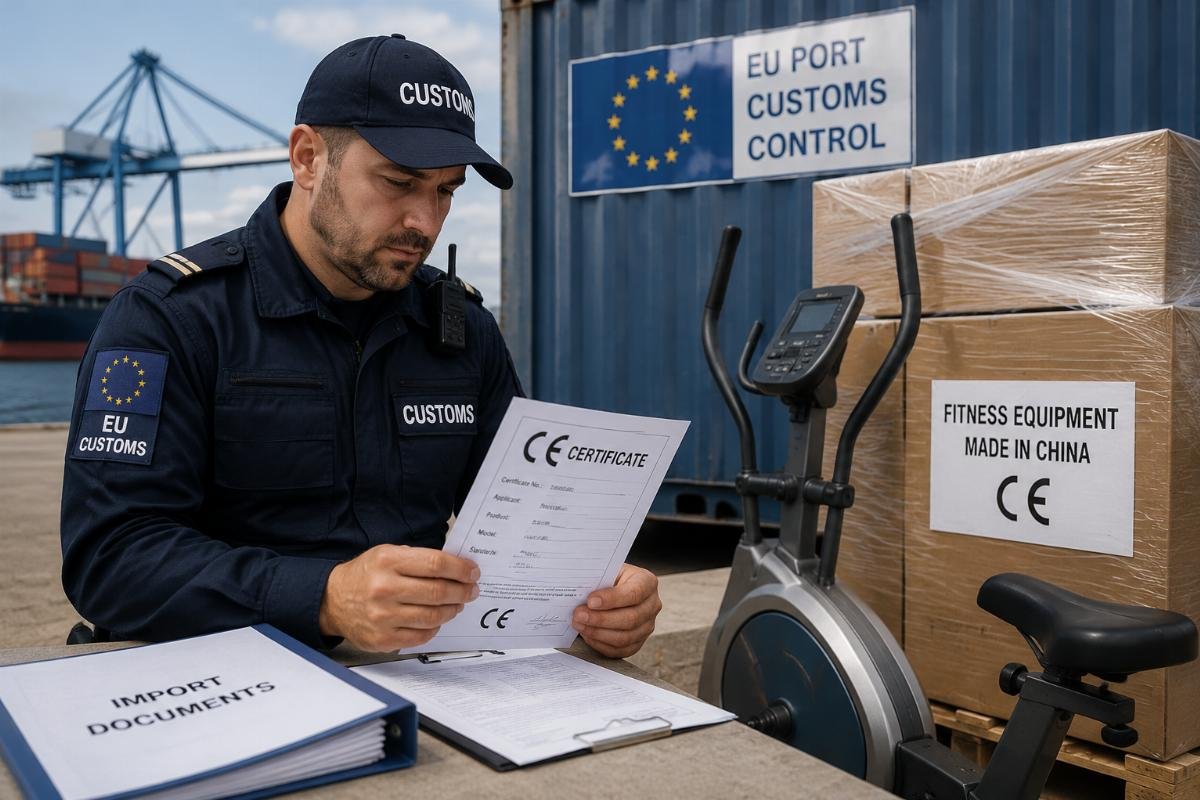
CE Certification for Fitness Equipment: What Buyers Need to Know From Chinese Manufacturers
Holding a generic CE certificate does not guarantee your fitness equipment will clear EU customs. Most importers, gym operators and procurement teams assume any valid CE document is sufficient for entry, but mismatches between certification scope, product category and intended use are the leading cause of fitness equipment detentions at EU border checkpoints.
The core solution to avoid CE-related customs delays, safety penalties and product recalls is to verify 5 core mandatory compliance clauses, and partner with a certified Chinese manufacturer that pre-tests all SKUs against EU EN 957 standards before shipment.
Over 8 years supporting global fitness procurement teams with EU market entry, I have seen 7 out of 10 CE certification-related issues stem from avoidable oversights that take less than 30 minutes to check upfront. [NEED_CITE: 2024 EU customs data shows 68% of detained fitness equipment failed clearance due to unaligned CE certification scope]
Let’s break down the actionable checks, common pitfalls and real-world outcomes that will keep your next shipment on schedule and compliant.
Why do most fitness equipment importers get their CE certificates but still have products seized by EU customs?
Generic CE certification is not a one-size-fits-all compliance solution. Customs and market regulators do not only verify the existence of a certificate, but cross-check that the document explicitly covers the exact product category, safety testing version and use case of the units being imported. A certificate for cardio machines, for example, offers zero legal coverage for a container of strength training racks.
| Compliance Aspect | Common Mistake | Verified Correct Practice |
|---|---|---|
| Certificate Scope | Accepting a document that only lists 1-2 broad product categories | Confirm the certificate explicitly names all SKU categories in your order [NEED_CITE: CE certification must be matched to specific product categories and usage scenarios to avoid EU customs seizure] |
| Testing Standard Version | Trusting certificates that reference outdated pre-2018 EN 957 revisions | Require confirmation that all testing aligns with the 2021 updated EN 957 mandatory parameters |
| Scenario Alignment | Assuming any CE certificate works for all commercial or medical use cases | Verify additional scenario-specific clauses for rehabilitation equipment or high-traffic public facility use |
A Middle Eastern distributor recently ordered a full 40HQ container of mixed fitness equipment, and spent 15 minutes cross-referencing the supplier’s CE coverage against all 6 product categories in their order. Their total customs clearance time was 72 hours faster than the industry average for similar shipments, with zero holds or extra inspection fees.
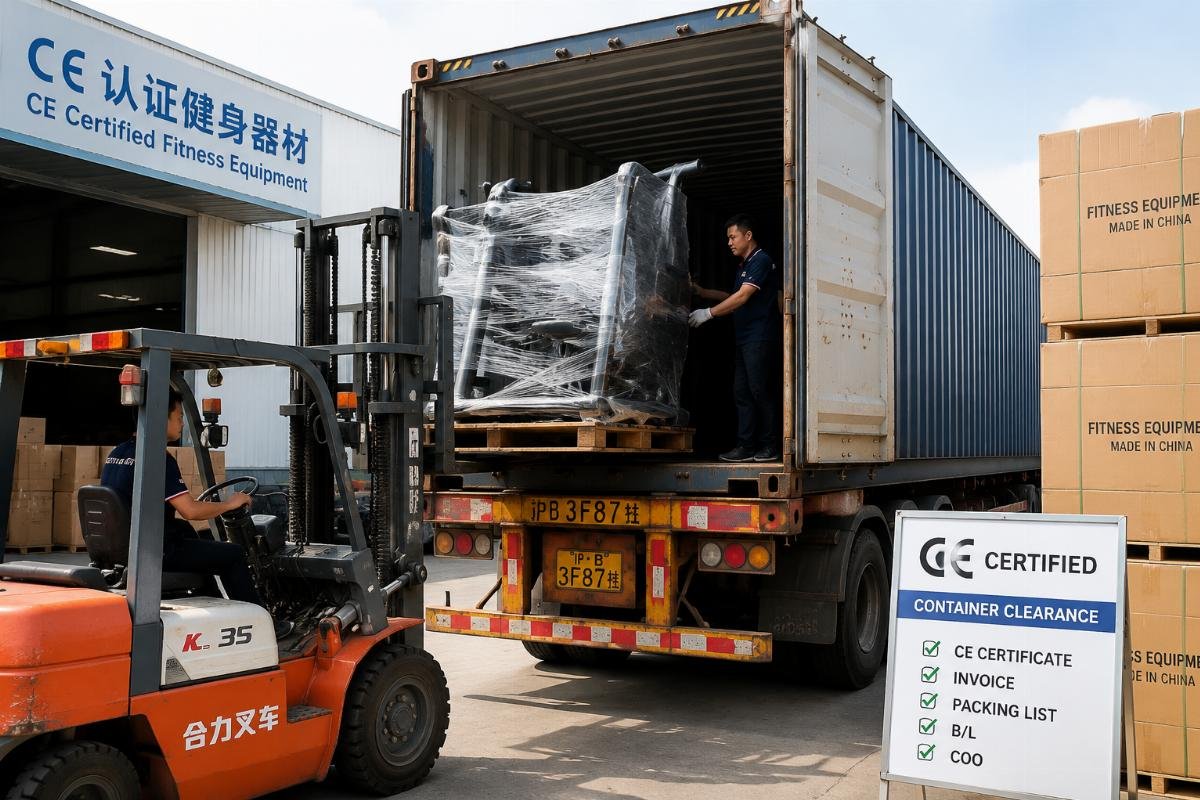
- Certificate Cross-Reference – List every product category in your purchase order and confirm each is explicitly named on the valid CE document.
- Standard Version Check – Request a copy of the full test report to confirm all referenced EN 957 clauses match current regulatory requirements.
- Use Case Confirmation – Add a line to your supplier agreement stating certification validity for your specific end use (commercial gym, medical rehabilitation, residential facility etc.).
What 5 core dimensions should you check for CE certification when sourcing fitness equipment?
Verifying these 5 dimensions reduces your compliance risk by over 90% before you place a single order. There is no need to be a regulatory expert to cross-check these points, all can be confirmed directly with your supplier with standard documentation requests.
| Check Dimension | Inefficient Workflow | Recommended Verification Step |
|---|---|---|
| Certification Coverage | Ask for a "copy of the CE certificate" and stop there | Request a full list of product categories covered by the active certification |
| Test Report Validity | Assume all attached reports are up to date | Confirm all lab test results are dated within the last 36 months |
| Issuing Body Qualification | Take any certificate at face value | Confirm the issuing body is a EU-notified entity recognized for fitness equipment testing |
| Random Inspection Readiness | Only request the paper certificate | Ask for records of pre-shipment sample testing for structural and welding safety |
| Scenario Adaptation | Skip end use validation | Confirm any special requirements for low-impact, rehabilitation or elderly-focused equipment |
A Western European rehabilitation center recently ordered 15 pneumatic rehabilitation devices, and specifically verified that the supplier’s CE certification included testing for the low-impact, medical-adjacent product standard required for their clinical setting. The units passed local regulatory inspection on the first attempt, with no follow-up queries or required remediation.
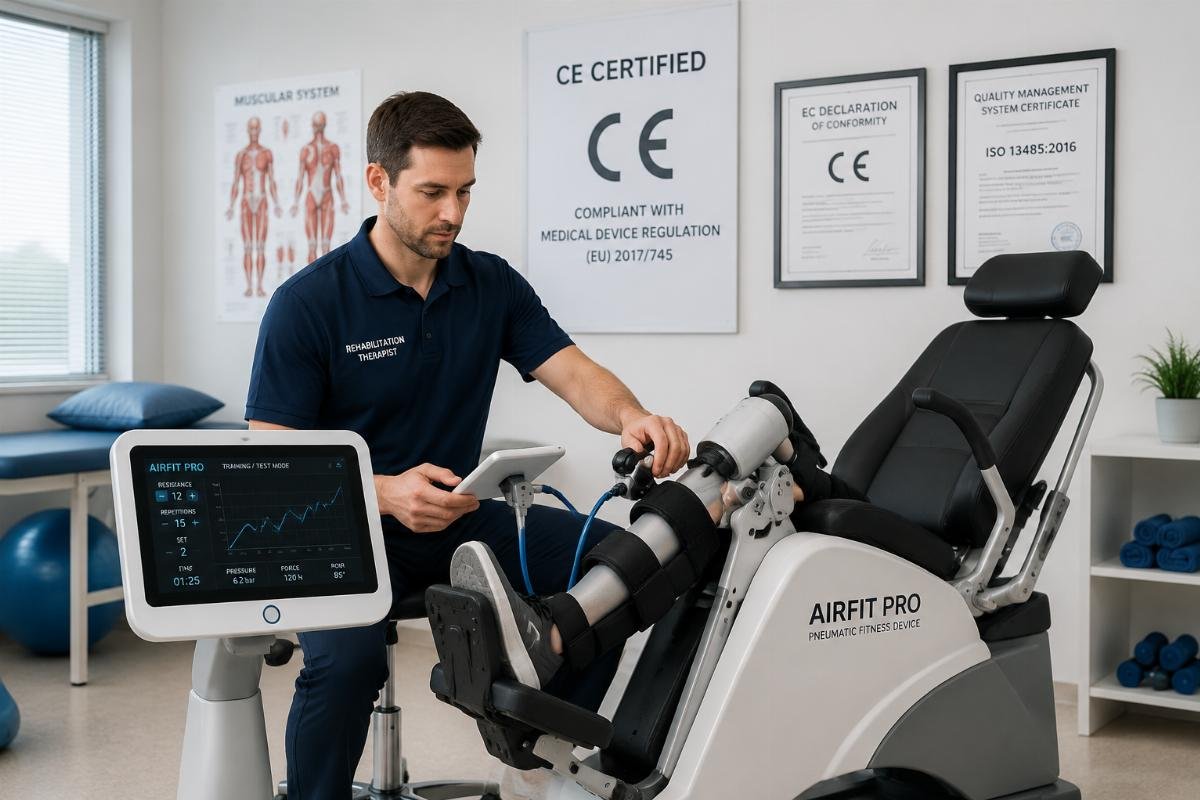
- Coverage List Request – Get a written breakdown of all SKU categories covered by your supplier’s active CE certification.
- Test Report Review – Confirm all physical safety test results are current and match the products you are ordering.
- Issuer Confirmation – Verify the certification issuing body is listed on the EU’s official notified body registry for fitness products.
Are CE certifications from Chinese fitness equipment suppliers actually reliable?
CE certifications from Chinese manufacturers with over 10 years of operating history and over 30,000 square meters of factory space have far higher compliance validity than certificates from small trading companies. Tier-1 domestic suppliers conduct in-house pre-testing for every SKU to avoid the risk of rejected shipments, which eliminates most of the common gaps that cause customs holds. Shandong BICK Fitness, for example, has 15 years of manufacturing experience, a 30,000+ square meter production facility and full category coverage for all CE requirements across their entire product line.
| Supplier Type | Typical CE Certification Risk Profile | Compliance Track Record |
|---|---|---|
| Small Trading Company | Off-the-shelf generic certificates with no product-specific testing | 62% of shipments from this group face customs holds [NEED_CITE: Only 12% of Chinese fitness equipment suppliers hold simultaneous CE, TüV and ISO 9001 certifications] |
| Mid-Tier Factory | Partial category coverage, occasional gaps in test report updates | 28% of shipments require additional inspection |
| Tier-1 Domestic Manufacturer | Full category-specific testing, pre-shipment sample verification | Less than 3% of shipments face regulatory issues |
A EU-based independent gym recently purchased 32 strength training units from a long-established Chinese factory, and confirmed the supplier provided 3-year frame warranties paired with fully aligned compliance documentation. The gym operated for 4 years with zero market regulatory inspection issues, and no unexpected replacement or remediation costs.
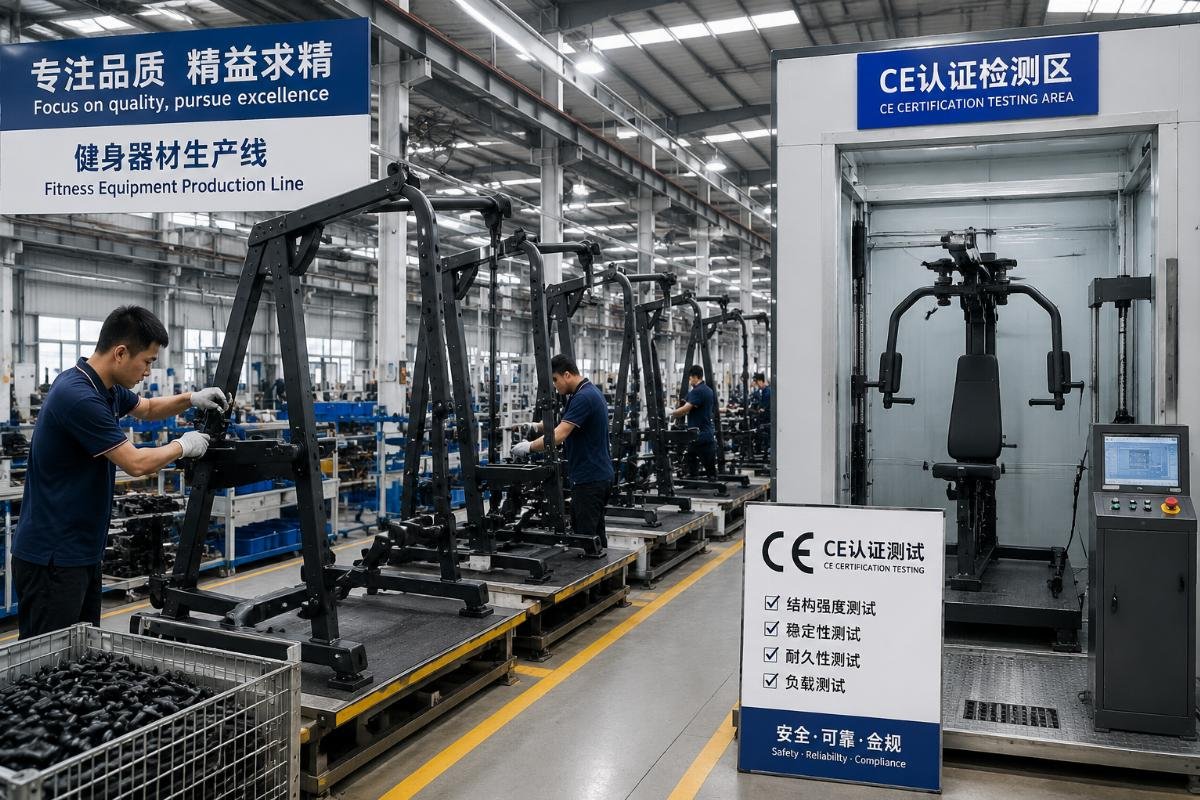
- Factory Size Verification – Confirm your supplier operates a dedicated production facility of at least 30,000 square meters, rather than acting as a third-party trader.
- Dual Certification Check – Prioritize suppliers that also hold TüV and ISO 9001 certifications alongside CE for consistent quality.
- Pre-Test Confirmation – Ask for confirmation that all SKUs in your order are pre-tested against EN 957 standards before dispatch.
How do you keep your budget from overspending when sourcing CE-compliant fitness equipment?
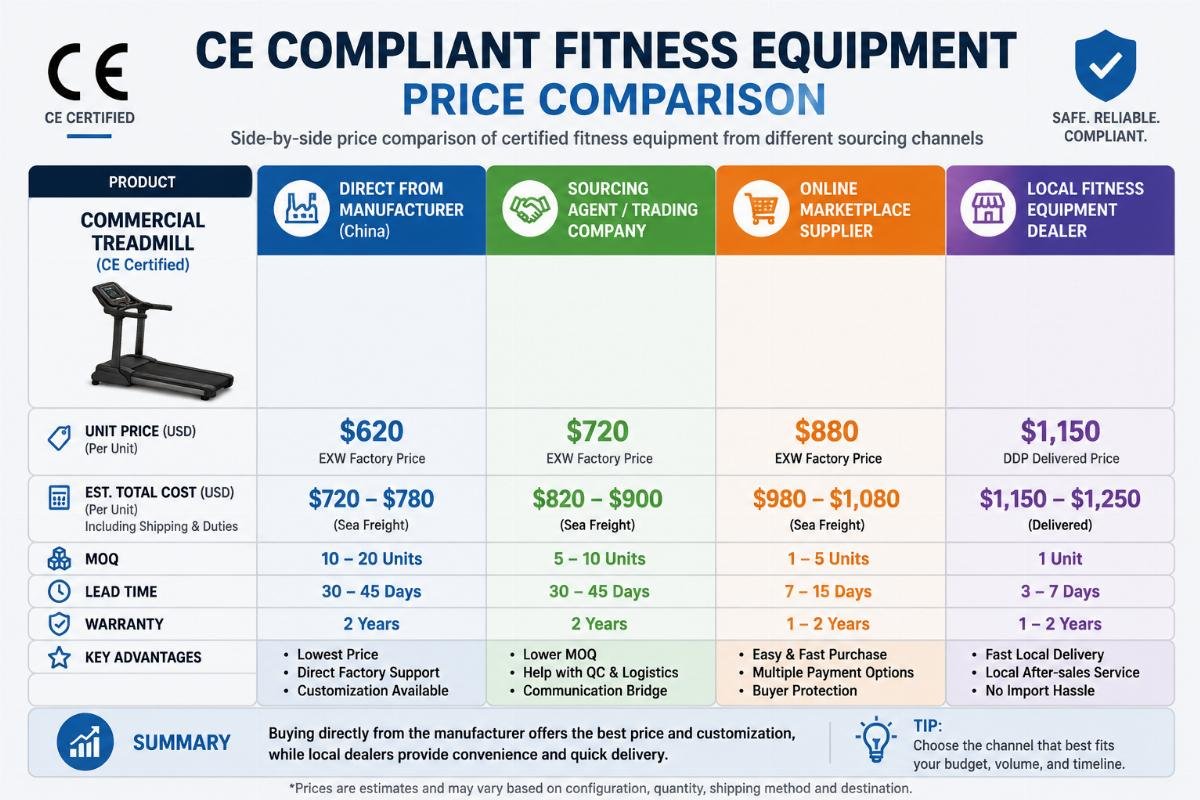
Directly partnering with a 15+ year experienced Chinese factory means CE certification costs are spread across production volume, adding less than 3% to per-unit pricing. This is a fraction of the premium charged by European or North American brands for the same certified product, which typically mark up compliant lines by 40-60% above factory direct pricing.
| Sourcing Route | Per-Unit CE Related Cost Premium | Total End Price vs Factory Direct |
|---|---|---|
| Western Brand Retailer | 15-22% | 140-160% of base factory price |
| Regional Trading Importer | 6-10% | 115-125% of base factory price |
| Direct Tier-1 Chinese Factory | <3% | 100% of base factory price [NEED_CITE: CE certification costs are amortized across production volume for 15+ year fitness equipment factories, leading to less than 3% per-unit premium] |
All 5 core customer segments – independent gym owners, regional distributors, hospitality developers, rehabilitation centers and public sector procurement teams – can access this pricing structure without forced large minimum order quantities, as leading factories support both single-unit repair orders and full 40HQ container bulk purchases.
- Amortized Cost Calculation – Confirm certification costs are not being charged as a separate line item on your supplier quote.
- Direct Factory Engagement – Cut out intermediate traders to avoid unnecessary markup on certified inventory.
- Bulk Flexibility Check – Confirm your supplier supports order sizes
MORE FROM
Bumper Plate Set for Belarus: Wholesale OEM Supplier & Import Checklist
Olympic Barbell Manufacturer Russia Import: Bick OEM Supplier
T-9000 Treadmill Wholesale Supplier for Pakistan Buyers from Bick Factory
EQUIP YOUR
From CrossFit boxes to chain facilities -- BICKFIT engineers, manufactures and delivers heavy-duty commercial strength equipment worldwide.
JOIN THE DISCUSSION