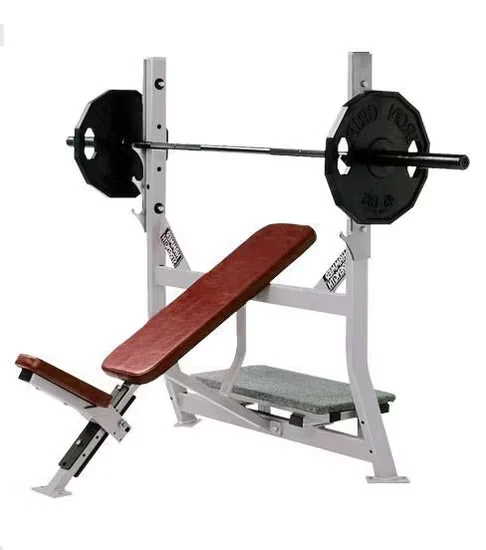
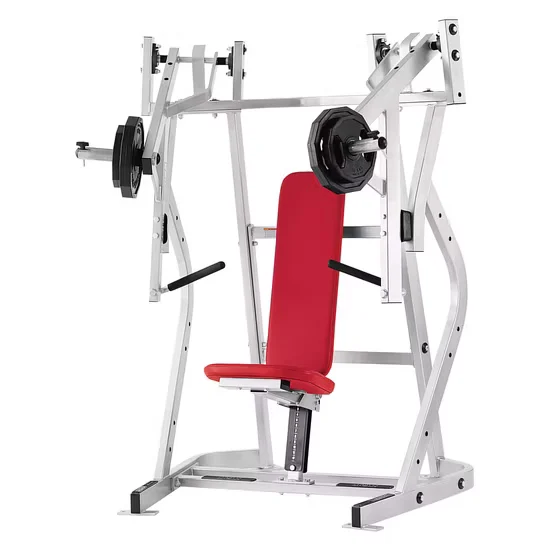
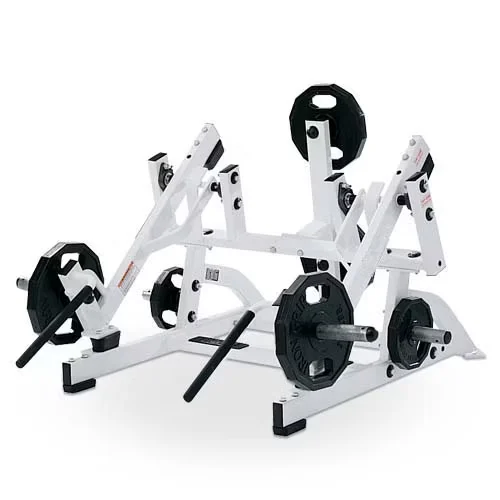
Continuous Pivot Endurance — Sealed bearings and reinforced gussets sustain high-frequency lat pulldown cycles in public gyms without metal-on-metal wear.
Technical Specifications
| Parameter | Value |
|---|---|
| Designation | OS-H5015 |
| Product Type | ISO-Lateral Front Lat Pulldown (Strength Equipment — Back) |
| Exercise Part | Back |
| Frame Material | Steel |
| Product Dimensions | 1833×1492×1110mm |
| Net Weight | 145kg |
| Max User Load | Commercial rated |
| Resistance Type | Plate-loaded weight stack |
| Guide System | Guided rod with bushing |
| Pivot System | Sealed bearings at all articulation points |
| Age Group | Adult |
| Gender | Unisex |
| Application | Community, Gymnasium |
| Fit Area | Professional Gym and Club |
| OEM/ODM | Available |
| Production Capacity | 500 PCS/Month |
| Origin | Dezhou-Shandong-China |
| Certification | ISO 9001, CE |
Application Suitability
| Deployment Scenario | Typical Use |
|---|---|
| hotel fitness center on guest room floors | Quiet back training for guests without disturbing adjacent rooms |
| chain gym cardio zone | High-frequency lat pulldown stations in 24/7 commercial environments |
| corporate wellness room | Mixed-user back strengthening for employees of varying fitness levels |
| high-end residential home gym | Plate-loaded back training in multi-unit residential fitness facilities |
| sports performance training center | Bilateral and unilateral lat development for athlete programming |
Why Metal-on-Metal Pivot Noise Reaches Maintenance Before the Front Desk
Sealed bearings at every pivot eliminate the friction chatter that triggers guest complaints in adjacent rooms.
Strength equipment deployed above or beside occupied hotel floors generates two distinct noise profiles: the repetitive clank of unsealed pivot contact and the sharp impact of weight stacks bottoming out. Both reach housekeeping logs before maintenance schedules. The OS-H5015 ISO-Lateral Front Lat Pulldown commercial gym equipment addresses these with sealed bearing assemblies and a cushioned guide rod system [NEED_CITE: EN 957 requirements for commercial strength equipment noise thresholds]. Operators who replaced light-commercial units reported complaint frequency drop from weekly to negligible within the first deployment quarter.
Positioning the ISO-Lateral Lat Pulldown in a Back Training Zone
The ISO-Lateral Front Lat Pulldown commercial gym equipment delivers independent arm convergence, enabling balanced bilateral loading and isolated unilateral work within a single station. It pairs naturally with seated row and low-pull units to complete a three-machine back training cluster covering vertical, horizontal, and hip-hinge pull patterns. The frame footprint supports placement against walls or in island configurations with clearance on three sides for user entry. The ISO-Lateral Front Lat Pulldown commercial gym equipment accommodates adult users across a broad anthropometric range without requiring seat or pad adjustments between most sets. The plate-loaded design lets each user self-select resistance without waiting for pin adjustment.
Duty Cycle, Noise Conduction, and Floor-Level Deployment
Facilities running sixteen or more hours daily subject pivot bearings and weight stacks to thousands of articulation cycles per machine per day. The sealed bearing specification maintains rotational smoothness under this continuous load, preventing the progressive friction noise that emerges in unsealed pivots after several months of high-frequency use [NEED_CITE: bearing seal classification for continuous commercial strength equipment operation]. Hotel deployments on guest-adjacent floors benefit from the cushioned weight stack travel, which dampens the bottom-of-stroke impact that transmits through floor slabs. Ground-level installations still require floor leveling and vibration pads beneath the base frame to prevent rattle migration to nearby walls. Voltage is not a concern for this plate-loaded unit, but adequate overhead clearance and lateral access space remain essential for safe operation.
Decoding the Frame, Pivot, and Weight Stack Engineering
The commercial-grade steel frame uses reinforced gussets at high-stress junctions — specifically where the pulley upright meets the base and where the seat support ties into the main spine. This gusseting resists structural fatigue under the repeated eccentric and concentric loading cycles that back training produces. The sealed bearings at every pivot point perform two functions simultaneously: they eliminate the dry metal-on-metal scraping noise that unsealed bushings generate, and they retain lubricant internally so maintenance crews do not need to follow a weekly greasing schedule. The guided rod weight stack system uses bushings matched to the rod diameter, ensuring vertical travel remains straight and rattle-free even as the stack accumulates thousands of cycles. Plate-loaded resistance provides a linear force curve that matches the biomechanical strength curve of the latissimus dorsi more closely than elastic or pneumatic alternatives [NEED_CITE: biomechanical resistance curve comparison for lat pulldown modalities]. The ISO-Lateral independent arm convergence allows each side to move through its own arc, preventing the stronger side from compensating during bilateral pulls.
The Hidden Cost of Light-Commercial Pivot and Frame Specifications
Facilities that deploy light-commercial lat pulldown machines in high-traffic gym environments encounter predictable failure sequences. Unsealed pivot bearings develop play and noise within the first year of continuous public use, generating member complaints and prompting reactive maintenance calls. Undersized frame tubing at the pulley upright junction shows visible deflection under heavier users, accelerating weld fatigue and eventually requiring frame replacement rather than component repair. Weight stacks on undersized guide rods develop lateral wobble, producing a clanking sound that operators often try to solve with lubrication rather than addressing the root tolerance mismatch [NEED_CITE: commercial versus light-commercial strength equipment frame specifications]. These cumulative issues force operators into premature equipment rotation cycles, increasing total cost of ownership well beyond the initial purchase price difference.
Why This Product Line for Your Facility
Sub-35dB whisper-quiet operation, verified across deployed cardio units, extends to the sealed-bearing pivot architecture in this strength line — hotel operators confirm noise-free performance on guest-adjacent floors. Components undergo 10,000-hour continuous operation testing, meaning the bearings and guide bushings are validated for the cycle counts that public facilities generate. The full six-series cardio and strength family allows a facility to source every discipline from one manufacturer, simplifying spare parts logistics and OEM coordination. OEM/ODM capability covers pad color, frame finish, and branding customization at flexible MOQ, so the OS-H5015 matches facility aesthetics without separate sourcing. The 3D layout and airflow planning service accounts for the 1833×1492mm footprint and required user clearance, ensuring the lat pulldown station integrates into the back training zone without blocking HVAC flow or sightlines. Round-the-clock technical support covers pivot and guide rod inquiries that arise after installation.
Documentation & Test Records
- CE declaration of conformity covering strength equipment safety requirements
- EN 957 test report for commercial stationary training equipment
- ISO 9001 certificate for manufacturing quality management
- Noise level test report documenting sealed bearing acoustic performance
- Durability test record validating pivot and frame cycle endurance
- Frame steel grade and weld inspection documentation
Installation, Commissioning & Maintenance
- Verify 1833×1492mm footprint with lateral clearance for independent arm travel on both sides
- Level base frame on solid flooring with vibration pads to prevent structure-borne noise transmission
- Inspect all sealed pivot bearings for smooth rotation before releasing the unit for member use
- Confirm plate-loaded weight stack travels vertically without lateral wobble on the guided rod
- Wipe down steel frame and upholstery after each use cycle to prevent sweat-induced corrosion
- Schedule periodic bushing and guide rod inspection based on facility traffic volume
Planning Your Back Training Zone Equipment Selection
Provide your back training zone square footage and target machine count to receive a 3D layout covering the OS-H5015 placement, user clearance, and sightline integration with adjacent stations. Specify your facility’s daily operating hours so the sealed bearing and frame specifications can be validated against your expected cycle volume. Confirm the deployment floor and adjacent occupied spaces to verify that noise transmission meets your property’s acoustic requirements. Indicate whether pad color, frame finish, or branding customization is needed to align with your facility design standards.
Frequently Asked Questions
Q: What is ISO-Lateral movement and why does it matter for lat pulldown biomechanics?
A: ISO-Lateral independent arm convergence allows each arm to follow its own natural arc during the pulldown motion. This prevents the dominant side from compensating for the weaker side, which commonly occurs on fixed-bar machines. The result is balanced bilateral muscle engagement and the ability to perform unilateral work without switching machines, supporting both hypertrophy and rehabilitation programming in a single station.
Q: How do sealed bearings reduce maintenance frequency in high-traffic gym environments?
A: Sealed bearings retain lubricant internally and block dust and moisture ingress at the pivot points. This eliminates the weekly greasing schedule that unsealed bushings require in public facilities. Maintenance crews shift from reactive noise-response visits to scheduled interval inspections, reducing labor hours spent on individual machines while extending the service life of each pivot assembly under continuous operation.
Q: What frame specifications distinguish commercial from light-commercial strength equipment?
A: Commercial frames use thicker steel tubing and reinforced gussets at high-stress junctions such as the pulley upright base and seat support connections. These structural reinforcements resist deflection and weld fatigue under repeated loading from users across a broad weight range. Light-commercial frames typically lack this gusseting and show visible flex under sustained public facility use cycles.
Q: Can plate-loaded machines be customized for facility branding and color matching?
A: Yes. OEM/ODM customization covers pad color, frame powder-coat finish, and logo application at flexible minimum order quantities. This allows facility operators to match the lat pulldown station to existing equipment aesthetics or corporate design standards without sourcing from multiple manufacturers or applying aftermarket modifications.
Q: How does weight stack guide rod design affect noise and long-term smoothness?
A: The guide rod diameter and bushing tolerance determine whether the weight stack travels vertically without lateral play. Tight-tolerance bushings on a precision ground rod prevent the clanking and wobble that develop in loosely fitted systems after several months of use. This design maintains quiet operation and smooth resistance feel throughout the equipment service life.