![Portable Folding Pilates Reformer for Yoga Studio Physiotherapy [WARN] draft identifier mismatch](https://bicksport.com/wp-content/uploads/2026/08/portable-folding-pilates-reformer-for-yoga-studio-physiotherapy-warn-draft-identifier-mismatch-fd1e14.webp)
Precision Carriage Glide — reinforced steel frame and sealed rail system engineered for wobble-free operation across back-to-back studio classes
Technical Specifications
| Parameter | Value |
|---|---|
| Product Type | Pilates Reformer |
| Model NO. | SRY-12A |
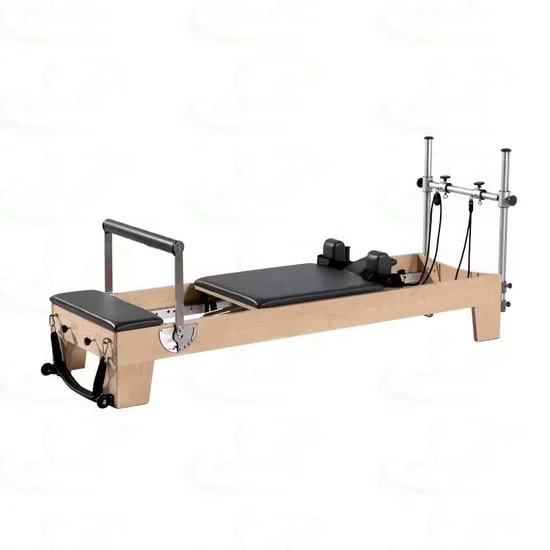
| Product Dimensions | 2350 × 720 × 270 mm |
| Net Weight | 90 kg |
| Accessory | Long Box / Jump Board / Platform |
| Color | Solid Color |
| Gender | Unisex |
| Age Group | Adult |
| Logo | Customized Is Allowed |
| Warranty | 3 Years |
| Production Capacity | 80 Pieces/Month |
Application Suitability
| Deployment Scenario | Typical Use |
|---|---|
| Boutique Pilates studio | 6–8 daily group reformer classes with continuous carriage cycling |
| Physiotherapy clinic | Low-impact rehabilitation sessions requiring stable, repeatable movement platforms |
| Multi-purpose fitness facility | Reformer training integrated into group class rotations and personal training blocks |
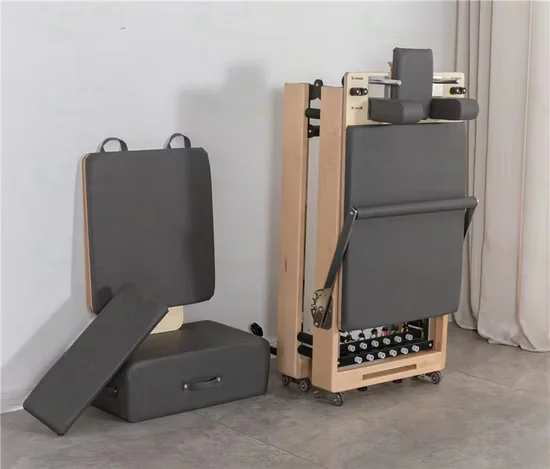
| Home studio | Folding storage between sessions in dedicated residential training spaces |
Why Studios Replace Light-Duty Reformers Within the First Year
Carriage drift and spring fatigue compound faster than maintenance schedules can catch them.
When a Pilates studio runs five or six classes a day, light-duty reformers start showing lateral carriage play within months. Instructors notice wobble during transitional movements, and members report joint discomfort during lateral work. I once saw a facility pull an entire row of reformers after guests at an adjacent wellness hotel complained about audible frame flex during evening sessions [NEED_CITE: commercial Pilates reformer durability under continuous studio scheduling]. The folding Pilates reformer SRY-12A addresses this with a reinforced steel frame and precision carriage rail system designed for continuous high-frequency studio environments.
Where This Reformer Sits in a Commercial Studio Layout
The SRY-12A covers the full spectrum of reformer-based movement patterns — supine, prone, seated, and standing — across beginner through advanced programming. In a studio cardio-and-conditioning zone, it pairs naturally with mat stations and tower units to fill out the Pilates equipment lineup. The 2350 mm length and folding capability allow flexible placement along walls or in multi-use rooms where floor space rotates between disciplines. It accommodates the full range of adult user body sizes supported by the Long Box, Jump Board, and Platform accessories. This portable folding Pilates reformer fits both dedicated reformer rooms and hybrid training floors.
Continuous Scheduling and Deployment Environment Requirements
Studios running six or more daily classes need equipment that handles back-to-back sessions without carriage performance degradation. The reinforced frame and sealed rail system maintain glide consistency across high-frequency use cycles. Deployment in multi-story buildings requires attention to floor vibration transmission during Jump Board work — a dense rubber underlay isolates impact from occupied rooms below. Adequate ceiling clearance and lateral spacing around each unit allow full accessory use without instructor line-of-sight obstruction [NEED_CITE: studio floor planning requirements for commercial reformer spacing]. Facilities integrating reformer data tracking should plan console placement and cable routing before final installation.
Frame Construction and Carriage Mechanics Explained
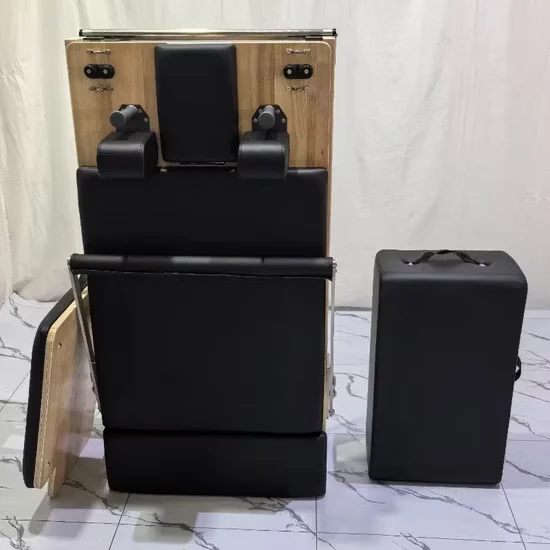
The 90 kg net weight reflects a steel frame mass that resists flex during dynamic exercises like Jump Board plyometrics and standing single-leg work. Heavier frames absorb lateral forces that lighter aluminum constructions transfer into carriage wobble. The carriage rail system uses sealed bearings on a hardened track — this prevents dust and chalk ingress that gradually degrades glide smoothness in open-rail designs. The folding mechanism locks with structural pins rather than friction catches, maintaining rigidity during use while allowing compact storage. Spring-based resistance provides a linear force curve that scales predictably with user weight, unlike elastic-band systems whose tension degrades with temperature and age cycles. The three included accessories — Long Box, Jump Board, and Platform — mount directly to the frame without additional fasteners or adapter brackets.
The Hidden Cost of Specification Compromises
Light-duty reformers in commercial studios typically show carriage rail wear within the first year of high-frequency use, leading to lateral play that instructors cannot correct through cueing alone. Spring sets on budget models lose calibrated tension unevenly, creating asymmetric resistance that members notice during bilateral movements. Folding mechanisms without structural locking gradually develop hinge play, introducing frame noise and instability during standing work [NEED_CITE: reformer maintenance frequency in commercial studio environments]. These failures compound into member attrition — clients who experience equipment inconsistency during sessions rarely return to the same facility.
Why This Product Line Was Built for Studio Operators
Every unit undergoes frame durability testing under continuous load cycles that simulate multi-class daily scheduling. The carriage rail precision specification is verified before shipment to eliminate out-of-box glide issues. OEM customization covers logo, color, and accessory bundling so facilities can match their branding without aftermarket modification. The six-series cardio and conditioning family means a studio can source reformers alongside treadmills, rowers, and climbers from a single production facility. Free 3D studio layout planning covers equipment spacing, instructor sightlines, and airflow for reformer rooms. Technical support responds around the clock for commissioning questions and spare parts sourcing.
Documentation & Test Records
- CE declaration of conformity for studio equipment compliance
- EN 957 test report covering static and dynamic load performance
- ISO 9001 certificate for manufacturing quality management
- Frame durability test record under continuous load cycles
- Carriage rail precision specification and wear documentation
- Accessory load-bearing capacity confirmation for Long Box, Jump Board, Platform
Installation, Commissioning & Maintenance
- Allow minimum 600 mm lateral and 900 mm rear clearance around the 2350 × 720 mm footprint for accessory use
- Level floor surface and place dense rubber underlay to isolate Jump Board vibration from floors below
- Verify folding mechanism structural pins engage fully before first loaded session
- Inspect carriage rail sealed bearings and clean track monthly in high-chalk studio environments
- Rotate spring attachment points quarterly to distribute wear evenly across the resistance system
- Wipe down steel frame and upholstery after each class to prevent sweat corrosion
Planning Your Reformer Procurement
Provide your studio floor area and class schedule density so we can generate a 3D layout with equipment spacing and instructor sightlines. Specify whether the room sits above occupied spaces to confirm vibration isolation requirements. Indicate target market for any regional compliance documentation. Confirm accessory configuration — Long Box, Jump Board, Platform — to match your programming scope.
Frequently Asked Questions
Q: How does frame construction affect reformer stability during dynamic movements?
A: The 90 kg steel frame resists lateral flex during standing and Jump Board exercises, keeping the carriage on a consistent track. Lighter frames transfer user-generated forces into rail vibration, which degrades glide precision over time. Reinforced construction maintains rigidity across multiple daily class cycles without requiring mid-day recalibration.
Q: What maintenance is required for carriage rail systems in high-frequency studio use?
A: Sealed bearings on the hardened rail track resist chalk dust and debris ingress, reducing cleaning frequency compared to open-rail designs. Monthly inspection of bearing seals and track surface condition is recommended for studios running six or more daily classes. Rail lubrication should follow manufacturer-specified intervals using compatible products only.
Q: How does the folding mechanism design impact structural rigidity during operation?
A: The folding system uses structural locking pins rather than friction-based catches, eliminating hinge play during loaded exercises. This maintains frame rigidity equivalent to fixed-frame reformers during use while allowing compact storage. The lock engagement is verified during each commissioning before the unit enters active rotation.
Q: What load capacity should commercial reformers support for diverse user populations?
A: Commercial reformers must accommodate the full range of adult body weights encountered in studio and clinical environments. The SRY-12A frame and carriage system are tested under continuous load cycles representing the upper spectrum of user weights. Accessory load-bearing capacity is confirmed separately for the Long Box, Jump Board, and Platform.
Q: How do accessory systems integrate without compromising carriage glide performance?
A: The Long Box, Jump Board, and Platform mount directly to designated frame attachment points without requiring adapter brackets or rail modifications. Each accessory is positioned so its weight distributes through the frame structure rather than loading the carriage rail. This preserves consistent glide characteristics whether accessories are mounted or removed between sessions.