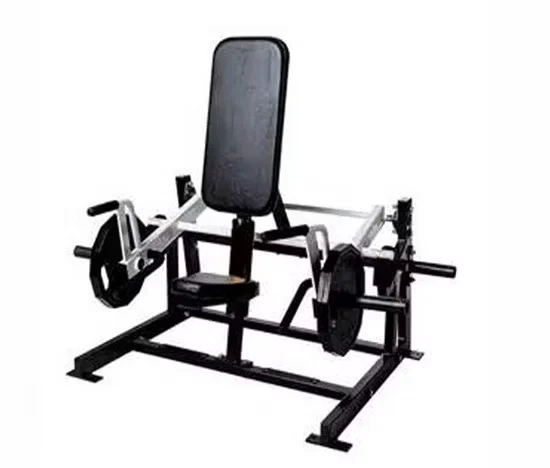
Zero-Emission Acoustic Profile — Manual resistance architecture eliminates motor noise, maintaining silent operation across high-frequency training cycles.
Technical Specifications
| Parameter | Value |
|---|---|
| Designation | 2019 Hammer Strength 4-Way Neck 21 |
| Product Type | 4-Way Neck Machine |
| Model NO. | OS — H5021 |
| Exercise Part | Back |
| Resistance Type | Manual |
| Max User Weight | 180kg |
| Product Dimensions | 900×1400×1600mm |
| Net Weight | 130kg |
| Main Frame Color | Available per customer requirements |
| Cushion Color | Available per customer requirements |
| Folded | Folded |
| Power Source | Manual |
| Certification | ISO 9001, CE |
| OEM/ODM | Acceptable |
Application Suitability
| Deployment Scenario | Typical Use |
|---|---|
| Professional gym strength zone | Neck flexion and extension training for general fitness members |
| Sports performance training center | Athlete-specific cervical strengthening for contact sport preparation |
| Community fitness center | Accessible neck conditioning integrated into full-body routines |
| Corporate wellness room | Compact deployment for office-based rehabilitation and posture work |
| Club functional training area | Complementary isolation work alongside compound lift programming |
Why Force Isolation Equipment Creates Noise Transfer Problems in Mixed-Use Zones
Manual resistance removes the primary vibration source from the strength floor entirely.
When plate-loaded or motorized resistance systems operate in shared facilities, structural vibration transmits through floor slabs into adjacent occupied spaces. Facilities housing cardio zones directly above guest rooms or office floors receive noise complaints that trace back to mechanical resistance components rather than user behavior. The absence of electric motors and weight stacks in this commercial 4-way neck machine Hammer Strength unit means the only sound generated comes from pad contact and user breathing [NEED_CITE: structural vibration transmission paths in multi-floor fitness facilities]. Maintenance teams spend disproportionate hours chasing resonance complaints that originate from motorized resistance units operating at harmonic frequencies matching the building structure.
Positioning the 4-Way Neck Machine Within a Strength Equipment Array
This commercial 4-way neck machine Hammer Strength unit addresses cervical isolation that compound movements cannot target directly. In a strength zone layout, it pairs with trap bar stations and upper-back machines to create a complete posterior chain training sequence. The 900×1400mm footprint allows placement in corridor-end positions or between larger rack systems without disrupting primary traffic flow. With a 180kg maximum user weight rating, the equipment accommodates the full range of athlete and member body compositions found in professional gym environments. The manual resistance system lets users self-regulate load through applied force, making it suitable for both rehabilitation protocols and progressive overload programs without requiring weight plate inventory nearby.
Operational Demands Across Continuous Facility Schedules
Facilities running sixteen or more hours daily subject every resistance mechanism to cumulative fatigue cycles that home-use equipment never encounters. The manual drive system eliminates motor thermal management as a scheduling constraint, allowing unrestricted placement regardless of ventilation infrastructure. Because no electrical connection is required, deployment options extend to zones where dedicated circuits are already allocated to cardio arrays or where floor penetrations for wiring are structurally prohibited. The 130kg steel frame mass provides inherent stability during high-force eccentric loading, reducing the requirement for bolted floor mounting in most installations [NEED_CITE: EN 957 stability requirements for static strength training equipment]. Acoustic transfer through the frame remains negligible since resistance generation occurs entirely through user-applied mechanical force rather than motorized components.
Interpreting the Manual Resistance Architecture
Manual resistance systems operate on a fundamentally different principle than weight-stack or pneumatic alternatives. The user’s own muscular output creates the opposing force, meaning resistance scales instantaneously with applied effort rather than following a fixed increment curve. This characteristic makes the commercial 4-way neck machine Hammer Strength particularly suited for rehabilitation environments where load must be titrated session by session. The steel frame construction at 130kg provides the mass necessary to counterbalance off-center loading during lateral flexion movements without frame lift or wobble. Welded joints in the main structure must handle multi-directional force vectors unique to cervical training, where loads are applied through short lever arms creating high torque concentrations at connection points. The folded capability allows transport through standard commercial doorways and service elevators during initial installation or future floor reconfigurations.
The Hidden Costs When Specification Compromises Surface After Deployment
Facilities that substitute lighter-gauge framing in neck training equipment discover instability problems only when larger athletes apply full eccentric force. Frames under 100kg require floor anchoring to prevent tipping during lateral movements, adding installation complexity and limiting future layout flexibility. Resistance mechanisms that rely on friction pads or elastic bands degrade on timelines measured in weeks under commercial use frequencies, creating maintenance burden and member dissatisfaction. Equipment positioned without adequate clearance for full range-of-motion forces users into abbreviated movement patterns, reducing training effectiveness and generating complaints directed at facility management rather than the equipment itself [NEED_CITE: clearance envelope standards for isolation training equipment]. Facilities that skip cervical isolation equipment entirely leave athletes seeking this training modality to improvise with free-weight solutions that carry higher injury risk profiles.
What This Product Line Delivers to Facility Operators
The manual resistance architecture eliminates motor maintenance entirely, removing one failure point from the preventive maintenance schedule. Equipment tested for durability across continuous commercial duty cycles provides procurement confidence when outfitting facilities that operate beyond standard business hours. The full OEM and ODM capability extends to frame color and cushion color matching, allowing branded environments without minimum order quantities that force overstocking. When planning a strength zone layout that includes this unit, the 900×1400mm footprint and surrounding clearance requirements can be modeled in 3D alongside rack systems and plate storage to optimize member flow before equipment ships. Technical support availability around the clock means installation questions encountered during after-hours setup can be resolved without delaying facility opening schedules.
Documentation & Test Records
- CE declaration of conformity for commercial strength training equipment
- EN 957 test report covering static load and stability verification
- ISO 9001 certificate for manufacturing quality management systems
- Noise level test report confirming silent manual resistance operation
- Durability test record documenting frame fatigue cycle completion
- Installation and commissioning guide with anchoring specifications
Installation, Commissioning & Maintenance
- Verify 900×1400mm footprint clearance including lateral movement envelope before final positioning
- Level the 130kg steel frame on vibration-damping pads to prevent load transfer to adjacent equipment
- Confirm all manual resistance adjustment points move through full range before member access
- Inspect welded frame joints after initial break-in period for any stress indications
- Clean head pad contact surfaces daily with non-corrosive antimicrobial solution
- Review OEM cushion color specifications against delivered units before signing commissioning report
Equipment Selection and Quotation Process
Provide your strength zone square footage and existing equipment list to receive a 3D layout incorporating this unit’s footprint and clearance requirements. Specify daily operating hours so duty-cycle expectations can be matched against manual resistance system durability ratings. Identify the deployment floor and adjacent occupied spaces to confirm that the silent manual operation meets your acoustic environment requirements. Indicate your target market voltage standards for any companion motorized equipment in the same procurement batch, and confirm whether frame or cushion color customization is needed for brand alignment.
Frequently Asked Questions
Q: How does manual resistance compare to weight-stack resistance for neck training applications?
A: Manual resistance allows users to self-regulate force through their own muscular output, creating smooth load matching that adapts within each repetition. Weight-stack systems offer fixed increments that may jump too aggressively for cervical rehabilitation progressions. In commercial facilities, manual systems eliminate cable and pulley maintenance while providing infinite resistance gradation suited to diverse user strength levels.
Q: What distinguishes commercial-grade neck training equipment from residential alternatives?
A: Commercial units like this carry 180kg user weight ratings and 130kg frame mass to withstand repeated high-force loading without anchoring requirements. Residential equipment typically uses lighter gauge steel and friction-based resistance that degrades under daily multi-user frequency. Commercial certification testing verifies structural integrity across thousands of loading cycles that home equipment specifications never address.
Q: How does four-direction cervical training support athlete preparation programs?
A: Four-way movement capability addresses flexion, extension, and bilateral lateral flexion through a single equipment footprint. Contact sport athletes require balanced cervical development to manage impact forces from multiple vectors. Isolating these movement patterns on dedicated equipment allows progressive overload tracking that compound exercises cannot provide, while keeping athletes in controlled loading environments rather than improvised free-weight solutions.
Q: What noise control considerations apply when placing neck training equipment near quiet zones?
A: Manual resistance systems generate no mechanical noise during operation, making them suitable for deployment on floors directly above guest rooms or adjacent to consultation spaces. Unlike motorized resistance equipment, there is no motor hum or weight-stack clatter to transmit through structural elements. Facility operators can position these units based on training flow logic rather than acoustic isolation requirements.
Q: What customization options exist for integrating this equipment into branded facility environments?
A: Frame color and cushion color are available per customer requirements, allowing visual alignment with facility branding standards. OEM and ODM customization extends to logo application and pad material specifications. Procurement teams should confirm minimum order quantities and lead times for custom color matching before finalizing equipment schedules, as standard production colors ship on shorter timelines.

![Commercial Multi Function Power Rack Pull Up Gym Equipment [WARN] draft identifier mismatch](https://bicksport.com/wp-content/uploads/2026/08/commercial-multi-function-power-rack-pull-up-gym-equipment-warn-draft-identifier-mismatch-881358.webp)