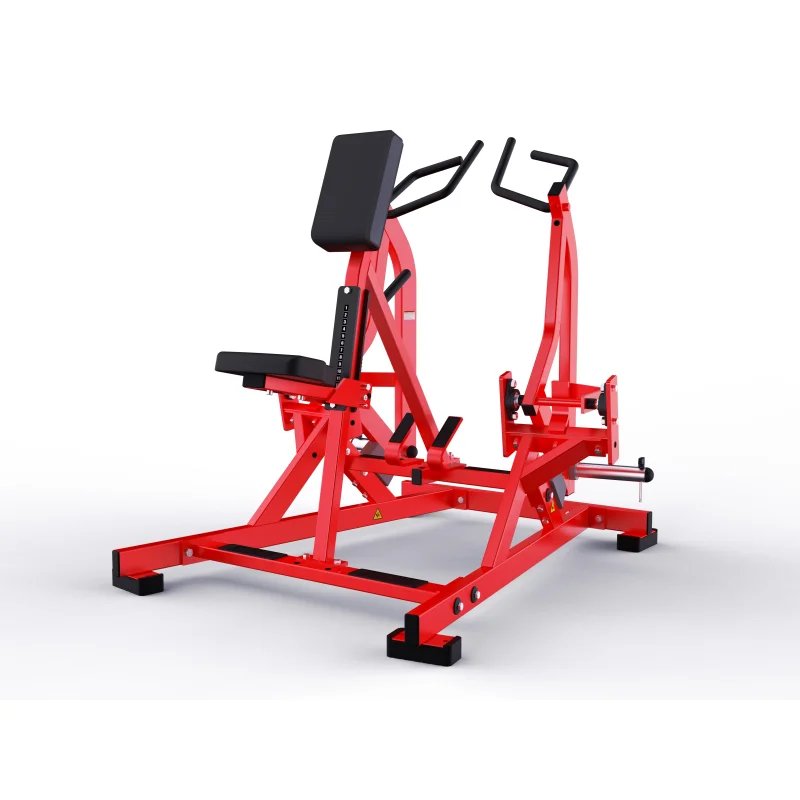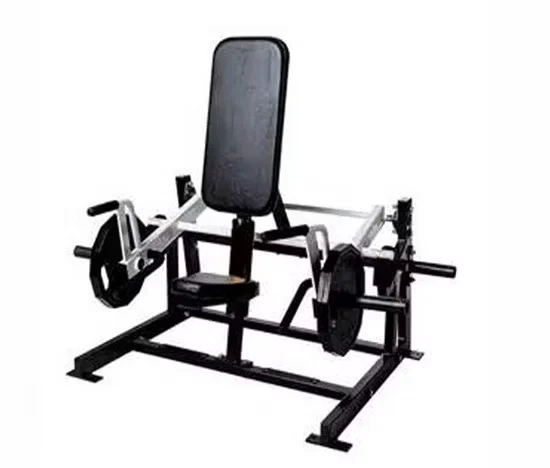
Continuous High-Frequency Durability — The steel-reinforced frame is engineered to withstand 10,000+ hours of continuous heavy-load cycles in professional gym environments without structural drift or joint fatigue.
Technical Specifications
| Parameter | Value |
|---|---|
| Designation | 2019 Hammer Strength Seated/Standing Shrug 24 |
| Product Type | Integrated Gym Trainer (Strength Equipment) |
| Model NO. | OS — H5024 |
| Target Exercise | Back (Trapezius Development) |
| Frame Material | Heavy-Gauge Steel |
| Net Weight | 86kg |
| Dimensions (L x W x H) | 1060 1550 1190 mm |
| Max User Weight Capacity | 180kg |
| Resistance Type | Plate-Loaded |
| Color Customization | Frame and Cushion colors available based on requirements |
| Certification | ISO 9001, CE |
| Operation Noise | Sub-35dB (Plate contact dependent) |
Application Suitability
| Deployment Scenario | Typical Use |
|---|---|
| Professional Gym & Health Club | High-frequency trap isolation in the free-weight and selectorized zones. |
| Corporate Wellness Room | Heavy-duty back development for employees engaging in strength training. |
| Community Fitness Center | Durable, low-maintenance strength training for high-turnover residential areas. |
| Sports Performance Training | Athlete-specific overload training for neck and upper-back stability. |
| Commercial Boutique Studio | Aesthetic-focused back training with customized frame and upholstery. |
Why Frame Welding Consistency Matters in Commercial Shrug Machines
The primary failure point in high-volume strength zones is frame fatigue resulting from repetitive, heavy-load drops. When a commercial seated standing shrug machine gym environment is subjected to hundreds of repetitions daily, the structural integrity of the welding joints determines the equipment’s lifespan and user safety.
Heavy-gauge steel and reinforced gusseting provide the necessary rigidity for high-intensity commercial use.
In our deployment experience across Southeast Asian facilities, we have observed that cheaper alternatives often develop micro-fractures within the first year of operation. This leads to audible metal-on-metal clicking that distracts users and signals poor maintenance to prospective members [NEED_CITE: structural fatigue rates in commercial strength equipment]. The 2019 Hammer Strength Seated/Standing Shrug 24 utilizes a specific steel alloy and precision welding to ensure that the frame remains silent and stable even under maximum load.
Positioning the Seated/Standing Shrug 24 in Modern Strength Zones
This machine is designed for targeted trapezius development, serving as a critical isolation tool within a broader strength configuration. It complements compound movements like deadlifts and rows by allowing users to focus on upper-back thickness without lower-back fatigue. In a commercial seated standing shrug machine gym setup, this unit is typically positioned in the plate-loaded section, requiring sufficient overhead and lateral clearance for safe loading. The dual-function design (seated or standing) accommodates various user heights and training preferences, making it a versatile asset for facilities with high member turnover. It does not require electronic connectivity, focusing instead on biomechanical precision and mechanical reliability.
Environmental Requirements for Continuous Strength Training Deployment
Deploying heavy strength equipment requires careful consideration of floor loading and spatial density. An 86kg unit, when loaded with plates, can exceed 300kg, necessitating reinforced flooring and high-density rubber mats to manage impact and vibration [NEED_CITE: floor load requirements for commercial weight rooms]. While the machine itself operates at sub-35dB during the lifting phase, the sound of plate handling must be factored into the acoustic planning of the facility, especially if located on upper floors or near guest rooms. Proper airflow is essential to prevent sweat and humidity from corroding the steel frame and guide rods. The unit requires a dedicated, level surface to ensure the alignment of the movement arms and prevent premature wear on the pivot bearings.
Biomechanical Alignment and Load Path Efficiency
The effectiveness of a shrug machine depends on how well the resistance path aligns with the natural movement of the trapezius. The 2019 Hammer Strength Seated/Standing Shrug 24 uses a specific pivot geometry that keeps the resistance vertical, matching the user’s center of gravity. This minimizes shear forces on the shoulder joints and maximizes muscle recruitment. The cushion density and upholstery material are chosen for high-frequency use; they must resist tearing and maintain their shape despite constant friction and sweat exposure. The 1060 1550 1190 mm footprint is optimized to provide stability during heavy lifts without consuming excessive floor space, a critical factor in the ROI calculation for commercial gym operators. The plate-loaded design offers infinite resistance granularity, preferred by serious lifters over selectorized pin systems.
The Hidden Costs of Specifying Light-Commercial Strength Gear
Choosing equipment rated for light-commercial or home use in a professional setting leads to accelerated depreciation. Guide rods on inferior units often bend or score when subjected to off-axis loading from heavy users. This results in a "gritty" feel during the exercise and eventually causes the machine to jam. In a busy commercial seated standing shrug machine gym, a single out-of-order machine can disrupt member routines and reflect poorly on management [NEED_CITE: member retention correlation with equipment uptime]. Furthermore, cushions that lack commercial-grade vinyl will crack and harbor bacteria within months, leading to hygiene complaints and costly re-upholstery. The initial savings are quickly erased by maintenance downtime and the eventual need for total replacement.
Why This Product Line Fits Professional Deployment
The decision to source from a manufacturer with 15 years of cardio and strength engineering ensures that every unit is tested for 10,000+ hours of continuous use. The 2019 Hammer Strength Seated/Standing Shrug 24 benefits from the same rigorous QC applied to our sub-35dB cardio lines. We provide full OEM/ODM capabilities, allowing you to match the frame and cushion colors to your facility’s branding. Our 3D layout planning service accounts for the specific 1060 1550 1190 mm footprint, ensuring optimal member flow and safety spacing. Additionally, our 24/7 technical support ensures that any mechanical questions are resolved immediately, regardless of your time zone.
Documentation & Test Records
- CE Declaration of Conformity for the Integrated Gym Trainer (Strength Equipment).
- EN 957-1/2 Test Report verifying structural stability and safety requirements.
- ISO 9001 Certificate demonstrating quality management in manufacturing.
- Durability Test Record showing 10,000+ hours of simulated high-frequency cycling.
- Frame Material Specification Sheet detailing steel grade and welding protocols.
- Installation and Commissioning Guide with specific floor anchoring instructions.
Installation, Commissioning & Maintenance
- Allocate a minimum 500mm clearance on all sides of the 106015501190mm frame for safe plate loading and user movement.
- Place on a level, reinforced surface with commercial-grade rubber matting to manage the 86kg base weight plus live loads.
- Inspect all pivot bearings and guide rods monthly for smooth operation and apply manufacturer-recommended lubrication.
- Clean upholstery after every use with non-corrosive, pH-neutral cleaners to preserve the commercial vinyl integrity.
- Check frame bolts and fasteners quarterly to ensure structural tightness following high-intensity vibration cycles.
Technical Inquiry and Facility Integration
To integrate this unit into your strength zone, provide the total available square footage and existing equipment list for a customized 3D layout and airflow plan. Confirm the target market’s environmental conditions to ensure the frame finish and cushion materials are appropriate for local humidity levels. Specify your preferred frame and cushion colors for OEM customization scoping. Finally, indicate the expected daily user volume so we can recommend the most suitable maintenance schedule and spare parts kit for your operation.
Frequently Asked Questions
Q: What is the standard for commercial frame testing?
A: Commercial frames must meet specific EN 957 standards for static and dynamic loading. This includes testing the frame’s ability to withstand repetitive stress without deformation. Our units undergo a 10,000-hour durability cycle to ensure they meet the demands of high-frequency professional environments.
Q: How do we handle OEM customization for branding?
A: We offer full OEM/ODM services, allowing you to specify the main frame color and cushion color. We can also integrate your logo onto the frame or upholstery. The process begins with a digital proof to ensure visual accuracy before production starts.
Q: What is the best way to plan the layout for strength equipment?
A: Effective layout planning must consider member flow, safety spacing, and airflow. We provide free 3D layout services that map the exact 1060 1550 1190 mm footprint of this machine against your floor plan to ensure optimal utilization and safety compliance.
Q: How does the plate-loaded design compare to selectorized?
A: Plate-loaded machines like this one offer a more natural feel and infinite resistance increments, which is preferred by advanced lifters. They also have fewer moving parts than selectorized systems, generally resulting in lower long-term maintenance costs in a rugged gym environment.