
![Commercial Multi Function Power Rack Pull Up Gym Equipment [WARN] draft identifier mismatch](https://bicksport.com/wp-content/uploads/2026/08/commercial-multi-function-power-rack-pull-up-gym-equipment-warn-draft-identifier-mismatch-881358.webp)
Heavy-Duty Rigidity — reinforced steel frame with sealed joints tested for continuous commercial loading cycles.
Technical Specifications
| Parameter | Value |
|---|---|
| Product Type | Power Rack / Multi-Function Strength Station |
| Model NO. | 5057 |
| Material | Steel |
| Product Dimensions | 1785 × 1365 × 2235 mm |
| Net Weight | 165 kg |
| Exercise Part | Whole Body |
| Age Group | Adult |
| Gender | Unisex |
| Appliance | Gymnasium |
| Certification | RoHS, ISO 9001, CE |
| Production Capacity | 500 PCS/Month |
Application Suitability
| Deployment Scenario | Typical Use |
|---|---|
| Hotel fitness center on guest room floors | Compact whole-body strength training for travelers with limited gym time |
| Chain gym cardio zone | Supplementary resistance station adjacent to treadmill and elliptical banks |
| Corporate wellness room | Multi-user full-body station for lunchtime and after-work sessions |
| High-end residential home gym | Space-efficient single-frame solution replacing multiple standalone machines |
| Sports performance training center | Pull-up and bodyweight conditioning for athlete warm-up protocols |
Why Frame Flex Under Load Creates Safety Complaints Before Maintenance Notices It
Structural rigidity is determined by steel gauge and weld penetration, not paint thickness.
When a commercial power rack pull up machine multi function gym equipment deflects visibly during heavy pull-ups or kipping movements, users instinctively reduce their training intensity — or stop using the station entirely. Facility operators then face a dilemma: the frame has not failed, so warranty claims are denied, yet member complaints accumulate [NEED_CITE: structural deflection thresholds for commercial strength equipment under dynamic loading]. I have walked through facilities where lightly built strength stations sat untouched while members waited in line for the one rack that did not shake.
How This Station Fits Into a Commercial Strength Zone
The commercial power rack pull up machine multi function gym equipment occupies a compact 1785 × 1365 mm footprint while delivering whole-body training coverage, making it suitable for placement between larger plate-loaded machines or at the perimeter of a functional training area. It complements cable crossover machines and plate-loaded leg presses by covering bodyweight and free-weight pulling movements that those stations cannot replicate. The 180 kg maximum user capacity across the commercial range accommodates diverse member demographics, from rehabilitation clients to heavyweight athletes. Suitable for high-traffic deployment where floor space is constrained and equipment density must be optimized without compromising safety zones.
Continuous High-Frequency Use and Environmental Requirements
A power rack deployed in a 24-hour hotel fitness center or chain gym sees repetitive loading cycles that expose weld integrity and bearing wear far sooner than residential equipment ever would [NEED_CITE: duty cycle classification for commercial strength equipment in 24/7 facilities]. The steel frame construction must withstand lateral forces generated during kipping pull-ups and muscle-ups without transferring vibration to adjacent flooring — a critical consideration for equipment placed on elevated floors above occupied rooms. Adequate clearance on all sides ensures safe passage for spotters and prevents collision with neighboring stations during dynamic movements. Rubber matting beneath the frame dampens impact noise from dropped bars and protects floor finishes.
Decoding the Steel Construction and Load-Bearing Engineering
The 165 kg net weight reflects the steel mass distributed across the frame, uprights, and cross-members — a direct indicator of structural capacity. Heavier frames resist lateral deflection during asymmetric loading, such as one-arm pull-ups or weighted vest exercises. The welding quality at every junction determines whether stress concentrates at a single point or distributes across the joint; full-penetration welds on commercial-grade stations prevent the hairline cracking that appears after months of cyclic loading [NEED_CITE: EN 957 requirements for static and dynamic load testing of strength equipment]. The pull-up bar grip diameter and knurling pattern directly influence user comfort and grip security during high-repetition sets, reducing the likelihood of hand tears that generate member complaints. Integrated attachment points allow facilities to add modular accessories as programming evolves, extending the station’s useful life without requiring a full replacement.
The Hidden Cost of Specifying Below Commercial Grade
Frames built with lighter-gauge steel save on shipping weight but deflect noticeably under loads above 100 kg, prompting athletes to avoid the station and leaving it as dead floor space. Weld failures on underspecified racks rarely occur during the warranty period — they emerge at month nine or ten, just outside coverage, forcing operators into unplanned capital expenditure [NEED_CITE: premature structural failure patterns in light-commercial strength equipment]. Pull-up bars with insufficient knurling or incorrect diameter cause grip failures that members attribute to the facility rather than their own technique, generating negative reviews. Modular attachment systems that lack standardized mounting interfaces lock operators into a single vendor for accessories, eliminating competitive pricing on future upgrades.
Why This Product Line Earns Its Placement
Sub-35 dB whisper-quiet operation matters less for a static steel frame than for motorized cardio, yet the engineering discipline that achieves verified noise performance on adjacent treadmills and ellipticals carries through to the manufacturing tolerances on this rack — sealed bearings and precision-cut mounting points that eliminate rattle under load. The 10,000-hour durability testing protocol applied across the cardio family extends to cyclic load testing on strength frames, verifying weld integrity and structural rigidity beyond typical commercial warranty periods. OEM customization covers powder-coat color, logo placement, and attachment configuration, allowing facility operators to maintain brand consistency across mixed equipment fleets. The complete six-series cardio family means a single source supplies every discipline, simplifying procurement and after-sales support. Free 3D layout planning accounts for the 1785 × 1365 mm footprint, safety clearance zones, and member traffic flow to position this station where it receives consistent use rather than becoming an obstacle.
Documentation & Test Records
- CE declaration of conformity covering structural load-bearing requirements
- EN 957 test report documenting static and dynamic load verification
- ISO 9001 certificate for manufacturing quality management systems
- RoHS compliance documentation for material substance restrictions
- Durability test record for cyclic loading on welded joints
- Spare parts list with exploded assembly diagrams
Installation, Commissioning & Maintenance
- Maintain minimum 600 mm clearance on all sides of the 1785 × 1365 mm footprint for safe user passage and spotter access
- Level the steel frame on rubber matting to prevent uneven load distribution and floor damage during dynamic exercises
- Inspect all bolted connections and pull-up bar mounting hardware after the first 30 days of use, then quarterly
- Clean knurled grip surfaces weekly with non-corrosive sanitizer to prevent salt buildup and grip degradation
- Verify attachment point integrity before adding modular accessories or third-party training tools
- Apply touch-up powder coat to any exposed steel immediately to prevent corrosion from gym humidity and sweat contact
Planning Your Strength Zone Deployment
Provide your strength zone square footage and existing equipment list to receive a 3D layout that positions the commercial power rack pull up machine multi function gym equipment within optimal member traffic flow. Specify your deployment floor level and adjacent room types so we can confirm vibration transfer requirements and recommend appropriate matting solutions. Indicate whether modular attachment expansion is planned so mounting interfaces can be configured at the factory. State your target market and any facility branding requirements to scope OEM powder-coat and logo customization.
Frequently Asked Questions
Q: How does steel gauge affect commercial durability under high-frequency use?
A: Heavier-gauge steel resists lateral deflection during dynamic movements like kipping pull-ups and weighted exercises. Thinner tubing may pass static load tests but develops visible flex and eventual weld fatigue after months of cyclic commercial loading. Requesting the manufacturer’s material grade certificate and weld inspection records provides objective verification beyond visual assessment of the finished frame.
Q: What pull-up bar diameter works best for diverse gym member demographics?
A: Bars between 30 mm and 35 mm accommodate the widest range of hand sizes while maintaining grip security during high-repetition sets. Knurling depth and pattern influence comfort — aggressive knurling suits competitive athletes but causes hand tears among casual users. Specifying the bar diameter and knurling style at the order stage ensures the installed station matches your member profile.
Q: What are the anchoring requirements for different floor types?
A: Concrete slabs accept standard wedge anchors that secure the frame against lateral tipping forces. Raised access floors require load-spreading base plates to distribute the 165 kg static weight plus dynamic user loading across multiple floor pedestals. Rubber matting alone does not provide anchoring — it only dampens vibration. Confirm your floor construction before installation to select the correct fixing method.
Q: How should maintenance be scheduled for commercial strength equipment?
A: Bolted connections throughout the frame should be torque-checked after the initial 30-day break-in period and quarterly thereafter. Pull-up bar knurling requires weekly cleaning to remove salt and chalk buildup that accelerates corrosion. Weld joints need visual inspection for hairline cracks every six months, particularly at high-stress junctions. Keeping a maintenance log supports warranty claims and tracks component wear patterns.
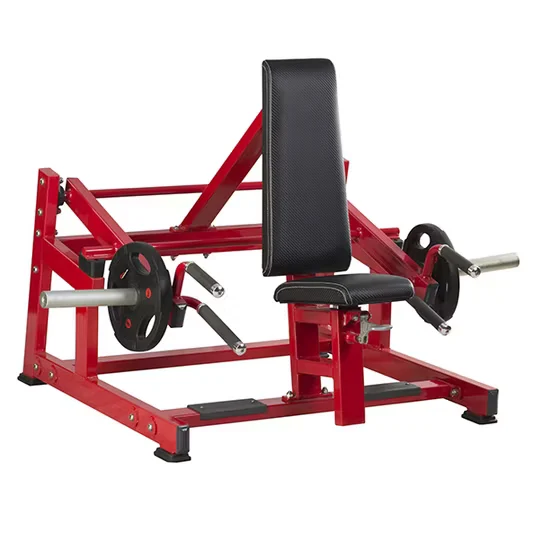
![Hammer Strength ISO-Lateral Incline Press Gym Fitness Equipment [WARN] draft identifier mismatch](https://bicksport.com/wp-content/uploads/2026/08/hammer-strength-iso-lateral-incline-press-gym-fitness-equipment-warn-draft-identifier-mismatch-f0a380.webp)
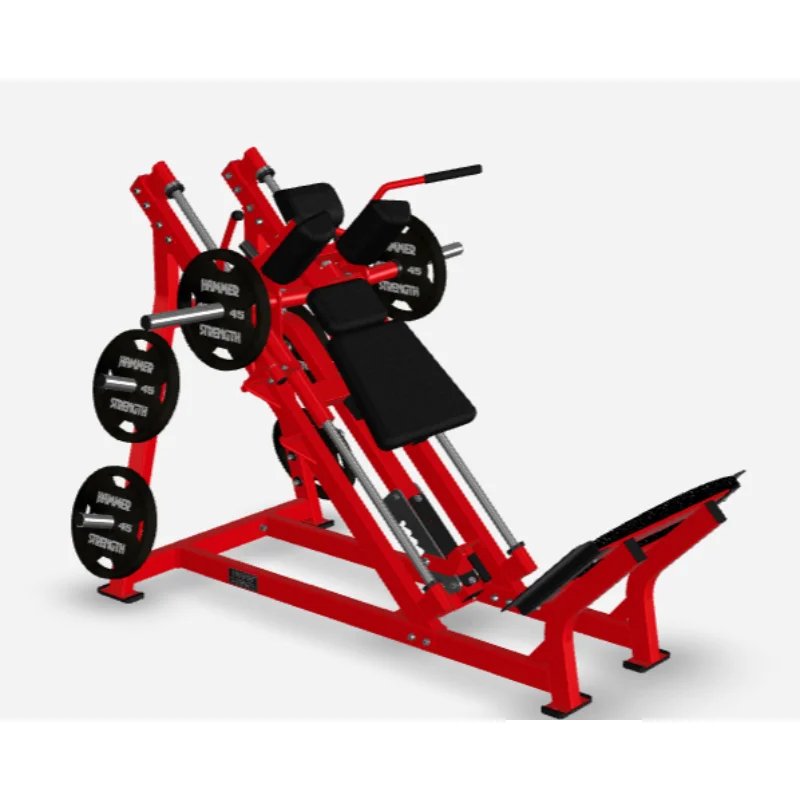
![Senrui Rogers PRO Power Squat Rack Commercial Gym Strength Equipment [WARN] draft identifier mismatch](https://bicksport.com/wp-content/uploads/2026/08/senrui-rogers-pro-power-squat-rack-commercial-gym-strength-equipment-warn-draft-identifier-mismatch-fe7720.webp)