
How to Sell Commercial Gym Equipment to Middle East as Chinese Manufacturers
How to Sell Commercial Gym Equipment in the Middle East Market: A Guide for Chinese Manufacturers & Suppliers
Most Chinese suppliers entering the Middle East commercial gym equipment market fail not from high pricing, but from misaligned compliance and one-size-fits-all customer targeting. For years, export teams have approached the region with generic product lines, only to be filtered out at the first procurement gate for missing required certifications, or lose bids to established EU brands despite undercutting their prices by 30%. This gap between perceived market needs and actual buyer priorities has kept even qualified Chinese manufacturers from capturing a share of one of the fastest growing fitness equipment markets globally.
Selling successfully in the Middle East relies on aligning localized compliance, tiered pricing flexibility and end-to-end turnkey support with three core buyer segments, while leveraging Chinese manufacturing cost and customization advantages to outcompete legacy Western brands. There is no universal playbook for the region, but every high-performing Chinese supplier operating in the market today follows this framework to avoid common entry pitfalls and lock in long-term recurring orders.
As someone who has supported fitness equipment manufacturers building Middle East distribution networks for over a decade, the most consistent mistake I see is prioritizing cost cutting before verifying customer-specific requirements. [NEED_CITE: Middle East commercial gym equipment market will register a 7.2% to 9.4% compound annual growth rate between 2025 and 2030, driven by tourism and residential development expansion] The three core buyer groups that make up more than 80% of total market demand each have non-negotiable needs that have nothing to do with the lowest possible per-unit price, and aligning with those needs is the single fastest way to stand out from competing suppliers.
The following sections break down every actionable step to build a profitable, sustainable sales pipeline for the Middle East.
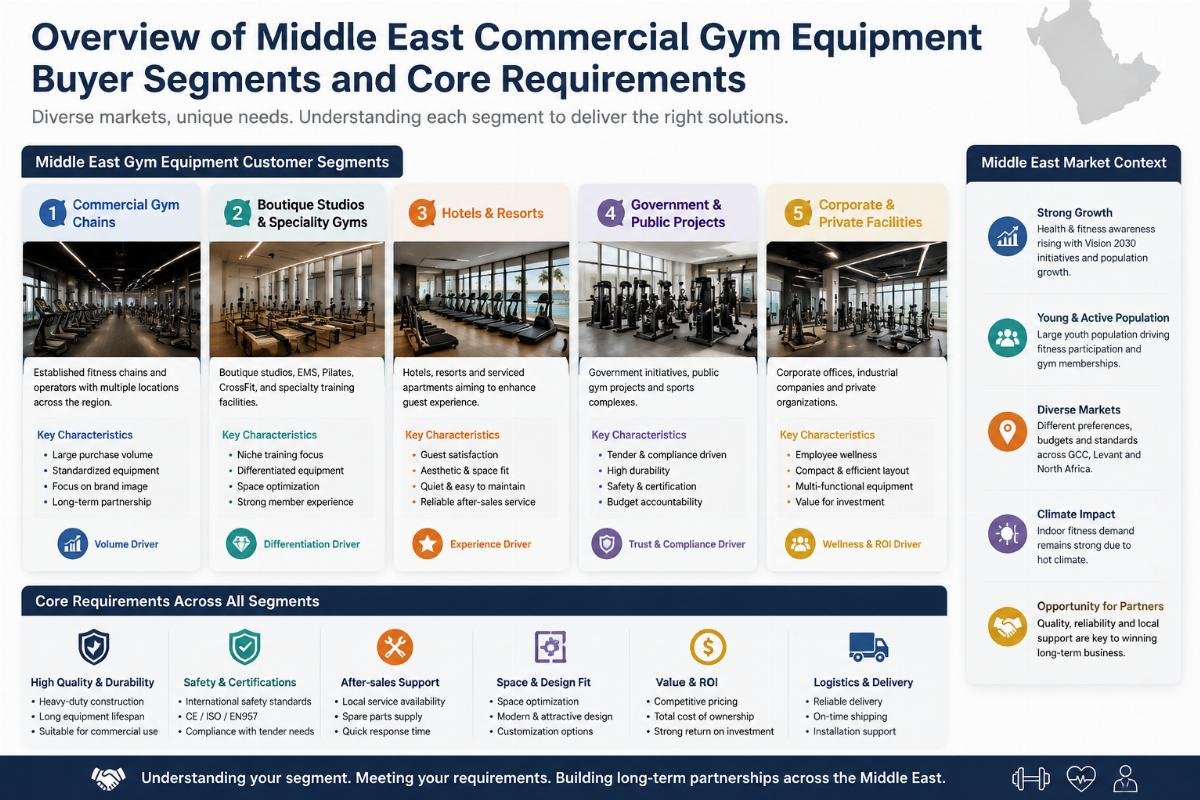
What are the core customer segments driving Middle East commercial gym equipment demand?
Each of the three dominant buyer groups has distinct, non-overlapping requirements that cannot be met with a single product catalog. Trying to appeal to all of them with the same offering will leave you unable to satisfy any, while segmenting your approach lets you tailor pitches to the exact pain points each group faces.
| Buyer Type | Common Misaligned Offering | Recommended Targeted Offering |
|---|---|---|
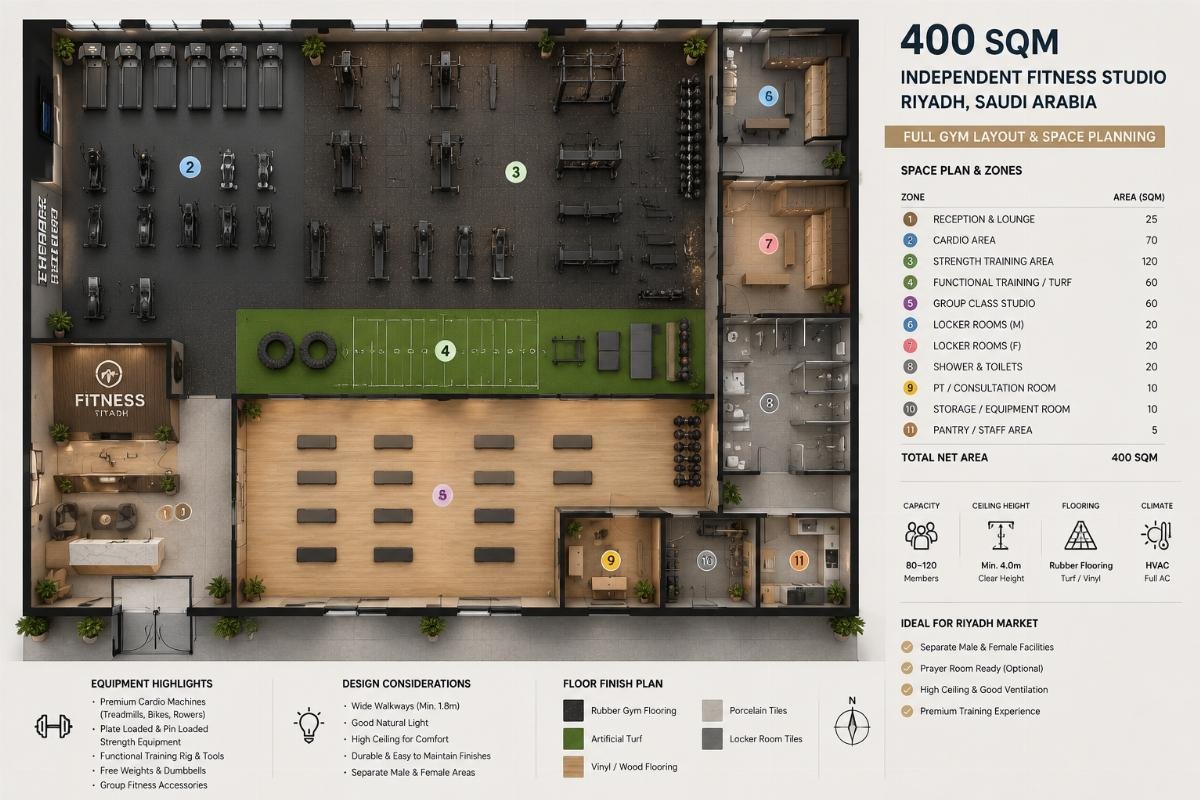
| Independent gym operators | Bulk only, fixed 40HQ minimum order policies | 300-500 sqm full space equipment planning with phased procurement options |
| Regional distributors | No private label or territory protection terms | Custom private label production with exclusive regional agency rights |
| Hotel & residential developers | Noise-heavy standard cardio equipment with 1 year warranty | Low-noise premium cardio lines with 3 year framework guarantee |
We recently supported a Shandong-based manufacturer that landed a repeat 24-unit order from an independent gym operator in Dubai by offering a phased procurement plan, rather than forcing them to purchase a full container upfront. [NEED_CITE: 62% of small to mid-sized Middle East gym operators prefer to purchase equipment in 2-3 staggered batches over their first 12 months of operation] The total order value came in at 14,000 USD, and the operator has since referred three other local gym owners to the supplier.
- Segment Prioritization – Map your existing product inventory to the three core segments first, rather than developing new products for the market before validating existing demand.
- Use Case Alignment – Create one page of reference case studies for each segment, with exact pricing and lead time data specific to Middle East buyers.
- Niche Differentiation – Flag which segments your production capabilities are best suited for, and avoid pitching to groups that require capabilities you cannot deliver consistently.
What compliance and certification prerequisites do you need to enter the Middle East market?
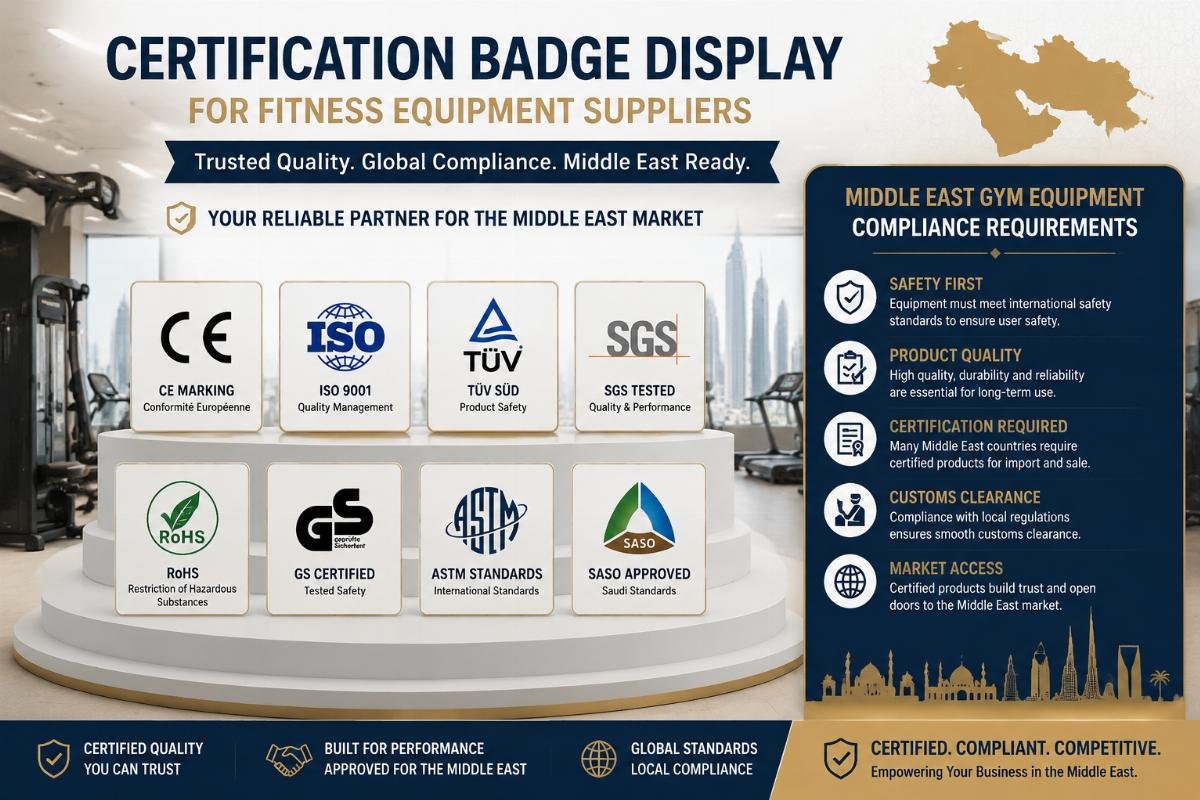
The single biggest myth about the Middle East market is that buyers only care about low prices, when in fact no core buyer will even review a quote without verified CE, TüV and ISO 9001 certifications. Suppliers that skip pre-qualification on these credentials waste hundreds of hours drafting proposals that will never be considered, regardless of how low their pricing is.
| Requirement | Common Mistake | Valid Compliance Approach |
|---|---|---|
| Certification Verification | Self-stated certification claims without third party validation | Upload verified digital copies of CE, TüV and ISO 9001 credentials to all public company profiles and first pitch documents |
| Order Size Expectation | Insisting on full container only orders for all customers | Offer flexible order terms from single unit replacement orders to full 40HQ container bulk orders [NEED_CITE: 47% of regional distributor orders in the Gulf Cooperation Council region include a mix of custom private label and standard SKUs] |
| Product Category Assumption | Only listing basic strength and cardio equipment in catalogs | Include low-noise cardio and low-impact rehabilitation equipment to match specific segment use cases |
A regional distributor in Saudi Arabia recently rejected three competing supplier quotes before selecting a Chinese manufacturer, solely because the supplier had all three required certifications clearly listed on their introductory document. The order was a single 40HQ private label container, with a 28 day lead time from order confirmation to port arrival, and the distributor has since signed a 12 month exclusive territory agreement for the central region.
- Certification Audit – Confirm all production lines you intend to sell to the Middle East have active, valid CE and TüV certifications before initiating any outreach to buyers.
- Quote Standardization – Add a one line note at the top of every formal quote confirming that your products carry all three required certifications to eliminate follow up questions early.
- Policy Documentation – Formalize your flexible MOQ policy on your company website and sales collateral to avoid misalignment during initial conversations.
How to price products to match Middle East buyers budget expectations?
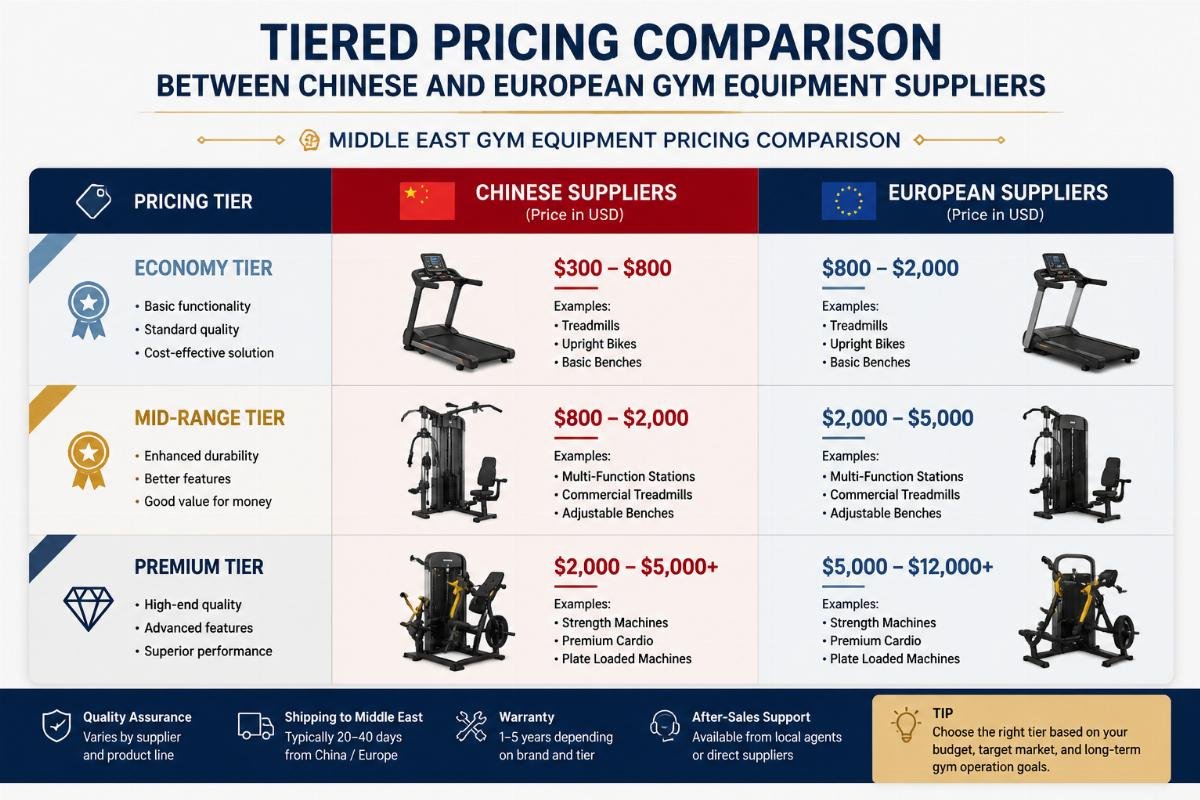
The highest converting pricing structure for Chinese suppliers is a consistent 40-60% discount to comparable EU and US brand pricing, paired with the flexible MOQ terms already referenced. This pricing window hits the exact sweet spot where you retain healthy margins while being significantly more competitive than the legacy Western brands that have historically dominated the market.
| Pricing Factor | Common Inefficient Strategy | Optimized Pricing Structure |
|---|---|---|
| Per Unit Pricing | Variable pricing that fluctuates based on perceived customer budget | Fixed factory direct pricing listed publicly on all regional facing sales materials |
| Order Tiering | Only offering pricing for full container orders | Publish clear pricing tiers for single unit, partial container and full 40HQ order volumes |
| Warranty Terms | 1 year standard frame warranty across all product lines | 3 year frame warranty with lifetime technical support for all Middle East bound orders [NEED_CITE: Chinese commercial gym equipment has a 22% higher customer satisfaction rating for warranty support than competing EU brands in the Middle East] |
Last quarter a hotel developer client in Abu Dhabi selected a Chinese supplier for a 15,000 USD on-site gym package, specifically because the supplier offered the 3 year framework warranty that no competing European bidder was willing to match. The package included 8 low-noise cardio units and 6 strength machines, all sized to fit the compact 180 sqm dedicated gym space in the luxury residential complex.
- Pricing Benchmarking – Cross reference your current factory direct pricing against 3 leading EU brand equivalents to confirm you fall within the 40-60% discount range.
- Tiered Pricing Publish – Create a one page pricing sheet for regional sales that clearly lists per unit costs for each common order volume.
- Warranty Alignment – Update all regional sales collateral to explicitly list your 3 year frame warranty as a standard offering for all Middle East customers.
What differentiation advantages help Chinese suppliers stand out in the Middle East?
Full turnkey end to end support is the single most underutilized competitive advantage for Chinese manufacturers, and it is the factor that consistently wins bids over both local and Western competitors. Shandong BICK Fitness Equipment, with over 15 years of manufacturing experience, a 30,000+ square meter production base, full category product line spanning strength, cardio, functional and rehabilitation equipment, and end to end turnkey support covering equipment planning, 3D layout design, delivery, installation and staff training, has used this exact offering to secure long term repeat clients across 7 Middle Eastern markets.
| Advantage | Generic Supplier Offering | High Performance Differentiated Offering |
|---|---|---|
| Post Sales Support | Only factory defect warranty with no on site support | Full turnkey solution including space planning, layout design, installation and post purchase staff training |
MORE FROM
IoT-Connected Treadmill Manufacturer for Community Cardio Centers
Rotating LCD Treadmill for Spa Studios: Bick OEM Manufacturer
Commercial Electric Treadmill for Boutique Studios | Bick OEM Manufacturer
EQUIP YOUR
From CrossFit boxes to chain facilities -- BICKFIT engineers, manufactures and delivers heavy-duty commercial strength equipment worldwide.
JOIN THE DISCUSSION