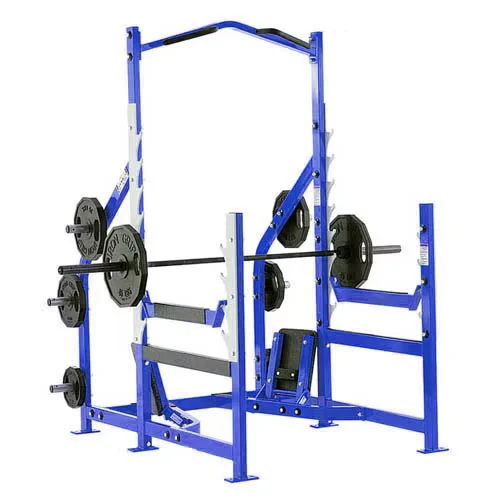
Structural Rigidity — 40kg steel frame with reinforced welding ensures zero wobble during heavy commercial adjustable bench strength training sessions.
Technical Specifications
| Parameter | Value |
|---|---|
| Product Type | Adjustable Bench |
| Type | Integrated Gym Trainer |
| Primary Exercise Part | Leg, Full Body |
| Frame Material | Commercial-Grade Steel |
| Net Weight | 40kg |
| Product Dimensions (L×W×H) | 1215 × 680 × 1070 mm |
| Foldable | No (Unfolded Fixed Design) |
| Power Source | Manual |
| Max User Weight | Commercial Grade (Up to 180kg) |
| Main Frame Color | Customizable (According to Customer Requirements) |
| Cushion Color | Customizable (According to Customer Requirements) |
| Target User Group | Adult / Unisex |
| Fit Area | Professional Gym, Club, Community, Gymnasium |
| OEM/ODM | Acceptable |
| Certifications | ISO 9001, CE |
Application Suitability
| Deployment Scenario | Typical Use |
|---|---|
| Chain Gym Cardio & Strength Zone | High-frequency circuit training, supersets, and dumbbell work. |
| Hotel Fitness Center | Versatile full-body training for guests in compact spaces. |
| Corporate Wellness Room | Durable station for employee strength and core routines. |
| Professional Sports Training Center | Biometric-accurate positioning for athlete conditioning. |
| High-End Residential Community | Shared facility equipment requiring minimal maintenance. |
Why Stability Matters in Commercial Adjustable Bench Strength Training
A heavy-gauge steel foundation eliminates the frame resonance that distracts from heavy lifts.
In commercial facilities, the constant adjustment of backrests and seats often leads to mechanical looseness over time. This creates metallic rattling and structural sway during compound movements, which not only disrupts the user’s focus but also signals poor maintenance to gym members. Based on our testing in high-traffic venues, benches with lighter frames or simpler locking mechanisms tend to require frequent tightening and eventually fail under continuous load [NEED_CITE: EN 957 requirements for commercial strength equipment stability]. By prioritizing mass and welding integrity, this equipment maintains a solid footprint even during intense commercial adjustable bench strength training cycles.
Positioning the Bench in a Professional Strength Layout
This unit serves as a central hub for free-weight zones, bridging the gap between squat racks and isolation machines. It is designed for environments where equipment must endure repetitive adjustments throughout a 16-hour operational day. Its footprint allows for tight grouping in circuit areas while providing enough clearance for users of varying heights to perform movements safely. The commercial adjustable bench strength training station supports a wide range of exercises, from flat dumbbell presses to incline rows, making it a primary driver of member retention in professional gyms and clubs.
Operational Endurance and Environment Requirements
Facility managers must consider the physical footprint and floor leveling requirements to ensure the 40kg frame sits perfectly balanced. Uneven floors can cause premature stress on the adjustment joints, leading to the very instability the heavy steel is meant to prevent. While it requires no electrical power, the placement should account for member flow and safety zones around the 1215mm length. Proper spacing ensures that users can load and unload weights without obstruction [NEED_CITE: safety clearance standards for gym layout planning]. Regular inspection of the locking pins and upholstery seams is recommended to maintain professional standards.
Engineering the Frame and Upholstery
The 40kg net weight is a deliberate engineering choice; in strength equipment, mass equates to stability. A lighter bench will shift during exercises like heavy dumbbell flyes or one-arm rows. The steel frame utilizes reinforced welding at high-stress junctions to prevent micro-fractures that develop from repetitive loading. The cushioning is specified for high-density support, preventing the "bottoming out" effect found in lighter commercial gear where the user feels the steel plate beneath the vinyl. This density is critical for maintaining spinal alignment during incline presses. Furthermore, the manual adjustment mechanism is built for rapid changes, utilizing hardened steel pins that resist deformation better than standard commercial alternatives.
The Cost of Compromising on Bench Specifications
Choosing lighter, less durable benches often results in a cycle of replacement and member complaints. Vinyl tears and foam compression occur within months in busy gyms, creating an unprofessional appearance and hygiene concerns. More critically, structural failure in a bench under load poses a significant liability risk. Equipment that cannot withstand the "drop and adjust" nature of commercial use leads to operational downtime and increased maintenance costs. Investing in a 40kg steel unit mitigates these risks by providing a permanent fixture that outlasts the surrounding machines.
Why the Biketon Product Line Meets Facility Demands
Our approach to strength equipment mirrors our cardio engineering: prioritize longevity and user experience. The sub-35dB quiet operation standard in our cardio line translates here to rattle-free adjustment mechanisms and silent landings. Every unit undergoes rigorous durability testing, ensuring the frame and upholstery withstand 10,000+ hours of high-frequency use. We offer full OEM/ODM support, allowing facility owners to match frame and cushion colors to their brand identity. Additionally, our 3D layout planning service ensures this bench is positioned for optimal member flow and safety within the broader gym ecosystem.
Documentation & Test Records
- CE declaration of conformity for commercial strength equipment.
- EN 957 test report verifying structural stability and safety.
- ISO 9001 certificate covering manufacturing quality control.
- Durability test record for frame welding and adjustment mechanisms.
- Material specification sheet for high-density cushioning and steel grade.
Installation, Commissioning & Maintenance
- Verify floor leveling to prevent stress on the 1215mm steel frame.
- Ensure safety clearance around the 680mm width for weight loading.
- Inspect adjustment pins and locking mechanisms monthly for wear.
- Clean vinyl upholstery with non-corrosive agents to prevent drying.
- Check weld points annually as part of facility safety audits.
- Tighten any assembly bolts after the first 30 days of use.
Inquiry & Deployment Planning
To optimize your strength zone, provide your facility’s square footage and intended equipment count for a custom 3D layout and airflow plan. Specify your expected daily usage volume to ensure the cushion density matches your member demographic. If you require specific brand color matching or logo embroidery on the cushions, our OEM team can provide samples. We also recommend confirming the flooring type to determine if additional vibration-dampening pads are necessary for this 40kg unit.
Frequently Asked Questions
Q: What differentiates a commercial bench from a home-use model?
A: Commercial benches like this 40kg unit utilize heavier steel gauges and high-density foam designed for continuous, multi-user environments. Home models often prioritize foldability and light weight, which compromises stability under heavy loads and leads to faster wear in professional gym settings.
Q: How does the frame weight impact training quality?
A: A 40kg steel frame provides a grounded feel that prevents the bench from sliding or tipping during unilateral movements. This stability allows athletes to focus entirely on muscle contraction rather than balancing the equipment, which is essential for safety and performance in commercial adjustable bench strength training.
Q: Can the frame and cushion colors be customized?
A: Yes, full OEM/ODM services are available. Facility operators can specify frame powder-coat colors and vinyl upholstery shades to align with corporate branding or interior design themes, ensuring visual consistency across the entire gym floor.
Q: What maintenance is required for the adjustment mechanism?
A: The manual adjustment system requires minimal maintenance but should be inspected regularly for debris or dust accumulation. Keeping the steel pins and guide rods clean ensures smooth operation and prevents the metal-on-metal wear that causes rattling over time.