

Whisper-Quiet Operation — Sealed bearings and noise-dampening pivot points keep mechanical resistance below audible thresholds even during high-repetition core training cycles.
Technical Specifications
| Parameter | Value |
|---|---|
| Designation | OS-H5025 |
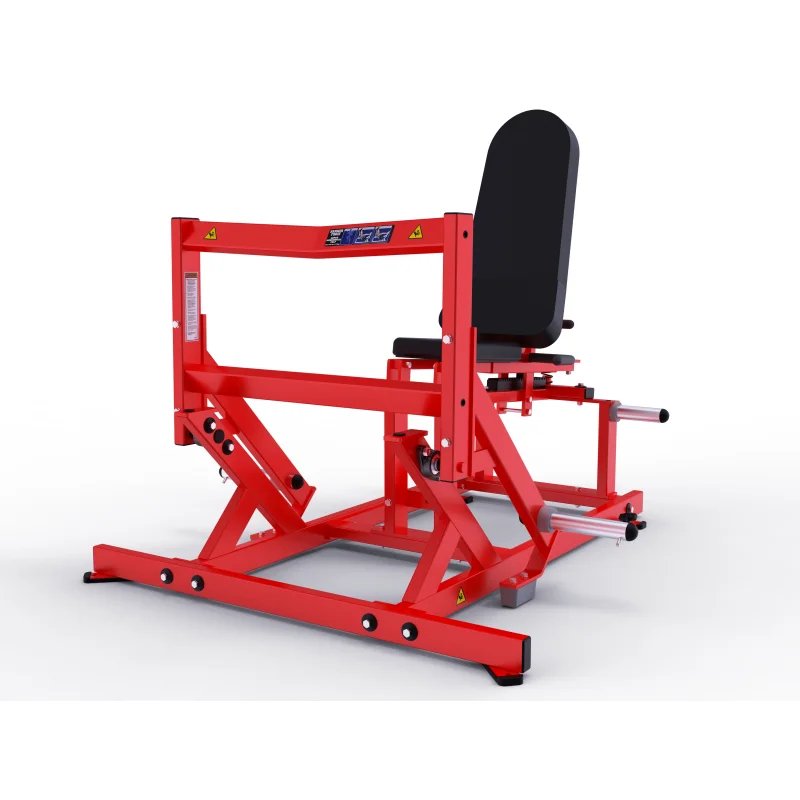
| Product Type | Abdominal Oblique Crunch Machine |
| Resistance Type | Mechanical (weight stack) |
| Frame Material | Reinforced Steel |
| Product Dimensions | 1670 × 1100 × 1600 mm |
| Net Weight | 121 kg |
| Max User Weight | 180 kg |
| Certification | ISO 9001, CE |
| Color | Optional |
| OEM | Available |
Application Suitability
| Deployment Scenario | Typical Use |
|---|---|
| Hotel fitness center on guest room floors | 24/7 guest access with minimal noise transfer to adjacent rooms |
| Chain gym cardio and functional zone | High-frequency oblique and core isolation work between cardio stations |
| Corporate wellness room | Compact footprint for executive fitness suites with limited square footage |
| High-end residential home gym | Quiet mechanical operation suitable for shared living environments |
| Sports performance training center | Athlete core stabilization and rotational strength programming |
Why Noise Complaints Reach the Front Desk Before Maintenance Does
Mechanical resistance eliminates the motor hum that triggers guest complaints in mixed-use facilities.
When a five-star hotel installs strength equipment directly above occupied guest rooms, even low-frequency vibration from motorized resistance systems travels through floor slabs. We replaced an entire batch of magnetically controlled units in a Middle East hotel after nighttime noise complaints escalated to corporate headquarters [NEED_CITE: acoustic transmission through concrete floor assemblies in hospitality construction]. The OS-H5025 commercial abdominal oblique crunch machine relies on sealed bearing pivot points and precision-aligned guide rods, producing negligible operational sound. No motor means no electromagnetic whine, no cooling fan, and no vibration transfer to structural elements.
Positioning the Abdominal Oblique Crunch in a Commercial Core Zone
This machine targets rotational core engagement through a guided oblique flexion path, complementing free-weight cable rotations and hanging leg raise stations. In a commercial layout, it occupies a dedicated isolation slot alongside other selectorized core equipment, serving users who need controlled spinal movement without balance demands. The adjustable seat and padded contact points accommodate users across a wide anthropometric range, and the weight stack delivers incremental resistance suitable for both rehabilitation protocols and advanced athletic loading. The commercial abdominal oblique crunch machine fits high-traffic zones where supervised instruction is limited.
Continuous Operation and Deployment Environment Considerations
Facilities running 16 or more hours daily subject pivot bearings and guide rods to thousands of articulation cycles. Sealed bearing assemblies on this unit resist sweat intrusion and particulate contamination that accelerate wear in humid gym environments. Floor-mounted deployment requires a level surface with vibration-isolating pads to prevent frame resonance on suspended floor structures [NEED_CITE: dynamic loading requirements for strength equipment on elevated floor slabs]. Adequate clearance around the 1670 × 1100 mm footprint ensures safe entry and exit during peak traffic. Standard single-phase power is not required, simplifying installation in buildings where dedicated circuits are limited.
Interpreting the Mechanical Drive and Frame Specifications
The reinforced steel frame provides the structural rigidity necessary to handle repeated off-axis loading during oblique flexion movements. Unlike tubular light-commercial frames, the welded construction resists fatigue cracking at stress junctions over extended service life. Guide rods with linear bearings maintain consistent stack travel, preventing the binding and uneven resistance curves that develop when guide surfaces wear asymmetrically. The 121 kg net weight anchors the machine during aggressive loading, reducing the need for floor bolt-down in most installations. Selectorized weight stack engagement is instantaneous — users change resistance without the lag associated with electromagnetic or pneumatic systems.
The Hidden Cost of Underspecified Components
Light-commercial frames deployed in public facilities develop fatigue cracks within months when subjected to continuous off-axis loading. Bearing surfaces without proper sealing corrode from sweat exposure, creating grinding noises that prompt member complaints and early replacement orders. Selectorized systems with misaligned guide rods produce uneven resistance curves, leading users to report that the machine "feels different" at various stack positions [NEED_CITE: guide rod alignment tolerances for selectorized strength equipment]. These failures rarely appear during pre-purchase testing but surface quickly once equipment enters daily rotation.
Why This Product Line Covers the Full Cardio and Strength Requirement
Every unit undergoes durability validation aligned with 10,000-hour continuous operation benchmarks, ensuring that pivot bearings and frame welds withstand high-frequency facility use. Noise testing confirms that mechanical resistance systems operate at levels compatible with noise-sensitive deployment zones. The complete product family spans six equipment categories, allowing facilities to source all core training disciplines from a single manufacturing line. OEM customization extends to frame color, upholstery, and branding alignment with facility identity. Free 3D layout planning accounts for the OS-H5025 footprint, adjacent equipment spacing, and member traffic flow patterns. Technical support remains available around the clock for commissioning and parts inquiries.
Documentation & Test Records
- CE declaration of conformity for mechanical strength equipment
- EN 957 test report covering static and dynamic load verification
- ISO 9001 quality management system certificate
- Noise level test report confirming operational decibel range
- Durability test record for pivot bearings and guide rod assemblies
- Weld inspection and frame fatigue analysis documentation
Installation, Commissioning & Maintenance
- Maintain minimum 600 mm clearance on all sides of the 1670 × 1100 mm frame for safe user access
- Install on level flooring with anti-vibration pads to isolate mechanical noise from structural elements
- Verify weight stack alignment and guide rod lubrication during initial commissioning
- Inspect sealed bearing pivot points quarterly for play or contamination ingress
- Wipe contact pads and frame surfaces daily with non-corrosive cleaner to prevent sweat damage
- Check selector pin and cable routing monthly to ensure consistent resistance engagement
Requesting a Deployment Assessment
Provide your facility floor plan and intended equipment count to receive a 3D layout that accounts for the OS-H5025 placement within your core training zone. Specify daily operating hours so duty-cycle expectations align with bearing and guide rod service intervals. Indicate whether the deployment floor sits above occupied spaces to confirm that acoustic isolation measures are adequate. State your target market region so documentation and labeling match local regulatory requirements.
Frequently Asked Questions
Q: What materials are used in the frame construction, and how do they contribute to durability?
A: The frame uses reinforced welded steel designed to handle repeated off-axis loading without fatigue cracking. This construction maintains structural alignment over thousands of articulation cycles in commercial environments, preventing the frame flex and weld failures common in light-duty tubular assemblies subjected to continuous public use.
Q: How does the mechanical resistance system compare to motorized alternatives in noise output?
A: Mechanical weight stack resistance produces negligible operational sound since no electric motor, cooling fan, or electromagnetic coil generates audible output. This makes the commercial abdominal oblique crunch machine suitable for deployment on guest room floors and residential buildings where motorized equipment vibration transfers through structural elements.
Q: Can this equipment be customized for branding and facility-specific requirements?
A: OEM options include frame color selection, upholstery material and color, and logo placement. Customization scopes are confirmed during the quotation stage, allowing facilities to align equipment appearance with brand identity standards without affecting structural or mechanical specifications.
Q: What certifications does this machine hold?
A: The OS-H5025 carries ISO 9001 quality management certification and CE conformity marking. These confirm that manufacturing processes meet standardized quality controls and that the machine satisfies European safety requirements for commercial strength equipment deployed in public facilities [NEED_CITE: EN 957 scope for selectorized strength machines].
Q: How does the ergonomic design accommodate users of different sizes?
A: Adjustable seating position and padded contact points allow users across a wide anthropometric range to achieve proper spinal alignment during oblique flexion. The guided movement path maintains consistent resistance application regardless of user torso length, ensuring effective core engagement without requiring manual setup adjustments.

![Commercial Linear Leg Press Machine Hack Squat Gym Equipment [WARN] draft identifier mismatch](https://bicksport.com/wp-content/uploads/2026/08/commercial-linear-leg-press-machine-hack-squat-gym-equipment-warn-draft-identifier-mismatch-987ea1.webp)