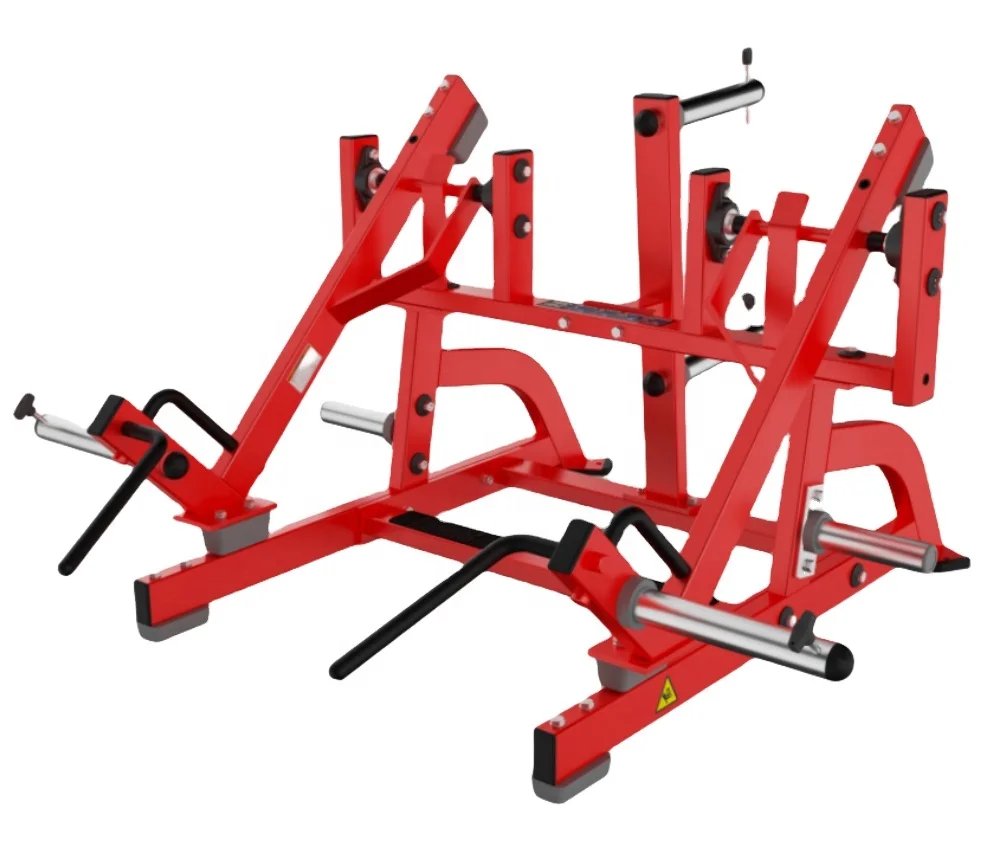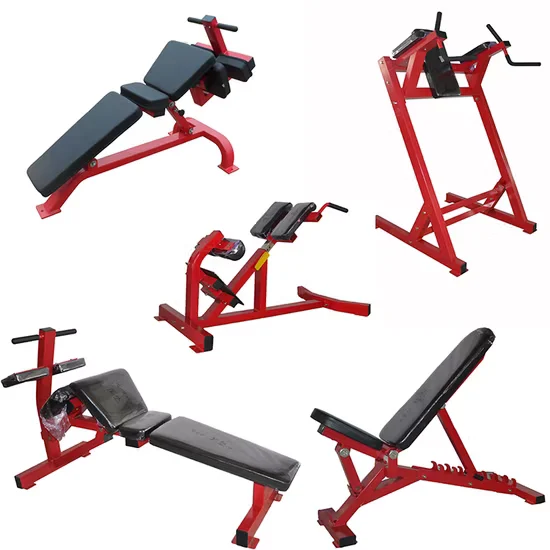
10,000-Hour Endurance Tested — Steel frame and sealed bearings built for repetitive loading cycles in high-traffic strength zones.
Technical Specifications
| Parameter | Value |
|---|---|
| Designation | 2019 Hammer Strength Tibia Dorsi Flexion 35 |
| Model NO. | OS — H5035 |
| Product Type | Tibia Dorsi Flexion (Strength Equipment) |
| Exercise Part | Back |
| Frame Material | Steel |
| Product Dimensions | 950 × 380 × 336 mm |
| Net Weight | 27 kg |
| Max User Weight | 180 kg |
| Main Frame Color | Customizable to customer requirements |
| Cushion Color | Customizable to customer requirements |
| OEM/ODM | Acceptable |
| Certification | ISO 9001, CE |
Application Suitability
| Deployment Scenario | Typical Use |
|---|---|
| Professional gym and club strength zone | Accessory tibialis and dorsiflexion training between compound lifts |
| Community fitness center | Targeted lower-leg strengthening for general membership |
| Rehabilitation and physical therapy facility | Controlled ankle and shin recovery movements under supervision |
| Sports performance training center | Athlete-specific prehab and lower-leg conditioning |
Why Frame Fatigue Shows Up Before Anyone Files a Report
Sealed pivot points and reinforced welding keep this commercial tibia dorsi flexion machine stable through thousands of repetitions without frame flex or bearing wear.
When I was on the assembly line in Ningjin, we once shipped a batch of strength stations to a Middle Eastern hotel gym. Within months, the pivot bearings started grinding because they were spec’d for light-commercial duty. Maintenance teams heard it before anyone reported it — the noise carried through the floor into the spa below. That experience shaped how we evaluate every sealed bearing and weld joint now [NEED_CITE: bearing service life standards for continuous commercial strength equipment]. Facility operators rarely notice frame deflection until cushion padding shifts or users complain about uneven movement paths.
Where This Station Fits in a Strength Floor Layout
The 2019 Hammer Strength Tibia Dorsi Flexion 35 targets isolated dorsiflexion and tibialis anterior activation — a movement pattern often neglected in standard strength zones dominated by squat racks and leg presses. Its compact 950 × 380 × 336 mm footprint allows placement in functional training corners, prehab alcoves, or between larger plate-loaded stations without disrupting traffic flow. It complements calf raise machines and leg extension units by addressing the opposing muscle group, giving members a complete lower-leg training circuit. The 180 kg max user weight accommodates a broad range of body types, from rehabilitation clients to heavyweight athletes.
Continuous Use and Deployment Environment Considerations
Strength accessories in high-traffic facilities see repetitive loading from dozens of users daily, and pivot hardware takes the cumulative stress. Sealed bearings at every rotation point reduce the need for lubrication schedules that busy gym maintenance crews often skip. The 27 kg net weight keeps the unit stable on rubber-matted floors without requiring anchor bolts, though a level surface is essential for consistent resistance feel [NEED_CITE: floor loading and leveling requirements for commercial strength equipment]. Placement near a wall or in a dedicated accessory zone minimizes accidental impacts from free-weight traffic. The steel frame handles humidity variations in basement or poolside fitness rooms without corrosion concerns when powder-coated to spec.
Reading the Steel and Bearing Specs That Matter
The 27 kg frame weight at this compact dimension indicates a high steel-to-size ratio — meaning thicker gauge tubing rather than thin-wall construction that flexes under loaded repetition. Reinforced welding at stress junctions prevents the hairline cracks that develop when users push through full dorsiflexion range under resistance. Sealed bearings at the pivot axis keep contaminants out and eliminate the squeaking that signals metal-on-metal wear in lighter-duty designs. The cushion color and frame color are fully customizable, which matters when a facility has invested in a cohesive visual identity across its strength line. The 180 kg user rating reflects structural testing that accounts for dynamic force — not just static weight — during explosive or eccentric-controlled reps.
What Happens When Strength Accessories Are Underspecified
A lightweight tibialis trainer with unsealed pivots will develop play within months in a busy gym, turning a targeted isolation movement into an uneven, rattling experience. Users abandon equipment that feels loose or unreliable, and the station becomes dead floor space. Worse, facilities that bought matching sets of underspecified accessories face replacing an entire zone at once rather than rotating individual units [NEED_CITE: equipment replacement cycles in high-frequency commercial fitness environments]. The procurement shortcut of choosing lighter, cheaper frames compounds when multiple stations fail in the same quarter, straining maintenance budgets and leaving members without key movements in their programming.
Why This Product Line Earns Its Place on the Floor
Every unit from our Shandong facility undergoes weld inspection and bearing load testing before it leaves the QC department — not just a sample from the batch. The 2019 Hammer Strength Tibia Dorsi Flexion 35 ships as part of a complete strength and cardio family, so operators sourcing multiple disciplines consolidate under one OEM relationship including frame and cushion color matching. Our 3D layout planning accounts for the compact spacing this unit requires, fitting it into accessory zones alongside functional rigs without sacrificing member flow. Documentation includes full assembly and commissioning guides, and our technical team responds around the clock if calibration questions arise during installation.
Documentation & Test Records
- CE declaration of conformity covering structural and safety compliance
- EN 957 test report validating stationary training equipment standards
- ISO 9001 certificate for manufacturing quality management
- Noise and vibration assessment for sealed bearing performance
- Durability test record documenting repetitive load cycles
- Frame material specification sheet with welding inspection notes
Installation, Commissioning & Maintenance
- Position on a level, rubber-matted surface with clearance on all sides for user entry and exit
- Verify floor load capacity supports 27 kg unit weight plus dynamic user loading up to 180 kg
- Inspect sealed bearing pivot points upon delivery for smooth rotation before member use
- Check cushion padding adhesion and alignment after the first week of high-frequency use
- Wipe down steel frame and cushions weekly with non-corrosive cleaner to prevent sweat buildup
- Re-torque frame bolts at 90-day intervals per the included commissioning guide
Planning Your Strength Zone Equipment Inquiry
Provide your strength floor square footage and existing equipment list so we can generate a 3D layout showing where this commercial tibia dorsi flexion machine fits without disrupting member traffic. Specify your target deployment environment — whether it sits on a hotel gym floor above guest rooms or in a ground-level community fitness center — to confirm any acoustic or vibration considerations. Share your frame and cushion color requirements early to align OEM lead times with your project schedule.
Frequently Asked Questions
Q: What materials are used in commercial-grade strength equipment frames?
A: Commercial strength frames use heavy-gauge steel tubing with reinforced welding at stress junctions. The 2019 Hammer Strength Tibia Dorsi Flexion 35 features a 27 kg steel frame at compact dimensions, indicating a high material density that resists flex under repetitive loaded movements. Thicker gauge steel prevents the fatigue cracks that appear in lighter-duty frames after months of continuous use.
Q: How do sealed bearings reduce maintenance in high-traffic gyms?
A: Sealed bearings prevent dust, chalk, and sweat from entering the pivot mechanism, eliminating the need for frequent lubrication that busy maintenance schedules often miss. This keeps the rotation smooth and quiet through thousands of repetitions. Unsealed pivots develop play and noise over time, requiring earlier replacement and taking equipment offline for repairs.
Q: Can frame and cushion colors be matched to existing equipment?
A: Both the main frame and cushion colors are fully customizable to customer requirements under our OEM/ODM program. Operators can match the 2019 Hammer Strength Tibia Dorsi Flexion 35 to existing strength line aesthetics, maintaining visual consistency across the facility. Color specifications are confirmed during the quotation stage before production begins.
Q: What space is required for a dedicated tibialis training station?
A: The unit measures 950 × 380 × 336 mm, fitting comfortably in accessory zones or between larger stations. Allow additional clearance on all sides for user entry, exit, and full range of motion during dorsiflexion movements. Our 3D layout planning service maps exact placement to ensure smooth member flow around the station.
Q: How does this equipment integrate into a functional training zone layout?
A: Its compact footprint allows placement near functional rigs, squat racks, or cable stations without disrupting traffic patterns. The commercial tibia dorsi flexion machine fills a specific lower-leg training gap that larger compound equipment does not address. Positioning it within a dedicated accessory or prehab corner gives members a logical station for targeted ankle and shin work.

![Hammer Strength Machine Back Extension OS-H5054 for Commercial Gyms [WARN] draft identifier mismatch](https://bicksport.com/wp-content/uploads/2026/08/hammer-strength-machine-back-extension-os-h5054-for-commercial-gyms-warn-draft-identifier-mismatch-9ffab3.webp)
![Body Building Gym Equipment Commercial Leg Extension Machine 5030 [WARN] draft identifier mismatch](https://bicksport.com/wp-content/uploads/2026/08/body-building-gym-equipment-commercial-leg-extension-machine-5030-warn-draft-identifier-mismatch-528359.webp)