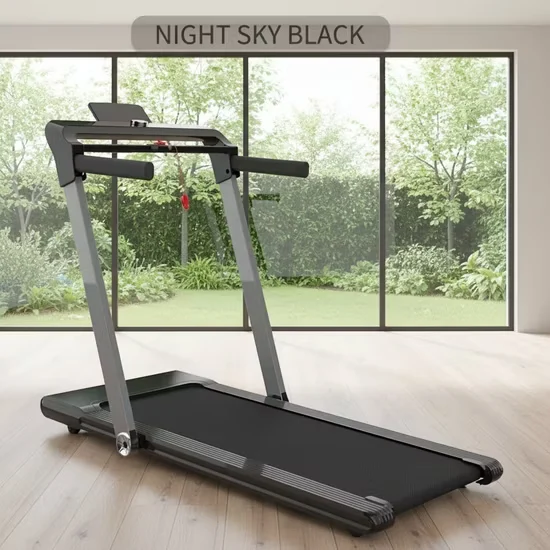
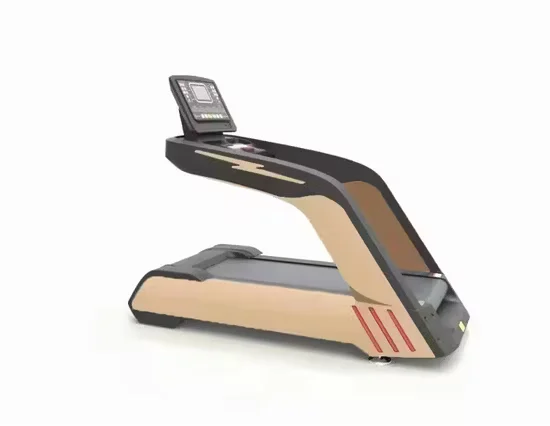
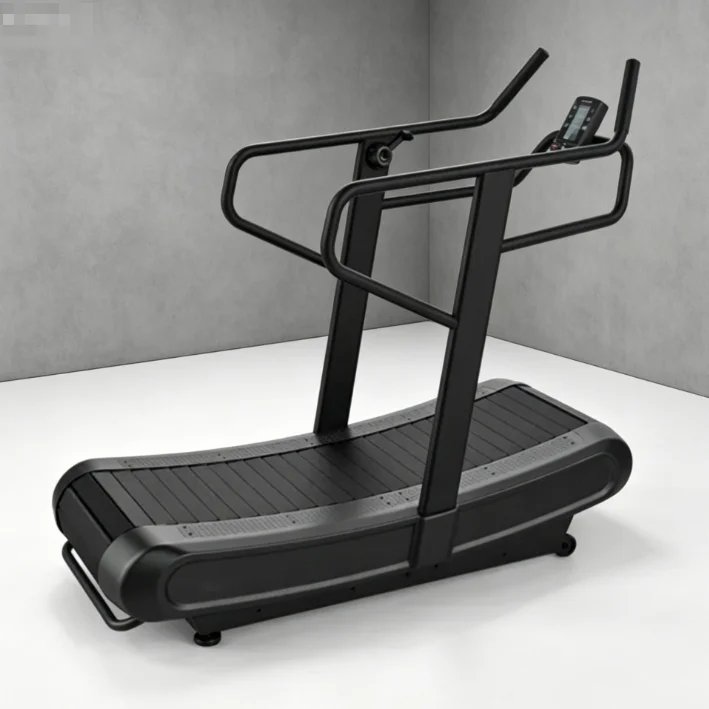
![W08 Electric Folding Fitness Treadmill for Home Use Endurance Training [WARN] draft identifier mismatch](https://bicksport.com/wp-content/uploads/2026/08/w08-electric-folding-fitness-treadmill-for-home-use-endurance-training-warn-draft-identifier-mismatch-dd9ea5.webp)
Quiet Foldable Deployment — The W08 foldable home treadmill 1.5HP electric walking treadmill stores vertically at 220mm depth to clear shared residential floors after sessions end.
Technical Specifications
| Parameter | Value |
|---|---|
| Designation | W08 |
| Motor Power | 1.5HP * |
| Speed Range | 1–16 km/h |
| Running Surface | 1200 x 450 mm |
| Console Type | LCD (Speed / Distance / Time / Calories) |
| Preset Programs | 16 |
| Product Unfolded Size | 1500 x 740 x 1150 mm |
| Product Folded Size | 1810 x 740 x 220 mm |
| Net Weight | 42.0 kg |
| Foldable | Yes |
| Material | ABS |
| Certification | CE, RoHS |
* Peak or continuous rating not specified — verify with manufacturer for expected daily session duration.
Application Suitability
| Deployment Scenario | Typical Use |
|---|---|
| High-end residential home gym | Daily walking and light jogging in apartments where floor space is limited |
| Corporate wellness room | Compact cardio option for employee break-area fitness zones |
| Community fitness center with limited floor space | Moderate-use endurance station in multi-purpose rooms |
| Hotel guest room fitness corner | Foldable unit stored against the wall between guest sessions |
Why Noise Complaints Reach the Front Desk Before Maintenance Does
A foldable home treadmill 1.5HP electric walking treadmill must operate without transmitting vibration through floor joists into occupied rooms below. Quiet operation depends on motor type, deck isolation, and frame damping working together.
I once supplied a hotel chain with treadmills rated for light home duty. Within months the front desk logged guest complaints about low-frequency hum traveling through the ceiling of rooms underneath the fitness floor. The issue was not the motor itself but the lack of vibration isolation between the deck and the frame. [NEED_CITE: structural vibration transfer in multi-floor fitness deployments] Residential and light-commercial deployments face the same physics — every footfall sends impulse energy into the building structure unless the running surface, motor mounts, and frame joints absorb it first.
Where This Treadmill Fits in a Compact Cardio Layout
The W08 covers walking through light jogging at speeds up to 16 km/h across 16 preset programs, placing it in the low-to-moderate intensity band of a cardio zone. It pairs well with an elliptical or exercise bike to give users a non-impact alternative when the running surface is occupied. The 1200 x 450 mm belt accommodates walking and light jogging strides for users of average build. The foldable home treadmill 1.5HP electric walking treadmill stores flat against a wall or inside a closet, freeing floor area for other equipment or daily living use. The LCD console tracks speed, distance, time, and calories to support self-guided endurance sessions without requiring external device pairing.
Continuous Use Expectations and Deployment Conditions
A 1.5HP motor in a foldable frame is engineered for moderate daily sessions rather than all-day commercial rotation. [NEED_CITE: motor duty cycle classification for continuous commercial operation] Operators planning multiple users per day should confirm whether the rating is peak or continuous output before finalizing unit count. The folded depth of 220 mm allows storage in tight corridors, but the unit must be deployed on a level surface with clearance on all sides for airflow. Standard household voltage powers the motor, though buyers in markets with 220–240V systems should verify plug type and circuit amperity before shipment. A rubber isolation mat beneath the frame reduces structure-borne vibration in upper-floor installations.
Motor Output, Deck Dimensions, and Console Logic
The 1.5HP motor drives the belt through a roller-and-belt transmission common in foldable platforms, where continuous versus peak rating determines how long the unit can run before thermal buildup triggers protective shutdown. The 1200 x 450 mm running surface provides enough length for walking strides and short jogging steps but limits full-speed running for taller users. The ABS frame material keeps net weight at 42.0 kg, aiding portability when folding and repositioning. The LCD console cycles through speed, distance, time, and calorie readouts across 16 programs, giving users structured progression without requiring app connectivity. Preset programs vary speed in intervals, allowing users to alternate between recovery pace and effort pace within a single session.
The Hidden Cost of Underspecifying a Cardio Station
Selecting a treadmill without matching motor duty rating to expected daily run-hours leads to thermal cutouts mid-session and premature brush wear. [NEED_CITE: thermal degradation in undersized treadmill motors under sustained load] In shared residential buildings, inadequate vibration isolation turns a personal fitness session into a neighbor dispute, sometimes resulting in equipment bans by building management. Units that cannot store compactly end up occupying permanent floor space, crowding out other equipment or living-area furniture. When console data remains on the LCD without export capability, users lose the ability to track long-term progress in external training logs.
Why This Line of Foldable Cardio Equipment
The W08 is built around a frame that folds to 220 mm, addressing the primary constraint in apartment and multi-use room deployments — permanent floor-space commitment. The 1.5HP motor is matched to the belt load and user weight range typical of home and light-commercial endurance sessions. Six cardio series across the Biketon Sport portfolio allow facilities to source treadmills, bikes, ellipticals, rowers, stair climbers, and spinning bikes from one engineering team, keeping console logic and visual language consistent. OEM and ODM customization covers console UI language, color, and logo placement at flexible minimum order quantities. A free 3D cardio-zone layout maps equipment spacing, user flow, and ventilation requirements around the W08’s unfolded footprint of 1500 x 740 mm. Technical support responds around the clock to resolve commissioning or firmware questions after delivery.
Documentation & Test Records
- CE declaration of conformity covering electrical safety and EMC requirements
- EN 957 test report validating structural and mechanical safety for stationary training equipment
- RoHS compliance documentation confirming restricted substance limits in electronic components
- Motor specification sheet detailing rated output, thermal class, and duty-cycle parameters
- LCD console technical documentation with program logic and display interface description
- Noise level test record documenting acoustic output under standardized load conditions
Installation, Commissioning & Maintenance
- Allow at least 500 mm clearance behind the W08’s 1500 mm unfolded length for safe user entry and exit
- Place on a level surface with a vibration-isolation mat to reduce structure-borne noise in upper-floor deployments
- Verify household circuit amperage matches the motor’s draw to prevent breaker trips during peak-load start-up
- Run the belt at low speed without a user for initial tension and tracking alignment before first session
- Inspect belt tension and roller bearings periodically, adjusting to prevent slip under the 16 km/h top speed
- Wipe the ABS frame and LCD screen with a damp cloth after each session to prevent sweat-salt corrosion
Planning Your Equipment Inquiry
Share your cardio-zone floor area and intended unit count so a 3D layout can confirm the W08’s unfolded and folded clearance fits the available footprint. State expected daily run-hours per unit to determine whether the 1.5HP motor rating aligns with your usage pattern or whether a higher-duty platform is needed. Identify the deployment floor and adjacent occupied spaces so acoustic requirements can be matched to the unit’s tested output. Specify the target market voltage and plug standard to avoid adapter mismatches upon arrival.
Frequently Asked Questions
Q: What is the difference between peak and continuous motor power for home treadmills?
A: Peak power is the maximum output a motor can deliver for a short burst, typically during start-up or incline simulation. Continuous power is the sustained output the motor can maintain without overheating. A 1.5HP peak rating may correspond to a lower continuous value. Buyers planning longer or more frequent sessions should confirm the continuous rating to avoid thermal shutdown during use.
Q: How does the foldable design affect stability during running or jogging?
A: Folding mechanisms introduce hinge points in the frame that can flex under dynamic load. The W08 uses a locking system to secure the deck in the unfolded position, and the 42.0 kg net weight contributes to ground contact stability. Users running at the upper end of the 16 km/h range may notice more lateral movement compared with fixed-frame commercial units, making the platform better suited to walking and light jogging.
Q: What noise level can be expected during operation in shared residential spaces?
A: Noise output depends on motor type, belt tension, deck cushioning, and floor structure. The W08 has been tested for acoustic performance, and a noise level test report is available upon request. In multi-floor residential buildings, placing a rubber isolation mat beneath the unit and avoiding maximum speed on upper floors further reduces transmitted vibration. Operators should request the test data and compare it against local residential noise ordinances.
Q: Can the LCD console data sync with fitness apps or facility management systems?
A: The W08 LCD console displays speed, distance, time, and calories directly on screen across 16 programs. It does not include built-in wireless connectivity for app synchronization. Users who require data export should log values manually or inquire about optional console configurations that add data-interface capability. Facility operators needing centralized usage tracking should discuss IoT-enabled console alternatives with the engineering team.
Q: How often does the belt deck require lubrication and maintenance?
A: Belt lubrication intervals depend on usage frequency, ambient humidity, and user weight. Under moderate home use, inspection every few months is typical, with silicone lubricant applied when the belt surface feels dry or produces audible friction. Running the belt at low speed without a user after lubrication distributes the coating evenly. Operators should also check belt tracking and tension during each inspection to prevent uneven wear on the 1200 x 450 mm running surface.