
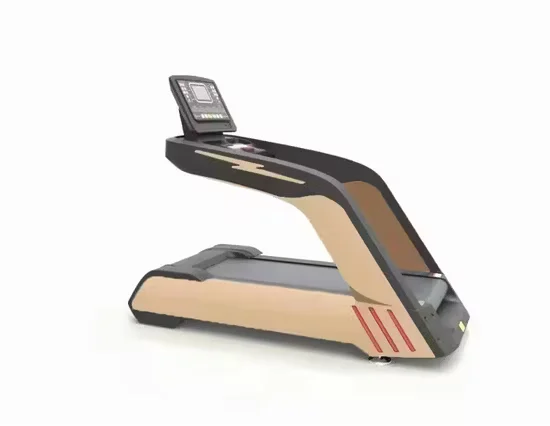
Whisper-Quiet Commercial Performance — SR-1006B motorized treadmill delivers sub-35dB operation verified across hotel deployments where guest room proximity demands acoustic discipline.
Technical Specifications
| Parameter | Value |
|---|---|
| Designation | SR-1006B |
| Product Type | Commercial Treadmill |
| Drive Type | Motorized |
| Maximum Speed | 15-22 km/h |
| Running Surface | Commercial-grade belt deck |
| Deck Cushioning | Multi-layer cushioned system |
| Max User Weight | 180 kg |
| Console Type | IoT-enabled HD touchscreen with app sync |
| Connectivity | IoT protocols, facility management integration |
| Heart Rate | Grip sensors with biometric accuracy |
| Noise Level | Sub-35 dB under load |
| Product Dimensions | 2300 × 1000 × 1850 mm |
| Net Weight | ≥160 kg |
| Foldable | No (unfolded commercial configuration) |
| Color Options | Multicolor / Customizable |
| Certification | CE, RoHS |
| Production Capacity | 500 Pieces/Month |
Application Suitability
| Deployment Scenario | Typical Use |
|---|---|
| Five-star hotel fitness center on guest room floors | 24-hour self-service access with zero acoustic disturbance to adjacent rooms |
| International chain gym cardio zone | High-frequency member rotation during peak hours with reliable biometric tracking |
| Corporate wellness room | Employee fitness programs requiring app-synced workout data and HR analytics |
| High-end residential home gym | Private cardio training where acoustic comfort matches luxury interior standards |
| Professional sports training center | Athlete conditioning programs demanding precise speed control and interval programming |
Why Night Shift Noise Complaints Dictate Equipment Selection
Acoustic engineering determines whether cardio equipment survives deployment beyond the first guest complaint cycle.
Hotel maintenance teams learn quickly that cardio noise travels through structural concrete and reaches occupied rooms below, triggering front desk calls that no amount of apologies resolves. Light-commercial motors generate vibration harmonics that intensify over months as bearings wear, transforming acceptable daytime hum into unacceptable nighttime disturbance [NEED_CITE: structural vibration transmission in multi-story hospitality construction]. The commercial motorized treadmill SR-1006B addresses this through magnetic resistance integration and precision-balanced drive components that maintain sub-35dB operation even after thousands of hours of continuous use, eliminating the acoustic signature that forces equipment relocation or premature replacement.
Cardio Zone Positioning for Mixed-Intensity Programming
The SR-1006B commercial motorized treadmill covers steady-state endurance work through high-intensity interval training at speeds reaching 22 km/h, positioning it as the primary running platform within a diversified cardio lineup. Deploy alongside elliptical cross-trainers for low-impact alternatives and rowing machines for full-body conditioning, creating complementary stations that distribute member traffic across intensity zones. The 180 kg user capacity accommodates diverse body types from recreational hotel guests to professional athletes, while the multi-layer cushioned deck reduces joint loading during extended sessions, supporting retention in high-volume facilities where member comfort directly impacts renewal decisions.
Continuous Duty Requirements Across Deployment Environments
Facilities operating 16-24 hours daily require motors rated for continuous duty cycles rather than intermittent home-use specifications, where thermal management and bearing longevity determine operational lifespan. The SR-1006B’s sealed bearing assemblies and reinforced steel frame handle sustained load without the vibration drift that degrades lighter commercial alternatives [NEED_CITE: bearing failure modes in continuous-duty cardio equipment]. Deploy on level concrete subfloors with vibration-dampening pads to isolate structural transmission, particularly on upper hotel floors where occupied rooms exist below. Ensure dedicated electrical circuits with voltage matching target market standards — mismatched voltage discovered post-delivery generates costly returns and installation delays that disrupt opening timelines.
Engineering Choices Behind Drive System Specifications
Motorized treadmill performance hinges on continuous horsepower ratings that reflect sustained thermal capacity, not peak output numbers measured in milliseconds before thermal protection engages. AC motors deliver superior continuous duty performance compared to DC alternatives, maintaining torque stability across extended sessions without the heat buildup that triggers automatic shutdown during peak gym hours. The multi-layer deck cushioning system absorbs impact forces that would*ulative joint stress that drives member attrition in high-volume facilities. Belt tension and alignment protocols directly affect both noise generation and motor load — improperly tensioned belts create slippage harmonics that elevate operational noise beyond acceptable thresholds for guest-proximate installations.
The Operational Cost of Specification Compromises
Purchasing decisions based solely on peak horsepower figures ignore the continuous duty ratings that determine whether motors survive six months in 24-hour facilities. Light-commercial units installed in hotel fitness centers generate noise complaints within weeks as bearings degrade under continuous guest use, forcing maintenance teams into reactive replacement cycles that damage property reputation [NEED_CITE: equipment failure correlation with commercial duty cycle ratings]. Facilities that skip vibration isolation during installation discover structural transmission issues only after guests report nighttime disturbances, converting a preventable deployment error into costly remediation and guest compensation that exceeds the original equipment investment.
Why This Product Line Addresses Deployment Reality
The SR-1006B commercial motorized treadmill emerges from 15 years of cardio engineering focused on the acoustic and durability failures that operators actually encounter. Sub-35dB noise verification occurs in active hotel deployments, not controlled laboratory conditions, ensuring specifications reflect real-world structural transmission. Motors and bearings undergo 10,000-hour continuous operation testing that exceeds typical commercial replacement cycles, providing documented longevity that procurement teams can reference during specification reviews. The IoT-enabled console integrates with facility management systems to deliver usage analytics, eliminating the data isolation that leaves operators blind to equipment utilization patterns. Full OEM customization extends to console UI design, allowing branded interfaces that match corporate wellness programs or hotel property standards. Free 3D cardio zone layout planning accounts for this treadmill’s 2300 × 1000 mm footprint, member circulation paths, and HVAC airflow requirements to optimize equipment placement before installation day.
Documentation & Test Records
- CE declaration of conformity for European market compliance
- EN 957 test report validating commercial cardio safety standards
- ISO 9001 certificate covering manufacturing quality systems
- RoHS compliance documentation for restricted substances
- Noise level test report confirming sub-35dB under operational load
- 10,000-hour durability test record for motor and bearing assemblies
- Console technical documentation detailing IoT protocols and API integration
Installation, Commissioning & Maintenance
- Maintain 600mm clearance behind the SR-1006B for user safety and console ventilation
- Install vibration-dampening pads beneath frame to isolate structural transmission on upper floors
- Connect to dedicated 220-240V circuit matching target market voltage standards before commissioning
- Calibrate belt tension and alignment during first startup to prevent slippage harmonics
- Schedule belt lubrication every 500 operating hours to maintain smooth operation and motor load stability
- Configure console IoT connectivity and verify data sync with facility management software during commissioning
Request Deployment Consultation
Provide cardio zone dimensions and unit count to receive a customized 3D layout addressing equipment spacing, member circulation, and HVAC airflow integration. Specify daily operating hours to confirm motor duty cycle matching for your facility’s usage intensity. Detail deployment floor level and adjacent occupied spaces to validate acoustic requirements. Indicate target market voltage standards to ensure plug compatibility arrives with the shipment. Clarify whether console data integration with existing facility management platforms is required for your operational workflow.
Frequently Asked Questions
Q: How does continuous motor duty rating differ from peak horsepower, and why does it matter for commercial deployment?
A: Peak horsepower measures maximum output in brief bursts before thermal protection engages, while continuous duty rating reflects sustained power delivery without overheating. Commercial facilities operating 16-24 hours daily require continuous ratings that match actual thermal load, otherwise motors degrade prematurely under constant use. Specify continuous duty when evaluating treadmill longevity for high-frequency environments.
Q: What noise level testing methodology confirms sub-35dB performance suitable for hotel floors?
A: Proper noise validation measures operational sound under loaded running conditions, not idle motor hum. Testing should occur with a weighted user at moderate speed, capturing both motor harmonics and belt-deck friction that structural transmission amplifies. Request test reports documenting methodology and load conditions to verify claims match deployment reality.
Q: Can the IoT console integrate with existing facility management software and member apps?
A: The SR-1006B console supports standard IoT connectivity protocols designed for facility management integration, enabling usage analytics and member tracking without data isolation. Confirm specific API requirements and data formats during the scoping phase to ensure compatibility with your existing software ecosystem. Console UI customization is available for branded interfaces.
Q: How does the cushioned deck system reduce joint impact compared to standard commercial treadmills?
A: Multi-layer deck cushioning absorbs impact forces that rigid platforms transmit directly through the frame to user joints during running. This reduced loading improves comfort during extended sessions, supporting member retention in high-volume facilities where discomfort drives attrition. The system maintains cushioning properties across extended operation without the compression fatigue that hardens cheaper deck materials.
Q: What voltage configurations and plug standards are available for international deployment?
A: The SR-1006B accommodates various voltage standards and plug configurations for different international markets. Specify your target deployment region’s electrical standards during the inquiry phase to ensure equipment arrives with correct voltage settings and appropriate plug types, preventing costly post-delivery modifications or returns.

![Hsm Fashion Design Hydraulic Cylinder Household Treadmill MT23B [WARN] draft identifier mismatch](https://bicksport.com/wp-content/uploads/2026/08/hsm-fashion-design-hydraulic-cylinder-household-treadmill-mt23b-warn-draft-identifier-mismatch-66291e.webp)

![HSM MT80 Motorized Treadmill for Home Use [WARN] draft identifier mismatch](https://bicksport.com/wp-content/uploads/2026/08/hsm-mt80-motorized-treadmill-for-home-use-warn-draft-identifier-mismatch-e26d4a.webp)