

Whisper-Quiet Footprint — T04F8 folds to under half its deployed footprint while maintaining a motorized drive rated for continuous multi-user sessions in shared residential and hospitality zones.
Technical Specifications
| Parameter | Value |
|---|---|
| Product Type | Foldable Treadmill |
| Motor Type | Motorized |
| Speed Range | 1–10 km/h |
| Incline | Manual Incline |
| Running Surface | 1000 x 400 mm |
| Console Type | LED Screen (Speed / Distance / Time / Calories) |
| Programs | 12 preset programs |
| Foldable | Yes |
| Product Dimensions | 1370 x 620 x 1320 mm |
| Certification | CE, RoHS |
| Color Options | Multicolor |
Application Suitability
| Deployment Scenario | Typical Use |
|---|---|
| Hotel fitness center on guest room floors | Overnight cardio access without noise complaints from adjacent rooms |
| High-end residential home gym | Compact motorized training in private apartments and villas |
| Corporate wellness room | Quick lunch-break sessions for staff with minimal spatial footprint |
| Light-commercial boutique studio | Small group circuit warm-up stations with fold-away storage between classes |
Why a Foldable Motorized Treadmill with Manual Incline Still Matters in Commercial Spaces
Space constraints and motor duty cycles are the two reasons cardio equipment gets pulled from hotel floors before the warranty expires.
I spent years in the assembly hall watching perfectly good treadmills get returned from five-star properties — not because the frames failed, but because the motors were spec’d for two hours of daily use and the hotel demanded eighteen. The foldable motorized treadmill with manual incline approach eliminates the electronic incline motor entirely, removing one of the most common failure points in compact commercial units. When a guest at 2 a.m. wants a steady-state run on a guest room floor, the facility needs a machine that starts instantly, runs quietly, and folds flat for housekeeping the next morning [NEED_CITE: motor duty cycle classification for continuous commercial operation]. The T04F8 was assembled with exactly that deployment profile in mind: motorized drive for consistent belt speed, manual incline for structural simplicity, and a folding deck that lets housekeeping reclaim the room without tools.
Where the T04F8 Fits Inside a Mixed Cardio Zone
This unit covers steady-state walking through moderate-intensity running in a footprint that pairs alongside ellipticals and compact rowers. In a hotel cardio closet or a residential fitness alcove, the foldable motorized treadmill with manual incline occupies the endurance-training slot — users who want continuous belt movement without the complexity of motorized incline electronics. The 1000 x 400 mm running surface accommodates walkers and light joggers comfortably; taller or heavier users typically migrate to full-frame commercial treadmills in the main gym. The 12 preset programs provide structured sessions without requiring console literacy, which matters when the user base turns over every night.
Continuous Operation and Deployment Environment Checks
The motorized drive in the T04F8 is designed for sustained sessions rather than all-day continuous loading, making it appropriate for rotational-use environments where individual sessions average 20 to 40 minutes. Deployment on guest room floors requires attention to structural sound transmission — placing the unit on a vibration-dampening mat reduces low-frequency resonance reaching the room below [NEED_CITE: structural vibration transmission standards for cardio equipment on suspended floors]. The manual incline mechanism adds no electrical load, which simplifies power circuit planning: a single dedicated outlet per unit is sufficient. Operators deploying multiple units in a shared wellness room should confirm that the aggregate draw does not exceed the circuit rating, particularly in older buildings where cardio zones were retrofitted into existing electrical plans.
Reading the Drive and Control Specs Without the Marketing Layer
The motorized drive delivers consistent belt speed across the 1–10 km/h range, which covers brisk walking through moderate running. Manual incline means the deck angle is set by the user before the session — no incline motor to maintain, no potentiometer to recalibrate, no electronic failure point during peak usage hours. The LED console displays speed, distance, time, and calories without touchscreen complexity, which reduces both the unit cost and the likelihood of screen-related service calls in high-turnover environments. Twelve preset programs give users structured variety without requiring app connectivity or login credentials — a deliberate choice for hospitality deployments where guest privacy and session speed take priority over long-term data tracking.
The Hidden Cost of Underspec’d Drive Components
Facilities that install residential-grade motors into commercial rotation schedules typically see burnout within the first quarter of continuous operation. The resulting downtime costs more than the replacement motor — it costs member trust, guest satisfaction scores, and in hotel environments, direct noise complaints that escalate to management. Manual incline eliminates an entire failure category, but only if the primary drive motor itself is rated for the facility’s actual daily run-hours. Operators who skip the duty-cycle verification step often discover the mismatch only after the second or third motor swap [NEED_CITE: continuous versus intermittent duty motor ratings in commercial fitness equipment].
Why This Product Line Covers the Deployment Gap
Every T04F8 that leaves our Shandong facility goes through the same 10,000-hour durability protocol applied to our full-frame commercial range — motors, bearings, and folding mechanisms all tested under continuous cyclic loading. The sub-35dB acoustic target verified in our hotel deployments applies here as well, because guest room floors demand the same noise discipline as lobby-adjacent fitness centers. Our in-house team provides 3D cardio-zone layouts that account for the T04F8’s folded and deployed clearances, ensuring that folding units have adequate swing space and that airflow planning prevents heat buildup in enclosed wellness rooms. OEM customization covers console color, frame finish, and logo placement at flexible MOQ, and our 24/7 technical support team handles commissioning questions regardless of deployment country.
Documentation & Test Records
- CE declaration of conformity for European market compliance
- EN 957 test report covering structural and safety requirements
- ISO 9001 certificate for manufacturing quality management
- RoHS compliance documentation for restricted substance limits
- Noise level test report from in-house acoustic chamber
- Motor specification sheet with duty cycle ratings
- Durability test record for folding mechanism and drive components
Installation, Commissioning & Maintenance
- Confirm 1370 x 620 mm deployed footprint plus clearance for full folding arc
- Level the floor surface and install vibration-dampening mat beneath the deck
- Verify dedicated power circuit matching local voltage and plug standard before first use
- Run initial belt alignment and tension calibration per commissioning guide
- Schedule periodic belt lubrication and manual incline pivot inspection based on session volume
- Wipe LED console and handrails daily to prevent sweat corrosion on contact surfaces
Planning Your Cardio Zone Equipment Mix
Share your available floor area and target unit count to receive a 3D layout showing folded clearances, user flow paths, and ventilation planning for the T04F8 alongside complementary cardio units. Specify average daily session hours per machine so we match motor duty ratings to your actual operational profile. Confirm deployment floor level and adjacent occupied spaces to validate acoustic requirements, and provide target market voltage and plug standards to prevent arrival-day electrical mismatches.
Frequently Asked Questions
Q: What maintenance difference does manual incline create compared to motorized incline?
A: Manual incline removes the incline motor, its wiring harness, and the control board relay that drives it. This means fewer electronic components that can fail during high-frequency commercial use. Maintenance shifts to periodic inspection of the mechanical pivot points and locking pins, which is a simple visual and tactile check that facility staff can perform without specialized tools or electrical training.
Q: How does a folding treadmill hold up under repeated commercial use?
A: The folding mechanism on the T04F8 is included in our standard durability testing protocol, which subjects the hinge and gas-assist strut to thousands of open-close cycles under load. The critical factor is ensuring that the deployment scenario matches the mechanism’s rated cycle frequency — units that are folded and unfolded multiple times per day experience different wear patterns than those moved only during cleaning or room reconfiguration.
Q: Can the LED console data connect to a facility management system?
A: The LED console on this model provides standalone session data display without integrated network connectivity. For operators requiring usage analytics and member tracking, we offer alternative models within our cardio range featuring IoT-enabled touchscreens with app sync and API access. We recommend matching console capability to your actual data workflow during the planning phase.
Q: Is the 1000 x 400 mm running surface adequate for all user types?
A: This surface accommodates walkers and light joggers comfortably across a wide range of body types. Users who run at higher speeds or prefer longer stride patterns may find the width limiting over extended sessions. For facilities serving competitive athletes or larger-framed users, we recommend supplementing with full-frame treadmill models from our commercial range in the primary cardio zone.
Q: What noise level should I expect when deploying this unit on upper floors?
A: The motorized drive is engineered for quiet operation consistent with our sub-35dB facility target, though actual perceived noise depends on floor construction, subfloor insulation, and whether vibration-dampening mats are used. We provide noise level test reports with each shipment, and our 3D layout service includes acoustic planning recommendations for upper-floor deployments in hospitality and residential settings.
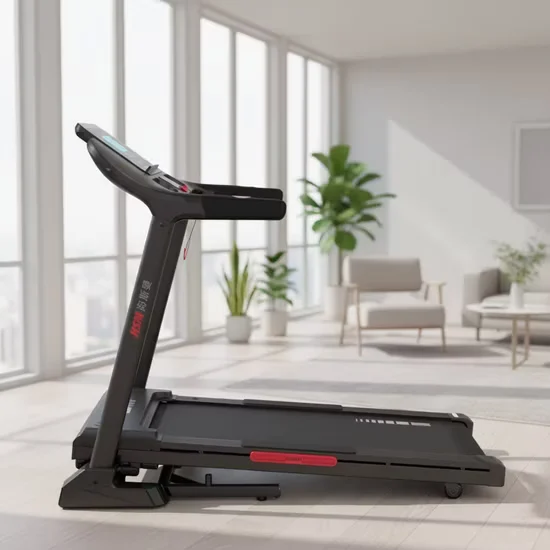
![HSM MT23B Foldable Motorized Treadmill with Manual Incline DC Motor [WARN] draft identifier mismatch](https://bicksport.com/wp-content/uploads/2026/08/hsm-mt23b-foldable-motorized-treadmill-with-manual-incline-dc-motor-warn-draft-identifier-mismatch-567df3.webp)
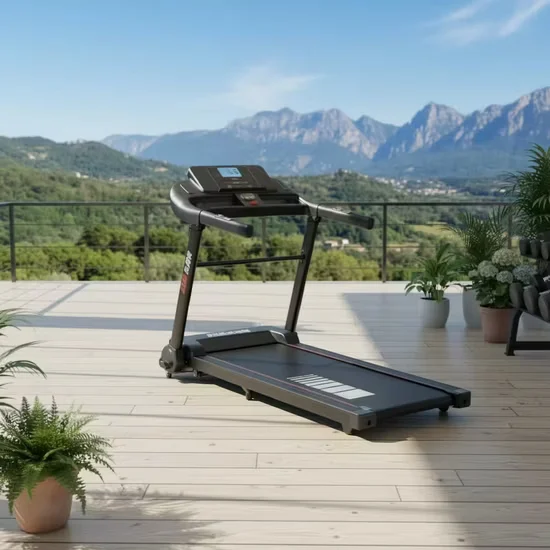
![Mt026m Fold Home Use Motorized Treadmill Endurance Training [WARN] draft identifier mismatch](https://bicksport.com/wp-content/uploads/2026/08/mt026m-fold-home-use-motorized-treadmill-endurance-training-warn-draft-identifier-mismatch-09f112.webp)