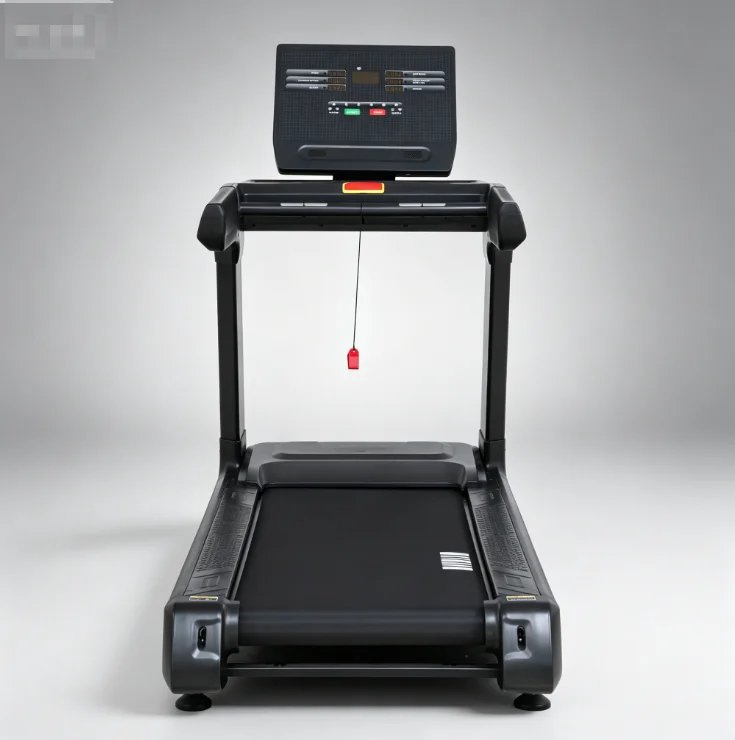
![HSM MT23B Foldable Motorized Treadmill with Manual Incline DC Motor [WARN] draft identifier mismatch](https://bicksport.com/wp-content/uploads/2026/08/hsm-mt23b-foldable-motorized-treadmill-with-manual-incline-dc-motor-warn-draft-identifier-mismatch-567df3.webp)
Quiet Drive Engineering — Manual incline eliminates the lift motor and its low-frequency resonance, keeping noise complaints off the front desk.
Technical Specifications
| Parameter | Value |
|---|---|
| Designation | MT23B |
| Motor Type | DC |
| Motor Power | 1.5 / DC 2.0 HP (peak or continuous not specified) |
| Speed Range | 1–12 km/h |
| Incline | Manual |
| Running Surface | 1200 x 420 mm |
| Console Type | LCD (Speed / Distance / Time / Calories / Pulse) |
| Programs | 12 |
| Heart Rate | Handgrip pulse sensor |
| Foldable | Yes |
| Product Dimensions | 1490 x 720 x 1100 mm (unfolded) |
| Net Weight | 37 kg |
| Certification | CE, RoHS |
| Customization | Logo and packaging available |
Application Suitability
| Deployment Scenario | Typical Use |
|---|---|
| High-end residential home gym | Daily personal cardio in space-constrained apartments where folding storage and low noise are priorities |
| Apartment fitness room | Shared cardio station for residents with moderate daily traffic and noise-sensitive neighbors |
| Light-commercial fitness studio | Personal training sessions and small-group circuits with controlled usage schedules |
| Boutique hotel fitness corner | Compact cardio option in limited-footprint wellness areas without 24/7 uptime demands |
What Peak Horsepower Hides About Continuous Duty
DC motors rated only by peak output often thermal-throttle before a commercial shift ends.
When a light-duty foldable motorized treadmill DC motor manual incline gets placed in a shared residential gym, the motor rarely sees the cool-down intervals its rating assumes. DC brushed motors generate heat at the commutator, and without adequate duty-cycle headroom, insulation breakdown arrives quietly — no warning light, just a gradual loss of torque and a rising whine that residents notice at night [NEED_CITE: motor duty cycle classification for continuous commercial operation]. We replaced an entire batch of motorized units in a Middle East hotel after low-frequency resonance migrated through the slab to guest rooms above; the replacement magnetic-resistance machines solved the noise but taught us that matching motor type to actual run-time is non-negotiable.
Where This Unit Fits in a Mixed Cardio Floor
The MT23B covers steady-state walking through moderate jogging, filling the low-to-mid intensity band that warm-up and recovery protocols demand. In a compact cardio zone it pairs with ellipticals and rowers to distribute joint-loading patterns across stations. The 1200 x 420 mm running surface accommodates users of average stride length at walking and jogging paces. Its foldable frame and manual incline mean it parks against a wall between sessions, returning floor space to circulation paths. Handgrip pulse sensing provides basic heart rate visibility without chest-strap pairing, and the foldable motorized treadmill DC motor manual incline design keeps the equipment footprint manageable in tight layouts.
Continuous Run-Time and Deployment Environment Constraints
A DC motor in this class suits facilities where daily cumulative run-time stays within light-duty thresholds — think scheduled class blocks rather than open-access 24-hour zones. Deploying above occupied floors demands attention to structure-borne vibration; the manual incline mechanism removes one noise source but belt-deck friction and footfall impulse still transmit through the frame [NEED_CITE: structure-borne vibration transmission in multi-story fitness deployments]. Adequate cross-ventilation around the motor housing prevents thermal accumulation during back-to-back sessions. Voltage and plug standards must match the destination market before the unit ships, because DC motor controllers are sensitive to input fluctuation. Ground leveling and a vibration-isolation mat further reduce transmission to adjacent rooms.
Reading Between the Specs on the Drive Train
The DC motor choice trades continuous-duty endurance for weight savings, which matters when the net weight must stay at 37 kg for foldable portability. Peak-rated horsepower figures do not describe sustained thermal capacity; a motor that peaks at 2.0 HP may deliver considerably less under continuous load without forced cooling. Manual incline replaces the lift motor entirely, removing its gear-train noise and a common failure point in light-commercial deployments. The LCD console displays speed, distance, time, calories, and pulse but offers no external connectivity, meaning usage data stays on the device rather than flowing to a facility management dashboard. Handgrip pulse sensors are adequate for casual monitoring but drift during high-sweat or high-cadence sessions compared to chest-strap telemetry. The 12 preset programs provide structured variety without requiring console firmware updates or network access.
The Hidden Cost of Specifying Below the Duty Cycle
A motor sized for occasional home use degrades rapidly under shared-facility run-times, and the failure rarely appears in the first month — it surfaces after cumulative heat cycles compromise winding insulation. Noise complaints in residential deployments often trace back to worn bearings and belt-deck friction that a lighter frame cannot dampen. When consoles lack data export, operators lose visibility into which units are overused and which sit idle, leaving replacement decisions based on guesswork. Voltage mismatches discovered after arrival force transformer purchases or complete rewiring, delaying commissioning and eroding installer confidence [NEED_CITE: voltage and plug standard mismatches in international fitness equipment deployment]. Each shortcut in specification matching compounds into member attrition or wholesale equipment swaps.
Why This Product Line Holds Up Under Scrutiny
Sub-35 dB whisper-quiet operation has been verified in hotel deployments where cardio equipment sits adjacent to occupied rooms. Components across our commercial range undergo 10,000-hour continuous-operation testing on motors, frames, and sealed bearings. The MT23B benefits from the same vertical integration — CNC-machined frame components, in-house QC, and assembly-line traceability. Full OEM and ODM capability extends to logo placement and packaging, and our 3D cardio-zone layout service factors in the MT23B’s folded footprint when planning wall-clearance and member flow in tight rooms. IoT-enabled consoles are available on higher-tier models for facilities that require usage analytics, while this LCD unit serves deployments where simplicity and maintenance-free operation take priority. Technical support responds around the clock for commissioning and spare-parts coordination.
Documentation & Test Records
- CE declaration of conformity covering electrical safety and EMC directives
- RoHS compliance certificate for restricted substance limits
- EN 957 test report validating structural and safety requirements
- Motor specification sheet detailing electrical and thermal characteristics
- Noise level test record at defined operating speeds
- Installation guide with folding mechanism commissioning steps
Installation, Commissioning & Maintenance
- Allow minimum clearance behind the 1490 mm unfolded length for safe mounting and dismounting
- Level the floor and place a vibration-isolation mat beneath the frame to limit structure-borne transmission
- Verify voltage matches the DC motor controller rating before first power-on
- Run the belt at low speed for initial alignment and tension check after assembly
- Inspect the manual incline pivot points and lubricate at scheduled maintenance intervals
- Wipe the LCD console and handgrip sensors after each session to prevent sweat corrosion
Specifying for Your Facility
Provide the cardio-zone square footage and intended equipment count so we can generate a 3D layout with airflow and sightline planning for the MT23B’s folded and unfolded positions. State the expected daily run-time per unit to confirm the DC motor duty cycle matches your traffic pattern. Identify the deployment floor and adjacent room types so we can verify noise and vibration isolation requirements. Confirm the destination market voltage and plug standard, and indicate whether console data integration with your management software is needed now or planned for future phases.
Frequently Asked Questions
Q: Is a DC motor appropriate for my facility’s daily usage pattern?
A: DC motors suit environments with controlled, moderate daily run-times such as residential gyms and boutique studios with scheduled access. For 24/7 open-access commercial floors with continuous back-to-back usage, an AC motor with higher thermal headroom is typically specified. Share your expected daily hours per unit so we can confirm the match.
Q: What is the difference between peak and continuous horsepower?
A: Peak horsepower describes the maximum output a motor can reach briefly, while continuous duty rating reflects sustained output without thermal degradation. A treadmill used in shared facilities must be evaluated against its continuous rating, because cumulative heat cycles determine motor lifespan. We provide motor specification sheets detailing both values.
Q: What are the trade-offs of manual versus motorized incline?
A: Manual incline removes the lift motor, reducing noise sources, maintenance points, and electrical complexity. The trade-off is that incline adjustments require the user to stop and reposition the frame. For noise-sensitive deployments above occupied floors, manual incline eliminates one common complaint pathway entirely.
Q: Can this LCD console integrate with facility management software?
A: The MT23B’s LCD console displays real-time metrics locally but does not include external connectivity ports or wireless protocols. Facilities requiring usage-data capture should explore our IoT-enabled console models, which support app sync and management-system integration for centralized analytics.
Q: What maintenance does the folding mechanism require?
A: The folding pivot and latch assembly should be inspected for wear and lubricated at regular intervals defined by usage frequency. Belt tension and alignment also need periodic checks, as folding and unfolding can shift the deck position slightly over time. Our maintenance guide specifies intervals based on deployment intensity.

![MT026M Electric Foldable Treadmill for Professional Training [WARN] draft identifier mismatch](https://bicksport.com/wp-content/uploads/2026/08/mt026m-electric-foldable-treadmill-for-professional-training-warn-draft-identifier-mismatch-6ca7a1.webp)