
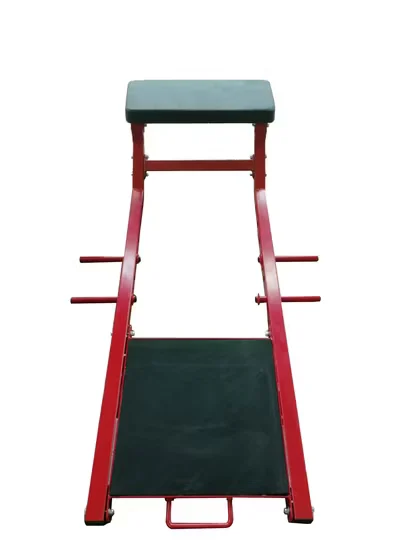
Heavy-Duty Steel Frame — Reinforced commercial-grade construction tested for continuous high-frequency use in professional gym environments.
Technical Specifications
| Parameter | Value |
|---|---|
| Product Type | Glute Machine (Strength Equipment) |
| Exercise Part | Glute |
| Material | Steel |
| Product Dimensions | 1595620400mm |
| Net Weight | 40kg |
| Main Frame Color | Available according to customer requirements |
| Cushion Color | Available according to customer requirements |
| Type | Integrated Gym Trainer |
| OEM/ODM | Acceptable |
| Certification | ISO9001, CE |
Application Suitability
| Deployment Scenario | Typical Use |
|---|---|
| Chain gym strength zone | High-frequency glute isolation training for general membership |
| Corporate wellness center | Focused lower-body equipment for time-efficient employee workouts |
| Community fitness facility | Durable strength station accessible to varied fitness levels |
| Sports performance training center | Athlete-specific posterior chain development |
| Professional rehabilitation studio | Controlled glute activation under supervised programs |
Why Structural Integrity Matters More Than You Think
Commercial strength equipment fails at the joints — literally.
When a gym owner sources a commercial glute machine strength fitness equipment package, the focus often lands on cushion comfort or visual appeal. But after months of heavy loading during hip thrusts and kickbacks, frame connections begin to shift. Weld seams on lower-grade units develop micro-fractures under repeated eccentric loading, and the result is equipment that feels unstable during peak training hours [NEED_CITE: fatigue failure patterns in commercial strength equipment frames]. I have seen facilities pull entire sets from the floor because the base plates could not handle repeated off-axis force vectors.
Where This Station Fits in a Strength Training Layout
This commercial glute machine strength fitness equipment occupies a dedicated niche in any strength zone — covering isolation work for gluteus maximus, medius, and supporting hip extensors through controlled resistance paths. It complements compound movement stations like squat racks and leg presses by providing targeted posterior chain engagement without requiring barbell setup or spotters. The 1595*620mm footprint allows placement against walls or in dedicated machine rows, leaving adequate traffic flow for adjacent equipment. Users across a broad weight range can load the movement pattern safely, and the fixed movement path reduces setup time between sets, keeping turnover efficient during peak hours.
Floor Loading, Sound Transfer, and Environmental Factors
A commercial glute machine strength fitness equipment unit generating repeated impact under loaded eccentric contractions transmits vibration through the floor assembly. In multi-story deployments — particularly above guest rooms, office spaces, or residential units — the steel base must interface with appropriate damping materials to prevent structure-borne noise. Facilities operating this equipment for extended daily sessions need adequate ventilation around the training zone, as heat accumulation from user exertion affects ambient comfort [NEED_CITE: HVAC load calculations for high-density strength training areas]. Level flooring is non-negotiable; any tilt introduces lateral stress on the frame welds and compromises movement path consistency.
Steel Gauge, Weld Patterns, and Load Path Engineering
The frame material on this commercial glute machine strength fitness equipment uses steel construction designed to manage force transmission from the user’s body through the pivot points and into the base. In strength equipment engineering, the relationship between wall thickness and load capacity follows predictable principles — thicker gauge steel resists deformation under peak loading but adds to overall unit mass. Weld quality at connection points determines whether cyclic loading produces fatigue cracking or maintains structural continuity across thousands of repetitions. The cushion system must balance density for long-term shape retention against surface material that resists abrasion from repeated contact and cleaning chemicals. Movement path geometry affects whether the resistance curve matches natural hip extension mechanics or forces compensatory patterns that reduce training effectiveness.
What Happens When Specifications Get Value-Engineered Down
Facilities that accept lower-grade steel frames on glute isolation equipment typically discover the consequences within the first year of high-frequency use. Weld failures at high-stress junctions remove equipment from service unexpectedly, creating member complaints and replacement costs that exceed any initial savings. Cushion systems filled with low-density foam compress permanently under repeated loading, forcing facilities to re-upholster or replace pads far earlier than projected [NEED_CITE: cushion compression standards for commercial fitness equipment]. Movement paths that deviate from biomechanically sound trajectories cause users to abandon the station, leaving it as dead floor space while members wait for functional equipment elsewhere.
Why This Lineup Earns Its Place on the Floor
The manufacturing protocol behind this equipment includes production runs verified under ISO 9001 quality management, with frame assemblies subjected to load testing that simulates extended commercial operation. The steel structure on this commercial glute machine strength fitness equipment undergoes welding inspection before finishing, ensuring connection integrity matches design specifications. OEM and ODM capability means frame colors and cushion upholstery can align with facility branding without requiring separate sourcing or third-party finishing work. The six-facility production structure — from CNC machining through final assembly and QC testing — keeps tolerance control consistent across production batches [NEED_CITE: vertical integration benefits in commercial fitness manufacturing]. Technical support availability means installation questions or field adjustments get addressed without waiting for overseas communication cycles.
Documentation & Test Records
- CE declaration of conformity for commercial strength equipment
- EN 957 test report covering static and dynamic load requirements
- ISO 9001 certificate for manufacturing quality management
- Frame material specification and weld inspection records
- Cushion density and abrasion resistance test documentation
- Installation guide with floor preparation and clearance requirements
Installation, Commissioning & Maintenance
- Maintain minimum clearance around the 1595620400mm footprint for safe user entry and exit
- Install on verified level flooring with vibration-damping pads to control structure-borne sound transmission
- Inspect all frame bolts and pivot connections after the first month of service, then quarterly
- Clean cushion surfaces with manufacturer-approved solutions to prevent vinyl degradation
- Verify movement path smoothness monthly and address any binding or irregular resistance immediately
- Touch up frame finish at any chip or scratch to prevent corrosion initiation
Request the Right Configuration for Your Facility
Provide your strength zone dimensions and current equipment roster so we can map placement and traffic flow. Specify your daily operating hours and expected user volume to confirm the unit matches your duty cycle requirements. Indicate whether the deployment floor sits above occupied spaces so we can recommend appropriate isolation materials. State your target market and any branding requirements for frame and cushion color coordination.
Frequently Asked Questions
Q: What separates commercial strength equipment from residential-grade units?
A: Commercial units use heavier-gauge steel frames designed for thousands of loading cycles without structural fatigue. Connection points receive reinforced welding patterns, and cushion systems employ higher-density foam that resists permanent compression. Weight capacity ratings reflect actual user loads encountered in public facilities rather than occasional home use. The commercial glute machine strength fitness equipment meets CE and ISO standards verified through independent testing protocols.
Q: How do I evaluate whether the movement path is biomechanically sound?
A: Request movement trajectory diagrams or arrange hands-on testing with loaded resistance. The path should allow natural hip extension without forcing lumbar compensation or knee tracking deviation. Pivot point placement relative to the user’s hip joint determines whether resistance feels smooth through full range of motion. Poor geometry becomes apparent when users shift position mid-repetition to find comfortable alignment.
Q: What impact does welding quality have on equipment lifespan?
A: Weld seams at high-stress junctions must achieve full penetration without porosity or undercut defects. Poor welds develop fatigue cracks under cyclic loading, eventually requiring frame repair or complete unit replacement. Manufacturing facilities with documented weld inspection protocols catch defects before equipment leaves the production line. Visual inspection of finished welds reveals consistency and coverage quality at connection points.
Q: How should I choose cushion materials for durability?
A: High-density foam cores resist permanent deformation under repeated compression, maintaining shape and support over extended service life. Vinyl or synthetic leather covers must withstand frequent cleaning with disinfectant solutions without cracking or peeling. Stitching patterns and seam construction determine whether covers split under tension during loaded movements. Request material specifications and abrasion test results before committing to production runs.
Q: Can custom frame colors introduce quality inconsistencies?
A: OEM color matching requires controlled powder coating or paint application with verified curing protocols. Facilities should request physical samples under standard lighting conditions before approving full production batches. Reputable manufacturers maintain color formulation records to ensure consistency across multiple orders placed over time. Specify your Pantone or RAL reference to establish a baseline for quality verification.


![ISO-Lateral Front Lat Pulldown OS-H5015 Commercial Strength Equipment [WARN] draft identifier mismatch](https://bicksport.com/wp-content/uploads/2026/08/iso-lateral-front-lat-pulldown-os-h5015-commercial-strength-equipment-warn-draft-identifier-mismatch-f0132f.webp)
