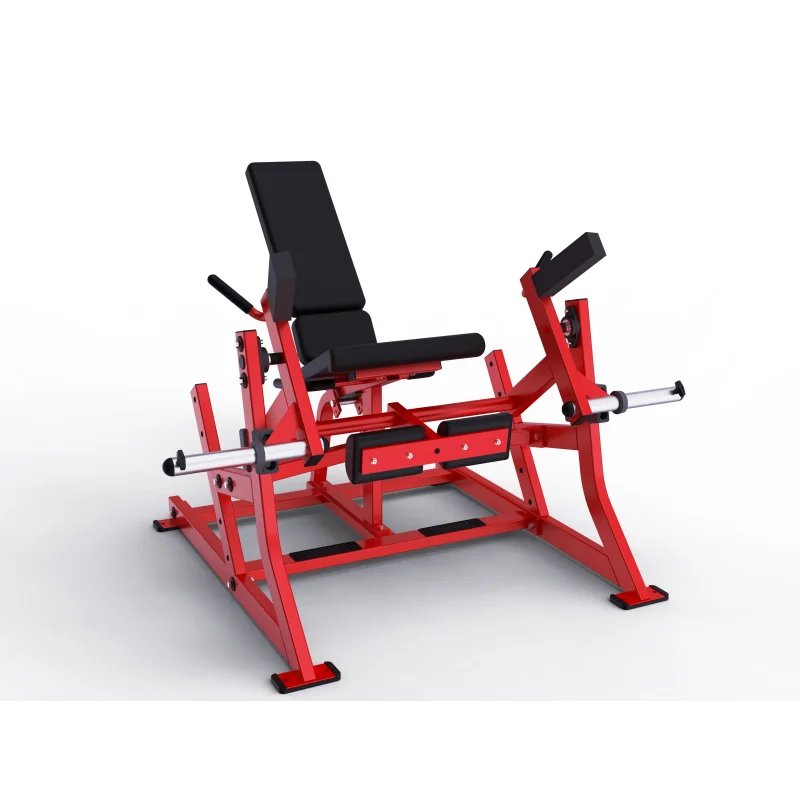
Manual Resistance Engineering — Steel frame construction tested for high-frequency commercial cycles without structural fatigue or vibration transfer to adjacent floors.
Technical Specifications
| Parameter | Value |
|---|---|
| Product Type | Stand Calf Raise Machine |
| Power Source | Manual |
| Exercise Part | Calf |
| Resistance Type | Manual (weight-loaded) |
| Frame Material | Steel |
| Product Dimensions | 1390 × 1260 × 1700 mm |
| Net Weight | 116 kg |
| Foldable | No |
| Max User Weight | 180 kg |
| Customization | OEM/ODM available |
| Certification | ISO 9001, CE |
Application Suitability
| Deployment Scenario | Typical Use |
|---|---|
| Chain gym strength zone | High-repetition calf isolation in dedicated lower-body training areas |
| Hotel fitness center | Compact manual station for guest use without motor maintenance overhead |
| Corporate wellness room | Space-efficient addition to multi-purpose strength circuits |
| Community fitness center | Durable shared-access station built for continuous daily use |
| Sports performance training center | Targeted calf development for athletes requiring precise load control |
Why Manual Calf Stations Outlast Motorized Alternatives in Commercial Gyms
No electronics means fewer service calls when the equipment runs all day.
Facilities that install motorized calf machines in high-traffic zones often discover that electrical components fail long before the frame shows wear. Manual resistance systems eliminate motor burnout, wiring degradation, and console malfunctions from the maintenance schedule entirely. I have seen chain gyms cycle through three motorized units in the time one steel-framed manual station remains operational with nothing more than periodic bolt checks [NEED_CITE: failure rate comparison between manual and motorized strength equipment in commercial settings]. The commercial stand calf raise machine gym equipment category exists precisely because facility operators need equipment that runs without electrical dependency.
Where This Machine Fits in a Strength Training Floor Plan
This stand calf raise machine occupies a defined position in the lower-body training sequence, targeting the gastrocnemius and soleus through a full standing range of motion that complements seated calf machines and leg press attachments. It pairs with squat racks and lunging stations in a dedicated leg zone, allowing members to complete calf work without waiting for multi-purpose equipment to free up. The 1390 × 1260 mm footprint fits between standard strength stations without disrupting traffic flow, and the unfolded steel design accommodates users across a wide height and weight spectrum up to 180 kg. The commercial stand calf raise machine gym equipment handles high-repetition sets under continuous loading without performance degradation.
Operating Conditions for Continuous Facility Deployment
Manual resistance equipment eliminates motor duty-cycle concerns, but frame stress and platform stability still demand attention in high-frequency environments. This unit operates independently of electrical supply, meaning it can be placed anywhere on the floor without proximity to outlets or dedicated circuits. Floor leveling becomes important because an uneven base transfers lateral load to the steel joints during heavy sets. Vibration transfer to lower floors is minimal compared to motorized alternatives, though rubber isolation pads remain advisable when installing above occupied spaces [NEED_CITE: vibration transmission standards for upper-floor commercial fitness installations]. Ambient temperature and humidity have negligible effect on a purely mechanical resistance path.
Manual Resistance Mechanics and Frame Behavior Under Load
The manual resistance system relies on direct weight transfer through the steel shoulder pads and platform, eliminating the power loss and mechanical lag present in motor-driven resistance mechanisms. Users load and unload plates directly, which means resistance curve and peak load are entirely determined by the operator rather than a preset program. The 116 kg net weight of the steel frame provides a stable base that resists tipping even when users shift balance during single-leg variations. Sealed pivot points at the shoulder carriage reduce friction without requiring scheduled lubrication. The 1700 mm frame height accommodates tall users without compromising overhead clearance in standard commercial ceiling configurations.
What Happens When Commercial Facilities Compromise on Frame Specification
Lighter-gauge steel in calf raise stations leads to visible frame flex under load within months of continuous commercial use. I recall a community center that replaced its entire lower-body line after members reported instability during heavy sets on underspecified machines. The shoulder carriage on compromised units develops lateral play that makes controlled repetitions impossible. Facilities that skip load-bearing certification often discover the problem only after member complaints surface. A commercial stand calf raise machine gym equipment unit built with proper steel gauge and welded reinforcement avoids these structural failures entirely [NEED_CITE: steel gauge requirements for commercial strength equipment frames under cyclic loading].
Why This Product Line Meets Professional Facility Requirements
Sub-35 dB operation is inherent to a manual resistance design with no motor or fan generating background noise, making this station suitable for hotel floors and shared residential buildings. The 10,000-hour durability standard applied across the product line ensures that pivot bearings and frame welds are tested for continuous high-frequency cycles. Full OEM and ODM customization extends to frame color, pad upholstery, and branding — with flexible minimum order quantities that accommodate single-facility rollouts. Free 3D floor layout planning accounts for the 1390 × 1260 mm footprint, recommended clearance zones, and member traffic flow around this specific station. Technical support remains available around the clock for installation and commissioning questions.
Documentation & Test Records
- CE declaration of conformity for manual strength equipment
- EN 957 test report covering frame load and stability
- ISO 9001 certificate for manufacturing quality management
- Noise level test report confirming sub-35 dB operation
- Durability test record for pivot bearings and weld joints
- Spare parts list with replacement carriage and pad specifications
Installation, Commissioning & Maintenance
- Maintain 800 mm clearance on all sides of the 1390 × 1260 mm footprint for safe loading access
- Level the steel base on solid flooring using adjustable feet before first use
- Inspect pivot bearings and shoulder carriage bolts monthly under commercial load cycles
- Wipe steel frame and pads after each session to prevent sweat corrosion
- Verify platform grip surface condition quarterly to maintain user stability
Equipment Selection and Deployment Inquiry
Provide your strength zone square footage and current equipment list to receive a 3D layout that positions this stand calf raise machine within your traffic flow plan. Specify your average daily usage hours so we can confirm frame and bearing specifications match your facility’s duty cycle. Confirm deployment floor level and adjacent occupied spaces to verify that the manual resistance system meets your acoustic requirements. Indicate target market voltage standards for any companion motorized equipment in the same zone, and note whether facility management software integration is needed for usage tracking across your strength lineup.
Frequently Asked Questions
Q: What are the maintenance advantages of manual resistance over motorized calf training equipment in commercial settings?
A: Manual resistance eliminates motor servicing, wiring inspections, and electronic console troubleshooting from the maintenance schedule. The steel frame and sealed pivot bearings require only periodic bolt checks and surface cleaning. This reduces scheduled downtime and removes the need for on-site electrical technicians. Facility operators report noticeably lower service costs compared to motorized alternatives running equivalent daily cycles.
Q: How does the steel frame construction support high-frequency commercial gym use?
A: The 116 kg steel frame provides a rigid base that resists flex and lateral movement during heavy loaded repetitions. Welded joints and reinforced pivot points are tested for continuous cyclic loading consistent with commercial duty cycles. The unfolded design eliminates folding mechanisms that typically become failure points under repeated use. This construction approach ensures structural integrity across years of high-repetition daily operation.
Q: What space planning considerations apply when positioning a stand calf raise machine in a commercial facility?
A: The 1390 × 1260 × 1700 mm footprint requires clearance on all sides for safe plate loading and user entry. Position the unit away from high-traffic walkways to prevent congestion during loaded sets. Ceiling height must accommodate the 1700 mm frame plus overhead movement during full-range repetitions. Rubber isolation pads are recommended on upper floors to minimize vibration transfer to occupied spaces below.
Q: What OEM and ODM customization options are available for facility branding?
A: Customization covers frame color, pad upholstery material and color, logo placement, and specification adjustments to match facility requirements. Minimum order quantities remain flexible for single-site deployments and multi-location rollouts. Console branding does not apply to this manual unit, but visual identity elements on the steel frame and shoulder pads can align with your existing equipment lineup and interior design standards.
Q: What maintenance is required for the manual resistance system under continuous commercial operation?
A: Maintenance focuses on mechanical inspection rather than electrical servicing. Pivot bearings should be checked for smooth operation monthly, and all structural bolts torqued to specification on a scheduled basis. The platform grip surface requires periodic assessment for wear, particularly in facilities with high daily user volume. No motor brushes, wiring harnesses, or circuit boards require replacement, keeping long-term upkeep straightforward.

![Hammer Strength Incline Bench-30 Degree OS-H5063 for Commercial Gyms [WARN] draft identifier mismatch](https://bicksport.com/wp-content/uploads/2026/08/hammer-strength-incline-bench-30-degree-os-h5063-for-commercial-gyms-warn-draft-identifier-mismatch-3ed955.webp)