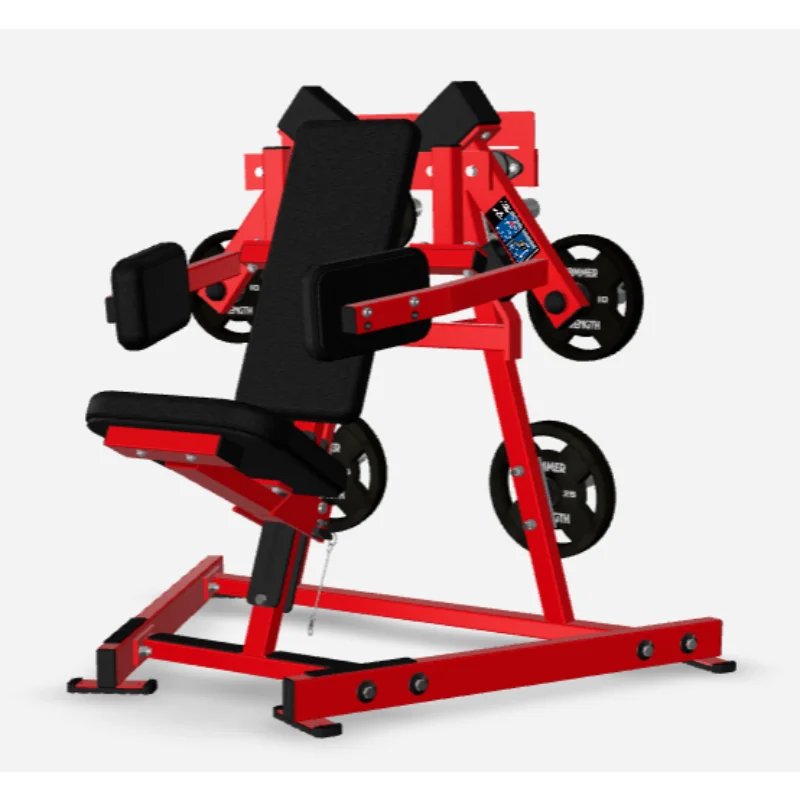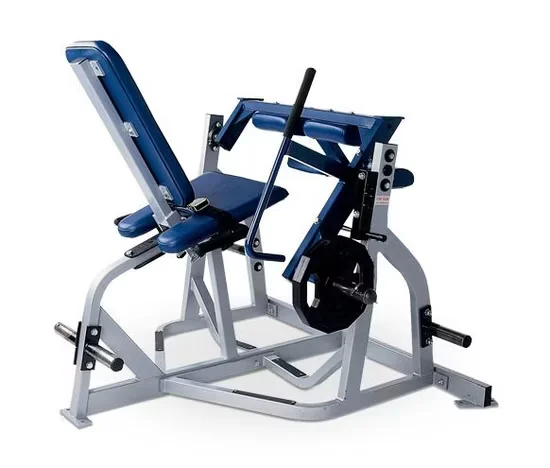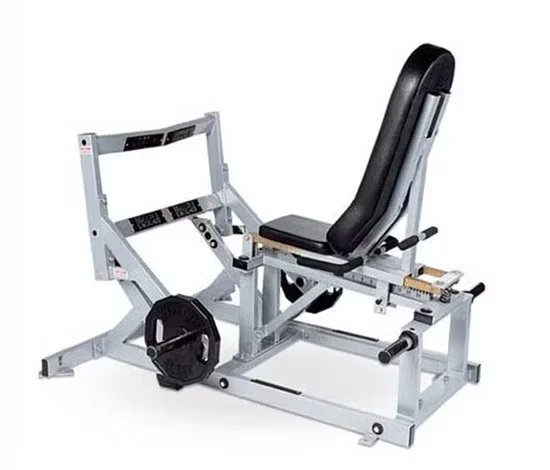
Continuous Duty Frame Engineering — reinforced steel construction tested for high-frequency commercial calf training cycles without flex or cushion degradation.
Technical Specifications
| Parameter | Value |
|---|---|
| Designation | 2019 Hammer Strength Super Horizontal Calf 34 |
| Product Name | Super Horizontal Calf |
| Model NO. | OS — H5034 |
| Product Type | Integrated Gym Trainer (Strength Equipment) |
| Exercise Part | Back |
| Main Frame Material | Steel |
| Main Frame Color | According to customer requirements |
| Cushion Color | According to customer requirements |
| Product Dimensions | 1673 × 1631 × 1501 mm |
| Net Weight | 135 kg |
| Age Group | Adult |
| Gender | Unisex |
| OEM/ODM | Acceptable |
| Appliance | Community, Gymnasium |
| Fit Area | Professional Gym and Club |
| Certification | ISO 9001, CE |
| HS Code | 9506911900 |
| Production Capacity | 1000 units |
Application Suitability
| Deployment Scenario | Typical Use |
|---|---|
| Professional gym and club strength zone | High-frequency calf isolation training during peak membership hours |
| Community fitness center resistance area | Multi-user lower-body conditioning in shared public facilities |
| Corporate wellness facility | Targeted calf and lower-leg strengthening for employee fitness programs |
| Sports performance training center | Athlete-specific posterior chain development under supervised programming |
Why Frame Flex Under Load Becomes a Facility Liability Before Members Even Notice
A calf machine that deflects under 180 kg of loaded repetitions is already failing long before the first complaint reaches the front desk.
I have walked into facilities where the horizontal calf platform visibly sagged under moderate loading, and the cushion foam had compressed into a hard slab within the first season. Members do not always articulate what feels wrong — they simply stop using the station, and the equipment becomes expensive floor filler. [NEED_CITE: structural deflection standards for commercial strength equipment under cyclic loading]
When a commercial horizontal calf raise machine integrated gym trainer is specified by brochure weight alone without verifying frame gauge and weld penetration, the facility inherits a liability that compounds with every repetition cycle.
Positioning Within the Strength Training Floor Plan
This integrated trainer occupies a dedicated footprint for horizontal calf isolation, complementing standing and seated calf stations already present in most commercial strength zones. The 1673 × 1631 mm footprint requires clearance on three sides for loading plates and user entry, which affects adjacent equipment spacing decisions during floor planning.
The horizontal body position recruits the gastrocnemius through a different range than upright machines, filling a gap in facilities that only stock standing calf equipment. It accommodates adult users across a wide anthropometric range, with the adjustable shoulder pad and back support adapting to different torso lengths. The commercial horizontal calf raise machine integrated gym trainer operates without electronic consoles or power connections, keeping the deployment simple and maintenance predictable in unsupervised zones.
Continuous Load Cycles and the Deployment Environment
This machine endures repetitive loading and unloading throughout operating hours, meaning the pivot bearings and frame joints experience thousands of stress cycles daily in a busy gym. [NEED_CITE: duty cycle classification for plate-loaded strength equipment in commercial facilities] Unlike motorized cardio equipment, the failure mode here is mechanical — bearing wear, bushing compression, and cushion foam breakdown — all of which accelerate in environments with high humidity or poor ventilation.
The 135 kg net weight provides inherent stability during loaded use, but the floor must be level within tolerance to prevent asymmetric loading on the pivot assembly. Facilities installing on upper floors should verify that the concentrated point loads at the four feet meet structural capacity, particularly in older buildings where floor joists may not accommodate dynamic loading patterns. No dedicated electrical circuit is required, simplifying placement relative to power infrastructure.
What the Frame Gauge and Cushion Density Actually Determine
Steel frame construction in this class of equipment must resist both static deflection under maximum loaded weight and fatigue cracking at weld joints through thousands of cycles. The main frame carries the entire load path from the shoulder pads through the pivot axis to the base feet, and any flex in this chain translates directly into user discomfort and eventual structural failure.
The cushion system serves two functions: distributing contact pressure across the shoulders and back during loaded repetitions, and absorbing vibration that would otherwise transmit through the frame to the floor. High-density foam retains its compression recovery characteristics far longer than low-density alternatives, which flatten permanently within months of commercial use. OEM customization of both frame color and cushion color allows facilities to maintain visual consistency across the strength zone while selecting materials appropriate for their maintenance cycles.
What Happens When Specifications Are Chosen on Price Alone
Facilities that source calf machines based on unit cost without verifying frame gauge and weld inspection typically face premature cushion replacement within the first year. The foam compresses unevenly under repetitive loading, creating pressure points that members notice immediately even if they cannot articulate the mechanical cause. [NEED_CITE: cushion degradation patterns in high-frequency commercial resistance equipment]
Frame flex under load accelerates bearing wear at the pivot point, leading to play in the movement arm that degrades exercise quality and eventually requires complete bearing replacement. When a facility deploys multiple units across locations, inconsistent frame quality between batches means maintenance schedules diverge unpredictably, complicating spare parts inventory and technician dispatch planning.
Why This Product Line for Your Facility
The steel frame construction undergoes continuous load testing that verifies weld integrity and pivot bearing endurance through high-frequency commercial use cycles. The cushion system supports independent replacement of wear components, meaning facilities swap foam and upholstery without pulling the entire unit off the floor for extended periods. OEM and ODM customization extends to frame color, cushion color, and facility branding at flexible minimum order quantities, allowing multi-location operators to maintain consistent visual identity.
The 1673 × 1631 mm footprint is accounted for in our 3D strength zone layout planning, which maps equipment spacing, user circulation paths, and sightlines across the entire training floor. Every unit ships with documentation covering installation torque specifications and recommended maintenance intervals, and technical support responds around the clock for commissioning questions or spare parts requirements. The integrated trainer design consolidates the horizontal calf exercise into a single footprint, reducing the number of separate stations a facility needs to cover complete lower-body training.
Documentation & Test Records
- CE declaration of conformity confirming compliance for commercial strength equipment
- EN 957 test report covering static and dynamic load verification
- ISO 9001 certificate validating manufacturing quality management systems
- Frame material specification and weld inspection records
- Cushion foam density and durability test documentation
- Complete spare parts list with replacement intervals and ordering codes
Installation, Commissioning & Maintenance
- Maintain clearance on three sides of the 1673 × 1631 mm footprint for safe plate loading and user access
- Verify floor levelness before anchoring to prevent asymmetric loading on the pivot bearings
- Inspect pivot bushings and bearing surfaces quarterly for play and replace at first sign of movement slack
- Check frame weld joints at the base-to-upright connection annually for stress cracking under cyclic loading
- Replace cushion foam and upholstery independently when compression recovery degrades or surface material tears
- Clean sweat-contact surfaces on the shoulder pads and back support daily to prevent upholstery breakdown
Request a Strength Zone Layout and Specification Review
Provide your strength zone floor area and planned equipment count to receive a 3D layout that maps this calf trainer into the overall circulation plan with verified spacing clearances. Specify expected daily user volume so we can confirm the frame duty cycle matches your operational intensity.
Indicate whether the installation floor sits above occupied spaces, which determines whether vibration isolation pads are needed beneath the four contact feet. Confirm OEM requirements including frame color, cushion color, and any facility branding placement before proforma invoice generation.
Frequently Asked Questions
Q: What steel grade and frame construction ensures commercial durability for continuous use?
A: The frame uses structural steel selected for yield strength appropriate to the maximum loaded weight and cyclic stress patterns of horizontal calf training. Weld joints at the pivot axis and base connections are inspected for full penetration to prevent fatigue cracking under thousands of daily repetitions. Frame gauge specifications are available in the technical documentation package provided with each quotation for engineering review.
Q: How does cushion customization work for facility branding and maintenance replacement?
A: Cushion color and upholstery material are selectable during the OEM process to match facility design standards, and the foam density can be specified for higher-traffic environments requiring extended compression recovery life. The cushion system mounts with standard fasteners, allowing maintenance staff to replace worn foam or torn upholstery without specialized tools or extended equipment downtime. Replacement cushion kits are available through the spare parts program independently of the frame assembly.
Q: What OEM/ODM options are available for frame color, cushion color, and logo placement?
A: Frame powder-coat color is matched to facility specifications using standard RAL or custom color references, and cushion upholstery is available in coordinated or contrasting colors as required. Logo placement on the frame is accommodated at flexible minimum order quantities, with artwork positioning confirmed through digital mockups before production begins. Lead times for customized color and branding configurations are confirmed during the quotation stage based on order volume and current production scheduling.
Q: How to verify equipment dimensions fit within planned strength zone layouts?
A: The 1673 × 1631 × 1501 mm dimensions must be checked against your floor plan with clearance margins on three sides for user access and plate loading. Our 3D layout service maps this unit alongside adjacent equipment, verifying circulation paths, sightlines, and ADA compliance spacing before any order is confirmed. Providing your room dimensions and planned equipment list allows us to produce a spatial integration plan showing exact placement coordinates.
Q: What certifications validate commercial-grade construction quality?
A: The equipment carries CE marking and is manufactured under ISO 9001 quality management certification, with EN 957 testing covering structural load verification for commercial strength equipment. Test reports and certificates are provided as part of the documentation package with each shipment, and additional testing documentation can be supplied upon request during the pre-order review stage. These records support facility compliance audits and insurance requirements for commercial fitness environments.