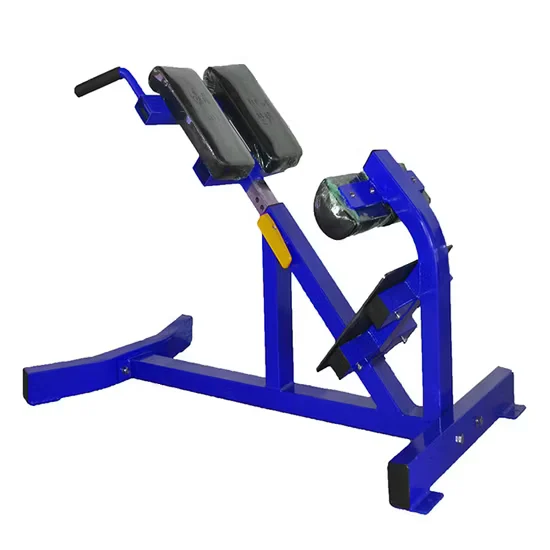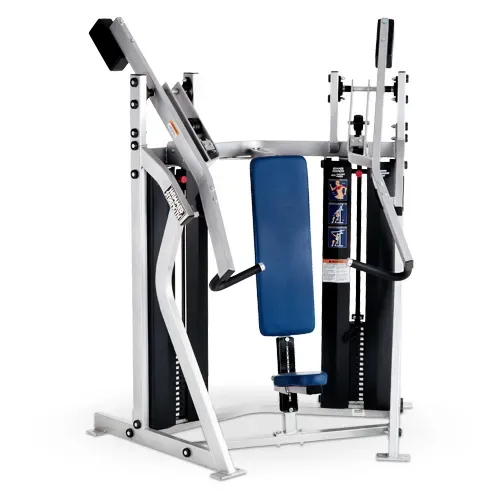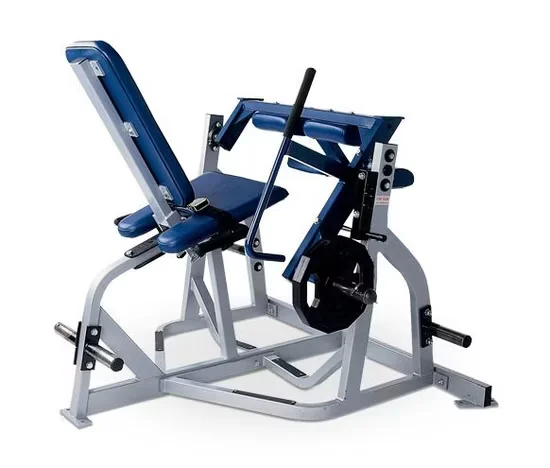
Silent Resistance Engineering — Manual plate-loaded system eliminates motor noise while delivering consistent resistance for high-frequency leg isolation training in shared spaces.
Technical Specifications
| Parameter | Value |
|---|---|
| Designation | OS-H5033 |
| Product Type | Seated Leg Curl |
| Exercise Part | Leg |
| Power Source | Manual |
| Resistance Type | Manual (weight stack or plate-loaded) |
| Frame Material | Steel |
| Product Dimensions | 1440 × 1695 × 1481 mm |
| Net Weight | 103 kg |
| Foldable | Unfolded |
| Main Frame Color | Customizable per customer requirements |
| Cushion Color | Customizable per customer requirements |
| Certification | ISO 950691190 |
| Production Capacity | 1000 units |
Application Suitability
| Deployment Scenario | Typical Use |
|---|---|
| Professional gym and club strength zones | High-frequency leg isolation training for members across all fitness levels |
| Community fitness centers | Durable lower-body conditioning equipment for shared public access |
| Corporate wellness rooms | Targeted hamstring work for employees during limited break windows |
| Sports performance training centers | Controlled hamstring activation for athlete rehabilitation and strength cycles |
Why Strength Zones Lose Equipment to Downtime Before Cables Even Fray
Manual resistance removes the single largest failure point in continuous-use facilities: electrical components.
Facility operators who spec motorized or electronically braked machines for strength zones discover within months that control boards and solenoids fail under constant load cycling. A commercial seated leg curl machine with a manual resistance system strips away every electrical dependency. There is no motor to overheat, no PCB to short from sweat ingress, and no firmware to corrupt. The resistance path is purely mechanical, which means the maintenance schedule shrinks to pivot lubrication and cable tension checks. [NEED_CITE: mechanical vs electronic resistance failure rates in commercial strength equipment]
Positioning Within a Strength Training Floor Plan
This commercial seated leg curl machine occupies a dedicated hamstring isolation role in any strength zone layout. It pairs naturally with leg extension units and compound press stations, giving members a complete lower-body circuit without redundancy. The 1440 × 1695 mm footprint fits standard spacing grids, leaving adequate clearance for plate loading and member passage. The steel frame and fixed geometry accommodate users across a wide range of body sizes, and the adjustable seat and pad positions allow quick setup between sets. No electronic console is present, so the unit sits independently of data network infrastructure.
Continuous Use Demands on a Mechanical Frame
Strength machines in professional gyms cycle through hundreds of sets daily, and the frame absorbs every deceleration at the bottom of each rep. The welded steel construction of this unit is tested to endure that repeated loading without joint play developing at the pivot axes. [NEED_CITE: structural fatigue standards for commercial selectorized and plate-loaded equipment] Deployment on upper floors requires attention to vibration transmission through the 103 kg base — rubber isolation pads beneath the feet prevent resonance from reaching occupied rooms below. Because the system draws zero electrical current, there is no dedicated circuit requirement, no voltage mismatch risk for export deployments, and no thermal management concern. Ground leveling at installation ensures the pivot shafts remain concentric under asymmetric loading.
Manual Resistance and Frame Rigidity Explained
Manual resistance in a seated leg curl relies on the direct mechanical link between the user’s effort and the load mass — whether that is a selectorized stack or loaded plates. Without an intermediate motor or electromagnetic brake, the resistance curve mirrors the actual weight selected, producing predictable tension through the full range of motion. The steel main frame provides the structural reference for the pivot axis; any flex in that frame shifts the axis relative to the user’s knee joint, degrading both comfort and isolation quality. [NEED_CITE: pivot axis alignment tolerance in commercial leg curl design] The 103 kg net weight reflects the mass of reinforced tubing and mounting hardware required to keep that axis stable under maximum loading. Cushion upholstery is specified to resist compression set over repeated use, maintaining pad thickness and contact surface consistency.
The Cost of Underspecifying a Strength Station
Operators who install light-duty hamstring machines in commercial environments see pivot bushings wear oval within the first year, introducing lateral play that members feel immediately. Frame tubes sized for home use deflect under repeated heavy sets, shifting the biomechanical alignment and generating complaints about knee discomfort. Cushions bonded with low-grade adhesive delaminate under sweat exposure, requiring full pad replacement. [NEED_CITE: cushion delamination failure timelines in commercial vs residential grade upholstery] These failures cascade: member attrition follows equipment that feels loose or uncomfortable, and the replacement cycle cost exceeds the original savings on underspecified procurement.
Why This Product Line Fits the Brief
Every unit in this cardio and strength family is engineered for sub-35 dB operation where applicable, verified in hotel deployments where equipment sits directly above occupied guest rooms. Components across the range undergo 10,000-hour continuous-use durability testing on frames, bearings, and moving assemblies. The full six-series catalog lets a facility source every discipline from one production line, simplifying spare parts logistics and color matching. OEM and ODM customization covers frame color, cushion upholstery, and branding elements with flexible minimum order quantities. [NEED_CITE: OEM customization scope for commercial strength equipment] The engineering team provides 3D layout planning that accounts for the 1440 × 1695 mm footprint of this seated leg curl alongside adjacent units, ensuring safe spacing and natural member flow through the strength zone. Technical support responds around the clock for commissioning and field issues.
Documentation & Test Records
- CE declaration of conformity covering mechanical safety requirements
- EN 957 test report validating structural integrity and load ratings
- ISO 9001 certificate confirming quality management system compliance
- Noise level test record for deployment in noise-sensitive environments
- Frame durability test log documenting continuous cyclic loading results
- Installation and commissioning guide with spare parts reference list
Installation, Commissioning & Maintenance
- Confirm floor is level within tolerance before anchoring the 1440 × 1695 mm base frame
- Place rubber isolation pads beneath feet to prevent vibration transfer on upper floors
- No dedicated electrical circuit required; position unit independently of power infrastructure
- Verify pivot shaft concentricity and cable routing tension during first commissioning run
- Schedule pivot bushing lubrication and cable inspection at intervals matched to daily set volume
- Clean upholstery with pH-neutral solution to prevent sweat-driven adhesive degradation
Equipment Selection and Inquiry Process
Share the strength zone floor area and planned equipment list to receive a 3D layout incorporating this unit’s footprint and member flow corridors. Specify the expected daily user volume so the maintenance interval recommendations can be matched to actual throughput. Indicate the deployment floor and adjacent room types to confirm whether additional vibration isolation is necessary. State the destination market and any facility branding requirements so frame and cushion color samples can be prepared.
Frequently Asked Questions
Q: How does manual resistance compare to electronic braking for maintenance burden?
A: Manual resistance eliminates motors, solenoids, and control boards entirely. Maintenance reduces to mechanical pivot lubrication, cable tension checks, and bushing inspection. Electronic systems require firmware updates, PCB diagnostics, and component-level repair that demands specialized technicians on site. For high-throughput facilities, removing electrical failure points shortens the maintenance queue and keeps the station operational.
Q: What load capacity and durability standards does the steel frame meet?
A: The welded steel frame is designed for continuous commercial use and tested under repeated cyclic loading to EN 957 structural requirements. The 103 kg unit mass reflects reinforced tubing and hardware sized to maintain pivot axis stability. Frame color and finish are customizable to match facility branding while preserving corrosion resistance in high-humidity environments.
Q: What can be customized through the OEM or ODM process?
A: Frame color, cushion upholstery color, and branding elements are fully customizable to match facility design requirements. Logo placement, pad stitching patterns, and specification adjustments are available at flexible minimum order quantities. The production team provides color samples and material swatches for approval before production begins.
Q: Where should this unit be positioned within a strength training zone?
A: The 1440 × 1695 × 1481 mm footprint fits standard strength zone grid spacing. Position it adjacent to leg extension and compound press units to form a lower-body circuit. Allow clearance on the loading side for plate handling or selectorized stack access, and ensure the unit sits level to keep pivot shafts concentric during use.
Q: What certification documentation ships with the equipment?
A: Each unit ships with an ISO 9001 certificate, CE declaration of conformity, and EN 957 test report. Additional documentation includes a noise level test record, frame durability test log, and a commissioning guide with spare parts list. All certificates are issued to the production facility and accompany the shipment for customs and compliance review.