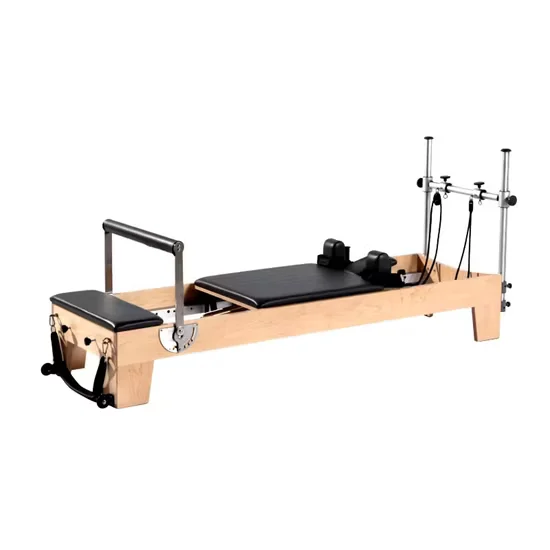
![Senrui SRY-23 Pilates Reformer with Microfiber Leather Wedge Pillow for Studio [WARN] draft identifier mismatch](https://bicksport.com/wp-content/uploads/2026/08/senrui-sry-23-pilates-reformer-with-microfiber-leather-wedge-pillow-for-studio-warn-draft-identifier-mismatch-ee3f63.webp)
Whisper-Quiet Studio Operation — Microfiber leather upholstery and spring resistance deliver low-noise, low-impact training suitable for shared acoustic environments.
Technical Specifications
| Parameter | Value |
|---|---|
| Product Type | Pilates Reformer |
| Designation | SRY-23 |
| Resistance Type | Spring Resistance System |
| Upholstery Material | Microfiber Leather |
| Frame Construction | Full Steel Frame |
| Net Weight | 100 kg |
| Product Dimensions | 780 × 590 × 180 mm |
| Accessories Included | Long Box / Jump Board / Platform |
| Logo Customization | Available |
| Color Options | Solid Color (customizable) |
| Target User | Adult, Unisex |
| Warranty | 3 Years |
Application Suitability
| Deployment Scenario | Typical Use |
|---|---|
| Boutique Pilates studio | Group reformer classes and private sessions |
| Yoga and mind-body studio | Complement to mat-based programming |
| Rehabilitation center | Post-injury and postpartum recovery protocols |
| Five-star hotel fitness center | Dedicated Pilates zone adjacent to cardio area |
| Private home gym | Personal daily practice in residential settings |
Why Spring Noise and Leather Cracking End Studio Contracts First
Microfiber leather and spring resistance eliminate the two most frequent studio complaints before they surface.
When a Pilates studio operates above occupied floors or inside shared commercial buildings, the acoustic signature of each reformer matters as much as its movement quality. Traditional PU leather cushions harden and crack within months of heavy scheduling, forcing studios into costly re-upholstery cycles that interrupt membership revenue. Spring housings on lower-tier reformers develop audible rattle under repeated jump board work, and that noise migrates through floor slabs into adjacent offices and guest rooms. The SRY-23 commercial Pilates reformer microfiber leather upholstery resists hardening under continuous use, while its spring resistance system maintains quiet operation across the full range of studio scheduling [NEED_CITE: acoustic performance requirements for fitness equipment in shared commercial buildings].
Where This Reformer Sits in a Studio Equipment Lineup
The SRY-23 covers full-body resistance training across supine, prone, seated, and standing movement patterns, occupying the primary reformer position in a studio layout. It pairs naturally with Cadillac and Wunda Chair units for advanced programming, and its jump board accessory extends cardiovascular conditioning without requiring separate plyometric equipment. A commercial Pilates reformer microfiber leather build suits high-turnover class schedules where multiple users cycle through each unit daily. The 100 kg steel frame anchors the carriage against lateral drift during unilateral work, accommodating users across a broad weight range.
Continuous Scheduling and Acoustic Deployment Requirements
A studio running back-to-back classes from early morning through evening places cumulative stress on every spring and sliding surface. The full steel frame and 100 kg mass provide inertial stability that prevents resonance transfer to floor structures — a critical factor when the reformer room sits above hotel guest corridors or residential units. Operators should plan for a level subfloor with vibration-damping pads beneath each unit to contain structure-borne noise [NEED_CITE: vibration isolation standards for fitness equipment on suspended floors]. Adequate clearance between units supports instructor circulation and prevents accessory collision during jump board sequences. Studios in humid climates benefit from the microfiber leather’s moisture resistance compared to standard PU alternatives.
Spring Resistance and Frame Engineering Decoded
Spring resistance delivers progressive load that increases with carriage travel, matching the natural strength curve of most muscle groups more closely than fixed-weight systems. The SRY-23’s spring housing is integrated into a welded steel frame rather than bolted to aluminum extrusions, reducing flex-induced noise at connection points under high-tension exercises. Microfiber leather differs from bonded PU in its fiber structure: the material maintains flexibility across temperature ranges and resists surface cracking from sweat exposure and repeated friction. The included long box extends the carriage surface for supine leg work, the jump board converts the unit for plyometric loading, and the platform attachment supports standing balance sequences — three accessories that expand class programming without adding floor footprint.
The Hidden Cost of Compromised Specifications
Studios that source reformers with bonded PU cushions face re-upholstery expenses that compound with each scheduling cycle, as hardened surfaces generate member complaints about comfort and hygiene. Lightweight aluminum frames transmit spring vibration directly into floor structures, producing noise complaints that escalate from maintenance tickets to lease disputes in multi-tenant buildings [NEED_CITE: tenant noise complaint escalation patterns in commercial fitness deployments]. Reformers lacking jump board and long box accessories force instructors to program around equipment gaps, limiting class variety and reducing membership retention. Units without OEM customization options prevent studio operators from maintaining brand consistency across a growing equipment fleet.
Why This Product Line Supports Studio Growth
The SRY-23 belongs to a full commercial cardio and studio equipment family, allowing operators to source reformers alongside treadmills, bikes, and ellipticals from a single manufacturing partner. Each unit undergoes durability testing on frame welds and spring assemblies aligned with continuous-use commercial duty cycles. The microfiber leather specification carries noise and wear performance data documented in test records available at inquiry. OEM customization extends to logo placement, color selection, and accessory bundling at flexible minimum order quantities. Facility operators receive 3D layout planning that accounts for reformer spacing, instructor sightlines, and ventilation paths within the studio footprint. The manufacturing partner maintains ISO 9001 certification and supports orders with 24/7 technical response coverage [NEED_CITE: ISO 9001 requirements for fitness equipment manufacturing quality systems].
Documentation & Test Records
- CE declaration of conformity for studio and rehabilitation deployment
- EN 957 test report covering frame load and spring resistance performance
- ISO 9001 manufacturing quality certificate
- Upholstery durability test record for microfiber leather abrasion resistance
- Spring system noise measurement report under cyclic loading
- Welded frame structural test documentation and spare parts list
Installation, Commissioning & Maintenance
- Verify floor levelness before placement; use vibration pads beneath the 780 × 590 mm frame footprint
- Maintain clearance on all sides for jump board travel and instructor circulation paths
- Inspect spring tension calibration and carriage alignment upon initial commissioning
- Clean microfiber leather surfaces daily with pH-neutral solution to prevent sweat-induced degradation
- Check spring housing bolts and carriage wheel bearings on a quarterly maintenance cycle
- Confirm accessory mounting points for long box and platform attachments during each scheduled inspection
Planning Your Studio Equipment Inquiry
Provide your studio floor area and target unit count to receive a 3D layout with spacing and airflow recommendations. Specify your daily class schedule volume so spring duty cycles can be matched to operational demand. Indicate deployment floor level and adjacent occupied spaces to confirm acoustic suitability. State your OEM requirements including logo application, color selection, and accessory configuration preferences for accurate quotation.
Frequently Asked Questions
Q: How does microfiber leather compare to standard PU leather under high-frequency studio use?
A: Microfiber leather maintains surface flexibility and resists cracking caused by repeated friction and sweat exposure across thousands of sessions. Standard PU leather tends to harden over time, requiring re-upholstery that disrupts studio scheduling and adds cumulative maintenance cost. The fiber structure of microfiber provides more consistent tactile performance in varying temperature and humidity conditions.
Q: How does spring resistance noise compare to rope-based systems in shared buildings?
A: Spring resistance systems integrated into welded steel frames produce minimal operational noise because the load path remains contained within the housing. Rope and pulley systems introduce friction at multiple guide points, generating audible wear signatures that increase over time. For studios on upper floors or beside occupied rooms, spring-based commercial Pilates reformer microfiber leather units reduce noise-related complaints significantly.
Q: What role does the 100 kg steel frame play in carriage stability?
A: The frame mass provides inertial resistance against lateral carriage movement during unilateral exercises and jump board sequences. Heavier frames prevent tipping and vibration transfer to floor structures, which is especially important on suspended slabs. Lighter frames allow resonance buildup that users perceive as instability, reducing confidence during advanced balance work.
Q: How do the included accessories expand class programming options?
A: The long box extends the carriage surface for supine leg circles and spinal articulation sequences. The jump board converts the reformer for cardiovascular plyometric training without separate equipment. The platform attachment supports standing and kneeling balance exercises. Together, these accessories allow instructors to design comprehensive full-body classes on a single commercial Pilates reformer microfiber leather unit.

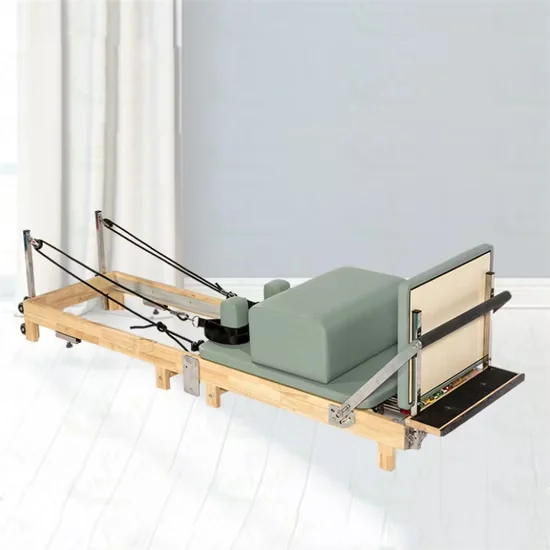
![Commercial Folding Pilates Reformer Machines SRY-20 for Studio [WARN] draft identifier mismatch](https://bicksport.com/wp-content/uploads/2026/08/commercial-folding-pilates-reformer-machines-sry-20-for-studio-warn-draft-identifier-mismatch-bb2073.webp)