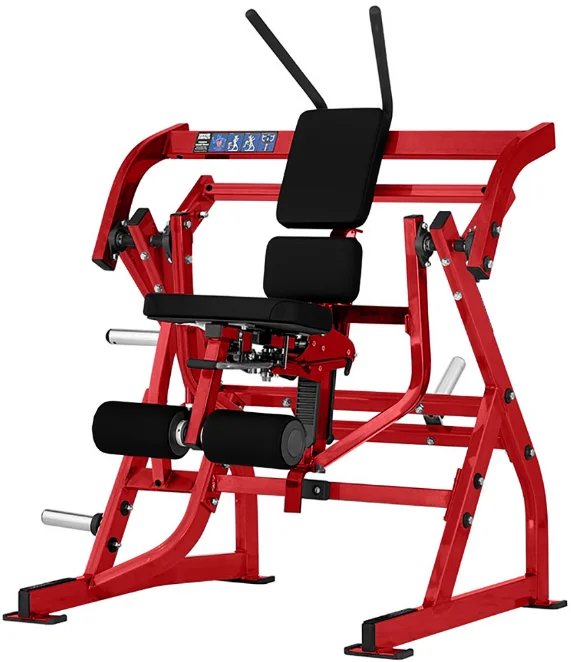
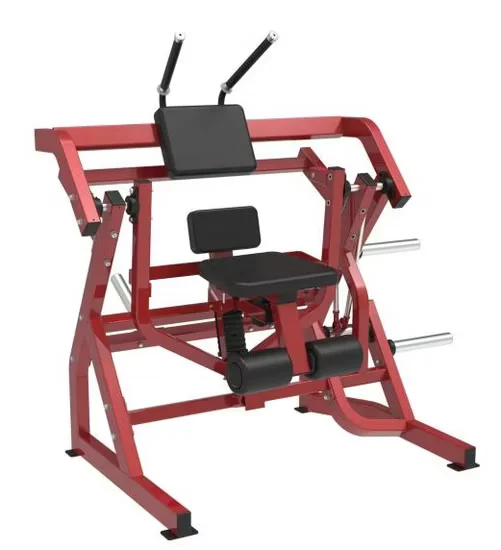
Steel-Frame Durability — verified through continuous high-frequency pivot testing for uninterrupted commercial core training zones.
Technical Specifications
| Parameter | Value |
|---|---|
| Product Type | Abdominal Oblique Crunch Machine |
| Model NO. | 5025 |
| Resistance Type | Selectorized weight stack (pin-loaded) |
| Frame Material | Heavy-duty steel |
| Max User Weight | 180 kg |
| Product Dimensions | 900 × 1400 × 1600 mm |
| Net Weight | 130 kg |
| Certification | ISO 9001, CE |
| Warranty | Commercial frame and parts coverage available |
Application Suitability
| Deployment Scenario | Typical Use |
|---|---|
| Chain gym strength and functional training zone | High-frequency oblique and core isolation work between compound lifts |
| Community fitness center | Accessible core training for members of varying fitness levels |
| Hotel fitness center comprehensive strength area | Compact footprint core station complementing cardio and free-weight zones |
| Corporate wellness room | Low-impact, guided-motion core exercise for time-limited lunch-break sessions |
| Sports performance training center | Targeted rotational core strengthening for athletic conditioning programs |
Why Commercial Facilities Replace Core Machines Before the Warranty Expires
Selectorized core trainers fail in high-traffic gyms when pivot bearings and cushion materials are specified for residential duty cycles.
I have seen oblique crunch stations develop lateral wobble within months when the pivot assembly uses standard bushings instead of sealed commercial bearings. The resulting noise and uneven resistance path causes members to avoid the station, and the facility ends up pulling the unit from the floor for warranty service [NEED_CITE: commercial bearing load rating for selectorized strength equipment]. When the seat pad compresses beyond recovery, users report lower-back discomfort and private trainers stop prescribing the movement, which turns a revenue-supporting asset into dead floor space.
Positioning This Abdominal Oblique Crunch Machine Within the Strength Floor
This commercial abdominal oblique crunch machine occupies the dedicated core and rotational training niche on a strength floor, complementing cable columns, rotary torso machines, and free-weight zones. The fixed-track selectorized design guides users through a controlled lateral flexion path, making it suitable for supervised group sessions and unsupervised open-gym use alike. The steel frame and 180 kg user capacity accommodate a wide range of body types without requiring manual adjustments beyond the weight-stack pin.
Continuous Operation and Floor-Load Considerations
Facilities running twelve or more hours daily need to verify that every pivot point and weld node on a selectorized core unit can handle repeated loading without developing play. The 900 × 1400 mm footprint requires clear lateral clearance on both sides for safe entry and exit, and the 130 kg net weight demands a level concrete sub-floor to prevent frame twist over time [NEED_CITE: floor flatness tolerance for fixed commercial strength equipment]. Adequate ventilation around the weight stack guides prevents dust accumulation that accelerates guide-rod wear.
Decoding the Structural and Mechanical Specifications
The heavy-duty steel frame provides the rigidity needed to resist torsional flex during loaded lateral crunches, keeping the resistance path consistent repetition after repetition. Sealed pivot bearings at the movement axis eliminate the metal-on-metal grinding that plagues bushing-based designs after several thousand cycles. High-density foam seat and back pads resist compression set far longer than standard open-cell foam, maintaining user comfort through years of continuous membership traffic. The selectorized weight stack with pin-loaded increments gives users precise resistance control without the learning curve of plate-loaded systems.
What Specification Shortcuts Cost a Facility Over Three Years
Gyms that accept residential-grade pivot hardware on core machines typically face bearing replacement and frame realignment within the first year of heavy use. Seat pads that flatten prematurely generate member complaints about spinal discomfort, driving trainers to remove the exercise from programming [NEED_CITE: foam density standards for commercial gym upholstery]. Weight stacks with undersized guide rods develop lateral play, creating uneven resistance that members perceive as equipment malfunction, leading to service calls and eventual unit replacement.
Why This Product Line Holds Up Under Daily Commercial Loads
Every frame in this cardio and strength family undergoes extended durability testing modeled on continuous high-frequency facility operation. The 3D layout planning service accounts for the specific footprint and lateral clearance this abdominal oblique crunch machine requires, ensuring adequate member flow between stations. OEM customization extends to pad color and frame finish, letting operators match existing floor aesthetics without sacrificing structural specifications. Technical documentation includes full pivot assembly diagrams and weight-stack calibration records, supporting in-house maintenance teams. Around-the-clock support response covers bearing, guide-rod, and pad inquiries for deployed units worldwide.
Documentation & Test Records
- CE declaration of conformity covering the selectorized weight stack and frame assembly
- EN 957 test report validating structural integrity and pinch-point clearance
- ISO 9001 certificate for the manufacturing quality management system
- Pivot bearing and guide-rod durability test record with cycle counts
- Seat and back pad compression-rebound test data
- Installation guide with anchor-bolt torque specifications and spare parts list
Installation, Commissioning & Maintenance
- Maintain minimum 600 mm lateral clearance on each side of the 900 × 1400 mm frame for safe user access
- Verify sub-floor levelness within 3 mm before anchoring the 130 kg steel frame to prevent torsional stress
- Lubricate weight-stack guide rods with manufacturer-specified grease during initial commissioning
- Inspect sealed pivot bearings for lateral play every quarter and re-torque pivot bolts to spec
- Wipe high-density foam pads with pH-neutral cleaner daily to prevent sweat-induced cover degradation
- Check selector pin and cable attachment points monthly for wear indicators
Requesting a Facility-Matched Equipment Proposal
Share your strength-zone floor area and target member volume so we can generate a 3D layout that positions this selectorized core unit with correct spacing and traffic flow. Specify daily operating hours to confirm that pivot and guide-rod specifications match your usage intensity. Identify the deployment floor and adjacent spaces so we can validate acoustic transfer requirements. State your market voltage and plug standard if the unit includes any electronic console option, and confirm whether usage-data integration with your facility management system is required.
Frequently Asked Questions
Q: What structural differences separate a commercial abdominal oblique crunch machine from a residential model?
A: Commercial units use thicker-gauge steel tubing, reinforced weld nodes at high-stress joints, and sealed pivot bearings rated for thousands of daily cycles. Residential models rely on thinner frames and standard bushings that develop play under continuous multi-user loading, leading to wobble, noise, and premature service calls.
Q: How do I evaluate whether the pivot assembly will survive high-frequency commercial use?
A: Request the manufacturer’s pivot durability test record showing total cycles completed under rated load without measurable lateral play. Verify that sealed bearings rather than plain bushings are used at every rotational axis, and confirm that pivot bolts are accessible for periodic re-torque during routine maintenance.
Q: Why do seat pads on core machines flatten so quickly in busy gyms?
A: Low-density open-cell foam compresses permanently after repeated loading, losing its rebound properties within months. Commercial pads should specify high-density closed-cell or rebond foam that maintains its shape through years of continuous use, and the upholstery cover should resist sweat penetration to prevent internal foam breakdown.
Q: What clearance and layout factors matter when placing this unit in a core training zone?
A: The 900 × 1400 mm footprint requires lateral clearance on both sides for safe entry and exit, plus overhead clearance matching the 1600 mm frame height. Position the unit away from high-traffic walkways so users performing loaded lateral flexion are not interrupted by passing members.
![Commercial Vertical Leg Press 5037 Gym Equipment [WARN] draft identifier mismatch](https://bicksport.com/wp-content/uploads/2026/08/commercial-vertical-leg-press-5037-gym-equipment-warn-draft-identifier-mismatch-e1f674.webp)