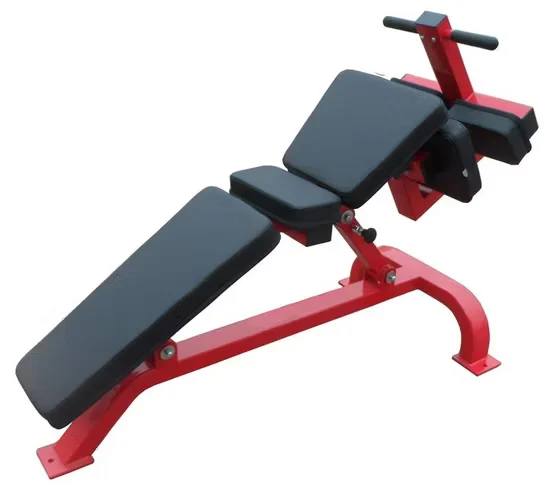
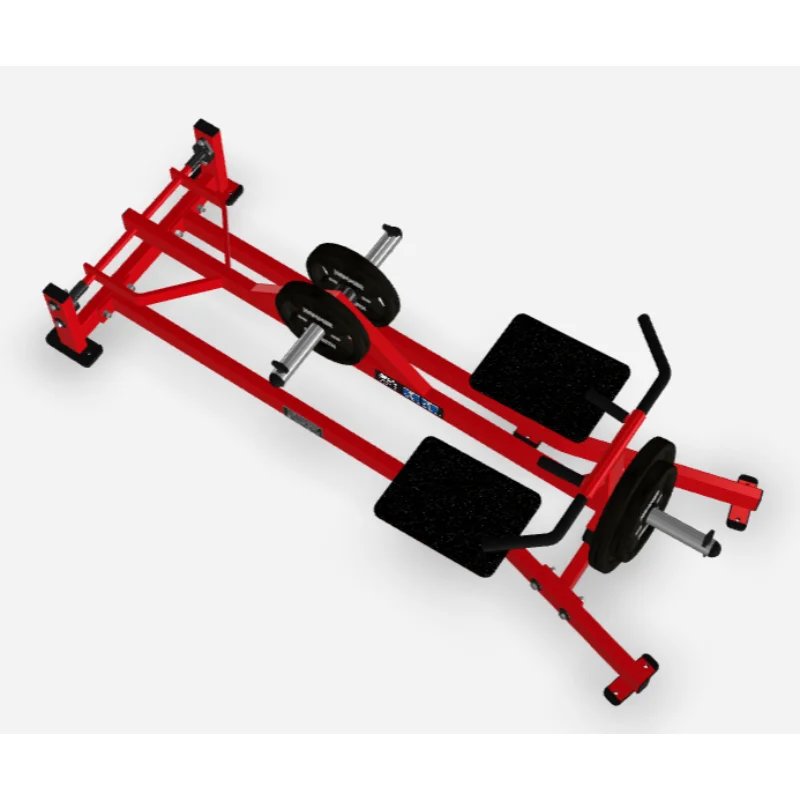
![Plate Loaded Hammer Strength Decline Abdominal Bench Gym Equipment [WARN] draft identifier mismatch](https://bicksport.com/wp-content/uploads/2026/08/plate-loaded-hammer-strength-decline-abdominal-bench-gym-equipment-warn-draft-identifier-mismatch-857c0f.webp)
Heavy-Duty Frame Stability — Welded steel construction tested for continuous high-frequency use without flex, supporting athletes up to 180kg across every repetition.
Technical Specifications
| Parameter | Value |
|---|---|
| Product Type | Decline Abdominal Bench (Plate Loaded / Hammer Strength) |
| Model NO. | H062 |
| Exercise Part | Chest & Abdominal |
| Material | Steel |
| Product Dimensions | 1650 × 650 × 800 mm |
| Net Weight | 36 kg |
| Max User Weight | 180 kg |
| Resistance Type | Plate Loaded |
| Main Frame Color | Available per customer specification |
| Cushion Color | Available per customer specification |
| Certification | ISO 9001, CE |
Application Suitability
| Deployment Scenario | Typical Use |
|---|---|
| International gym chain strength zone | High-frequency core and abdominal training across peak hours |
| Professional sports training center | Athlete-grade core conditioning with progressive plate loading |
| Corporate wellness facility | Comprehensive strength circuit including targeted abdominal work |
| Community fitness center | Durable plate loaded station for supervised and unsupervised use |
| High-end residential home gym | Compact footprint abdominal trainer for dedicated strength spaces |
Why Frame Rigidity Determines Member Retention on Abdominal Stations
A flexing frame under load signals poor build quality to every user who grips the handles.
In commercial facilities, plate loaded decline abdominal bench commercial gym equipment faces repeated loading cycles that expose weak welds and undersized tubing within months. I have seen benches pulled off the floor after members reported the frame shifting mid-set, creating both a safety concern and a perception that the entire strength zone is under-equipped. When the frame does not hold rigid under a 180kg user plus added plates, the cushion compresses unevenly, the decline angle changes subtly, and the movement pattern degrades [NEED_CITE: frame deflection tolerance under dynamic loading in commercial strength equipment]. Facilities that replaced lightweight benches with reinforced steel frames consistently report fewer member complaints and longer equipment service intervals.
Where This Decline Bench Fits in a Commercial Strength Layout
This plate loaded hammer strength decline abdominal bench occupies the core training segment of a commercial strength zone, complementing flat and incline benches as well as rotational torso machines. The fixed decline angle targets the lower rectus abdominis and hip flexors through a controlled range of motion, suited for both high-rep endurance sets and heavy low-rep loading. Its 1650 × 650 mm footprint allows placement along perimeter walls or within dedicated abdominal training clusters, requiring minimal lateral clearance. The 180kg maximum user weight accommodates the full spectrum of commercial gym members, from recreational users to competitive athletes performing weighted decline sit-ups and Russian twists with plate resistance.
Continuous Use Demands on Plate Loaded Strength Stations
In a busy gym chain, this station may see forty or more users per day during peak hours, each applying dynamic loads that cycle the frame through stress and release. The steel construction and sealed pivot points are designed to handle this duty cycle without developing play or rattle [NEED_CITE: commercial strength equipment duty cycle classification for high-traffic facilities]. Floor anchoring requirements depend on the deployment surface — concrete slabs accept standard anchor bolts, while raised flooring may require load distribution plates. The powder-coated frame finish resists sweat corrosion and cleaning chemicals used in daily maintenance routines. Ambient temperature and humidity in the strength zone should remain within standard indoor ranges to prevent condensation on steel surfaces.
Plate Loading Mechanics and Frame Engineering
The plate loaded design eliminates cables, pulleys, and selectorized weight stacks, reducing the maintenance burden to occasional bolt torque checks and pivot lubrication. Horn-style plate posts accept standard Olympic plates, allowing users to increment load in small steps for progressive overload. The reinforced steel frame uses rectangular tubing at primary stress junctions, with gusseted joints where the decline rail meets the base — these are the points that experience the highest bending moments during weighted repetitions. Commercial-grade cushioning uses high-density foam over a rigid back pad, engineered to resist compression set over thousands of use cycles. The decline angle positions the user’s center of gravity to increase resistance through the concentric phase of the movement, demanding a frame that does not deflect under combined user and plate weight.
What Cutting Corners on Frame Steel Actually Costs
Benches built with lighter gauge tubing develop visible flex within the first year of commercial deployment, leading to member complaints about instability and eventual removal from the floor. Cushion foam that is too soft compresses permanently within months, creating an uneven surface that alters the movement path and generates joint discomfort reports. Pivot hardware that is not sealed against sweat ingress develops corrosion, introducing play that makes the bench feel loose and unsafe [NEED_CITE: pivot bearing degradation in plate loaded equipment under continuous sweat exposure]. The cost of replacing an entire bank of failed benches far exceeds the initial investment in properly engineered steel frames, and the member attrition caused by unreliable equipment compounds the financial impact.
Why This Product Line Meets Commercial Deployment Standards
Every unit undergoes frame load testing that verifies structural integrity at the 180kg user weight limit plus maximum plate loading, ensuring no deflection or permanent deformation. The six-series cardio family available from the same manufacturer allows facilities to source both strength and cardio equipment from a single production facility, simplifying logistics and warranty management. Full OEM and ODM customization covers frame color and cushion color to match facility branding, with flexible MOQ for multi-site rollouts. The 50,000 square meter ISO-certified manufacturing facility in Shandong maintains vertical integration from CNC machining through final assembly and QC inspection [NEED_CITE: ISO 9001 quality management requirements for commercial fitness equipment manufacturing]. Free 3D strength zone layout planning is available, covering equipment spacing, member flow paths, and ventilation requirements specific to the facility footprint. Technical support operates around the clock for commissioning questions and spare parts coordination.
Documentation & Test Records
- CE declaration of conformity covering mechanical safety requirements
- EN 957 test report for stationary training equipment structural integrity
- ISO 9001 certificate for quality management system compliance
- Frame load testing record at maximum user and plate weight
- Cushion foam density and compression set test data
- Assembly and commissioning guide with torque specifications
Installation, Commissioning & Maintenance
- Maintain minimum 600mm clearance on all sides of the 1650 × 650 mm footprint for safe plate loading
- Level the base on concrete flooring and secure with anchor bolts at all four mounting points
- Verify all frame bolts and pivot hardware torque values during initial commissioning
- Inspect pivot bearings and reapply lubricant at quarterly intervals under high-frequency use
- Wipe steel frame and cushion surfaces daily with pH-neutral cleaner to prevent sweat corrosion
Sourcing Guidance for Strength Zone Procurement
Provide your facility floor plan and planned equipment count to receive a 3D strength zone layout that accounts for safe plate loading clearance and member circulation around this decline bench. Specify the expected daily user volume so that duty cycle matching confirms the frame and pivot specifications suit your traffic level. Indicate the deployment surface type — concrete slab, raised floor, or rubber-matted area — to receive appropriate anchoring recommendations. Confirm whether frame and cushion color customization is required to align with your facility branding standards.
Frequently Asked Questions
Q: What are the advantages of plate loaded equipment over selectorized machines in a commercial setting?
A: Plate loaded stations eliminate cables, pulleys, and weight stack mechanisms that require regular adjustment and replacement. Maintenance reduces to periodic bolt checks and pivot lubrication, lowering the total cost of ownership. Users control load increments precisely by adding standard plates, and the simpler mechanical design means fewer components can fail during peak operating hours.
Q: How does the frame construction support high-frequency gym use?
A: The reinforced steel frame uses rectangular tubing with gusseted joints at primary stress points, designed to resist deflection under combined user and plate weight. This rigidity prevents the frame from developing play or rattle over thousands of loading cycles, maintaining consistent movement mechanics and user confidence throughout the equipment service life.
Q: Can the frame and cushion colors be fully customized to match our gym branding?
A: Full OEM and ODM customization is available for both frame powder coat color and cushion upholstery color. Facilities can match existing equipment lines or corporate branding standards. Customization is supported at flexible minimum order quantities, making it practical for both single-site deployments and multi-location chain rollouts.
Q: What maintenance schedule is recommended for commercial plate loaded equipment?
A: Daily surface cleaning with pH-neutral solution prevents sweat corrosion on steel and cushion materials. Quarterly inspection of all frame bolts, pivot hardware, and anchor points ensures continued structural integrity. Pivot bearings should be re-lubricated during quarterly checks, and cushion foam condition should be assessed for compression set at semi-annual intervals.
Q: How does the decline angle target abdominal muscles more effectively than a flat bench?
A: The fixed decline position shifts the user’s center of gravity, increasing resistance through the concentric phase of sit-up and crunch movements. This places greater demand on the lower rectus abdominis and hip flexors compared to flat bench variations. The plate loaded design allows progressive overload to match advancing strength levels.