

Structural Integrity Verified — Reinforced steel frame and linear guide rail system engineered for continuous high-frequency leg training cycles.
Technical Specifications
| Parameter | Value |
|---|---|
| Designation | OS-H5039 |
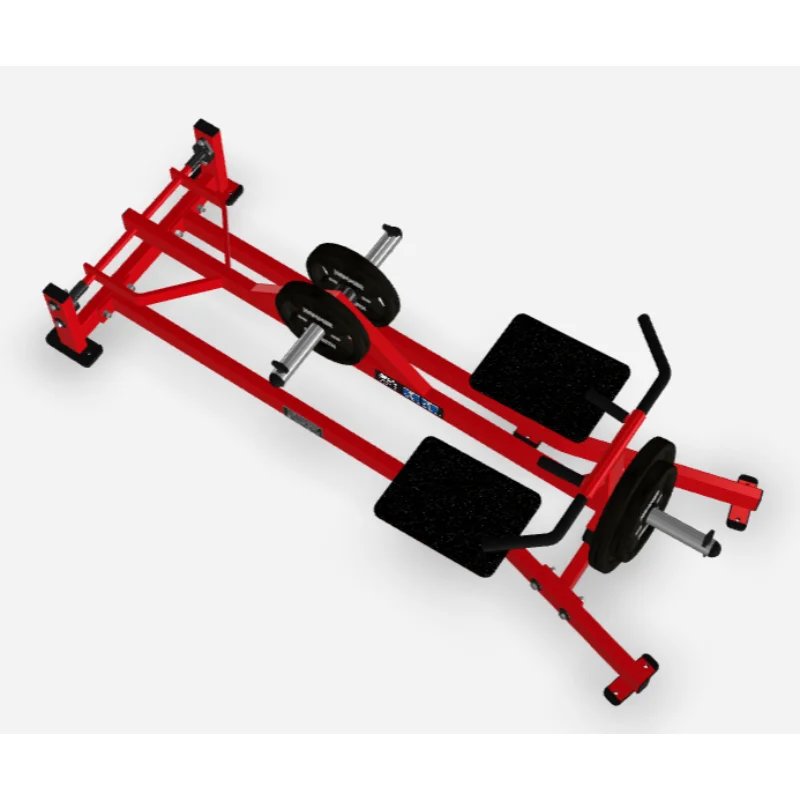
| Product Type | Linear Leg Press |
| Exercise Target | Leg musculature |
| Frame Material | Steel |
| Product Dimensions | 2375 × 1500 × 1475 mm |
| Net Weight | 250 kg |
| Main Frame Color | Available per customer requirements |
| Cushion Color | Available per customer requirements |
| OEM/ODM | Acceptable |
| Certification | ISO 9001, CE |
| Transport Package | Plywood Box |
| Application | Community, Gymnasium, Professional Gym and Club |
Application Suitability
| Deployment Scenario | Typical Use |
|---|---|
| Chain gym strength training zone | High-frequency member use during peak hours with continuous load cycles |
| Professional sports training center | Athlete-specific lower body conditioning and periodized strength programs |
| Corporate wellness facility | Staff fitness room deployment for structured resistance training sessions |
| Community recreation center | Public-access strength equipment with daily multi-user rotation |
Why Frame Rigidity Matters More Than Plate Count in a Commercial Linear Leg Press
A flexing frame under heavy load is a safety incident waiting to happen.
When I was procuring equipment for a five-star property in Dubai, we learned the hard way that leg press frames not built for continuous public facility use develop micro-fractures at weld joints within months. The steel construction on this commercial linear leg press addresses exactly that failure mode. Weld quality and structural reinforcement at stress points determine whether a machine survives three years of back-to-back users or becomes a liability [NEED_CITE: structural fatigue testing standards for commercial resistance equipment]. Facilities that cut corners on frame specifications end up replacing entire units — a cost that far exceeds the initial price differential.
Where This Linear Leg Press Fits in a Commercial Strength Layout
This machine targets controlled lower body engagement through a fixed linear press path, making it a complement to free-weight squat racks and plate-loaded hack squat stations. In a commercial strength zone, it occupies a specific niche: users who need guided movement patterns without the stabilization demands of free weights. The 2375 × 1500 mm footprint positions it along perimeter walls or dedicated machine circuits rather than open-floor functional areas. The commercial linear leg press accommodates users across a broad size range given the linear guide mechanics and adjustable positioning, suitable for general membership populations and athletic training cohorts alike.
Continuous Duty Cycles and Environmental Requirements for 24/7 Facilities
A linear leg press in a high-traffic gym sees dozens of users daily, each loading significant weight through the guide rail system. The steel frame and sealed bearing assemblies must handle this repetitive stress without degradation in movement smoothness. Floor-level deployment requires a flat, reinforced concrete substrate capable of supporting the 250 kg net weight plus loaded plates and user mass simultaneously. Adequate spacing around the unit — particularly at the loading points and user entry/exit zones — prevents congestion during peak hours [NEED_CITE: commercial gym equipment spacing guidelines for safe operation]. Ventilation around the machine matters less than for motorized cardio, but sweat accumulation on the guide rails demands regular maintenance attention in humid environments.
Reading the Steel Gauge and Guide Rail Specifications
The linear press path relies on guide rails that must maintain smooth travel under asymmetric loading — when a user pushes unevenly, the rail system prevents binding or lateral drift. Steel frame construction at this weight class indicates substantial material thickness at structural joints. The 250 kg net weight reflects the mass required to anchor the machine during heavy presses without floor bolt-down in many installations. Linear guide systems differ fundamentally from pivot-arm leg press designs: the fixed track eliminates the arc variation in resistance feel that pivot machines produce, delivering consistent mechanical engagement throughout the full range of motion. Frame color and cushion color customization allow facility operators to match existing equipment lines or brand palettes without compromising the underlying structural specification.
The Hidden Cost of Underspecified Strength Equipment
Light-commercial frames installed in public-facing facilities show stress cracking at weld points within the first year of high-frequency use. Guide rails that lack adequate sealing accumulate chalk, sweat residue, and particulate matter, leading to rough travel and user complaints. Cushion foam that compresses prematurely creates discomfort that drives members toward alternative equipment, leaving the leg press underutilized. When procurement decisions focus solely on initial price without verifying frame gauge and rail durability, the total cost of ownership — including downtime, replacement, and member dissatisfaction — escalates rapidly [NEED_CITE: total cost of ownership analysis for commercial gym equipment procurement].
Why This Product Line Earns Its Place in the Facility
The steel frame engineering and linear guide system on the OS-H5039 address the specific failure points observed across commercial deployments. Frame and cushion color customization integrates the unit into cohesive facility aesthetics without special-order lead times typical of boutique manufacturers. OEM and ODM capability extends to specification adjustments for facilities with unique requirements. The 2375 × 1500 × 1475 mm dimensions inform the 3D layout planning, ensuring adequate user clearance and maintenance access in the strength zone. Full documentation packages accompany each unit for facility compliance records. Technical support availability addresses the inevitable questions that arise during installation and commissioning phases.
Documentation & Test Records
- CE declaration of conformity for European market compliance
- ISO 9001 certificate covering manufacturing quality management
- EN 957 test report validating safety requirements for stationary training equipment
- Structural load testing records for frame and guide rail assemblies
- Material specification sheets for steel frame components
- Installation and commissioning guide with spare parts catalog
Installation, Commissioning & Maintenance
- Allocate clearance around the 2375 × 1500 mm footprint for safe user loading and exit
- Verify floor levelness before positioning the 250 kg frame to prevent rail binding
- Inspect guide rail travel smoothness and lubricate per manufacturer schedule
- Check weld integrity at frame stress points during quarterly maintenance cycles
- Clean cushion upholstery and guide rails to prevent sweat corrosion buildup
- Confirm all fastener torque specifications after the initial break-in period
Equipment Selection and Facility Planning Inquiry
Provide your strength zone square footage and existing equipment list to receive a layout plan accounting for the OS-H5039 footprint and user flow requirements. Specify anticipated daily user volume to confirm the frame and guide rail specifications match your facility duty cycle. Indicate deployment floor level and adjacent occupied spaces if noise transmission from plate loading is a concern. Confirm target market requirements for documentation and compliance standards.
Frequently Asked Questions
Q: How does a linear leg press compare to a plate-loaded pivot-arm design for commercial use?
A: Linear guide systems maintain consistent resistance feel throughout the movement range, while pivot-arm designs create variable resistance due to the arc path. For commercial facilities serving diverse membership populations, the linear path offers predictable engagement that reduces user confusion. Maintenance requirements differ as well — linear rails need regular lubrication and seal inspection, while pivot arms require bushing replacement over time.
Q: What frame construction standards should facilities verify before purchasing?
A: Confirm the steel gauge at primary structural joints and request weld inspection documentation. Commercial-grade frames undergo cyclic loading tests that simulate years of use. Ask for EN 957 compliance documentation, which covers static and dynamic load testing. Frame weight itself is an indicator — units under a certain mass threshold typically lack the material thickness needed for high-frequency deployment.
Q: Can the frame and cushion colors match existing gym equipment branding?
A: Both frame color and cushion color are available per customer requirements, allowing integration with existing equipment aesthetics or facility brand standards. This customization applies to the OS-H5039 without extended lead times typical of specialized finish requests. Confirm color codes during the specification phase to ensure accurate matching across your equipment fleet.
Q: What maintenance does the linear guide rail system require?
A: Guide rails require periodic cleaning to remove chalk dust, sweat residue, and particulate accumulation that causes rough travel. Lubrication intervals depend on usage frequency — high-traffic facilities may need monthly attention while lower-volume sites follow quarterly schedules. Sealed bearing assemblies reduce contamination ingress but still benefit from visual inspection during routine maintenance rounds.
Q: How should facilities plan floor space for this leg press in a strength zone?
A: The 2375 × 1500 × 1475 mm dimensions define the physical footprint, but operational clearance extends beyond the machine envelope. Allow adequate space at loading points for plate handling and at the user entry position for safe mounting. Perimeter wall placement typically works well, keeping the unit accessible without disrupting traffic flow through the free-weight and functional training areas.

![Hammer Strength ISO-Lateral High Row OS-H5016 Commercial Gym Equipment [WARN] draft identifier mismatch](https://bicksport.com/wp-content/uploads/2026/08/hammer-strength-iso-lateral-high-row-os-h5016-commercial-gym-equipment-warn-draft-identifier-mismatch-2fd6a5.webp)
