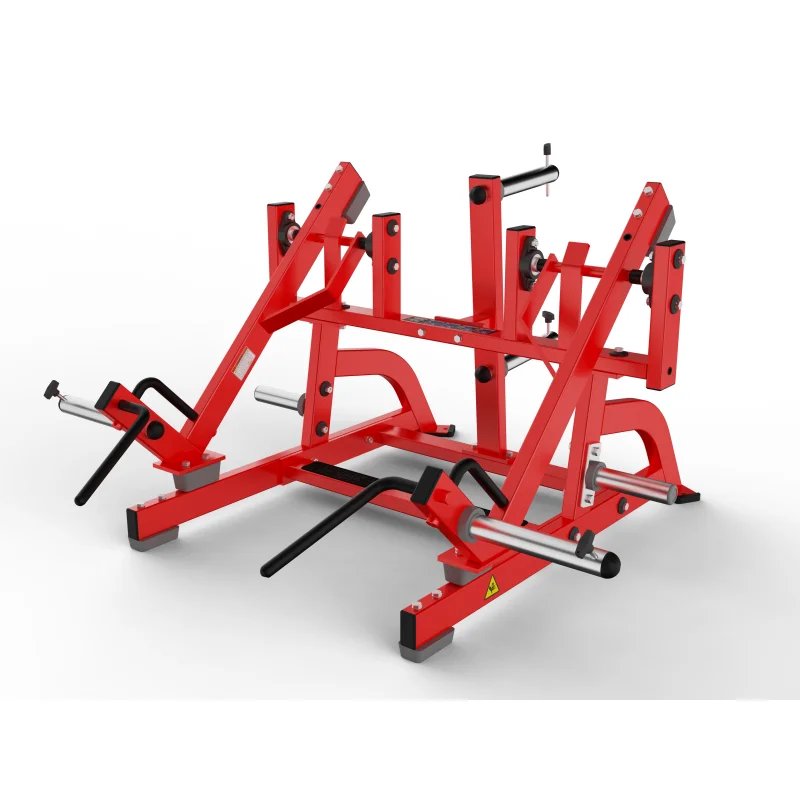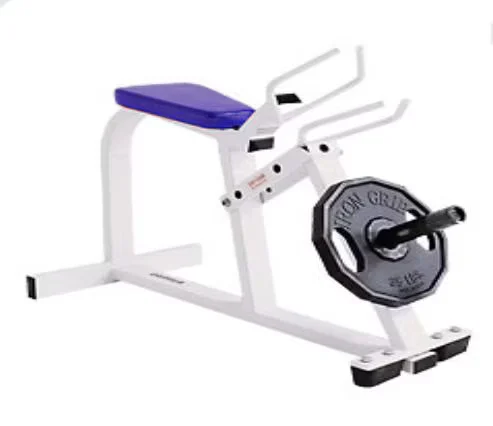
Acoustic Silence by Design — The manual resistance architecture eliminates motor noise entirely, enabling deployment on noise-sensitive hotel floors and shared residential spaces.
Technical Specifications
| Parameter | Value |
|---|---|
| Designation | 5022 |
| Power Source | Manual |
| Exercise Part | Hand |
| Material | Steel |
| Resistance Type | Manual Plate Loaded |
| Product Dimensions | 1075580855mm |
| Net Weight | 53kg |
| Foldable | Unfolded |
| Certification | ISO 9001, CE |
| OEM/ODM | Available |
Application Suitability
| Deployment Scenario | Typical Use |
|---|---|
| hotel fitness center on guest room floors | Low-noise upper body conditioning adjacent to resting zones |
| chain gym cardio zone | High-frequency grip and forearm endurance training between cardio sets |
| corporate wellness room | Accessible manual resistance for mixed-fitness employee populations |
| sports performance training center | Athlete-grade grip strength development for climbing and combat sports |
Why Zero Motor Dependency Matters for Facility Uptime
No motor means no burnout, no circuit board failures, and no noise complaints reaching the front desk.
In commercial facilities running sixteen-hour days, motorized grip and forearm stations account for a disproportionate share of maintenance tickets. Coils overheat under continuous load, control boards drift out of calibration, and the low-frequency hum transmits through floor slabs into occupied rooms below. A commercial plate loaded gripper machine manual resistance design sidesteps every one of these failure modes by returning to pure mechanical loading. Facility managers who have cycled through motorized alternatives consistently report that unplanned downtime drops when the power cord disappears [NEED_CITE: motor failure frequency in high-traffic commercial grip stations].
Positioning Within a Commercial Cardio and Strength Floor Plan
Model 5022 occupies a compact footprint that slots into transition zones between cardio rows and free-weight areas, giving members a dedicated grip and forearm station without consuming prime floor space. It complements treadmill and elliptical lines by addressing the upper-body endurance gap that pure cardio zones leave open. The steel frame and unfolded configuration suit high-traffic corridors where folding mechanisms would introduce maintenance liability. Users across a wide range of hand sizes and strength levels can load plates incrementally, making the station accessible from rehabilitation contexts through to elite athletic preparation. The commercial plate loaded gripper machine manual resistance format ensures the equipment remains in constant rotation without queuing bottlenecks.
Continuous Operation Without Electrical Infrastructure
Because the 5022 draws zero current, deployment bypasses the electrical planning that motorized stations demand—no dedicated circuit, no voltage matching, no surge protection. This matters on hotel guest room floors where adding a 220V drop to an existing lighting circuit triggers code reviews. The unfolded steel frame transmits vibration directly to the subfloor, so a level concrete slab or reinforced composite decking is necessary to prevent resonant rattle in rooms below [NEED_CITE: floor-borne vibration transmission thresholds for commercial fitness equipment]. Thermal management is irrelevant; there is no heat sink, no fan, and no ambient temperature ceiling to monitor during summer peak loads.
Manual Resistance Mechanics and Load Transfer
The plate-loaded horn accepts standard Olympic or bumper plates, translating dead weight into linear grip resistance without the lag and hysteresis inherent in pneumatic or cable-pulley systems. The steel frame construction provides the torsional rigidity needed when users load asymmetrically or apply explosive contraction force. Unlike selectorized pin-and-stack machines, plate loading allows micro-increments that match progressive overload protocols precisely. The absence of cables, pulleys, and weight stack guide rods removes the three components most frequently cited in commercial service calls.
The Hidden Cost of Compromised Frame Rigidity
Light-gauge steel and bolt-together assemblies flex under heavy asymmetric loading, producing the lateral wobble that users interpret as equipment failure. Over months of high-frequency use, this flex fatigues weld points and accelerates bushing wear in the lever arm pivot. Facilities that initially sourced lighter-frame alternatives frequently report frame crack inspections becoming a monthly line item. The 53kg net weight of the 5022 reflects material mass concentrated where load paths demand it, not ornamental overbuild [NEED_CITE: structural fatigue cycles in commercial strength frame welds].
Why This Product Line Holds Up Under Scrutiny
The 5022 belongs to a full six-series cardio and strength family, meaning a facility can source every discipline from a single engineering standard. Components undergo 10,000-hour continuous operation testing on bearings and pivot assemblies—the same durability protocol applied to the motorized treadmill and elliptical lines. OEM customization extends to frame color, logo placement, and plate horn specification, allowing chain operators to maintain visual identity across locations. The free 3D layout and airflow planning service accounts for the 1075580855mm footprint and the member flow clearance needed around a plate-loading station. Technical support responds around the clock with parts diagrams and torque specifications.
Documentation & Test Records
- CE declaration of conformity covering mechanical safety and load rating
- EN 957 test report for stationary strength training equipment
- ISO 9001 certificate for quality management system compliance
- Structural durability test record for frame and pivot assemblies
- Installation and commissioning guide with floor anchoring specifications
- Spare parts list with bearing and bushing replacement intervals
Installation, Commissioning & Maintenance
- Verify 1075580855mm footprint allows 600mm clearance on all sides for plate loading
- Anchor unfolded steel frame to level concrete using M10 expansion bolts at four base points
- Confirm no electrical circuit or dedicated breaker is required for manual operation
- Inspect plate horn sleeve and collar retention before first member use
- Lubricate pivot bushings with lithium grease at 500-hour intervals
- Wipe steel frame with pH-neutral cleaner daily to prevent sweat-induced corrosion
Equipment Selection and Deployment Planning
Provide the cardio or strength zone square footage and adjacent equipment list to receive a 3D layout that accounts for plate swing radius and member circulation paths. Specify the deployment floor and neighboring room types so that vibration isolation requirements can be confirmed. State the target market and any regional certification requirements beyond CE and ISO 9001. Indicate whether the 5022 will operate standalone or integrate into a branded equipment package requiring OEM color and logo customization.
Frequently Asked Questions
Q: How does maintenance cost compare between manual resistance and motorized grip stations?
A: Manual resistance eliminates the motor, control board, and wiring harness—the three components responsible for the majority of commercial service calls. Maintenance reduces to periodic bushing lubrication and frame inspection. Facilities that replace motorized units with plate loaded alternatives consistently report a noticeable drop in unplanned maintenance tickets and parts expenditure over a twelve-month operating cycle.
Q: What training objectives does a plate loaded gripper machine address in a commercial setting?
A: The 5022 targets grip strength, forearm endurance, and wrist stabilizer development. It serves climbers, combat athletes, and general fitness members seeking to improve deadlift and pull-up performance. Incremental plate loading accommodates users from rehabilitation stages through advanced strength levels, making it a versatile addition to any commercial floor plan.
Q: How does the steel frame perform under high-frequency commercial use?
A: The unfolded steel frame resists the torsional flex that causes lighter assemblies to develop lateral wobble and fatigue cracks. At 53kg net weight, material is concentrated along primary load paths. Welds and pivot bearings are tested for continuous high-frequency operation, matching the durability protocol applied across the entire product family.
Q: What OEM and ODM customization options are available for chain deployments?
A: Customization covers frame color, logo application, and plate horn specification. Console UI customization applies to the motorized cardio lines in the same product family. Minimum order quantities remain flexible to accommodate both single-site upgrades and multi-location rollouts, ensuring visual consistency across a chain network.
Q: What are the spatial and floor loading requirements for deployment?
A: The 1075580855mm footprint requires clearance on all sides for safe plate loading and member circulation. The 53kg net weight plus maximum user load and plate mass should be verified against floor slab capacity, particularly on elevated hotel floors. A level, rigid subfloor is required to prevent resonant vibration transmission to adjacent occupied spaces.