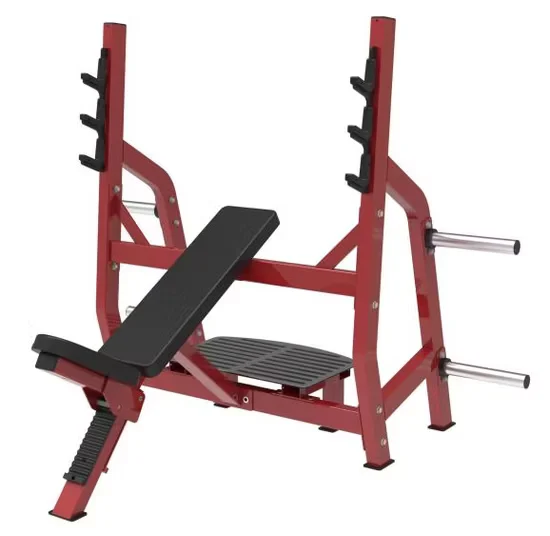

Commercial Durability — Tested for continuous high-frequency use in commercial gym environments, this low row machine features reinforced steel construction and commercial-grade pivot points designed to withstand demanding training schedules.
Technical Specifications
| Parameter | Value |
|---|---|
| Product Type | Low Row Machine |
| Model NO. | OS-5005 |
| Exercise Part | Back |
| Material | Steel |
| Product Dimensions | 125010561700mm |
| Net Weight | 139kg |
| Max User Weight | 180kg |
| Age Group | Adult |
| Gender | Unisex |
| Appliance | Gymnasium, Home |
| Certification | ISO9001, CE |
| HS Code | 9506911900 |
| Production Capacity | 500 Pieces Per Month |
Application Suitability
| Deployment Scenario | Typical Use |
|---|---|
| Commercial gymnasium strength zones | Primary back training station in circuit layouts |
| Corporate wellness fitness centers | Mid-day usage by office workers seeking posture correction |
| High-end residential home gym | Dedicated back development for serious home trainers |
| Boutique fitness studio | Supplementary strength equipment alongside cardio offerings |
Why Frame Flex Undermines Member Confidence in Strength Equipment
Structural rigidity determines whether users trust the machine during heavy loading cycles.
When a low row machine flexes during compound pulling movements, members sense instability and reduce their training intensity. Commercial facilities face equipment that cannot handle repetitive loading from diverse user groups throughout operating hours. The reinforced steel frame construction addresses this by maintaining alignment under continuous use, preventing the wobble that drives members toward free weights instead [NEED_CITE: structural testing standards for commercial strength equipment].
Positioning Within Integrated Strength Training Zones
This low row machine targets mid-back and latissimus dorsi development through controlled horizontal pulling motion. It complements vertical pull-down stations and cable crossover systems in comprehensive back training circuits. The compact 1250×1056mm footprint allows placement in space-constrained strength areas without compromising user clearance. The ergonomic seat and handle positioning accommodates users across the commercial strength equipment weight spectrum while maintaining proper biomechanical alignment during repetitive sets.
Continuous Operation Demands and Facility Integration Requirements
Commercial gymnasium environments subject strength equipment to sustained usage patterns that differ fundamentally from home gym scenarios. This low row machine must maintain pivot point integrity through hundreds of daily repetitions across varied user weights and training intensities. Facility managers should verify floor leveling before installation to prevent frame stress concentration at mounting points. Adequate lateral clearance ensures users can load and unload weight plates safely without adjacent equipment interference [NEED_CITE: commercial facility layout standards for strength zones].
Engineering Choices That Define Long-Term Reliability
The 139kg net weight reflects steel grade selection and frame thickness decisions that prioritize structural integrity over material cost savings. Commercial-grade bearings at pivot points reduce maintenance intervals compared to bushing systems that degrade under high-frequency operation. The sealed bearing design prevents dust and sweat contamination that accelerates wear in demanding gym environments. Handle positioning geometry ensures the pulling path aligns with natural shoulder mechanics, reducing joint stress during high-volume training sessions. The steel construction provides the mass necessary to resist tipping during aggressive rowing movements without requiring floor anchoring in most installations.
The Hidden Costs of Specification Compromises
Facilities that select strength equipment based primarily on upfront cost encounter premature bearing failure, cable fraying, and frame weld fatigue within the first year of commercial operation. Members notice equipment that develops play in pivot points and avoid machines that feel unstable during heavy sets. Maintenance teams spend disproportionate time servicing equipment with inferior bearing specifications and undersized cable systems. The cumulative cost of replacement parts, technician labor, and member attrition exceeds the initial savings from choosing lower-specification alternatives [NEED_CITE: total cost of ownership analysis for commercial strength equipment].
Why This Product Line Addresses Real Deployment Challenges
The reinforced steel frame construction undergoes durability testing that simulates continuous commercial loading cycles. Commercial-grade pivot points and sealed bearings maintain smooth operation through thousands of repetition sets without requiring frequent adjustment. The compact footprint integrates into existing strength zone layouts without demanding extensive floor plan modifications. ISO 9001 manufacturing processes ensure weld consistency and frame alignment across production batches. The 180kg maximum user weight rating accommodates the full spectrum of commercial gym membership demographics. Technical support availability ensures rapid resolution when facilities encounter installation or calibration questions.
Documentation & Test Records
- CE declaration of conformity for European market compliance
- EN 957 test report validating safety and performance standards
- ISO 9001 certificate confirming quality management systems
- Durability test records documenting frame and bearing lifecycle
- Installation and commissioning guide with torque specifications
- Spare parts list with component identification numbers
Installation, Commissioning & Maintenance
- Verify 1250×1056mm footprint clearance including user movement space
- Level floor surface before positioning to prevent frame stress
- Inspect cable tension and pivot point smoothness during initial setup
- Establish monthly bearing inspection schedule based on usage volume
- Clean handle grips and seat surfaces daily to prevent sweat corrosion
- Document maintenance intervals in facility management system
Equipment Selection and Facility Planning Inquiry
Provide your strength zone dimensions and equipment list to receive layout recommendations that optimize member flow and equipment spacing. Specify daily operating hours and expected user volume to confirm this low row machine matches your facility’s duty cycle requirements. Indicate whether the installation location requires consideration for adjacent occupied spaces or upper-floor deployment. Share your target market voltage standards if the equipment includes electronic components requiring power connection.
Frequently Asked Questions
Q: What steel grade and frame thickness ensure long-term structural integrity?
A: The frame uses commercial-grade steel selected for yield strength and weld compatibility. Thickness specifications prioritize rigidity at stress concentration points near pivot mounts and cable anchor locations. This approach prevents the frame flex that members perceive as instability during heavy loading. Manufacturing documentation provides material specifications for facility engineering review.
Q: How do commercial-grade bearings reduce maintenance frequency?
A: Sealed bearings prevent contamination from dust, chalk, and sweat that accelerates wear in gym environments. The bearing specification matches expected load cycles and pivot point forces during rowing movements. This reduces the adjustment and replacement intervals that maintenance teams encounter with bushing-based systems. Facilities report longer service intervals compared to lower-specification alternatives.
Q: What biomechanical advantages does the low row motion provide for back development?
A: Horizontal pulling targets mid-back musculature through a movement pattern that complements vertical pull-down exercises. The seat and handle geometry maintains proper shoulder alignment throughout the range of motion. This positioning reduces compensatory movement patterns that limit training effectiveness. The controlled resistance delivery allows users to focus on muscle engagement rather than stabilizing unstable equipment.
Q: How to integrate this unit into a balanced strength zone layout?
A: Position the low row machine adjacent to vertical pull-down stations to create comprehensive back training circuits. Maintain adequate lateral clearance for plate loading and user movement between sets. The 1250×1056mm footprint allows integration into existing layouts without major reconfiguration. Consider member flow patterns to prevent congestion during peak usage hours.