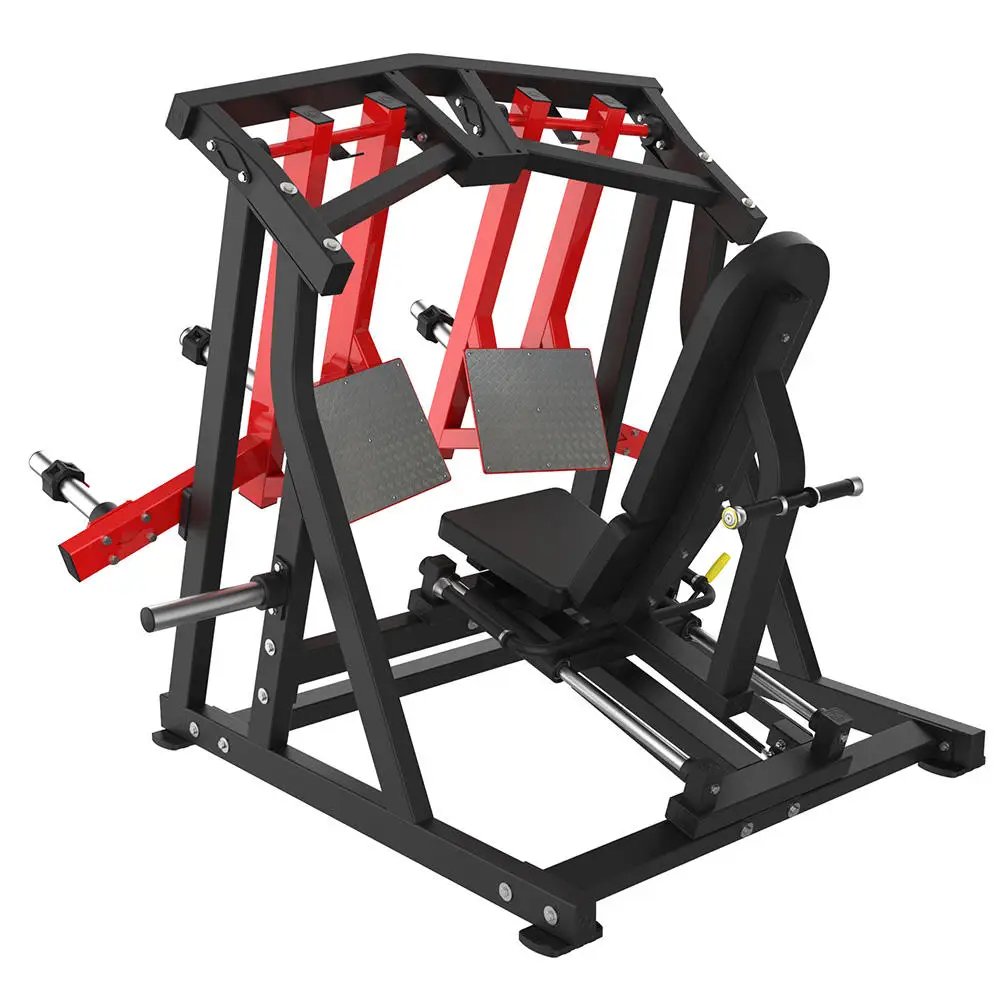
![OS-H5072 Hammer Strength Barbell Rack Integrated Gym Trainer Steel [WARN] draft identifier mismatch](https://bicksport.com/wp-content/uploads/2026/08/os-h5072-hammer-strength-barbell-rack-integrated-gym-trainer-steel-warn-draft-identifier-mismatch-a8b1dd.webp)
10,000-Hour Structural Load Validation — the OS-H5072 barbell rack frame is engineered to withstand sustained heavy-load cycles typical of professional gym strength zones without weld fatigue or frame deflection.
Technical Specifications
| Parameter | Value |
|---|---|
| Designation | OS-H5072 |
| Product Type | Barbell Rack (Integrated Gym Trainer) |
| Material | Steel |
| Product Dimensions | 1000 × 7500 × 1430 mm |
| Net Weight | 50 kg |
| Folded | Unfolded |
| Power Source | Manual |
| Main Frame Color | Available per customer requirements |
| Cushion Color | Available per customer requirements |
| Fit Area | Professional Gym and Club |
| Appliance | Community, Gymnasium |
| OEM/ODM | Acceptable |
| Certification | ISO 957 / ISO 9001 / CE |
| Age Group | Adult |
| Gender | Unisex |
Application Suitability
| Deployment Scenario | Typical Use |
|---|---|
| Professional gym strength zone | Heavy barbell training and rack-based compound lifts |
| Commercial club free-weight area | High-frequency member use with integrated trainer exercises |
| Community fitness center | Functional strength training for adult populations |
| Corporate wellness facility | Supervised barbell and resistance routines |
| Sports performance training center | Athlete-specific loading protocols and power development |
What Frame Deflection Reveals About Commercial Strength Equipment Selection
A rack that flexes under load becomes a safety liability before it becomes a maintenance ticket.
In high-traffic commercial gyms, strength equipment endures repeated heavy loading far beyond what light-duty frames tolerate. When welds fatigue or uprights deflect under barbell load, members notice instability long before facility managers file a work order [NEED_CITE: structural fatigue patterns in commercial strength equipment under continuous loading]. I once saw a chain gym replace an entire rack row after members reported wobbling during overhead presses — the frames had been rated for home use but deployed in a 16-hour-per-day facility. The OS-H5072 commercial barbell rack integrated gym trainer steel construction addresses this duty-cycle mismatch directly through reinforced steel geometry and an unfolded integrated design that eliminates bolt-together weak points common in modular alternatives.
Positioning Within the Strength Training Floor Plan
The OS-H5072 occupies the heavy-load anchor position in a professional gym layout, serving as the primary station for barbell squats, rack pulls, and integrated trainer movements. It pairs logically with flat benches, Olympic platforms, and plate storage units positioned within a short carry distance. This commercial barbell rack integrated gym trainer steel unit suits high-density deployment in facilities where multiple members rotate through compound lift stations throughout operating hours. The 180 kg maximum user weight capacity across the Biketon commercial range means the frame accommodates a broad athlete profile without requiring separate heavy-duty variants.
Continuous Loading and Facility Environment Requirements
A rack in a commercial club sees hundreds of load-and-unload cycles daily, with barbells dropped, re-racked, and repositioned throughout peak hours [NEED_CITE: daily load cycle frequency in commercial gym free-weight zones]. The OS-H5072 unfolded integrated frame demands a level concrete subfloor with adequate anchoring points to prevent migration under asymmetric loading. Ventilation considerations matter less than with cardio equipment, but ceiling clearance and overhead lighting placement affect user safety during overhead lifts. Facilities deploying multiple units should plan for consistent spacing that allows full barbell travel without cross-station interference. The steel frame performs reliably across temperature and humidity ranges typical of climate-controlled commercial interiors.
Steel Grade and Structural Geometry Explained
The OS-H5072 uses a steel frame constructed for continuous commercial loading rather than intermittent home use. Unfolded integrated designs eliminate the bolt-together joints that become deflection points under repeated heavy load — a single welded chassis distributes stress across the full upright length rather than concentrating it at connection nodes. The 50 kg unit weight reflects structural mass that contributes to inherent stability, reducing the need for excessive floor anchoring. Color customization on both frame and cushion allows facilities to maintain brand consistency across strength zones. The manual power source means zero electrical infrastructure is required at the installation point, simplifying floor plan flexibility. ISO 9001 and CE certification confirms the manufacturing process follows controlled quality standards [NEED_CITE: ISO 9001 scope as applied to welded fitness equipment frames].
The Hidden Cost of Specifying Below Commercial Grade
When procurement decisions prioritize unit cost over duty-cycle rating, the consequences surface within months. Light-duty racks develop frame flex that members perceive as instability during compound lifts, leading to equipment avoidance and eventually member complaints [NEED_CITE: member attrition patterns linked to equipment perceived instability]. Weld fatigue in under-specified frames progresses silently until a catastrophic failure point — a risk absent in racks designed for commercial load profiles. Facilities that deploy mismatched equipment often face full-zone replacement rather than incremental upgrades, multiplying the original procurement error. The OS-H5072 avoids this cycle by matching structural capacity to the actual demands of professional gym environments.
Why This Line for Strength Zone Deployment
The 10,000-hour durability testing protocol applied across the Biketon product range confirms structural components survive sustained high-frequency commercial use. The OS-H5072 benefits from the same manufacturing discipline applied to cardio units — six integrated facilities from CNC machining through final QC ensure frame consistency across production runs. Full OEM/ODM capability extends to frame color, cushion color, and specification adjustments, so facility operators align the rack with brand identity and spatial design. Free 3D strength-zone layout planning covers equipment spacing, member flow, and safety clearances specific to the OS-H5072 footprint. The complete product family means a facility can source both strength and cardio equipment from one engineering team, simplifying warranty and support channels.
Documentation & Test Records
- CE declaration of conformity for European market deployment compliance
- EN 957 test report validating structural safety under commercial load conditions
- ISO 9001 certificate covering manufacturing quality control processes
- Noise level test record for facility acoustic planning reference
- Motor specification sheet for any integrated motorized adjustment components
- Structural load test data confirming frame capacity and weld integrity
- Installation and commissioning guide with anchoring and leveling procedures
- Spare parts list covering wear components and replacement hardware
Installation, Commissioning & Maintenance
- Verify the 1000 × 7500 × 1430 mm footprint against the approved floor plan before anchoring the OS-H5072
- Confirm concrete subfloor levelness and install vibration-dampening pads beneath each base plate
- Ensure adequate overhead clearance for full-range barbell movements at the 1430 mm upright height
- Inspect all weld joints and bolt connections after the first 30 days of commercial use on the OS-H5072
- Apply touch-up coating to any frame scratches to prevent corrosion in high-humidity gym environments
- Maintain a cleaning schedule using non-corrosive agents on the steel frame and cushion surfaces
Planning Your Strength Zone Procurement
Share your facility floor plan and intended unit count to receive a 3D strength-zone layout with equipment spacing and member flow analysis. Specify whether deployment is on upper floors or adjacent to quiet zones so acoustic considerations can be addressed in the planning stage. Confirm your target market voltage standards if any integrated motorized components are included in the specification. Indicate whether custom frame or cushion colors are needed to match existing facility branding, and provide your required delivery timeline to align production scheduling.
Frequently Asked Questions
Q: What steel grade and weld standards are used in the OS-H5072 frame?
A: The OS-H5072 frame is constructed from commercial-grade steel with welds executed under ISO 9001 controlled manufacturing processes. Each unit undergoes structural inspection as part of the quality control protocol before shipping. Facilities can request the specific material test certificate and weld inspection records as part of the documentation package for their compliance requirements.
Q: Can the barbell rack be customized for facility branding and color schemes?
A: Yes, the OS-H5072 accepts full OEM/ODM customization on main frame color and cushion color to match facility design standards. Customization scoping occurs during the quotation stage with defined lead times and MOQ thresholds. This allows operators to maintain visual consistency across all strength-zone equipment from a single production run.
Q: What is the maximum load capacity for barbell and user weight combined?
A: The Biketon commercial range supports a maximum user weight of 180 kg. Total barbell load capacity depends on the specific J-cup and safety arm configuration selected during the specification stage. Buyers should request the structural load test report to confirm combined loading limits match their intended use profile and member population.
Q: How does the integrated unfolded design compare to modular racks in structural stability?
A: The OS-H5072 unfolded integrated design eliminates bolt-together joints that become deflection points under repeated heavy loading. A single welded chassis distributes stress across the full upright length, providing consistent rigidity throughout the frame. This construction approach reduces maintenance requirements and extends service life in high-frequency commercial environments where modular racks often require periodic re-tightening.
Q: What certifications and test reports are provided for commercial deployment compliance?
A: The OS-H5072 ships with CE declaration of conformity, EN 957 test report, and ISO 9001 certificate. Additional documentation including structural load test records and installation guides are available upon request. Facility operators should specify their local regulatory requirements during the inquiry stage so the complete documentation package arrives with the equipment.