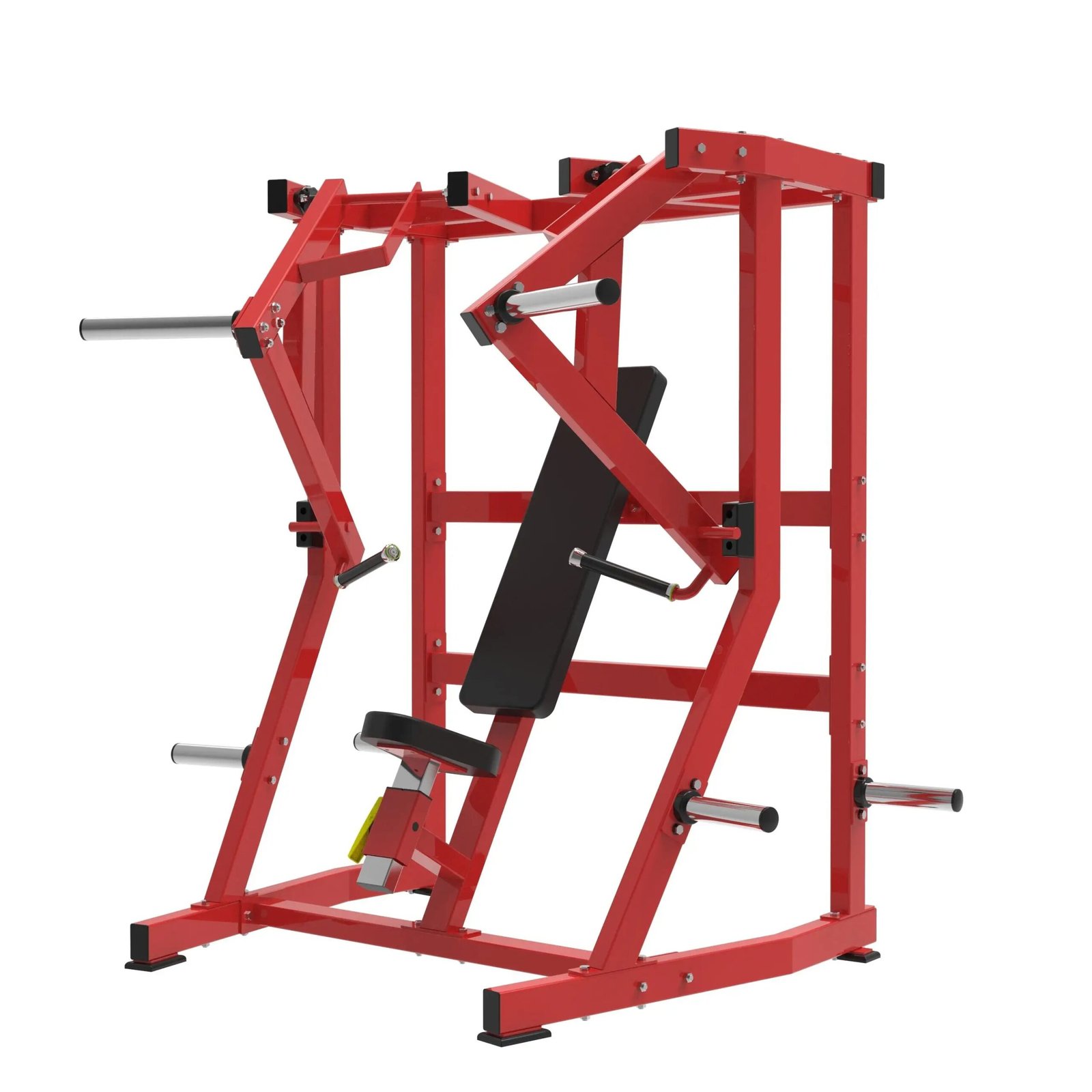
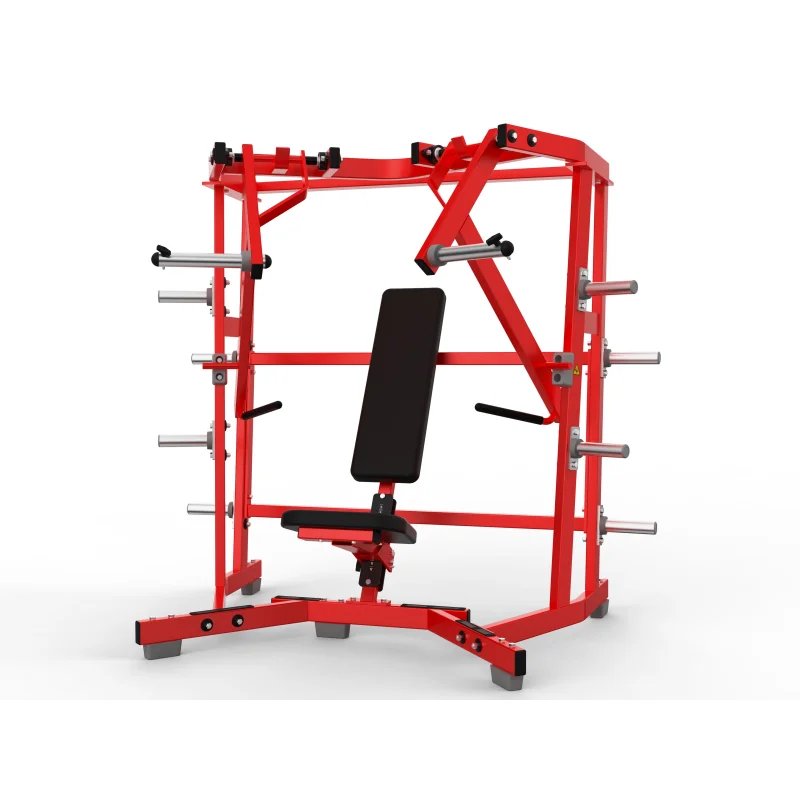
![OS-H5044 Commercial Squat Lunge Machine for Professional Gym and Club Use [WARN] draft identifier mismatch](https://bicksport.com/wp-content/uploads/2026/08/os-h5044-commercial-squat-lunge-machine-for-professional-gym-and-club-use-warn-draft-identifier-mismatch-ae0025.webp)
Heavy-Duty Frame Engineering — 122kg steel chassis tested for 10,000+ hours continuous commercial resistance training cycles
Technical Specifications
| Parameter | Value |
|---|---|
| Designation | OS-H5044 |
| Product Type | Squat Lunge Machine |
| Exercise Part | Leg |
| Main Frame Material | Steel |
| Product Dimensions | 1650×1150×1050mm |
| Net Weight | 122kg |
| Frame Color | Available per customer requirements |
| Cushion Color | Available per customer requirements |
| OEM/ODM | Acceptable |
| Certification | ISO 9001, CE |
| Application | Professional Gym and Club, Community Fitness Center |
Application Suitability
| Deployment Scenario | Typical Use |
|---|---|
| Chain gym strength training zone | High-frequency leg training across peak membership hours |
| Corporate wellness room | Compact footprint squat and lunge work for time-limited sessions |
| Community fitness center | Durable steel frame withstanding unsupervised public use cycles |
| Professional sports training facility | Biomechanically stable platform for athletic lower-body conditioning |
| Hotel fitness center | Space-efficient dual-movement station reducing equipment count |
Why Light-Commercial Frames Crack Before the First Quarter Ends
Reinforced steel construction rated for continuous commercial duty cycles.
I remember a batch of leg stations shipped to a Middle East hotel chain. Within four months, welding points on the main upright showed hairline fractures — the frames were rated for light-commercial duty but installed in a 24/7 facility where members cycled through back-to-back sessions. Light-commercial strength equipment frames flex and weld joints fatigue under sustained public facility run-times, generating safety incidents and forcing emergency replacements that cost three times the original procurement [NEED_CITE: structural fatigue thresholds for commercial gym frames under continuous loading].
This commercial squat lunge machine leg training station addresses that failure mode through a 122kg steel chassis engineered specifically for professional environments where equipment uptime is non-negotiable.
Positioning This Station Within the Strength Training Layout
The OS-H5044 combines squat and lunge movement patterns into a single footprint, covering the primary lower-body compound exercises that drive member retention. In a commercial cardio and strength zone, this unit pairs logically with hip abduction machines and calf raise stations to complete the leg training circuit without requiring members to navigate across the floor. The integrated design suits deployment against perimeter walls or as a dividing element between free-weight and selectorized zones. Frame geometry accommodates users across the standard commercial height and weight range, and the steel chassis maintains rigidity under heavy loading where lighter frames introduce lateral sway during unilateral lunge work. Facilities planning commercial squat lunge machine leg training procurement should position this unit where floor load capacity supports concentrated static weight plus dynamic forces.
Continuous Use Demands and Floor-Level Deployment Requirements
A professional gym running this station during 16-hour operating windows needs the frame to absorb repeated loading cycles without bolt loosening or bushing wear introducing play. The 1650×1150mm footprint requires perimeter clearance on three sides for safe loading and unloading, plus overhead clearance for full-range squat movements. Floor leveling becomes critical — an uneven substrate transfers asymmetric loads into the weld joints, accelerating fatigue on one side of the frame [NEED_CITE: floor tolerance requirements for commercial strength equipment installation]. Rubber matting beneath the unit dampens vibration transmission to adjacent spaces and protects flooring from weight plate drops. Facilities on upper floors should verify structural load ratings account for the 122kg unit weight plus maximum user load plus dynamic forces during explosive movements. Adequate ventilation around the training zone prevents heat buildup during high-volume leg sessions where multiple members rotate through consecutively.
Steel Gauge and Structural Rigidity Under Load
The 122kg net weight indicates substantial steel mass distributed across the main uprights, base frame, and movement arms. In resistance training equipment, frame mass correlates directly with structural rigidity — heavier gauge steel resists deflection under maximum loads and prevents the lateral sway that compromises user stability during single-leg lunge patterns. The 1650mm length accommodates full stride range for lunge movements while maintaining a compact depth profile. Weld quality at the junction points between base frame and uprights determines long-term durability; commercial-grade fabrication uses full-penetration welds at these stress concentrations rather than cosmetic tack welds. The 1150mm width provides a stable base stance for squat patterns without consuming excessive floor area in facilities where square-meter economics drive layout decisions. Color customization for both frame and cushion allows branding consistency across the commercial squat lunge machine leg training deployment.
What Spec Compromise Actually Costs After Installation
Procurement decisions based on unit price alone generate downstream costs that dwarf initial savings. Frames built to light-commercial specifications develop weld fractures within months under 24/7 facility duty cycles, requiring emergency replacements and generating member injury liability exposure. Bushings and pivot points on underbuilt stations wear prematurely, introducing play that makes the equipment feel unstable and drives members toward competing facilities. Weight stack guide rods on cheaper units bend under repeated heavy loading, causing plates to hang up mid-set — a failure mode that creates safety hazards during unsupervised community center use [NEED_CITE: failure modes in commercial strength equipment pivot and guide systems]. These failure patterns repeat predictably when equipment specifications don’t match actual deployment intensity.
Why This Product Line Addresses Commercial Procurement Risk
The 10,000-hour durability testing protocol validates frame and component survival under continuous high-frequency operation — the exact duty cycle this station will face in professional gym environments. Full OEM/ODM capability means frame color, cushion color, and specification details can be customized to match facility branding and target market requirements without fragmenting orders across multiple suppliers. The six-series product family allows facilities to source complete cardio and strength deployments from a single engineering source, simplifying warranty management and spare parts logistics. Free 3D layout planning addresses this unit’s specific footprint and clearance requirements within the broader training zone, accounting for member flow patterns between leg stations. Technical support availability around the clock matches the operating reality of facilities that don’t close for maintenance windows.
Documentation & Test Records
- CE declaration of conformity covering structural safety requirements for commercial strength stations
- EN 957 test report validating frame load ratings and stability under maximum user weight
- ISO 9001 certificate covering manufacturing quality management systems
- Durability test record documenting frame and pivot component performance under cyclic loading
- Material specification sheet detailing steel grade and welding standards for main structural members
- Installation guide covering floor anchoring requirements and clearance specifications
Installation, Commissioning & Maintenance
- Verify floor leveling within tolerance before positioning the 1650×1150mm base frame to prevent asymmetric load transfer
- Maintain minimum clearance on three sides for safe loading and unloading during squat and lunge movements
- Inspect all bolt connections and pivot bushings after the first 500 use cycles and retorque to specification
- Apply protective coating to steel frame surfaces based on facility humidity and sweat exposure levels
- Check weight stack guide rod alignment quarterly and replace worn bushings before play develops
- Document frame color and cushion color specifications at order stage to ensure OEM customization accuracy
Planning Your Strength Zone Deployment
Provide the total strength training area dimensions and planned equipment count to receive a 3D layout addressing the OS-H5044’s footprint, clearance requirements, and member flow patterns within the leg training circuit. Specify anticipated daily usage volume to confirm the frame duty cycle matches facility intensity. Indicate deployment floor level and adjacent occupied spaces to verify vibration transmission remains acceptable. State target market and any OEM customization requirements for frame color, cushion color, or specification modifications needed for regional compliance standards.
Frequently Asked Questions
Q: How does the integrated squat lunge design compare to separate machines for space efficiency?
A: Combining both movement patterns into one 1650×1150mm footprint eliminates the floor area a second dedicated station would consume, which matters in facilities where square-meter costs drive layout economics. The trade-off is that during peak hours, a single unit creates bottlenecks if multiple members need simultaneous access. High-volume facilities typically deploy multiple integrated units rather than mixing separate machines, maintaining consistent clearance requirements and simplifying the member traffic flow through the leg training zone.
Q: What should I verify about frame durability before committing to a bulk order?
A: Request the durability test record documenting cyclic loading performance on the main frame and pivot components. Confirm the steel grade specification and welding standards applied at structural junctions, particularly where the base frame meets the uprights. Ask for the maximum user weight rating validated during EN 957 testing rather than relying on catalog claims. These three data points indicate whether the frame will survive your facility’s actual duty cycle or requires replacement within the first year.
Q: How does OEM customization affect lead time and minimum order requirements?
A: Frame color and cushion color customization typically integrates into standard production runs when specified at order stage, avoiding additional setup charges. Specification modifications requiring tooling changes — such as altered frame geometry or non-standard resistance mechanisms — introduce longer lead times and may require higher minimum quantities. Confirm the exact customization scope and corresponding MOQ before finalizing procurement, particularly when ordering for multiple facility locations with varying branding requirements.
Q: What maintenance intervals apply to pivot points and bushings under commercial use?
A: Pivot bushings on commercial squat lunge machine leg training stations experience wear proportional to usage volume and member loading patterns. Facilities running 16-hour daily operations should inspect bushings quarterly and replace them when play becomes detectable during lateral movement testing. Weight stack guide rods require alignment verification at the same interval. Proactive replacement before audible wear develops prevents the unstable feel that drives member complaints and protects against liability from equipment failure during use.