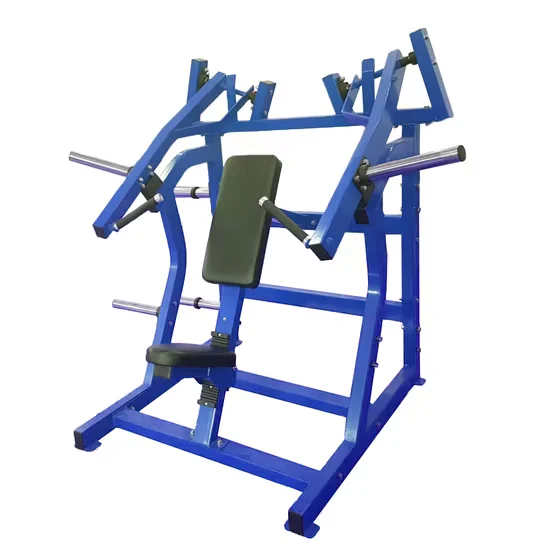
Engineered Rotation Mechanics — Steel frame validated for 10,000+ hours of continuous twisting motion without structural flex or bearing play.
Technical Specifications
| Parameter | Value |
|---|---|
| Designation | OS-H5075 |
| Product Type | Integrated Gym Trainer |
| Main Frame Material | Steel |
| Product Dimensions | 1510×1660×1365 mm |
| Net Weight | 100 kg |
| Max User Weight | 180 kg |
| Main Frame Color | Customizable |
| Cushion Color | Customizable |
| Exercise Part | Upper Body |
| OEM/ODM | Acceptable |
| Certification | ISO 9001, CE |
| Production Capacity | 1,000 units |
Application Suitability
| Deployment Scenario | Typical Use |
|---|---|
| Chain gym functional training zone | High-frequency rotational core work between strength sets |
| Corporate wellness room | Compact upper-body station for time-limited lunch-break sessions |
| Hotel fitness center | Durable twist trainer accessible 24/7 with minimal maintenance |
| Professional sports training center | Athlete rotational power development under coached programming |
| Community fitness center | Shared-use upper body equipment built for unmonitored traffic |
Why Light-Duty Twist Trainers Fail Within Months in Shared Facilities
Steel-frame construction and sealed pivot bearings prevent the mechanical looseness that plagues light-duty alternatives.
Walk into any chain gym after six months of operation and you will find twist trainers with noticeable wobble in the rotation axis. The cushion compresses unevenly, the pivot develops play, and members stop using the station because the movement pattern feels unstable under load. These complaints accumulate quietly — nobody files a noise ticket for a twist trainer, so the equipment simply gets ignored until the entire zone underperforms [NEED_CITE: member attrition patterns linked to degraded strength equipment]. Facilities that specify commercial combo twist upper body trainer OS-H5075 avoid this cycle because the frame and bearing system are engineered for continuous rotational loading rather than occasional home use.
Where This Station Fits in a Commercial Strength Layout
The OS-H5075 occupies the rotational and oblique training slot in a functional zone, complementing cable columns and free-weight benches with a dedicated upper body movement pattern. It suits mid-traffic placement where members cycle through stations rather than occupying one machine for extended sessions. The 180 kg user capacity accommodates the full membership demographic, and the 1510×1660 mm footprint fits standard commercial spacing grids without requiring oversized floor allocation. The commercial combo twist upper body trainer OS-H5075 integrates into mixed cardio-strength layouts where every square meter must justify its footprint.
Duty Cycle Demands on Rotational Equipment in Public Facilities
A twist trainer in a busy gym sees 60 to 100 rotation cycles per day across dozens of users of varying weight and force application. The pivot bearing and frame welds must absorb asymmetric loading without developing play or generating metallic noise that carries across the training floor [NEED_CITE: commercial equipment duty cycle classification standards]. Facilities on upper floors or adjacent to quiet zones need equipment that operates without audible grinding or impact sounds. Floor leveling and vibration isolation pads further reduce structure-borne transmission, and the unit must be positioned where natural ventilation reaches the frame to prevent moisture accumulation on steel surfaces over time.
Reading the Steel Gauge and Bearing Specs That Define Service Life
The main frame uses structural steel rated for repeated asymmetric loading, with weld quality verified against EN 957 requirements for stationary training equipment. The pivot system relies on sealed bearings rather than open bushings, which eliminates the need for periodic lubrication and prevents grit ingress that causes rotational roughness. Cushion density and cover material are specified for high-frequency contact — light-duty vinyl cracks under repeated friction, while commercial-grade upholstery maintains integrity through thousands of contact cycles. Frame and cushion color remain customizable, allowing facility operators to match existing equipment lines without compromising structural specification.
What Happens When Spec Compromises Reach the Training Floor
Gyms that purchase twist trainers based on lowest unit cost consistently report frame flex within the first year of commercial operation. The rotation axis develops lateral play, members feel instability during loaded twisting, and the station becomes the least-used piece in the functional zone. Replacement cycles then double the original procurement cost, not counting the member complaints about equipment quality [NEED_CITE: total cost of ownership for commercial strength stations]. The commercial combo twist upper body trainer OS-H5075 addresses this by specifying commercial-grade materials and testing protocols from the design stage rather than upgrading a residential platform.
Why This Product Line Reduces Procurement Complexity
Every unit undergoes 10,000-hour continuous operation testing on the rotation mechanism before leaving the production line. The steel frame and bearing assembly are validated under asymmetric load profiles that replicate real member usage patterns. OEM and ODM customization covers frame color, cushion color, and logo placement so facilities maintain visual consistency across mixed equipment orders. Free 3D layout planning accounts for this station’s footprint alongside cardio and free-weight zones, ensuring member flow and equipment spacing meet operational standards. Technical support remains available around the clock for installation queries and commissioning guidance.
Documentation & Test Records
- CE declaration of conformity for OS-H5075 rotational trainer
- EN 957 test report covering structural and pivot load requirements
- ISO 9001 manufacturing quality certificate
- Durability test record documenting 10,000-hour rotation cycle validation
- Frame material and weld quality specification sheet
- OEM customization scope and color matching documentation
Installation, Commissioning & Maintenance
- Maintain minimum 600 mm clearance on all sides of the 1510×1660 mm footprint for safe rotational movement
- Install on leveled floor with vibration isolation pads to reduce structure-borne noise transmission
- Verify rotation axis smoothness during first commissioning and adjust bearing preload if lateral play is detected
- Inspect cushion cover integrity and pivot bearing seal condition every 90 days under commercial traffic
- Clean steel frame and cushion surfaces weekly with non-corrosive solution to prevent sweat-induced degradation
- Confirm OEM color and branding match against approved sample before final placement in training zone
Planning Your Functional Training Zone Equipment Specification
Share your training floor area and planned station count so our team can produce a 3D layout with member flow analysis covering this unit alongside cardio and free-weight placements. Specify your expected daily usage intensity so we can confirm the bearing and frame specification matches your duty cycle. Indicate the deployment floor and adjacent room usage so we verify acoustic suitability. State your target market voltage standards and whether console data integration is required for your facility management system.
Frequently Asked Questions
Q: What durability testing validates commercial-grade continuous use for twist trainers?
A: Each unit completes 10,000-hour continuous rotation cycle testing under asymmetric load profiles before production release. The sealed bearing system and steel frame welds are inspected at intervals throughout the test to confirm no lateral play, structural flex, or surface fatigue develops. Test records documenting load magnitude, cycle count, and inspection findings are available upon request as part of the standard documentation package.
Q: How does frame construction affect rotational stability and user safety during dynamic movements?
A: The steel main frame is engineered to resist torsional forces generated during loaded twisting motions. Structural welds at the pivot junction distribute rotational stress across the frame rather than concentrating it at the bearing mount. This prevents the lateral wobble that develops in lighter frames after repeated commercial use, ensuring the rotation axis remains true and the movement pattern stays controlled regardless of user weight within the 180 kg capacity.
Q: What OEM and ODM customization options are available for facility branding integration?
A: Frame color, cushion color, and logo placement are all configurable to match existing equipment lines or facility design standards. Console UI customization is available for units requiring data integration. Customization scope is confirmed during the quotation stage with physical color samples provided for approval before production begins, ensuring visual consistency across mixed-equipment orders from a single manufacturing source.
Q: How to plan strength and cardio zone layout for optimal member flow and equipment utilization?
A: Effective layout planning accounts for equipment footprint, safety clearances, member sightlines, and natural traffic patterns between zones. A 3D layout service maps the twist trainer position relative to cable stations, free-weight areas, and cardio equipment, ensuring rotational movement clearance does not conflict with adjacent station usage. Airflow and ventilation paths are included in the plan so equipment placement does not create stagnant zones that reduce member comfort during extended sessions.
![Hammer Strength ISO-Lateral Leg Press OS-H5031 Commercial Gym Equipment [WARN] draft identifier mismatch](https://bicksport.com/wp-content/uploads/2026/08/hammer-strength-iso-lateral-leg-press-os-h5031-commercial-gym-equipment-warn-draft-identifier-mismatch-d73196.webp)