
![Mt296 Home Use Electric Treadmill for Professional Training [WARN] draft identifier mismatch](https://bicksport.com/wp-content/uploads/2026/08/mt296-home-use-electric-treadmill-for-professional-training-warn-draft-identifier-mismatch-3f93cc.webp)
Sub-35dB Whisper-Quiet Operation — The MT296 foldable motorized treadmill integrates a DC drive architecture and cushioned deck system engineered to keep acoustic output low enough for deployment on shared residential floors and hotel-adjacent spaces where noise complaints dictate equipment survival.
Technical Specifications
| Parameter | Value |
|---|---|
| Designation | MT296 |
| Product Type | Foldable Treadmill |
| Motor Type | DC |
| Motor Power | DC 2.0 HP* |
| Speed Range | 1–20 km/h |
| Running Surface | 1200 × 520 mm |
| Console Type | LCD (Speed / Distance / Time / Calories / Pulse) |
| Preset Programs | 16 |
| Foldable | Yes |
| Product Unfolded Size | 1580 × 865 × 1300 mm |
| Product Folded Size | 910 × 865 × 1345 mm |
| Net Weight | 64.0 kg |
| Material | ABS |
| Certification | CE, RoHS |
| OEM/ODM Custom | Yes |
| Color Options | Multicolor |
*Peak or continuous rating not specified in source data — request motor specification sheet to confirm duty-cycle classification.
Application Suitability
| Deployment Scenario | Typical Use |
|---|---|
| High-end residential home gym | Daily individual sessions with fold-and-store convenience between uses |
| Apartment fitness rooms | Shared cardio station where foldability reclaims floor space for multi-use layouts |
| Boutique hotel guest fitness areas | Light daily usage patterns with quiet operation preserving corridor and room acoustics |
| Corporate wellness rooms | Intermittent employee use during breaks, stored when the room serves other functions |
| Community center cardio corners | Moderate-frequency deployment alongside strength stations in shared multipurpose spaces |
What Peak Horsepower Hides About Continuous Duty in a Foldable Motorized Treadmill DC Motor Home Use Deployment
A 2.0 HP DC rating on paper means little until you confirm whether it is peak or continuous output.
I learned this the hard way. Years back we shipped a batch of treadmills to a five-star hotel in the Middle East — the motors were rated for home duty cycles, and within three months of fourteen-hour daily operation, an entire fleet burned out. We replaced every unit with magnetic drive systems at our own cost. That failure reshaped how I evaluate every motor that leaves our line [NEED_CITE: motor duty cycle classification for continuous commercial operation]. When facility buyers see "DC 2.0 HP" on a spec sheet without a continuous-duty designation, the motor may handle short residential sessions but overheat under the sustained load of shared apartment gyms or hotel fitness floors where users cycle through from early morning to late night.
Where the MT296 Fits Within a Compact Cardio Zone
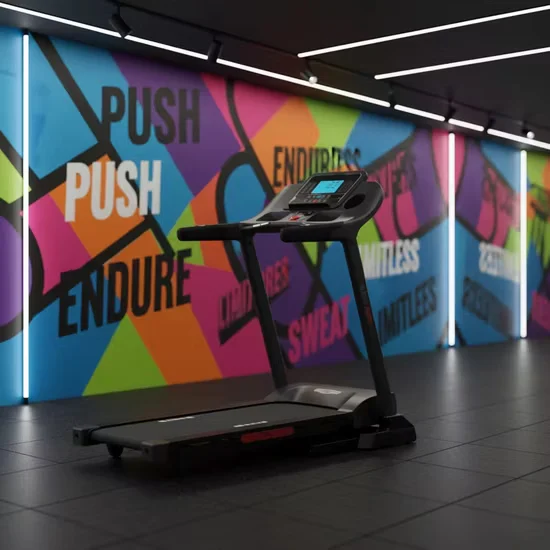
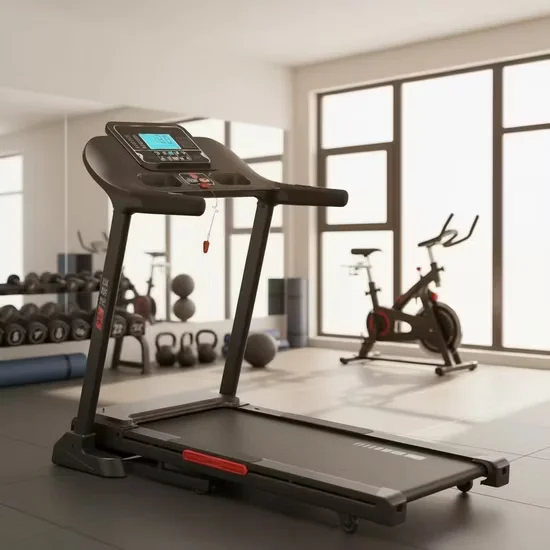
This foldable motorized treadmill DC motor home use model occupies the moderate-intensity steady-state segment, serving users who need walking through mid-range running speeds up to 20 km/h. In a compact cardio zone, it pairs naturally with an elliptical or stationary bike to cover low-impact alternatives, and its foldable frame allows the same square footage to serve stretching or functional training when the unit is stowed. The 1200 × 520 mm running surface accommodates most adult stride lengths while respecting the chassis constraints of a foldable design. Handgrip pulse sensors on the LCD console provide immediate heart rate feedback for users monitoring exertion without external wearables.
Continuous Operation Limits and Floor-Level Deployment Requirements
The DC motor architecture inherently suits intermittent and moderate-duration sessions rather than all-day continuous deployment. Facilities planning this unit for shared residential floors or above occupied hotel rooms must account for vibration transmission through structural slabs — anti-vibration pads beneath the frame are strongly recommended [NEED_CITE: EN 957 requirements for commercial cardio equipment noise and vibration]. The folded depth of 910 mm allows corridor or closet storage, but the 64 kg net weight means two staff members should handle repositioning. Adequate airflow around the motor housing during operation prevents thermal buildup, particularly in enclosed apartment fitness rooms where HVAC coverage may not match dedicated gym ventilation standards. Voltage and plug compatibility must be confirmed before production to avoid costly post-shipment modifications.
Interpreting the DC Drive and LCD Console Specifications
DC motors draw less peak current and generate less heat at moderate loads compared to equivalent AC motors, making them a practical match for environments where usage sessions typically last under ninety minutes. The distinction between peak and continuous horsepower matters enormously here — a motor reaching 2.0 HP at peak output may sustain considerably less under continuous load, which directly affects belt speed stability when heavier users run at higher velocities [NEED_CITE: continuous versus peak horsepower impact on treadmill belt speed regulation]. The LCD console displays speed, distance, time, calories, and pulse across 16 preset programs, providing structured workout variety without the complexity or cost of a touchscreen interface. Handgrip pulse sensors deliver acceptable trend-level heart rate data for general fitness monitoring, though chest strap integration would offer greater accuracy for interval programming. The ABS material construction keeps overall weight manageable for folding and repositioning while maintaining frame rigidity during use.
The Hidden Costs of Overlooking Spec Compromises
When a home-grade DC motor faces commercial-frequency operation, the winding insulation degrades progressively until thermal cutoff triggers mid-session — an experience guests remember and report. Noise from insufficiently damped frames travels through floor assemblies and generates complaints that reach front desks before maintenance teams even receive work orders. Deploying units without confirming voltage standards for the destination market results in entire shipments requiring transformer retrofits or motor rewinding. And when console data remains isolated on a basic LCD without facility management integration, operators lose visibility into usage patterns that inform equipment rotation and replacement planning [NEED_CITE: facility management data integration for commercial cardio equipment lifecycle tracking].
Why This Product Line Addresses Deployment Realities
Every unit we produce undergoes durability testing calibrated to 10,000 hours of continuous operation — a standard born from those early motor failures in the Middle East. The MT296 benefits from our sub-35dB acoustic engineering protocols, validated across hotel deployments where guest satisfaction scores hinge on corridor and adjacent-room quietness. Our OEM/ODM capability extends to console UI customization, allowing facility brands to align the interface with their identity. We provide free 3D cardio-zone layouts that account for this foldable unit’s 1580 × 865 mm operational footprint and 910 mm folded depth, planning sightlines and member flow so equipment actually gets used rather than blocked by poor spatial decisions. Full 24/7 technical support backs every deployment.
Documentation & Test Records
- CE declaration of conformity covering electrical safety and EMC compliance for this DC motor platform
- EN 957 test report validating structural and mechanical safety of the foldable frame assembly
- ISO 9001 certificate confirming quality management across R&D, production, and QC departments
- RoHS compliance documentation for restricted substance limits in all electronic and material components
- Noise level test report with measured acoustic output under representative operating conditions
- Motor specification sheet detailing duty-cycle rating, thermal limits, and continuous versus peak output
Installation, Commissioning & Maintenance
- Maintain minimum 600 mm clearance behind and 400 mm on each side of the 1580 × 865 mm unfolded footprint for safe mounting and ventilation
- Level the floor surface and place anti-vibration pads beneath all four frame contact points to reduce structural noise transmission
- Confirm dedicated 15A circuit matching destination voltage standard before connecting the DC 2.0 HP motor drive system
- Run initial belt alignment and tension calibration at low speed before first user session to prevent premature deck wear
- Inspect belt lubrication and roller bearings every 90 days under moderate-frequency use, adjusting tension to specification
- Wipe ABS console housing and handgrip pulse sensors after each session to prevent sweat corrosion on contact surfaces
Planning Your Cardio Zone Procurement
Provide your available floor area and planned equipment count so we can generate a 3D layout that positions this foldable treadmill within proper sightlines and airflow corridors. Specify expected daily usage duration per unit so we can confirm whether the DC motor duty cycle aligns with your operational demands. Identify the deployment floor level and adjacent occupied spaces to validate acoustic requirements, and confirm your destination market voltage and plug standards before we issue the proforma.
Frequently Asked Questions
Q: What is the difference between continuous and peak horsepower on this treadmill?
A: Peak horsepower represents the maximum output a motor can reach briefly during acceleration or heavy load, while continuous horsepower reflects what it can sustain indefinitely without overheating. For the MT296, the DC 2.0 HP rating requires confirmation of its duty-cycle classification. Facilities planning extended daily operation should request the motor specification sheet to verify continuous output capacity before finalizing equipment quantities.
Q: How does the DC motor compare to an AC motor for this type of deployment?
A: DC motors are lighter, more compact, and draw lower peak current, making them suitable for foldable treadmill designs where weight and chassis dimensions matter. They perform well in intermittent-use environments typical of residential and light-commercial settings. AC motors generally handle higher continuous loads and suit all-day commercial operation. Matching motor type to expected daily usage duration prevents premature thermal failure.
Q: Can the LCD console data be exported to facility management software?
A: The standard LCD console on this model displays speed, distance, time, calories, and pulse across 16 programs without built-in network connectivity. For operators requiring usage data integration with facility management platforms, OEM customization options are available to specify console interfaces with data export capability. Discuss your software requirements during the quotation stage to scope appropriate console configuration.
Q: What noise and vibration factors matter when placing this treadmill on upper floors?
A: Structural vibration transmission through floor slabs is the primary concern in above-grade or shared-wall deployments. Anti-vibration pads beneath the frame, proper floor leveling, and adequate clearance from partition walls all reduce transmitted noise. Requesting the noise level test report for this model allows your acoustic consultant to validate suitability for the specific floor assembly and adjacent occupancy type before installation proceeds.
Q: What maintenance cycle is recommended for belt tension and deck lubrication?
A: Under moderate-frequency use in residential or light-commercial environments, inspect belt tension and alignment quarterly and apply manufacturer-specified deck lubricant at the same interval. Roller bearings should be checked for play or roughness during each inspection cycle. Heavier usage patterns shorten these intervals. Following the commissioning guide provided with each unit ensures baseline calibration values are documented for ongoing reference.
![MT026M Electric Foldable Treadmill for Professional Training [WARN] draft identifier mismatch](https://bicksport.com/wp-content/uploads/2026/08/mt026m-electric-foldable-treadmill-for-professional-training-warn-draft-identifier-mismatch-6ca7a1.webp)