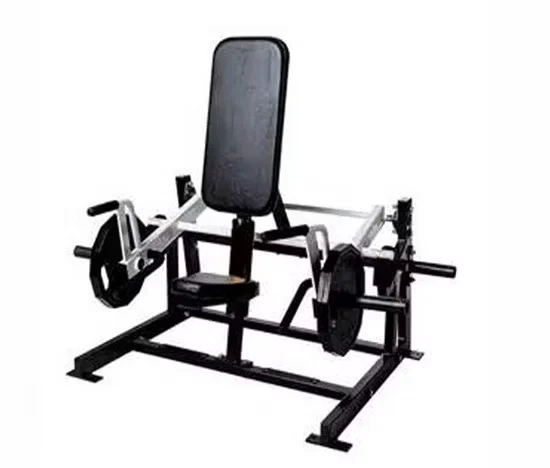
![Factory Price Commercial Barbell Rack Gym Equipment Storage Machine [WARN] draft identifier mismatch](https://bicksport.com/wp-content/uploads/2026/08/factory-price-commercial-barbell-rack-gym-equipment-storage-machine-warn-draft-identifier-mismatch-c41110.webp)
Proven Load Stability — Reinforced steel construction tested for continuous high-frequency loading cycles in commercial free-weight zones without frame deformation.
Technical Specifications
| Parameter | Value |
|---|---|
| Product Type | Barbell Rack |
| Material | Steel |
| Product Dimensions | 1050 x 560 x 1460 mm |
| Net Weight | 25 kg |
| Max User Weight | 180 kg |
| Certification | ISO 9001, CE |
| OEM/ODM | Available |
| Warranty | Contact for terms |
Application Suitability
| Deployment Scenario | Typical Use |
|---|---|
| Hotel fitness center on guest room floors | Compact barbell storage for 24-hour access areas with limited floor space |
| Chain gym free-weight zone | High-capacity storage supporting heavy daily turnover from member traffic |
| Corporate wellness room | Organized strength equipment storage in multi-purpose fitness spaces |
| High-end residential home gym | Space-efficient barbell organization for dedicated home training environments |
| Sports performance training center | Durable storage supporting frequent loading cycles during athletic programming |
Why Welding Quality Matters More Than Steel Thickness for Barbell Storage
Structural failure in storage equipment often traces to joint integrity rather than material gauge alone.
When barbell racks warp under repeated loading, the damage extends beyond the frame — dropped plates, misaligned storage slots, and eventual member complaints follow. Light-duty retail-grade racks consistently fail within months when deployed in commercial free-weight zones [NEED_CITE: structural fatigue patterns in high-frequency strength equipment storage]. The welding pattern and joint reinforcement determine whether a rack maintains dimensional stability across thousands of load cycles, not merely the steel wall thickness stamped on spec sheets.
Load Distribution Across the Free-Weight Zone
This barbell rack occupies a specific role in strength equipment layouts: providing primary or secondary storage for standard and Olympic-length bars without consuming excessive floor space. Its 1050 mm width accommodates multiple bars while maintaining clearance for member circulation around adjacent squat racks and bench stations. The vertical profile positions bar endpoints at accessible heights for users across typical commercial membership demographics, from recreational lifters to coached athletes. Storage capacity and spacing integrate with plate trees, dumbbell racks, and functional training rigs to prevent congestion during peak usage windows.
Deployment Density and Spatial Planning
The 560 x 1050 mm footprint allows placement against walls, between rack bays, or as island storage depending on traffic flow requirements. In high-turnover commercial environments, positioning multiple units requires consideration of member approach angles — users loading or unloading bars need clearance both in front and behind the storage point. Floor mounting options should be evaluated based on expected load frequency and facility vibration characteristics [NEED_CITE: free-weight zone equipment spacing standards for member safety]. Surface treatment selection correlates with local humidity levels and cleaning protocol intensity, as high-sweat commercial environments accelerate corrosion on inadequately protected steel.
Steel Frame Engineering and Load Path Mechanics
The reinforced welding at load-bearing joints addresses the primary failure mode in barbell storage: cyclical stress concentration where horizontal support arms meet vertical uprights. When a loaded barbell rests on support points, the moment force transfers through the weld into the upright, and inadequate penetration depth or inconsistent bead quality creates fatigue initiation sites. The 180 kg maximum load rating reflects the combined weight of the bar plus typical plate loading that the frame can sustain without permanent deformation across extended usage. Steel selection balances weldability with yield strength — materials too hard become brittle at joints, while softer steels bend under sustained load. Powder coating or alternative surface treatments protect against both cosmetic degradation and structural corrosion that compromises long-term load capacity.
The Cost of Underspecified Storage Equipment
Facilities deploying light-duty racks in commercial free-weight zones encounter predictable failure sequences: support arms develop visible deflection within months, welds crack under daily load cycles, and uneven weight distribution creates tipping hazards during busy periods. Member injuries from collapsing storage equipment trigger liability reviews and often force emergency replacement purchases at premium pricing [NEED_CITE: commercial gym equipment replacement frequency due to premature structural failure]. The operational disruption extends beyond the failed unit — adjacent equipment becomes temporarily inaccessible during removal and replacement, and member trust in facility equipment quality diminishes when visible failures occur in high-traffic zones.
Why This Product Line Addresses Facility Requirements
Sub-35dB operation matters less for static storage equipment, but the manufacturing discipline behind acoustic engineering translates to welding consistency and dimensional accuracy across production batches. The same 10,000-hour durability testing protocols applied to motors and bearings inform load cycle verification for structural components. OEM customization extends beyond cosmetic branding — color matching, dimension adjustments, and logo application integrate storage equipment with facility design standards rather than forcing generic industrial appearance. The complete six-series cardio family means strength storage coordinates with cardio zone equipment in color and finish, supporting unified visual identity across the entire training floor. Free 3D layout planning addresses not only cardio equipment positioning but also free-weight zone circulation patterns, ensuring storage placement supports rather than obstructs member flow.
Documentation & Test Records
- CE declaration of conformity for European market compliance
- EN 957 test report covering structural load requirements
- ISO 9001 certificate verifying manufacturing quality systems
- Material grade certification confirming steel specifications
- Surface treatment specification and corrosion resistance data
- Dimensional verification report for OEM customization orders
Installation, Commissioning & Maintenance
- Verify floor levelness and install anti-vibration pads if positioned adjacent to cardio zones to prevent transmitted vibration
- Confirm 1050 x 560 mm footprint provides adequate clearance from adjacent squat racks and member circulation paths
- Apply protective coating to high-contact support arms quarterly in high-humidity environments to maintain corrosion resistance
- Inspect weld joints and support arm alignment annually, documenting any visible deflection or surface cracking
- Clean powder-coated surfaces with pH-neutral solutions to prevent finish degradation from accumulated sweat and cleaning chemicals
Equipment Selection for Your Facility Layout
Provide your free-weight zone dimensions and planned barbell inventory count to receive layout recommendations for storage unit placement and quantity. Specify whether the facility operates in high-humidity coastal environments or temperature-controlled indoor spaces to determine appropriate surface treatment requirements. Confirm whether storage units need to match existing equipment color schemes or carry facility branding for visual consistency across the training floor.
Frequently Asked Questions
Q: What steel gauge and welding standards ensure commercial-grade durability for barbell racks?
A: Commercial-grade durability depends on both material thickness and joint construction quality. The reinforced welding at support arm connections must achieve full penetration depth to distribute cyclical loads without creating fatigue initiation sites. Facilities should request material grade certification and weld inspection documentation to verify structural specifications match deployment requirements for continuous high-frequency use.
Q: How do I verify load capacity matches facility usage frequency and barbell inventory?
A: Load capacity ratings reflect maximum static weight the frame sustains without permanent deformation, but commercial environments impose dynamic loading during bar placement and removal. Evaluate whether the rated capacity accommodates your heaviest loaded bars plus operational stress from daily use cycles. Facilities with high member turnover should specify higher capacity margins to account for frequent loading events.
Q: Can rack dimensions and branding be customized for specific gym layouts?
A: OEM/ODM customization covers dimension adjustments, color matching, and logo application to align storage equipment with facility design standards. Coordinate dimension changes with layout planning to ensure modified footprints maintain adequate clearance for member circulation and adjacent equipment access. Specify powder coating color codes and branding placement requirements during the quotation phase.
Q: What surface treatments resist corrosion in high-humidity gym environments?
A: Powder coating provides durable protection against sweat accumulation and cleaning chemicals in commercial environments, but coastal facilities or spaces without climate control may require additional zinc priming or alternative treatments. Specify local humidity levels and cleaning protocol intensity when requesting surface treatment recommendations. Regular maintenance with pH-neutral cleaners extends coating lifespan.
Q: How does rack footprint affect member flow and safety clearance in free-weight zones?
A: The 1050 x 560 mm footprint requires evaluation against adjacent equipment spacing and member approach angles during loading and unloading. Positioning multiple units demands consideration of traffic patterns during peak usage to prevent congestion around squat racks and bench stations. Facilities should map circulation paths before finalizing storage unit quantity and placement.
![Commercial Leg Raise Machine Gym Equipment for Fitness Center [WARN] draft identifier mismatch](https://bicksport.com/wp-content/uploads/2026/08/commercial-leg-raise-machine-gym-equipment-for-fitness-center-warn-draft-identifier-mismatch-45329b.webp)