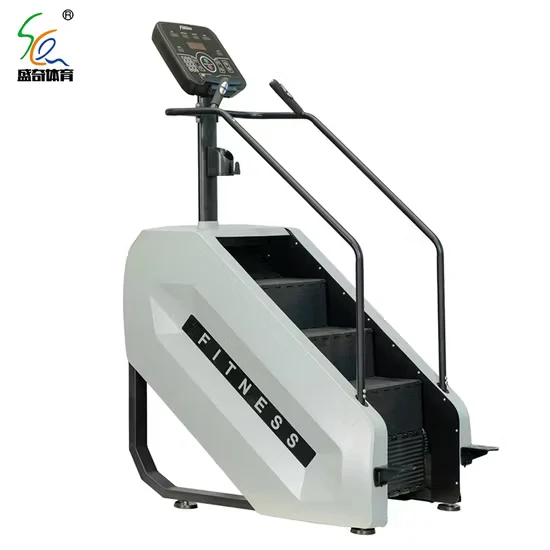
Continuous Duty Validation — Every motor-driven stair climber undergoes 10,000-hour continuous operation testing before leaving the facility, ensuring reliable performance under demanding commercial deployment schedules.
Technical Specifications
| Parameter | Value |
|---|---|
| Product Type | Stair Climber |
| Motor Type | Motor Drive (AC motor implied — continuous vs peak not specified in source) |
| Running Velocity | 15–164 steps/minute |
| Step Area | 560 × 240 × 200 mm |
| Console Type | LED display |
| Console Metrics | Time, Climb, Calories, Steps, Heart Rate |
| Heart Rate | Handgrip sensors |
| Power Requirement | AC220V±10% / AC110V±10% |
| Product Dimensions | 1400 × 700 × 2000 mm |
| Net Weight | 148 kg |
| Frame Material | Steel Pipe + PP Plastic |
| Foldable | Unfolded |
| Certification | CE |
Application Suitability
| Deployment Scenario | Typical Use |
|---|---|
| chain gym cardio zone | High-frequency member traffic with continuous stepping sessions throughout operating hours |
| hotel fitness center on guest room floors | 24-hour access with quiet motor operation minimizing noise transfer to adjacent rooms |
| corporate wellness room | Mid-day usage peaks by employees seeking low-impact cardiovascular conditioning |
| high-end residential home gym | Daily personal training with commercial-grade durability for long-term reliability |
| sports performance training center | Athlete conditioning programs requiring consistent step velocity for interval protocols |
What Peak Horsepower Hides About Continuous Duty
Motor rating transparency determines whether equipment survives its first year in a commercial facility.
When light-commercial stair climbers enter gym chains operating sixteen hours daily, the motors face thermal stress far beyond their design envelope. Operators report units cycling off from overheating within months of installation. The discrepancy between advertised peak output and actual continuous duty rating creates procurement blind spots that only surface after warranty claims accumulate [NEED_CITE: motor duty cycle classification for continuous commercial operation]. Facilities paying premium prices for equipment that requires replacement within two seasons face compounded costs from member complaints and zone downtime.
Cardio Zone Positioning for Vertical Climbing Demand
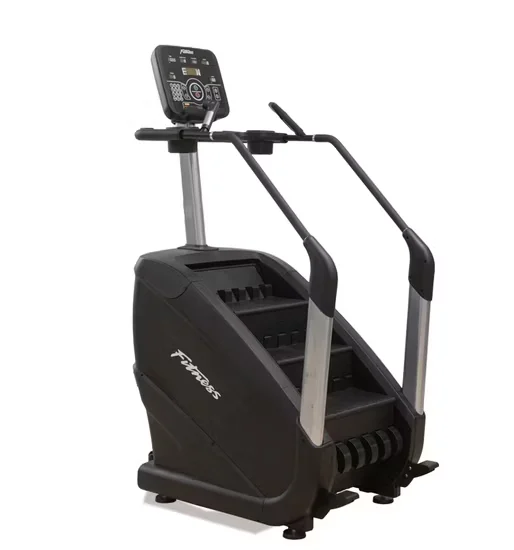
This commercial stair climber motor drive gym unit fills the vertical-loading niche in mixed cardio configurations, complementing horizontal equipment like recumbent bikes and treadmills. The 15–164 steps/minute velocity range accommodates warm-up protocols through high-intensity interval work without mechanical lag at either extreme. Deployment works best in zones with ceiling clearance exceeding two meters given the upright posture and overhead handrail extension. The LED console displays real-time metrics including climb count, calorie estimates, and heart rate captured through handgrip sensors, giving users immediate feedback during sustained efforts.
Continuous Operation Requirements and Facility Infrastructure
Commercial stair climbers running eight or more hours daily require dedicated electrical circuits matching the specified AC220V±10% or AC110V±10% input with proper grounding. Units positioned on elevated floors need vibration isolation pads beneath the 148 kg frame to prevent structure-borne noise transmission to spaces below. Adequate ventilation around the motor housing prevents thermal accumulation during back-to-back usage sessions. Facilities planning data integration should verify console output compatibility before committing to fleet purchases [NEED_CITE: EN 957 requirements for commercial cardio equipment]. Floor leveling ensures the step mechanism tracks correctly without premature wear on guide rails or drive components.
Motor Drive System and Step Velocity Engineering
AC motors driving step mechanisms must maintain torque consistency across the full 15–164 steps/minute range without stalling under user loads approaching maximum capacity. The distinction between peak output ratings and continuous duty specifications matters critically here—motors rated only for intermittent peaks will overheat when users sustain mid-range cadences for thirty-minute sessions. Step dimensions of 560 × 240 × 200 mm accommodate most athletic shoe sizes while the textured surface provides traction during sweat-heavy workouts. Handgrip heart rate sensors capture pulse data through palm contact, though signal stability can fluctuate during rapid stepping when grip pressure varies. The LED console prioritizes legibility under fluorescent gym lighting over touchscreen entertainment features that add maintenance complexity.
The Hidden Cost of Specification Compromises
Facilities purchasing stair climbers based on peak motor ratings alone face predictable failure patterns once equipment enters rotation. Light-commercial motors installed in 24-hour gym environments typically show thermal degradation within six months of continuous deployment, manifesting as inconsistent step resistance and eventual drive failure. Noise levels that seem acceptable in showroom demonstrations become problematic when units operate simultaneously in multi-machine cardio zones [NEED_CITE: acoustic performance standards for commercial fitness facilities]. Operators who skipped verification of continuous duty specifications end up managing warranty replacements while members migrate to competing facilities with functioning equipment.
Why This Product Line Earns Deployment Trust
Every commercial stair climber motor drive gym unit completes 10,000-hour continuous operation validation covering motor thermal performance, step mechanism wear, and console stability under sustained load. The sub-35dB noise floor verified in hotel deployments allows installation on guest room floors without generating complaints. OEM customization extends to console interface design, letting branded facilities maintain visual consistency across equipment fleets. The complete six-series cardio catalog enables single-source procurement for entire zones, reducing vendor coordination overhead. Free 3D layout planning accounts for unit footprint, member circulation paths, and HVAC airflow patterns specific to the deployment space. Technical support responds around the clock for commissioning questions and spare parts coordination.
Documentation & Test Records
- CE conformity declaration for European market commercial equipment compliance
- EN 957 test report covering mechanical safety and performance requirements
- ISO 9001 certificate validating manufacturing quality management systems
- Motor specification sheet distinguishing continuous duty from peak output ratings
- Durability test record documenting 10,000-hour continuous operation validation
- Console technical documentation with LED display operational parameters
Installation, Commissioning & Maintenance
- Allocate 1400 × 700 mm footprint plus clearance for user mounting on both sides
- Install vibration isolation pads beneath frame when deploying on elevated floor levels
- Verify dedicated circuit matches AC220V±10% or AC110V±10% specification before connection
- Confirm step mechanism tracks smoothly through full velocity range during commissioning
- Schedule guide rail inspection and lubrication based on facility usage intensity
- Clean handgrip sensor surfaces daily to maintain heart rate signal conductivity
Equipment Selection and Deployment Planning
Share your cardio zone dimensions and target equipment count to receive 3D layout recommendations accounting for member flow and ventilation requirements. Specify expected daily operating hours so motor duty cycle matches your facility’s usage patterns. Indicate deployment floor levels and adjacent occupied spaces to confirm noise transmission stays within acceptable thresholds. Communicate target market voltage standards and plug configurations to avoid compatibility issues at delivery. Clarify whether console data must integrate with existing facility management systems for usage tracking.
Frequently Asked Questions
Q: What is the difference between continuous duty and peak motor power on stair climbers?
A: Peak power indicates maximum output the motor can sustain briefly, while continuous duty reflects sustainable output during extended sessions. Commercial facilities need continuous duty specifications matching their usage patterns. Motors rated only for peak performance overheat when users maintain steady cadences beyond short bursts, causing thermal shutdowns and premature component failure. Always request continuous duty documentation before purchasing.
Q: How does motor drive type affect noise level and maintenance intervals?
A: Motor drive systems generate noise through mechanical friction, electromagnetic vibration, and cooling fan operation. Properly matched motors running within their continuous duty envelope produce less heat and acoustic output than undersized units straining at peak capacity. Maintenance intervals depend on bearing seal quality and drive belt tension specifications. Units with accessible service points allow faster intervention when wear indicators emerge during routine inspections.
Q: Can the console sync with gym management software or member apps?
A: Console connectivity varies by configuration. LED displays typically show local workout metrics without data export capability. Facilities requiring usage tracking for management systems should specify console options with data interface compatibility during procurement. Request interface documentation before finalizing orders to confirm protocol compatibility with your existing infrastructure. Custom console configurations can address specific integration requirements for fleet deployments.
Q: What heart rate sensor accuracy can be expected during high-cadence stepping?
A: Handgrip sensors capture pulse through palm contact, providing reasonable accuracy during moderate stepping cadences when grip remains steady. Signal quality may fluctuate during high-intensity intervals when grip pressure varies or sweat affects conductivity. Users requiring precise heart rate data for interval programming should consider chest strap monitors as supplementary inputs. Regular cleaning of sensor contact surfaces maintains consistent signal transmission over extended deployment periods.
Q: How to verify voltage and plug compatibility before shipment?
A: Confirm your facility’s electrical supply matches either AC220V±10% or AC110V±10% specifications listed in product documentation. Specify the correct plug type for your target market during order placement to avoid adapter requirements or field modifications. Request voltage configuration confirmation on the proforma invoice. Facilities with unusual power characteristics should share specifications with the supplier to ensure motor compatibility and prevent damage from supply irregularities.
![Stair Machine Climbing Stepper for Commercial Gym Equipment [WARN] draft identifier mismatch](https://bicksport.com/wp-content/uploads/2026/08/stair-machine-climbing-stepper-for-commercial-gym-equipment-warn-draft-identifier-mismatch-548bcd.webp)
![Commercial Stair Climber Machine for Gym Training [WARN] draft identifier mismatch](https://bicksport.com/wp-content/uploads/2026/08/commercial-stair-climber-machine-for-gym-training-warn-draft-identifier-mismatch-d5fb15.webp)