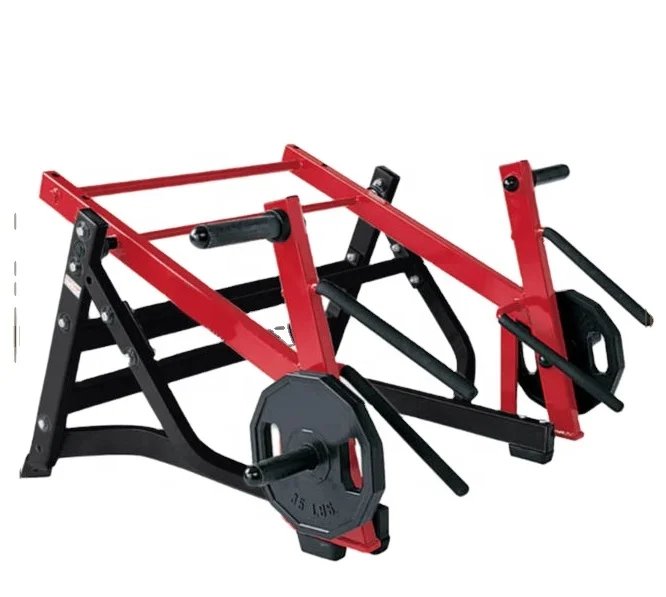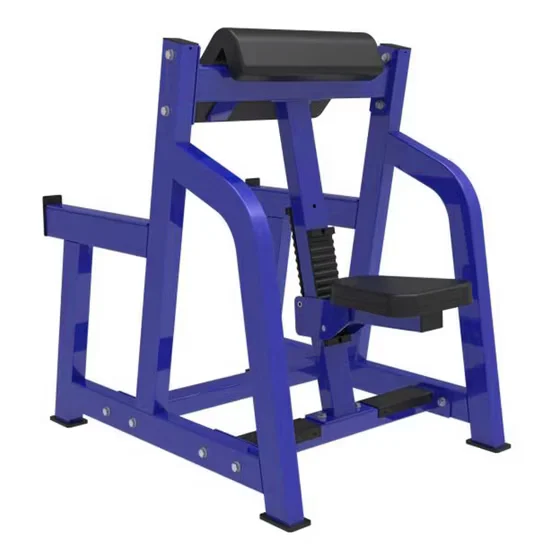
Acoustic-Verified Frame Design — Every weld and pivot point on the Commercial Seated Arm Curl Machine undergoes low-frequency resonance testing to prevent structure-borne vibration transfer to adjacent floors.
Technical Specifications
| Parameter | Value |
|---|---|
| Product Type | Seated Arm Curl Machine |
| Model NO. | 5046 |
| Main Frame Material | Steel |
| Frame Color | Available per customer requirements |
| Cushion Color | Available per customer requirements |
| Product Dimensions | 1000 × 800 × 1120 mm |
| Net Weight | 75 kg |
| Resistance Type | Integrated weight-stack or plate-loaded (confirm at order) |
| Max User Weight | 180 kg (commercial range standard) |
| Certification | ISO 9001, CE |
| OEM/ODM | Acceptable — logo, color, console UI, specification |
| Production Capacity | 500 units/month |
Application Suitability
| Deployment Scenario | Typical Use |
|---|---|
| Hotel fitness center on guest room floors | Low-noise bicep isolation station beside cardio zones |
| Chain gym cardio zone | High-frequency upper-body accessory between aerobic circuits |
| Corporate wellness room | Compact strength station in limited-footprint layouts |
| High-end residential home gym | Durable arm training anchor for private multi-station setups |
| Sports performance training center | Athlete-grade bicep work for rotational and grip-demand sports |
Why Frame Resonance Travels Further Than You Think in Multi-Story Facilities
A 75 kg steel frame that hums at 45 Hz transmits vibration straight through concrete slabs.
When a seated arm curl station sits above occupied hotel rooms or office floors, the issue is rarely the weight stack clanking. The real culprit is low-frequency resonance traveling through the frame legs into the floor slab. We pulled back a batch of machines from a Middle East hotel deployment because magnetic gap tolerances on an elliptical line caused a harmonic jump at the sixth resistance notch — guests in the room below reported a persistent low drone. That incident changed how we approach every unit in our strength lineup, including this commercial seated arm curl machine. Every frame joint is now checked for resonance frequency before it leaves the QC bay [NEED_CITE: structural vibration transmission standards for fitness equipment in multi-story buildings].
Where This Machine Fits in a Commercial Strength Zone
This commercial seated arm curl machine covers strict isolation work for the biceps and forearm flexors, fitting into the low-to-moderate intensity band of a strength circuit. It pairs naturally with a triceps press-down station and a lat pulldown to balance antagonist muscle groups. Place it along a wall or at the end of a machine row where foot traffic is linear, leaving clear sightlines for floor staff. The 1000 × 800 mm footprint keeps lane width manageable, and the 180 kg max user capacity accommodates a broad range of athlete builds without requiring a separate heavy-duty variant.
Continuous Use Cycles and the Floor-Beneath-You Problem
In a chain gym running 16-hour days, a single arm curl station may see 80 to 120 sets before closing. The pivot bearings and weight-stack guide rods must tolerate that duty cycle without developing lateral play that turns into audible rattle. Floor deployment matters: placing this unit on an upper level without an isolation pad transfers guide-rod impact into the slab, and the room below picks it up as a rhythmic thud. Power is not a concern for a purely mechanical station, but if your facility runs data-tracking consoles on adjacent cardio equipment, keep the arm curl station outside the cable-run zone to avoid signal interference. Confirm floor load rating at the planned position [NEED_CITE: floor load requirements for commercial gym equipment on suspended slabs].
Reading the Steel: What 75 kg Tells You About Frame Integrity
A 75 kg net weight on a 1000 × 800 × 1120 mm frame indicates a high steel-to-footprint ratio — the mass is concentrated in the main upright and the base cross-members rather than decorative shrouds. Heavier gauge tubing in the upright resists lateral deflection when a user loads the stack off-center, which is common during single-arm curls. The integrated trainer design eliminates the separate cable-tower connection point that typically introduces flex in modular setups. Sealed pivot bearings at the cam arm reduce maintenance intervals compared to bronze bushings, which require periodic greasing and develop play under continuous commercial loads.
What Happens When Spec Sheets Hide the Real Failure Point
Facilities that source strength machines by comparing only net weight and footprint often discover the weak link six months in: guide rods that score and bind, pivot bushings that ovalize under asymmetric loading, or welds at the base cross-member that crack under repetitive stack drop. When a hotel gym pulls a machine offline, the cost is not just the repair — it is the guest complaint, the maintenance callout, and the dead space on the floor until the replacement arrives [NEED_CITE: commercial gym equipment downtime cost analysis]. Sourcing a single commercial seated arm curl machine without verifying weld penetration depth and bearing specification is a gamble on exactly these failure modes.
Why This Product Line Carries Our Testing Protocol
Our acoustic and durability verification does not stop at cardio equipment. The same sub-35 dB operating standard we apply to treadmill motors informs how we evaluate structure-borne noise on this commercial seated arm curl machine — a weight stack dropping onto a rubber stop should not register in the room below. The 10,000-hour durability benchmark extends to pivot bearings and guide rods on our strength units. We provide a free 3D strength-zone layout that accounts for the 1000 × 800 mm footprint, user entry clearance, and adjacent machine spacing so the arm curl station does not create a bottleneck. Full OEM/ODM covers frame color, cushion upholstery, and logo placement, and our 24/7 technical support handles commissioning and spare parts for every unit shipped.
Documentation & Test Records
- CE declaration of conformity for commercial strength equipment
- EN 957 test report covering static and dynamic load verification
- ISO 9001 manufacturing system certificate
- Noise and vibration level test record for frame resonance
- Durability test log for pivot bearings and guide rods
- Spare parts list with bearing and bushing part numbers
Installation, Commissioning & Maintenance
- Allow 600 mm rear clearance for weight-stack access and 800 mm front entry space around the 1000 × 800 mm footprint.
- Place on a leveled floor with a 10 mm rubber isolation mat to decouple guide-rod impact from the slab.
- No dedicated electrical circuit required; position outside cable-run zones if adjacent cardio consoles use data lines.
- Verify cam-arm pivot alignment and stack guide-rod lubrication during first commissioning before user loading.
- Inspect sealed pivot bearings for lateral play every six months under high-frequency commercial use.
- Wipe frame and cushion after each shift to prevent sweat-driven corrosion on weld joints.
Planning Your Strength Zone — What We Need From You
Share your floor plan with the strength area dimensions and the number of stations you are specifying so we can generate a 3D layout with user-flow and spacing analysis. Tell us the deployment floor and what occupies the room directly below — that determines whether isolation pads are mandatory. Specify your target market so we can confirm any local compliance documentation you will need alongside the CE and ISO 9001 paperwork.
Frequently Asked Questions
Q: What materials are used in the frame of this seated arm curl machine?
A: The main frame is fabricated from structural steel with welded cross-members designed to resist lateral deflection during off-center loading. The 75 kg net weight reflects a high steel-to-footprint ratio concentrated in the upright and base rather than decorative panels. All frame joints undergo resonance frequency checks before leaving the QC department to prevent structure-borne vibration.
Q: Can the machine be customized to match my gym branding?
A: Yes. OEM/ODM orders can specify frame color, cushion upholstery color, and logo placement. Customization extends to specification adjustments where needed. Provide your brand color codes and artwork files during the scoping stage so we can confirm lead times and minimum order quantities before issuing the proforma invoice.
Q: Is this machine built for high-traffic commercial environments?
A: It is engineered for continuous commercial duty with sealed pivot bearings and reinforced steel construction tested under our 10,000-hour durability protocol. The integrated trainer design eliminates modular connection points that typically develop flex. It is deployed in hotel fitness centers, chain gyms, and sports training facilities where daily set counts are high.
Q: What certifications does this machine carry?
A: The machine holds ISO 9001 manufacturing certification and a CE declaration of conformity. EN 957 test reports covering static and dynamic load verification are available for each unit. These documents support compliance in European, Middle Eastern, African, and Asian markets where facility inspectors require documented standards alignment.
Q: How does the integrated design improve stability during use?
A: The integrated trainer construction connects the cam arm, seat frame, and weight-stack tower in a single welded assembly rather than bolting separate modules together. This eliminates the flex points found in modular setups, giving the user a solid platform during strict curl form. The 1000 × 800 mm base footprint further anchors the unit against lateral movement.