![Commercial Pilates Reformer White Aluminum Alloy Machine Home Studio Use [WARN] draft identifier mismatch](https://bicksport.com/wp-content/uploads/2026/08/commercial-pilates-reformer-white-aluminum-alloy-machine-home-studio-use-warn-draft-identifier-mismatch-7160ce.webp)
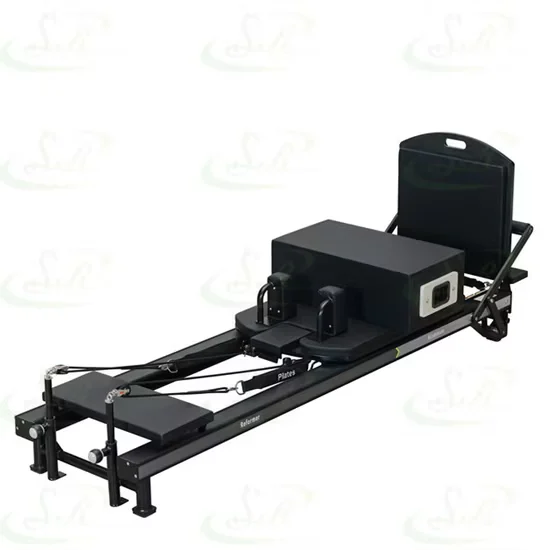
Studio Data Readiness — The commercial Pilates reformer white aluminum alloy frame accepts third-party sensor mounts and usage tracking tags for facility management integration.
Technical Specifications
| Parameter | Value |
|---|---|
| Designation | SRY-12 |
| Product Type | Pilates Reformer |
| Frame Material | Aluminum Alloy |
| Finish | White |
| Included Accessories | Long Box, Jump Board, Platform |
| Product Dimensions | 2400820380mm |
| Net Weight | 110kgs |
| Maximum User Weight | 180kg |
| Certification | ISO 9001, CE, EN 957 |
| Warranty | 3 Years |
Application Suitability
| Deployment Scenario | Typical Use |
|---|---|
| Boutique Pilates studio | Group reformer classes and private sessions |
| Five-star hotel fitness center | Guest spa and wellness floor apparatus zones |
| Corporate wellness facility | Employee rehabilitation and core conditioning |
| High-end residential home gym | Private daily classical repertoire practice |
| Sports performance training center | Athlete injury prevention and core stability work |
Why Carriage Rattle Echoes Through Shared Studio Floors
Precision-machined aluminum rails eliminate the metallic resonance that disrupts adjacent wellness spaces.
When this commercial Pilates reformer white aluminum alloy model deploys in mixed-use commercial buildings or hotel spa levels, steel-framed units transmit low-frequency vibration through floor slabs. Members feel the judder during slow eccentric contractions, and studio owners face noise complaints from the therapy rooms next door. [NEED_CITE: acoustic transmission class for mixed-use fitness environments]
Repertoire Coverage and Studio Placement
This unit anchors the dedicated mat-and-apparatus zone, accommodating both classical sequences and contemporary spring-board routines. It pairs with tower attachments and spine correctors in high-traffic boutique layouts, serving members across varied anthropometrics. The rigid carriage travel supports controlled low-velocity movements while the modular accessory suite maximizes floor-plan efficiency without requiring secondary apparatus purchases.
Daily Class Throughput and Acoustic Environment
Boutique studios running back-to-back group reformer classes demand equipment that tolerates high-frequency carriage cycling without rail degradation. The aluminum extrusion maintains dimensional stability under continuous humidity and sweat exposure, preventing the warping that causes wheel misalignment. Deployment on elevated floors requires verified acoustic isolation, and the non-resonant frame profile keeps ambient noise below the threshold that disturbs adjacent yoga or meditation sessions. [NEED_CITE: continuous duty cycle classification for studio apparatus]
Aluminum Extrusion and Spring Progression Mechanics
The carriage wheel-to-rail interface dictates the smoothness of lateral and longitudinal travel, where machined aluminum profiles deliver consistent glide without the stick-slip friction typical of painted steel tracks. Spring configuration follows a linear progression curve, allowing instructors to layer incremental resistance without abrupt tension spikes that compromise member form. The alloy composition also resists corrosion from studio humidity and cleaning agents, extending the maintenance interval between wheel bearing inspections.
The Hidden Cost of Steel Frames and Loose Tolerances
Steel-framed reformers deployed in shared residential spaces generate structural vibration that travels through concrete slabs, triggering noise complaints from occupants below. Carriage judder during slow footwork sequences forces members to brace against instability rather than engage target musculature, leading to joint discomfort and session attrition. Inadequate accessory integration means studios must purchase separate jumping platforms and long boxes, inflating the equipment budget while consuming valuable floor space. [NEED_CITE: vibration transmission metrics for multi-story fitness facilities]
Why Facility Operators Specify This Lineup
Sub-35dB whisper-quiet operation is verified in hotel deployments where cardio and apparatus zones share floor plates. The aluminum frame and precision rail system undergo 10,000-hour durability testing to withstand continuous studio scheduling. Full OEM customization covers logo placement, powder-coat color matching, and accessory bundling for branded franchise rollouts. Free 3D studio layout planning addresses equipment spacing, member flow, and HVAC airflow patterns to prevent heat buildup around high-throughput reformer zones. Technical support responds 24/7 for bearing adjustments or spring tension recalibration.
Documentation & Test Records
- CE declaration of conformity for European studio deployments
- EN 957 test report verifying structural load capacity
- ISO 9001 certificate covering manufacturing quality control
- Noise level test record for acoustic-sensitive environments
- Durability test log documenting carriage cycle endurance
- Spring specification sheet detailing tension progression curves
- Assembly and commissioning guide with accessory mounting procedures
Installation, Commissioning & Maintenance
- Allow minimum clearance on all four sides for carriage travel and instructor circulation
- Verify floor levelness to within tolerance before anchoring the aluminum frame feet
- Inspect wheel bearings and rail lubrication during the initial commissioning phase
- Torque accessory mounting hardware to specification after the first week of use
- Schedule quarterly spring tension verification and carriage alignment checks
- Use pH-neutral cleaners on the white powder-coat finish to prevent discoloration
Inquiry Direction
Provide your studio square footage and class schedule density to receive a 3D layout with equipment spacing and airflow analysis. Specify deployment floor level and adjacent room usage to confirm acoustic isolation requirements. Indicate target market region for plug and voltage compliance verification. State whether accessory bundles require OEM branding or custom color matching for franchise consistency.
Frequently Asked Questions
Q: How does the aluminum alloy frame compare to steel in noise transmission?
A: Aluminum extrusions exhibit lower acoustic resonance than welded steel frames, preventing the metallic vibration that transfers through floor slabs to occupied spaces below. This makes the reformer suitable for multi-story hotels and shared residential buildings where noise complaints disrupt operations. The material also resists corrosion from studio humidity and cleaning agents.
Q: What documentation verifies carriage smoothness and rail precision?
A: Request the manufacturer’s carriage noise level test report and wheel bearing specification sheet, which document operational smoothness under load. The EN 957 test report also covers structural integrity and moving part tolerances. On-site verification involves cycling the carriage through full range at low velocity to detect judder or stick-slip friction points.
Q: Can the long box and jump board be added after initial purchase?
A: Yes, the modular accessory mounting points accept long boxes, jump boards, and platforms added post-deployment. This allows studios to phase capital expenditure while maintaining equipment consistency. Verify the mounting hardware compatibility with the specific frame revision to ensure secure attachment during high-impact jump board sequences.
Q: What OEM customization options are available for franchise rollouts?
A: Customization covers logo placement on the frame, powder-coat color matching to brand guidelines, and accessory bundling configurations. Console UI customization applies to integrated digital tracking systems where applicable. Minimum order quantities vary by customization scope, so confirm requirements during the quotation phase to align production scheduling with studio opening timelines.