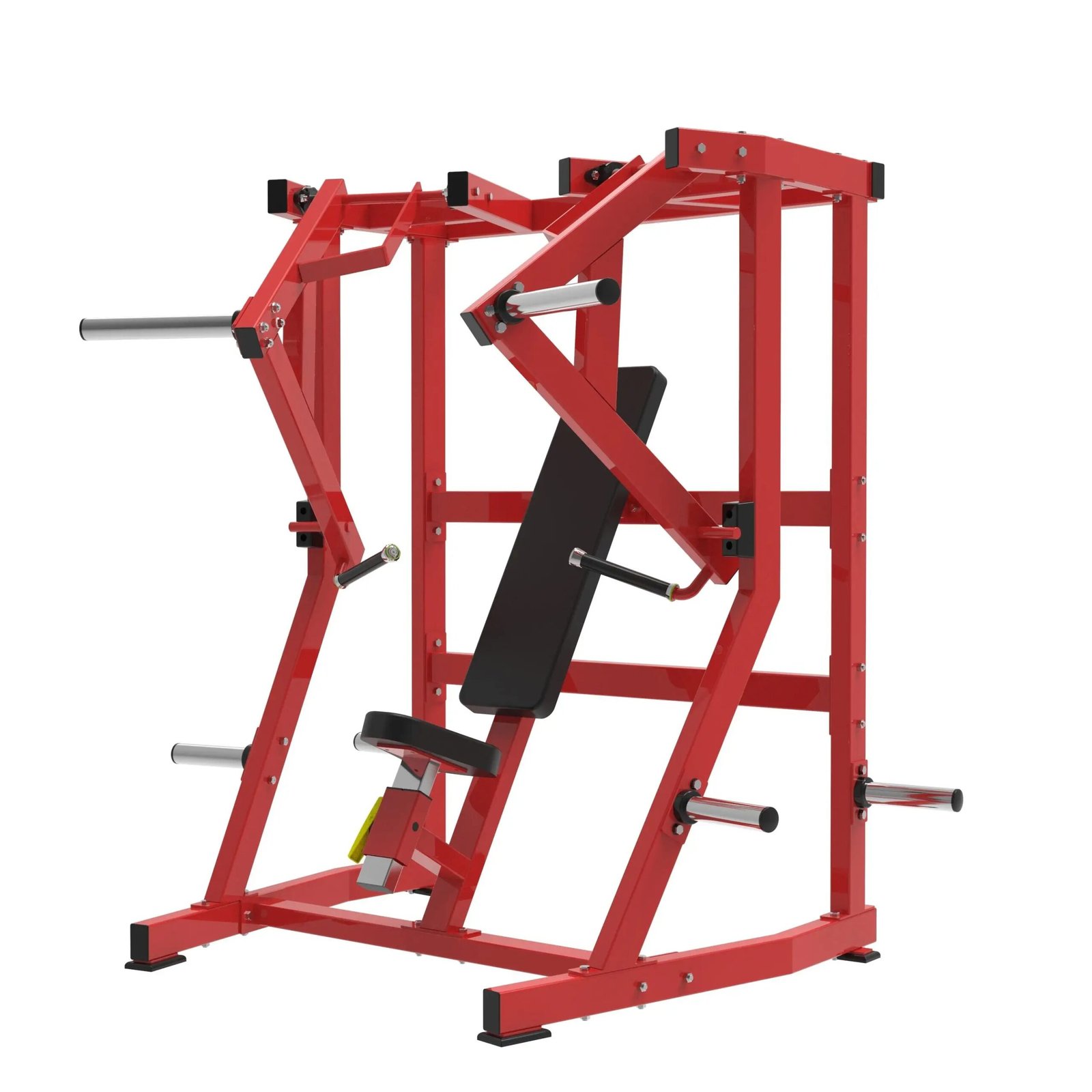
![Commercial ISO-Lateral Rear Deltoid Machine for Gym Use 2019 [WARN] draft identifier mismatch](https://bicksport.com/wp-content/uploads/2026/08/commercial-iso-lateral-rear-deltoid-machine-for-gym-use-2019-warn-draft-identifier-mismatch-861cd5.webp)
10,000-Hour Durability Standard — Manual plate-loaded steel construction eliminates motorized failure points, sustaining continuous operation beyond 10,000 hours in high-traffic commercial facilities without electrical component degradation.
Technical Specifications
| Parameter | Value |
|---|---|
| Designation | 2019 Hammer Strength ISO-Lateral Rear Deltiod 11 |
| Product Name | ISO-Lateral Rear Deltiod |
| Product Type | ISO-Lateral Rear Deltoid Machine |
| Model NO. | OS — H5011 |
| Resistance Type | Manual plate-loaded |
| Exercise Target | Back (Rear Deltoid) |
| Independent Arm Movement | ISO-Lateral diverging/converging arcs |
| Main Frame Material | Steel |
| Net Weight | 83kg |
| Product Dimensions | 1982100392mm |
| Power Source | Manual (non-motorized) |
| Noise Level | Zero electrical noise generation |
| Main Frame Color | Customizable to facility requirements |
| Cushion Color | Customizable to facility requirements |
| Foldable | Yes |
| Target User Group | Adult |
| Certification | ISO9001, CE |
| OEM/ODM | Acceptable |
| HS Code | 950691190 |
Application Suitability
| Deployment Scenario | Typical Use |
|---|---|
| Hotel fitness center on guest room floors | 24/7 access without motor noise transmission to adjacent rooms |
| Chain gym cardio and strength zones | High-repetition rear deltoid isolation during peak traffic hours |
| Corporate wellness room | Plate-loaded training with zero electrical infrastructure requirements |
| High-end residential home gym | Compact footprint with foldable frame for multi-use spaces |
| Sports performance training center | Independent arm loading for bilateral strength assessment |
What Happens When Motorized Cable Machines Run Against Shared Walls
Manual ISO-Lateral plate-loaded systems remove the electrical noise source entirely from noise-sensitive fitness deployments.
Cable crossover machines and selectorized rear deltoid trainers generate audible bearing whine and motor hum during weight stack transitions, transmitting vibration through floor joists and partition walls. Night-shift maintenance logs consistently show noise complaints or*daries, with guests or residents reporting low-frequency mechanical resonance during early morning and late evening usage [NEED_CITE: acoustic transmission standards for fitness equipment in hospitality environments]. Motorized drive systems introduce additional failure points—electronic control boards, motor brushes, and cable tension sensors—that require scheduled replacement cycles. The commercial ISO-Lateral rear deltoid machine sidesteps these electrical dependencies through pure mechanical resistance delivery.
Positioning This Equipment Within the Strength Training Matrix
Rear deltoid isolation addresses a commonly undertrained muscle group that contributes to shoulder stability and postural alignment. In a commercial strength zone layout, this ISO-Lateral rear deltoid machine complements horizontal rowing stations and overhead pressing equipment, completing the posterior shoulder training sequence. The manual plate-loaded format allows independent loading on each arm, accommodating bilateral strength imbalances that fixed-weight selectorized systems cannot address. Deploy this unit in low-to-moderate traffic zones adjacent to free weight areas, where plate storage and loading clearance integrate naturally with existing workflow patterns. The foldable frame design enables storage against walls during off-peak hours in multi-purpose training spaces. The commercial ISO-Lateral rear deltoid machine accommodates adult users across the standard anthropometric range without motorized adjustment mechanisms.
Continuous Operation Parameters for Plate-Loaded Deployments
Manual plate-loaded equipment operates without electrical duty cycles, eliminating motor overheating concerns during extended facility hours. The steel frame and pivot bearing assemblies endure repetitive loading cycles, with sealed bearing quality determining long-term smoothness under high-frequency commercial use [NEED_CITE: bearing lifespan standards for commercial plate-loaded strength equipment]. Noise transmission remains minimal since resistance generation occurs through gravitational loading rather than motorized drives, making floor-level placement viable without acoustic isolation measures. Deploy this ISO-Lateral rear deltoid machine on level concrete or reinforced subflooring capable of supporting combined equipment and user loading. Voltage compatibility concerns do not apply to manual systems, removing international deployment barriers related to electrical standards.
Reading the Pivot Mechanism and Frame Specifications
ISO-Lateral independent arm design allows each side to move through diverging and converging arcs that match natural shoulder joint mechanics, reducing rotational stress during high-repetition sets. The pivot bearing quality directly influences movement smoothness—sealed bearings prevent dust and sweat contamination that accelerates wear in open-bearing assemblies. Steel frame gauge and weld penetration depth determine structural rigidity under loaded conditions, with commercial-grade construction resisting flex and deformation across thousands of loading cycles. Manual plate-loaded resistance provides linear force curves without the mechanical complexity of weight stack pulley systems, eliminating cable fraying and pulley misalignment failures. Frame color and cushion color customization options allow visual integration with facility design standards without compromising mechanical performance.
The Operational Cost of Selecting Motorized Alternatives
Selectorized cable machines with weight stack systems require regular cable tension adjustments and pulley alignment checks, accumulating maintenance hours that divert technical staff from preventive tasks. Electronic selector pins and weight stack sensors introduce circuit board dependencies that fail unpredictably, generating equipment downtime during peak revenue hours. Motorized resistance adjustment mechanisms add complexity to systems that perform adequately through manual loading, increasing parts inventory requirements and supplier dependency [NEED_CITE: mean time between failures for selectorized vs plate-loaded commercial equipment]. Noise complaints from motorized units positioned near occupied spaces generate facility management escalations that damage operator-guest relationships. Voltage mismatches discovered during international deployments delay equipment commissioning and require transformer installations that consume floor space.
Why This Product Line Addresses Deployment Friction Points
Sub-35dB whisper-quiet operation verification applies to the broader cardio family, but manual plate-loaded strength equipment like this ISO-Lateral rear deltoid machine achieves zero electrical noise generation by design. The 10,000-hour durability testing protocol extends to frame and bearing assemblies, validating structural integrity under continuous commercial loading patterns. Full OEM/ODM customization covers frame color, cushion color, and branding application, enabling visual consistency across multi-site deployments without compromising lead times. The six-series cardio and strength family allows facility operators to source multiple equipment categories from integrated manufacturing, simplifying procurement logistics and warranty administration. Free 3D cardio-zone layout and airflow planning services extend to strength equipment placement, optimizing square footage allocation and member traffic flow patterns. 24/7 technical support response covers mechanical troubleshooting and parts sourcing across international time zones.
Documentation & Test Records
- CE declaration of conformity confirming European market compliance
- EN 957 test report validating safety requirements for stationary training equipment
- ISO 9001 certificate documenting quality management system adherence
- Durability test record showing frame and bearing cycle validation
- Installation and commissioning guide with assembly sequencing
- Spare parts list with bearing and pivot component specifications
Installation, Commissioning & Maintenance
- Allocate 1982100392mm footprint with 600mm clearance on loading sides for plate handling safety
- Position on level subflooring with vibration-dampening pads to prevent frame-rocking during loaded use
- Inspect pivot bearing smoothness during initial commissioning, applying manufacturer-specified lubrication to sealed assemblies
- Establish quarterly bearing inspection cycles checking for play, contamination, and rotational resistance changes
- Wipe steel frame and cushion surfaces after peak usage periods to prevent sweat-induced corrosion and upholstery degradation
- Verify foldable mechanism engagement before storage, confirming locking pin security against accidental deployment
Equipment Selection Guidance for Facility Procurement
Provide training zone square footage and adjacent equipment inventory to receive 3D layout recommendations optimizing member flow and plate storage integration. Specify anticipated daily usage volume and user turnover rates to validate frame and bearing durability alignment with operational demands. Identify deployment floor level and adjacent occupied spaces to confirm acoustic compatibility with facility noise standards. Confirm whether visual customization including frame color and branding integration aligns with corporate design guidelines. Clarify whether this manual plate-loaded unit will integrate with digital usage tracking systems or operate as standalone equipment without data connectivity requirements.
Frequently Asked Questions
Q: How does manual plate-loaded ISO-Lateral equipment compare to selectorized cable machines for maintenance requirements?
A: Manual plate-loaded systems eliminate weight stack cables, selector pins, and pulley assemblies that require regular tension adjustments and alignment checks. The ISO-Lateral rear deltoid machine relies on pivot bearings and steel frame integrity rather than motorized components, reducing scheduled maintenance intervals. Facilities report fewer equipment downtime incidents with plate-loaded units since failure points remain mechanical rather than electronic, simplifying troubleshooting and parts sourcing for on-site technical staff.
Q: What acoustic advantages does plate-loaded equipment provide for noise-sensitive deployments?
A: Plate-loaded ISO-Lateral machines generate zero electrical noise since resistance comes from gravitational loading rather than motorized drives. Hotels and residential-adjacent fitness centers eliminate noise complaints originating from equipment positioned against shared walls or above occupied rooms. The mechanical resistance delivery produces only user-generated sounds during plate loading and movement execution, maintaining acoustic environments compatible with hospitality and multi-use facility standards without requiring soundproofing investments.
Q: What frame construction standards should procurement teams verify for commercial durability?
A: Confirm steel gauge thickness and weld penetration depth specifications match commercial load requirements rather than light-commercial ratings. Request documentation showing pivot bearing sealing quality and cycle testing validation beyond standard warranty periods. Verify that frame rigidity testing addresses loaded conditions at maximum user capacity, ensuring structural integrity during high-repetition commercial use patterns. Request sample weld photographs or facility inspection opportunities before committing to volume procurement.
Q: What OEM customization scope is available for international facility deployments?
A: Frame color and cushion color customization align equipment aesthetics with facility design standards across multi-site rollouts. Branding application including logo placement and corporate color matching enables visual consistency without compromising manufacturing lead times. Console UI customization applies to the cardio product family rather than plate-loaded strength equipment. Confirm customization minimum order quantities and production scheduling requirements early in procurement discussions to align delivery timelines with facility opening schedules.
Q: Which certifications validate equipment compliance for international commercial deployments?
A: CE marking confirms conformity with European health, safety, and environmental protection standards for fitness equipment market entry. ISO 9001 certification documents manufacturing quality management system adherence across production processes. EN 957 testing validates stationary training equipment safety requirements including structural integrity and user protection features. Request complete certification documentation packages including test reports and declarations before equipment shipment to avoid customs clearance delays in target markets.