
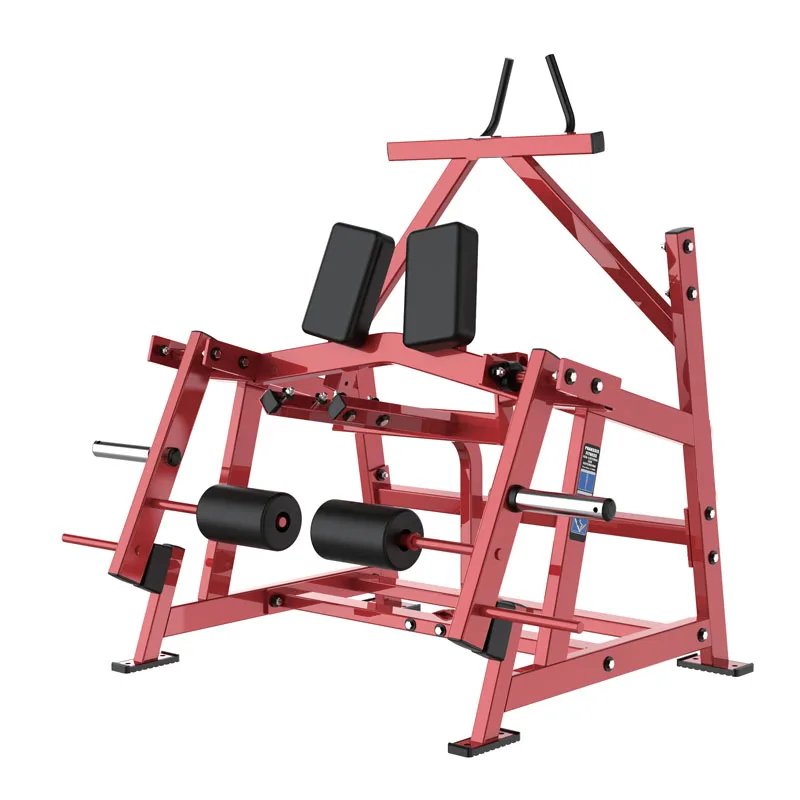
![Commercial Hammer Strength ISO-Lateral D.Y.Row Plate Loaded Machine OS-H5003 [WARN] draft identifier mismatch](https://bicksport.com/wp-content/uploads/2026/08/commercial-hammer-strength-iso-lateral-d-y-row-plate-loaded-machine-os-h5003-warn-draft-identifier-mismatch-6b974d.webp)
Whisper-Quiet Durability — ISO-lateral arm mechanics paired with a 135kg steel frame deliver stable, low-noise strength training in high-traffic commercial zones.
Technical Specifications
| Parameter | Value |
|---|---|
| Designation | OS-H5003 |
| Product Type | Plate Loaded Machine |
| Product Name | ISO-Lateral D.Y.Row |
| Exercise Part | Arm / Back |
| Frame Material | Steel |
| Net Weight | 135kg |
| Product Dimensions (L×W×H mm) | 1455 × 1476 × 2133 |
| Resistance Type | Plate Loaded |
| Color | Optional |
| OEM | Available |
| Certification | ISO 9001, CE |
| Max User Weight | Commercial rated |
| Application | Fitness Center, Gymnasium |
| Age Group | Adult |
| Gender | Unisex |
| Production Capacity | 500 Units Per Month |
| HS Code | 9506911900 |
Application Suitability
| Deployment Scenario | Typical Use |
|---|---|
| Chain gym strength zone | High-frequency back and arm training in dedicated plate-loaded sections |
| Hotel fitness center | Compact footprint rowing movements for guests with varied fitness levels |
| Corporate wellness room | Moderate-volume upper body training during employee breaks |
| Sports performance training center | Athlete-grade unilateral rowing for muscle imbalance correction |
| High-end residential home gym | Serious lifters requiring gym-grade resistance without space compromise |
Why Bearing Wear Decides When a Plate Loaded Rowing Machine Becomes a Complaint Ticket
Precision bushings and sealed bearings keep the ISO-lateral arms tracking smoothly long after competitors develop lateral play.
When a commercial ISO-Lateral Plate Loaded Rowing Machine commercial unit accumulates thousands of cycles per week, the pivot points absorb tremendous shear force. I have seen facilities where worn bushings introduced wobble into the movement path within the first year, turning what should be a smooth rowing motion into an uneven grind that members notice immediately. The maintenance calls start not because the frame failed, but because the rotational interfaces degraded under repetitive loading [NEED_CITE: bearing lifecycle under commercial cyclic loading]. That early bearing wear forces gym operators into unplanned downtime, pulling equipment off the floor for servicing during peak hours.
How This Machine Fits Into a Commercial Strength Floor
The OS-H5003 targets the back and biceps through a diverging rowing arc, filling the horizontal pulling slot that complements vertical pull-down and lat machines in a balanced ISO-Lateral Plate Loaded Rowing Machine commercial setup. Its independent arm design means each side loads separately, accommodating users with strength imbalances or those rehabbing unilateral deficits. Positioned in the plate-loaded section, it pairs naturally with a seated row and a chest press to cover the full push-pull spectrum. The 1455 × 1476mm footprint fits standard strength bay spacing, and the 2133mm height clears typical commercial ceiling heights with margin. The steel frame and plate-loaded resistance suit users across a broad strength range, from intermediate members building volume to advanced lifters loading heavy unilateral work.
Continuous Operation and Deployment Environment Requirements
Unlike motorized cardio, a plate-loaded machine does not have a duty cycle rating, but the pivot bearings and guide rods endure equivalent fatigue from constant load-unload sequences across hundreds of daily repetitions. Facilities running sixteen or more operating hours need a maintenance schedule that checks bearing play and guide rod lubrication at defined intervals rather than waiting for audible grinding [NEED_CITE: preventive maintenance intervals for plate-loaded pivot assemblies]. Deployment on upper floors benefits from the 135kg mass, which anchors the frame against walking-induced vibration, though rubber isolation pads between the base and floor further reduce structure-borne noise transmission. Adequate ventilation around the unit matters less for thermal management and more for member comfort during high-effort sets. Standard commercial power is not required since the resistance is entirely mechanical, simplifying placement flexibility. Level flooring with less than five millimeters of deviation across the base footprint prevents frame racking that accelerates uneven bearing wear.
Engineering Behind the ISO-Lateral Movement Path
The ISO-lateral design separates the left and right rowing arms onto independent pivot axes, which diverge as the user pulls the handles toward the torso. This divergence mirrors the natural convergence of the scapulae during horizontal pulling, reducing the shearing torque that fixed-bar machines impose on the shoulder joint. The 135kg net weight reflects a steel frame thick enough to resist torsional flex even when one side is loaded significantly heavier than the other, a common scenario during unilateral training. Plate-loaded resistance eliminates the mechanical losses and maintenance demands of cable-and-pulley systems; the force path runs directly from the plates through the arm carriage to the user’s hands. Sealed bearings at each pivot point resist contamination from chalk dust and sweat that accelerate corrosion in open bushing designs. The 2133mm height accommodates the full arc of the diverging arms without requiring the user to adjust seat position mid-set, preserving consistent biomechanical alignment from start to finish.
The Hidden Cost of Specifying Below Commercial Grade
Facilities that install light-duty plate-loaded machines in high-traffic zones discover the compromise through a predictable sequence: bearing play develops within months, the arms begin to track unevenly, members adjust their grip to compensate, and eventually the pivot assembly requires full replacement rather than simple re-lubrication. I recall a mid-tier gym chain that selected lighter rowing units to save on initial procurement, only to face warranty claims on pivot assemblies across multiple locations before the second year [NEED_CITE: pivot assembly failure rates in high-frequency commercial deployments]. The downtime cost — pulling units off the floor, shipping replacement parts, scheduling technician visits — eclipsed the original price difference. Members who encounter wobbly or rough-tracking machines simply move to adjacent equipment, and the underused station becomes dead floor space that drags down the revenue per square meter of that zone.
Why Operators Source This Line for Their Strength Zones
Every OS-H5003 that leaves the facility has its pivot bearings tested through repetitive load cycles that simulate years of commercial use before it ships. The steel frame undergoes weld inspection and static load testing to verify it handles asymmetric loading without deflection. OEM customization extends to frame color, upholstery material, and brand identification, allowing gym operators to maintain visual consistency across their strength floor. The six-series cardio family from the same manufacturer means a facility can source its entire equipment package — from treadmills to plate-loaded rows — through a single technical team that understands how equipment spacing and member flow interact. A free 3D layout covering the strength zone square footage, sightlines, and traffic patterns ensures the ISO-Lateral Plate Loaded Rowing Machine commercial unit sits where members naturally progress from compound to isolation movements. Technical support responds around the clock for commissioning questions or maintenance guidance.
Documentation & Test Records
- CE declaration of conformity for the OS-H5003 plate-loaded frame and pivot assembly
- EN 957 test report covering static load and dynamic endurance of the rowing mechanism
- ISO 9001 certificate verifying manufacturing quality management systems
- Bearing and bushing durability test record with cycle count documentation
- Steel frame weld inspection report and static load verification sheet
- Installation and commissioning guide with torque specifications and spare parts list
Installation, Commissioning & Maintenance
- Allow minimum 600mm clearance on each side and 1000mm behind the 1455 × 1476mm base for safe plate loading
- Place on level flooring with rubber isolation pads under the steel base to dampen vibration transfer
- No electrical circuit required; plate-loaded resistance operates independently of facility power systems
- Verify all pivot bolts to specified torque values before first use and re-check after 500 cycles
- Lubricate sealed bearing interfaces and guide rods quarterly in high-traffic deployments to prevent dry friction
- Wipe down steel frame and upholstery after each shift to prevent sweat-induced corrosion on exposed surfaces
Planning Your Strength Zone Equipment Specification
Provide the strength area dimensions and target member capacity to receive a 3D layout that positions this plate-loaded rowing unit within your traffic flow and sightline plan. Specify expected daily usage volume so the maintenance schedule aligns with your operating hours. Confirm the floor construction and whether the unit deploys above occupied spaces, so appropriate isolation measures are included. State any OEM requirements for frame color or upholstery to match your existing strength floor palette.
Frequently Asked Questions
Q: What is the difference between ISO-lateral design and a fixed-bar rowing machine?
A: ISO-lateral machines separate the left and right arms onto independent pivot axes that diverge during the pulling motion. This allows each arm to follow a natural path that matches individual shoulder mechanics, rather than forcing both sides along a single rigid bar. Users with strength imbalances or shoulder restrictions benefit because each side works independently without the dominant side compensating.
Q: How often should the pivot bearings be inspected on a commercial plate-loaded rowing machine?
A: In high-traffic commercial gyms operating twelve or more hours daily, pivot bearings should be inspected quarterly for lateral play and audible grinding. Lubrication intervals depend on usage volume and environmental conditions such as humidity and chalk dust exposure. Facilities with lighter usage can extend inspection to semi-annual intervals while still catching wear before it affects movement smoothness.
Q: What signs indicate that the bearings need replacement rather than re-lubrication?
A: Noticeable lateral wobble in the rowing arms that persists after cleaning and re-lubrication typically indicates bearing race wear rather than simple dryness. Audible clicking or grinding during unloaded movement, visible corrosion pitting on the bearing surface, or uneven resistance through the range of motion all suggest the bearing assembly has exceeded its service life and requires replacement parts.
Q: What items can be customized through OEM for this plate-loaded machine?
A: OEM customization covers frame color selection to match your facility branding, upholstery material and padding density for the seat and chest pad, and brand identification including logos on the frame. Custom specifications are discussed during the scoping phase with minimum order quantities that accommodate both single-location operators and multi-site gym networks.
Q: How do you evaluate the structural stability of a plate-loaded rowing machine before purchase?
A: Request the static load test report and weld inspection documentation for the steel frame. Verify the net weight relative to comparable commercial units, as heavier frames generally resist torsional flex under asymmetric loading. Check that the base footprint provides adequate ground contact area and that the manufacturer specifies maximum load ratings with documented safety margins.
![Commercial Fitness Equipment Decline Bench Machine H-004 for Gym Use [WARN] draft identifier mismatch](https://bicksport.com/wp-content/uploads/2026/08/commercial-fitness-equipment-decline-bench-machine-h-004-for-gym-use-warn-draft-identifier-mismatch-6ebcd5.webp)
![Hammer Strength Plate Loaded Bench Press Gym Equipment [WARN] draft identifier mismatch](https://bicksport.com/wp-content/uploads/2026/08/hammer-strength-plate-loaded-bench-press-gym-equipment-warn-draft-identifier-mismatch-364dc3.webp)