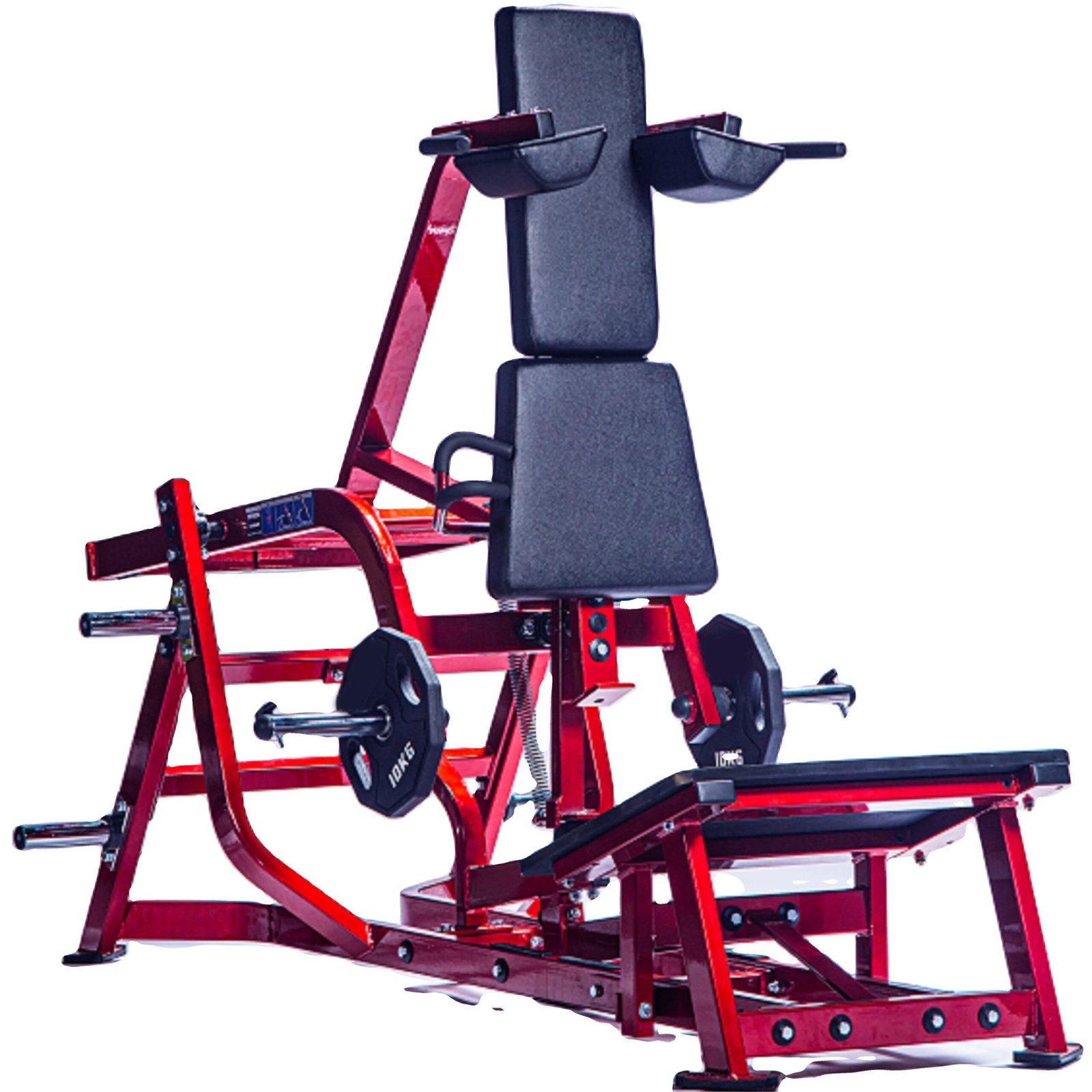
![Hammer Strength Plate Loaded Bench Press Gym Equipment [WARN] draft identifier mismatch](https://bicksport.com/wp-content/uploads/2026/08/hammer-strength-plate-loaded-bench-press-gym-equipment-warn-draft-identifier-mismatch-364dc3.webp)
Technical Specifications
| Parameter | Value |
|---|---|
| Designation | OS-H5001 |
| Product Type | Plate Loaded Bench Press |
| Exercise Part | Chest |
| Frame Material | Heavy-Gauge Steel |
| Max User Weight | 180kg |
| Product Dimensions | 1323 × 1599 × 1746 mm |
| Net Weight | 140kg |
| Plate Compatibility | Olympic Standard |
| Resistance Type | Plate Loaded |
| Certification | ISO 9001, CE |
| Age Group | Adult |
| Gender | Unisex |
| HS Code | 9506911900 |
| Production Capacity | 500 pieces per month |
Application Suitability
| Deployment Scenario | Typical Use |
|---|---|
| International chain gym strength zones | High-volume chest and upper-body training across peak operating hours |
| Five-star hotel fitness centers | Durable plate-loaded bench press commercial gym equipment accessible around the clock for guests |
| Professional sports training centers | Progressive overload programming for athletes requiring precise load adjustments |
| Corporate wellness rooms | Compact, low-maintenance chest training for employees during short workout windows |
| High-end residential home gyms | Heavy-duty build for dedicated lifters wanting gym-grade resistance without weight stack limits |
What Happens When a Weight Stack Machine Cannot Keep Up
A plate-loaded design removes the ceiling on how much resistance a lifter can load.
In commercial strength zones, pin-select machines work well for general membership, but serious lifters quickly hit the top of the stack. I have seen facilities pull entire rows of selectorized presses because athletes and experienced members needed more load than the stack provided. A plate loaded bench press commercial gym equipment unit like the OS-H5001 solves this by accepting standard Olympic plates, letting progressive overload continue without replacing the entire machine [NEED_CITE: load capacity limitations of pin-select vs plate-loaded chest machines in commercial facilities]. When the frame is built from heavy-gauge steel and the guide rod runs true, the movement stays smooth even at maximum loading — something that separates commercial-grade equipment from light-duty alternatives that flex and bind under heavy plates.
How the OS-H5001 Fits Into a Commercial Strength Floor
This machine targets the chest press movement pattern, covering the primary compound lift that anchors most upper-body training programs. In a strength zone layout, it pairs naturally with an incline press, a shoulder press, and cable crossover stations to form a complete upper-body circuit. The plate loaded bench press commercial gym equipment format suits high-traffic areas where members load and unload plates independently, reducing wait times compared to shared weight stack machines. The 180kg max user weight rating and 140kg net weight provide the stability needed for heavy pressing without frame lift or wobble. Facilities serving both general fitness members and competitive lifters benefit from this dual-range loading flexibility — a beginner can load a single 5kg plate on each side while an advanced lifter stacks four 20kg plates without any mechanical adjustment to the machine itself.
Continuous Use Demands on Pivot Points and Guide Rods
A chest press in a busy commercial gym may see hundreds of repetitions per day across dozens of users, and each cycle puts lateral stress on the pivot bearings and guide rod [NEED_CITE: EN 957 requirements for commercial strength equipment durability testing]. The OS-H5001 uses sealed bearings at every pivot to prevent sweat and chalk dust from contaminating the rotation surfaces — a failure point I have seen cause grinding and uneven resistance in machines with open bushings. The 1323 × 1599 mm footprint requires adequate clearance on all sides: at least 600mm behind the seat for plate loading, and clear sightlines so floor staff can monitor form. Proper floor leveling is essential; an uneven surface transfers asymmetric load into the frame welds over time. The steel frame does not require electrical power or data connectivity, which simplifies deployment in basement gym levels or heritage buildings where running dedicated circuits for each station adds cost.
Reading the Frame Gauge and Resistance Mechanics
The heavy-gauge steel construction of this plate loaded bench press commercial gym equipment addresses the most common structural failure in commercial chest machines: frame flex under asymmetric loading. When a lifter pushes harder with one arm, thin-walled tubing twists, and over thousands of cycles that twist fatigues the welds at the pivot junction. The OS-H5001’s reinforced frame and 140kg net weight minimize this deflection. The guide rod mechanism channels the press path along a fixed biomechanical arc that matches natural pectoral engagement, reducing the shear force on shoulder joints compared to free-weight bench pressing where the bar path varies with each rep. Olympic plate compatibility means loading is granular — fractional plates allow 0.5kg increments for rehabilitation or technique work, while full 25kg plates support maximum strength testing. The plate horns are positioned to keep the center of gravity low and centered, preventing the machine from tipping forward when loaded heavily on one side during single-arm variations.
The Cost of Underspecifying a Chest Press
Purchasing a light-duty chest press for a commercial environment creates a cascade of operational problems. Frames built with thinner steel tubing develop visible flex within the first year of high-frequency use, and members notice the wobble — they migrate to machines that feel solid, leaving the underbuilt unit empty while neighboring stations have queues [NEED_CITE: member equipment preference patterns related to perceived build quality]. Guide rods on budget machines often use plastic bushings instead of sealed bearings, which wear unevenly and create a gritty, inconsistent resistance feel that frustrates experienced lifters. I recall a batch of light-commercial presses we serviced where the pivot pins had elongated their mounting holes after roughly eight months of gym-floor use, making the press path sloppy and unsafe. Replacing those units cost the facility far more than specifying commercial-grade equipment from the start.
Why This Product Line Addresses the Gaps
Every OS-H5001 frame undergoes 10,000-hour durability testing on pivot points and guide rods to verify structural integrity under continuous loading cycles. The reinforced steel construction is validated through maximum-load static testing before any unit ships. Our team provides 3D strength zone layout planning that accounts for the OS-H5001’s 1323 × 1599 mm footprint, recommended plate-loading clearance, and member traffic flow between adjacent stations. Full OEM and ODM customization covers frame color, logo placement, and upholstery specification to match facility branding. Documentation packages include EN 957 test reports and structural load verification records so procurement teams have traceable quality evidence. The six-series product family allows a facility to source every strength and cardio discipline from a single manufacturing partner, simplifying warranty management and spare parts logistics. Technical support operates around the clock for installation questions and commissioning guidance.
Documentation & Test Records
- CE declaration of conformity for the OS-H5001 plate loaded bench press commercial gym equipment
- EN 957 structural and functional test report covering frame load capacity
- ISO 9001 quality management system certificate
- 10,000-hour pivot bearing and guide rod durability test record
- Frame welding inspection report under maximum rated load
- Complete spare parts list with part numbers for guide rod and bearing assemblies
Installation, Commissioning & Maintenance
- Maintain minimum 600mm clearance behind the OS-H5001 for safe Olympic plate loading and unloading
- Verify floor levelness within tolerance before anchoring; use vibration-dampening pads under all four feet
- Inspect sealed pivot bearings quarterly and wipe guide rods clean of chalk dust and sweat residue weekly
- Check all frame bolts at 30-day intervals during the first quarter of deployment, then every 90 days
- Wipe down upholstery and steel surfaces daily with pH-neutral cleaner to prevent sweat corrosion
- Confirm plate horn retaining clips are secure after each maintenance cycle to prevent plate slippage
Equipment Selection and Facility Planning Inquiry
Share your strength zone square footage and target equipment count to receive a 3D layout plan covering the OS-H5001’s placement alongside complementary stations for optimal member flow. Specify whether the deployment floor sits above occupied spaces so we can advise on vibration isolation requirements for heavy plate drops. Indicate your target market so plate compatibility standards and labeling requirements align with local regulations. Let us know if upholstery color and frame finish need to match an existing equipment palette or brand guideline for visual consistency across the facility.
Frequently Asked Questions
Q: How does plate-loaded durability compare to pin-select machines in commercial settings?
A: Plate-loaded machines like the OS-H5001 have fewer moving parts than selectorized alternatives — no cables, pulleys, or weight stack guide rods that wear under continuous friction. The resistance comes directly from Olympic plates on fixed horns, so mechanical failure points are limited to pivot bearings and frame welds, both tested for 10,000 hours of continuous operation in our facility.
Q: What steel gauge and welding standards apply to commercial chest press frames?
A: The OS-H5001 uses heavy-gauge steel tubing selected to resist flex under asymmetric loading during single-arm press variations. All frame welds undergo visual and structural inspection per ISO 9001 quality protocols, and maximum-load static testing verifies that no deflection exceeds design tolerance at the rated 180kg user capacity.
Q: What maintenance does the guide rod mechanism require?
A: The sealed bearing pivots on the OS-H5001 are designed to exclude chalk dust and moisture from the rotation surface, significantly extending service intervals compared to open bushing designs. We recommend wiping the guide rod clean weekly and inspecting bearing smoothness quarterly, with lubrication applied only per the schedule in the commissioning guide.
Q: How does the press path design affect shoulder joint stress?
A: The OS-H5001 guide rod constrains the pressing arc to a biomechanically aligned path that matches natural pectoral engagement patterns. This fixed trajectory reduces the rotational shear on shoulder joints compared to free-weight bench pressing, where bar path deviation during fatigue increases injury risk during high-volume commercial training sessions.
Q: How should plate-loaded equipment be spaced in a commercial gym layout?
A: The OS-H5001’s 1323 × 1599 mm footprint requires clearance on all sides for safe plate handling and member passage. Our 3D layout planning service calculates optimal spacing between stations based on your total floor area, expected peak-hour traffic, and the need for clear sightlines so floor staff can monitor form across the strength zone.
![V-Squat Machine Strength Fitness Equipment for Commercial Gym [WARN] draft identifier mismatch](https://bicksport.com/wp-content/uploads/2026/08/v-squat-machine-strength-fitness-equipment-for-commercial-gym-warn-draft-identifier-mismatch-a99053.webp)
![Seated DIP Machine Osh014 Commercial Fitness Equipment for Gym [WARN] draft identifier mismatch](https://bicksport.com/wp-content/uploads/2026/08/seated-dip-machine-osh014-commercial-fitness-equipment-for-gym-warn-draft-identifier-mismatch-befbc1.webp)