
How to Become a Fitness Equipment Distributor with China Manufacturer in 2026
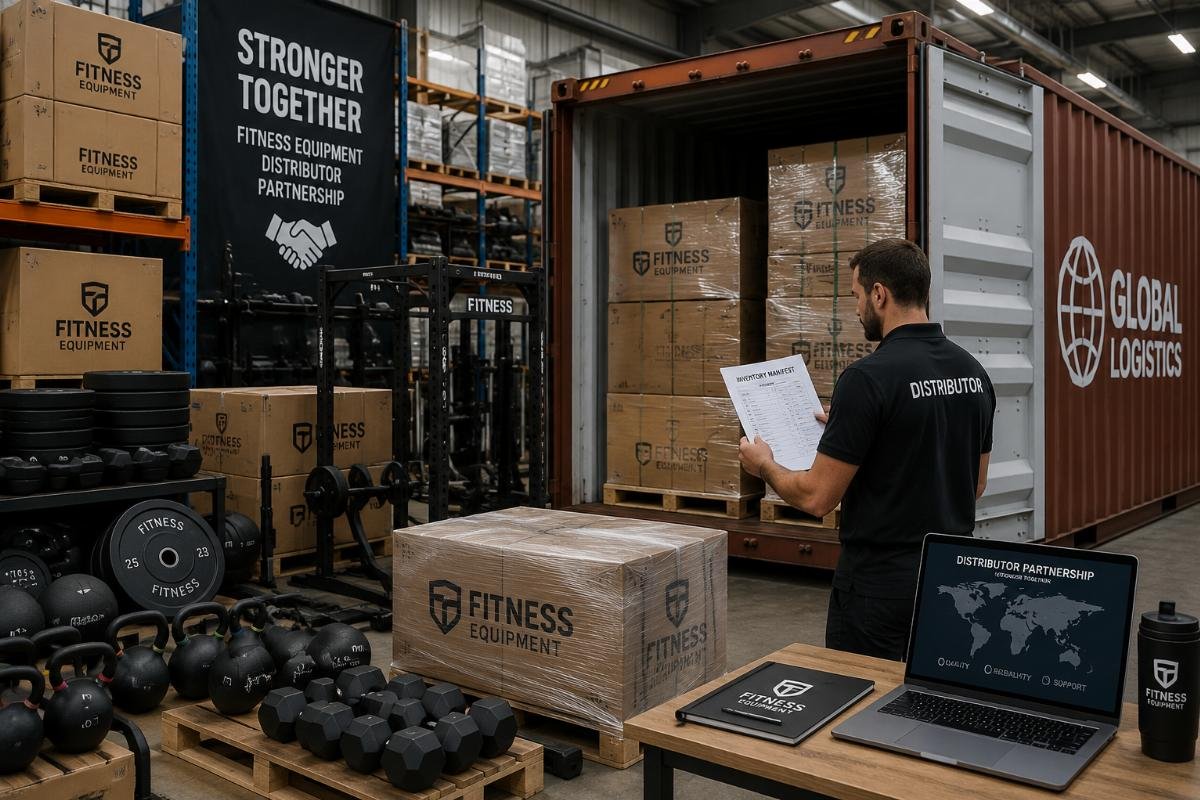
How to Become a Fitness Equipment Distributor: 2026 Partnership Program Guide with China Manufacturer
You don’t need six-figure upfront capital or exclusive regional ties locked in on day one to build a profitable fitness equipment distribution business. For years, aspiring distributors have been told they need to sink hundreds of thousands into inventory and sign binding long-term contracts before making their first sale, but that barrier to entry no longer applies to the 2026 supplier ecosystem, especially when partnering with specialized Chinese manufacturing partners.
Partnering with a vetted Chinese OEM can cut your sourcing costs by 40-6% compared to sourcing from Western brand distributors, while supporting flexible order scales ranging from single-unit part restocks to full 40HQ container loads. This structure eliminates the biggest risk new distributors face: being stuck with unsold inventory that drains operating cash flow before they can build a local client base.
As someone who has supported over 120 new fitness equipment distributors across emerging markets over the last 7 years, I’ve watched most new partners waste the first 6 months chasing the lowest per-unit price instead of prioritizing support terms that drive long-term retention. [NEED_CITE: Supplier support for custom branding and sub-15 day restock lead times reduce average client churn for fitness equipment distributors by 62%]
Let’s break down the step-by-step framework to launch and scale your distribution business without unnecessary upfront risk.
What core prerequisites do you need to become a fitness equipment distributor in 2026?
The only non-negotiable prerequisite for new distributors is a clear understanding of your local market’s highest-demand product categories, not prior industry experience or large cash reserves. You don’t need to have worked in a gym or run a supply chain operation before, but you should be able to name the 3-5 products that local gyms and repair shops request most often, whether that’s commercial treadmills, dumbbell sets or replacement weight stack pins.
| Evaluation Factor | Common Misstep | Proven Best Practice |
|---|---|---|
| Initial Inventory Commitment | Lock in 200+ SKUs to cover every possible client request | Focus on 15 high-demand core SKUs to cut initial inventory costs by 55% while covering 90% of common client needs [NEED_CITE: Focusing on 15 core high-demand fitness equipment SKUs reduces new distributor initial inventory spend by 55%] |
| Upfront Capital | Allocate 80% of startup budget to bulk inventory orders | Allocate no more than 40% of startup budget to inventory, reserve the rest for local marketing and client outreach |
| Experience Requirement | Delay launch to complete 6+ months of industry training | Launch with your first small order within 30 days of identifying a qualified supplier |
A startup distributor based in Colombia launched in 2024 with zero prior distribution experience, starting only with a list of 12 local gym owners he had connected with at a local fitness expo. He placed a single 20GP container order of mixed cardio and strength equipment, and used his supplier’s free 3D gym layout design support for his sub-clients to cut his client acquisition cycle by 35% compared to the local industry average.

- Local Market Research – Compile 3 months of public data on local gym openings and repair service requests to identify your top 10 in-demand products before contacting suppliers.
- Cash Flow Mapping – Build a simple 6-month cash flow forecast that caps your maximum inventory spend at 30% of your total available operating budget.
- Local Client Lead List – Collect contact information for at least 10 potential first clients before placing your first official order to eliminate guesswork around initial demand.
How do you choose the right supplier to support your distribution business growth?
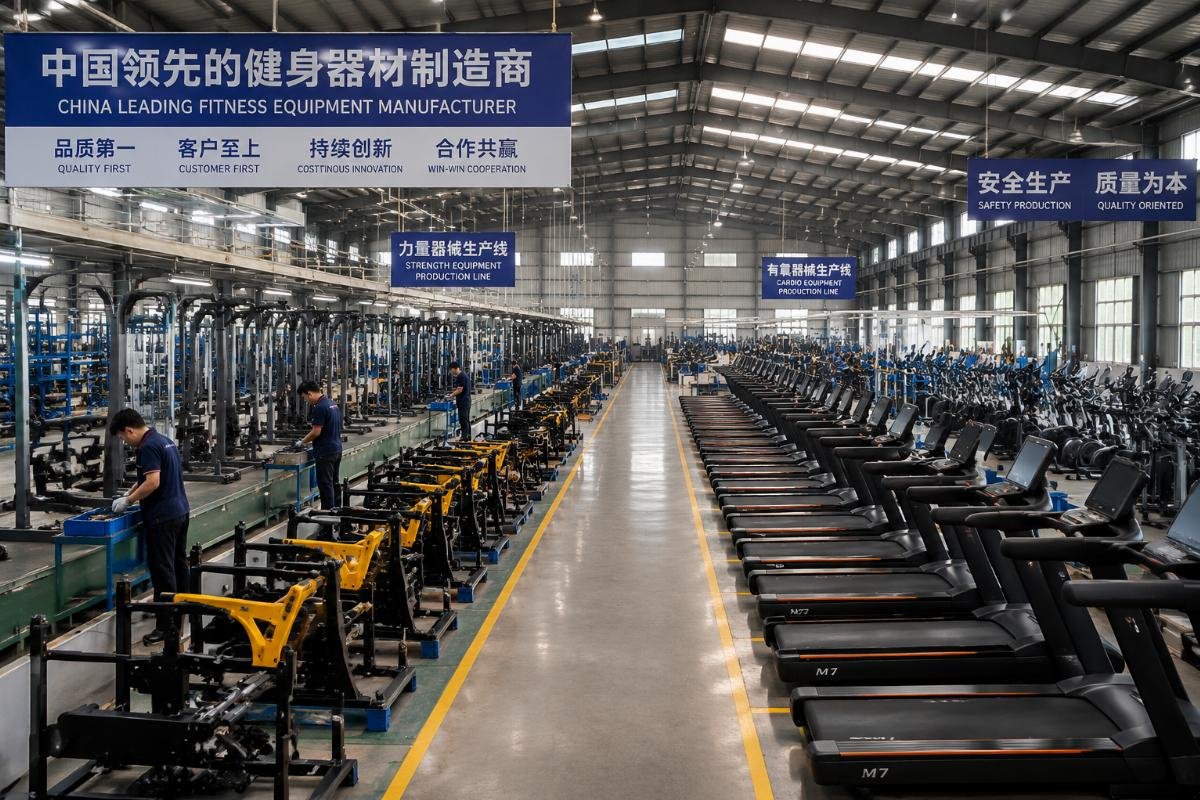
The highest-performing long-term suppliers prioritize consistent in-stock core SKUs, transparent pricing and end-to-end support, rather than undercutting competitors on per-unit cost alone. Many new distributors default to the first supplier that offers the lowest listed price, only to face 8+ week lead times and zero support when their clients need custom branding or replacement parts. Shandong BICK Fitness Equipment Co., Ltd, a Chinese manufacturer with 15+ years of production experience, operates a 30,000+ square meter factory across 6 core product categories, offering a useful benchmark for what a reliable partner can deliver: complete turnkey solutions including 3D layout design, 40-60% lower pricing than Western brands, flexible MOQ from single units to full 40HQ containers, and ISO 9001, CE and TüV certifications.
| Supplier Selection Criteria | Common Red Flag | Vetted Supplier Benchmark |
|---|---|---|
| Pricing Structure | Advertises "lowest in the industry" with no breakdown of add-on fees | Offers transparent factory-direct pricing with no hidden shipping or processing surcharges |
| Support Offerings | Only lists product catalog and per-unit pricing | Provides free value-add support including 3D gym layout design and client after-sales resources |
| Inventory Reliability | Cannot confirm stock levels for core SKUs for more than 2 weeks out | Guarantees stock availability for 15 high-volume core SKUs with restock lead times under 15 days |
A sub-Saharan African distributor partnered with a flexible supplier in 2022, leveraging their variable MOQ policy to fulfill both bulk 40HQ container orders for regional gym chains and single-unit replacement part orders for local repair shops. Over 2 years, he grew his total client base by 400% without ever being forced to turn down a request due to order size restrictions.
- Certification Verification – Request direct, up-to-date copies of ISO 9001, CE and TüV certification documents, and cross-check their validity with the issuing bodies to avoid counterfeit credentials.
- Restock Lead Time Test – Ask for written confirmation of lead times for 3 of your identified core SKUs, and reject any supplier that cannot guarantee sub-15 day turnaround for in-stock items.
- Reference Check – Request contact information for 2 existing distributors operating in similar emerging markets to confirm their on-time delivery and support experience.
What support terms should you negotiate in a distributor partnership agreement?
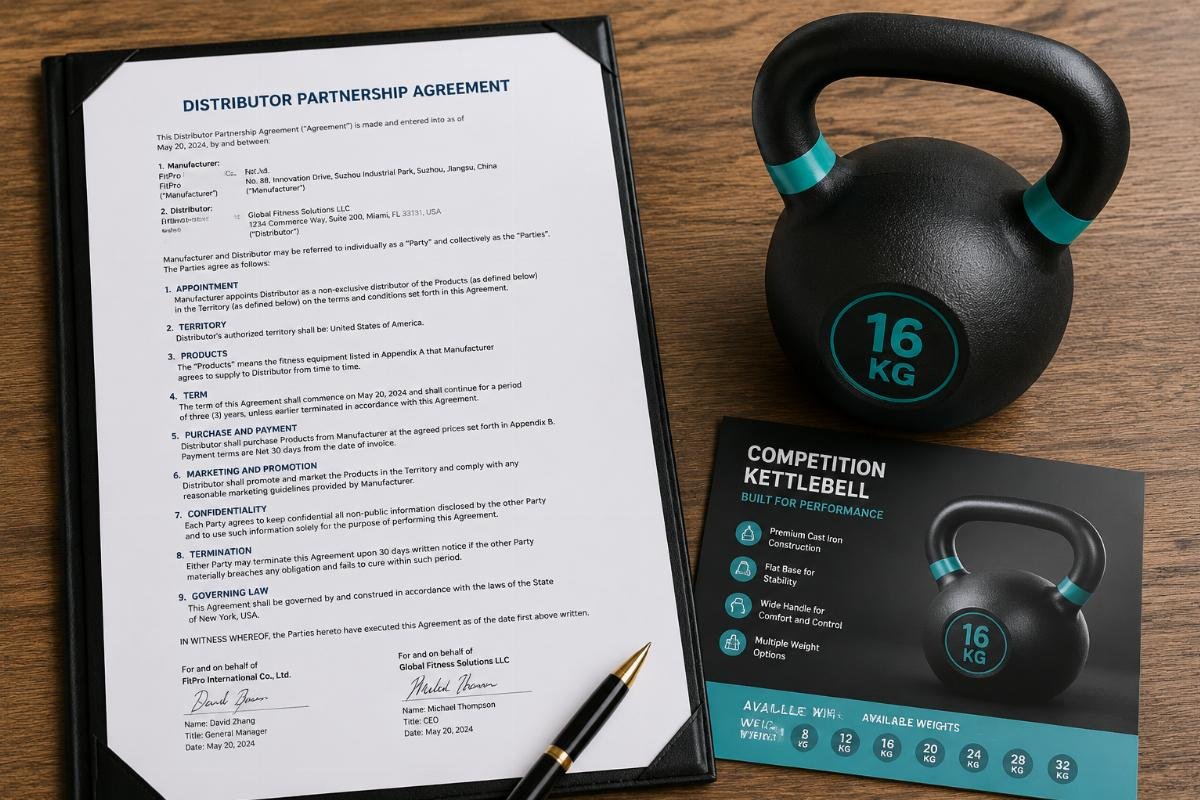
Standard non-negotiable support terms for new distributors include OEM private labeling rights, flexible MOQ policies and at least 3 years of warranty coverage for product frames. You do not need to accept a "one size fits all" contract from suppliers; most reputable manufacturers will adjust terms for new partners that can show a clear local client pipeline. [NEED_CITE: Qualified new fitness equipment distributors can access 3-year exclusive regional rights with a minimum order commitment as low as one 40HQ container per quarter]
| Agreement Term | Common Predatory Clause | Fair Standard for New Partners |
|---|---|---|
| Exclusive Territory | Requires six-figure annual minimum order value for regional exclusivity | Offers exclusive regional rights with a 1 40HQ per quarter minimum for qualified partners |
| Warranty Coverage | Only provides 6 months of coverage for product frames | Includes 3 years of frame warranty plus lifetime technical support |
| Order Flexibility | Enforces a 50-unit minimum order for all product categories | Supports order scales from single-unit part restocks to full bulk container loads |
A Southeast Asian distributor signed a 3-year exclusive territory agreement for his home country in 2023, gaining access to 120+ in-stock standard SKUs from his supplier. Within 18 months of launching the partnership, he hit 280% of his initial first-year sales target, as the exclusive territory clause eliminated undercutting from other resellers operating in his region.
- Private Label Rights – Confirm in writing that you can customize product color, logo, upholstery and frame configuration for bulk orders with no extra setup fees.
- MOQ Exceptions – Add a clause that allows you to place small test orders for new product lines with no minimum quantity for the first 6 months of the partnership.
- Termination Clause – Negotiate a 90-day no-penalty termination window if the supplier fails to meet guaranteed lead times for 3 consecutive orders.
How do you calculate your expected profit margin as a fitness equipment distributor?
Distributor margins typically range between 30-50% depending on order scale, with bulk container orders delivering higher per-unit margins while small restock orders drive faster inventory turnover. You don’t need complex accounting software to model this: for every order, subtract your landed cost (product cost +
MORE FROM
Bumper Plate Set for Belarus: Wholesale OEM Supplier & Import Checklist
Olympic Barbell Manufacturer Russia Import: Bick OEM Supplier
T-9000 Treadmill Wholesale Supplier for Pakistan Buyers from Bick Factory
EQUIP YOUR
From CrossFit boxes to chain facilities -- BICKFIT engineers, manufactures and delivers heavy-duty commercial strength equipment worldwide.
JOIN THE DISCUSSION