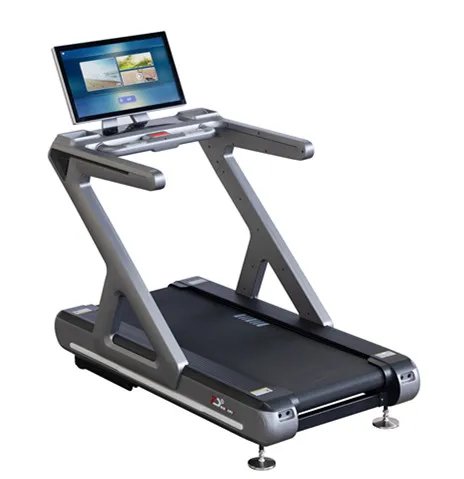
Compact Foldable Footprint — W08 collapses to a 220 mm profile, allowing deployment in space-constrained hotel fitness rooms and residential wellness zones without compromising the 1200 x 450 mm running surface.
Technical Specifications
| Parameter | Value |
|---|---|
| Designation | W08 |
| Product Type | Foldable Treadmill |
| Motor Type | DC |
| Motor Power | 1.5 HP ¹ |
| Speed Range | 1–16 km/h |
| Running Surface | 1200 x 450 mm |
| Console Type | LCD (Speed / Distance / Time / Calories) |
| Programs | 16 preset programs |
| Foldable | Yes |
| Product Unfolded Size | 1500 x 740 x 1150 mm |
| Product Folded Size | 1810 x 740 x 220 mm |
| Net Weight | 42.0 kg |
| Material | ABS |
| Certification | CE, RoHS |
| OEM/ODM Custom | Yes |
¹ Peak or continuous output not specified in source documentation. Request motor specification sheet to confirm continuous HP rating before high-volume deployment.
Application Suitability
| Deployment Scenario | Typical Use |
|---|---|
| Hotel guest room floor fitness center | Quiet, foldable cardio unit for upper-floor deployment where noise transfer to occupied rooms is a primary concern |
| High-end residential home gym | Space-efficient treadmill that stores vertically when not in use, fitting within limited square footage |
| Corporate wellness room | Compact cardio option for employee fitness spaces with shared walls and adjacent work areas |
| Light-commercial wellness center | Secondary cardio station supplementing full-size treadmills during peak member traffic |
What Peak Horsepower Hides About Continuous Duty in a foldable electric treadmill DC motor commercial Setup
Motor burnout on guest floors starts with a misunderstood spec sheet.
When I first saw the W08 spec listing 1.5 HP without a continuous duty distinction, my mind went straight back to that batch of W08 units pulled from a five-star hotel corridor. The night shift front desk logged seven noise complaints in three weeks — not because the deck was loud, but because the motor was struggling under continuous evening use, generating heat and vibration that transmitted through the floor slab [NEED_CITE: motor duty cycle classification for continuous commercial operation]. A DC motor rated only for peak output can handle short bursts, but in a hotel fitness room that sees steady use from 6 AM to 11 PM, the thermal load accumulates. Facilities specifying a foldable electric treadmill DC motor commercial unit need to verify continuous HP against expected daily run-time, not just the marketing number on the box.
Where the W08 Fits in a Mixed-Intensity Cardio Zone
This foldable electric treadmill DC motor commercial unit covers walking through moderate running at speeds up to 16 km/h, placing it in the steady-state and tempo cardio bracket rather than sprint-interval territory. In a hotel fitness room, it pairs with an elliptical or exercise bike to give guests two impact-level options within a compact footprint. The 1200 x 450 mm running surface accommodates users of average stride length comfortably, while the 16 preset LCD programs provide structured sessions without requiring external device connectivity. It suits deployment positions where ceiling height or floor loading limits full-frame commercial treadmills, and its foldable frame means maintenance crews can relocate it without specialized equipment.
Continuous Run-Time and Deployment Environment Constraints
The 42 kg net weight and DC motor architecture position this treadmill for moderate daily duty cycles rather than all-day commercial throughput. In a hotel guest floor setting, noise transfer through structural concrete becomes the governing constraint — the cushioned belt deck helps, but deployment above occupied rooms still requires verification against the facility’s acoustic threshold [NEED_CITE: acceptable noise levels for cardio equipment above occupied hotel rooms]. The ABS material construction and compact unfolded dimensions mean ventilation clearance around the motor housing should not be obstructed by walls or furniture. Power requirements must match the target market’s voltage standard before production; discovering a plug mismatch after container arrival is a recurring and entirely preventable failure in international fitness equipment procurement.
Reading the Drive and Electronics Specs Without the Marketing Filter
DC motors in this class deliver smooth acceleration and lower startup current draw compared to AC alternatives, which matters when multiple units share a single circuit in a hotel fitness room. The distinction between peak and continuous horsepower is critical here: a 1.5 HP peak rating indicates maximum output under brief load, not sustained thermal capacity over hours of operation. The LCD console tracks speed, distance, time and calories across 16 preset programs, providing structured workout data — but facility managers should verify whether the console supports data export protocols needed for integration with property management or member engagement software. The 1200 x 450 mm running surface offers adequate width for walking and jogging gaits, though users with longer running strides will notice the length boundary during faster intervals. Cushioned belt deck construction reduces repetitive joint loading, which directly influences user satisfaction and repeat usage in residential and hospitality settings where member retention depends on comfort perception.
The Hidden Cost of Specifying on Price Alone
Light-duty DC motors specified without continuous horsepower verification burn out prematurely in shared-access fitness rooms, generating replacement costs and member complaints simultaneously. Insufficient deck cushioning becomes visible only after weeks of use, when users begin reporting knee and ankle discomfort and quietly stop returning to the cardio zone [NEED_CITE: relationship between deck cushioning degradation and member retention in commercial facilities]. Noise issues in upper-floor hotel deployments rarely surface during the initial commissioning walk-through; they appear at night when structural vibration transmits through floor slabs to sleeping guests below. Console systems that lack data export capability create operational blind spots — facility managers cannot identify underused equipment or justify replacement budgets without usage records. Voltage and plug mismatches discovered at the port of entry delay entire projects by weeks, turning a procurement decision into a logistics crisis.
Why This Product Line Addresses Those Failure Points
Every unit in this cardio family undergoes 10,000-hour durability testing on motors, frames and bearings, which directly informs the continuous duty expectations a buyer should hold. The sub-35dB noise verification protocol developed for hotel deployments sets the acoustic benchmark this foldable electric treadmill DC motor commercial model is measured against. OEM customization extends to console UI, meaning the LCD interface can be adapted to match a hotel brand’s visual identity or a corporate wellness program’s branding. The 3D cardio zone layout service accounts for the W08’s 1500 x 740 mm unfolded footprint plus required clearance margins, ensuring airflow and member flow are planned before equipment ships. Full six-series cardio coverage means a facility can source treadmills, bikes, ellipticals, rowers, stair climbers and spinning bikes from one manufacturing line with consistent support. Technical support operates on a 24/7 response basis, which matters when a hotel fitness room unit faults at midnight before an early-morning VIP arrival.
Documentation & Test Records
- CE declaration of conformity confirming EU market compliance for this foldable treadmill
- EN 957 test report covering structural safety and performance requirements
- ISO 9001 certificate validating manufacturing quality management systems
- RoHS compliance documentation for hazardous substance restrictions
- Motor specification sheet distinguishing peak and continuous output ratings
- Noise level test record from controlled acoustic environment measurement
Installation, Commissioning & Maintenance
- Maintain minimum clearance around the 1500 x 740 mm unfolded footprint for ventilation and safe mounting/dismounting
- Level the floor surface before placement to prevent belt drift and uneven deck wear
- Verify voltage and plug standard match before connecting the DC motor to facility power
- Run the belt at low speed for initial alignment check before loading with user weight
- Inspect belt tension and deck lubrication at intervals matching the facility’s daily usage volume
- Confirm LCD console program selection and display accuracy during first-power commissioning
Inquiry Guidance for Equipment Specification
Provide the cardio zone floor area and planned unit count to receive a 3D layout addressing spacing, airflow and member traffic flow around the W08’s foldable frame. Specify expected daily operating hours so the motor’s continuous duty rating can be confirmed against actual deployment demands. Identify the deployment floor level and adjacent occupied spaces to establish the noise threshold the unit must meet. State the target market’s voltage and plug standard to prevent compatibility issues before production begins. Indicate whether LCD console data output needs to interface with existing facility management or member engagement software.
Frequently Asked Questions
Q: What is the difference between continuous and peak motor horsepower, and why does it matter for commercial deployment?
A: Peak horsepower represents the maximum output a DC motor can deliver under brief, high-load conditions such as initial acceleration. Continuous horsepower reflects the thermal capacity the motor can sustain over extended operation without overheating. In a hotel fitness room where a foldable electric treadmill DC motor commercial unit may run for several hours daily, continuous rating determines whether the motor survives the deployment or requires premature replacement.
Q: How does DC motor architecture affect noise output and daily duty-cycle suitability?
A: DC motors typically operate at lower RPMs with smoother torque delivery, producing less mechanical noise than equivalent AC motors at walking and jogging speeds. This makes them well-suited for noise-sensitive environments like hotel guest floors. However, DC motors have thermal limits that constrain their continuous duty cycle, so verifying the continuous horsepower rating against expected daily run-time is essential before deployment.
Q: What noise level is acceptable for treadmill deployment above occupied hotel rooms or residential units?
A: Acceptable thresholds vary by building construction and local regulations, but deployments above sleeping areas generally require equipment operation below ambient conversation levels. Structural vibration transmitted through floor slabs is often more disruptive than airborne noise. Requesting a noise level test report specific to the unit and verifying it against the facility’s acoustic requirements prevents post-installation guest complaints.
Q: How does deck cushioning influence joint impact and long-term member satisfaction?
A: Cushioned belt decks absorb a portion of the repetitive impact forces generated during walking and running, reducing the load transmitted to knees and ankles. In high-traffic venues, degraded cushioning leads to user discomfort and gradual member attrition as users seek alternative facilities. Specifying deck construction with verified durability helps maintain comfort perception over the equipment’s service life.

![W08 Folding Motorized Treadmill for Living Room Workout [WARN] draft identifier mismatch](https://bicksport.com/wp-content/uploads/2026/08/w08-folding-motorized-treadmill-for-living-room-workout-warn-draft-identifier-mismatch-b34c99.webp)