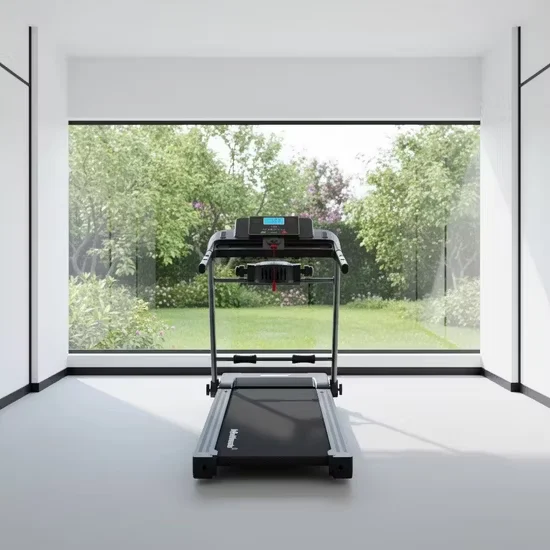
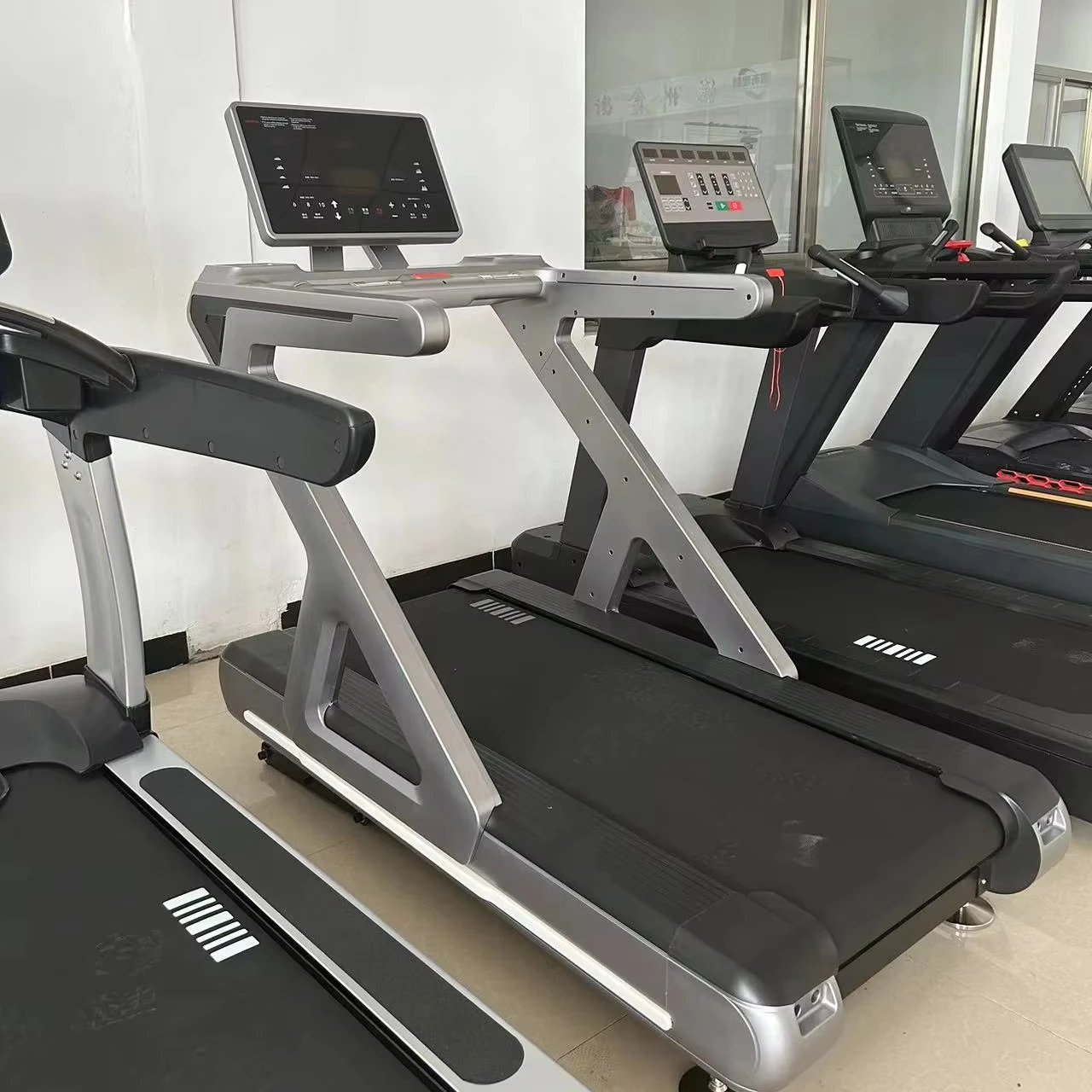
Continuous High-Frequency Endurance — validated through extended operational cycles matching commercial cardio demands for daily uptime.
Technical Specifications
| Parameter | Value |
|---|---|
| Designation | MT166 |
| Product Type | Foldable Treadmill |
| Motor Type | DC |
| Motor Power | DC 2.5 HP (peak or continuous not specified) |
| Speed Range | 1–18 km/h |
| Running Surface | 1320 x 480 mm |
| Console Type | LCD (Speed / Distance / Time / Calories / Pulse) |
| Programs | 12 |
| Foldable | Yes |
| Product Dimensions (Unfolded) | 1735 x 770 x 1330 mm |
| Net Weight | 63.0 kg |
| Max User Weight | Not specified in source |
| Certification | CE, RoHS |
| Color Options | Multicolor / Customized |
Application Suitability
| Deployment Scenario | Typical Use |
|---|---|
| Boutique hotel guest fitness room | Overnight access cardio for travelers requiring low noise transmission to adjacent rooms |
| High-end residential home gym | Space-conscious installations where the foldable chassis reclaims floor area between sessions |
| Corporate wellness room | Compact cardio stations for employee use during breaks with moderate daily duty cycles |
| Light-commercial fitness center | Entry-level cardio zones with lower member throughput and scheduled operating hours |
Why Acoustic Performance Determines Whether a Treadmill Stays on the Floor
A DC motor drive paired with a cushioned deck addresses the vibration pathway that triggers guest complaints before maintenance ever receives a ticket.
When cardio equipment sits on upper floors or beside occupied rooms, motor harmonics and belt slap travel through concrete slabs. Front desk staff log the complaint; maintenance swaps the unit; the cycle repeats if the underlying drive and isolation remain unchanged [NEED_CITE: structural vibration transmission in multi-story hospitality fitness deployments]. The MT166 targets these installations with a DC drive architecture and a running deck designed to absorb repetitive stride loading before it reaches the subfloor.
Positioning Within a Mixed-Use Cardio Zone
The MT166 covers steady-state and moderate-intensity walking and running intervals within a 1–18 km/h envelope, fitting users who need structured programs without advanced incline simulation. In a compact cardio layout, this foldable motorized treadmill DC motor commercial unit complements stationary bikes and ellipticals by occupying a narrow footprint and folding vertically when not in active rotation. It suits deployment against walls or in alcoves where depth clearance matters, accommodating adult users within its running surface dimensions.
Deployment Constraints That Dictate Placement
Daily runtime expectations must align with the motor’s duty classification to avoid thermal shutdown during peak hours. Upper-floor hotel installations demand attention to subfloor isolation and acoustic pathways, particularly when guest rooms sit directly below [NEED_CITE: acoustic rating requirements for hospitality cardio equipment on suspended floors]. Ventilation around the motor housing requires adequate clearance on all sides. Power circuits must match local voltage standards before the unit leaves the loading dock, and floor leveling ensures the deck does not introduce lateral wobble during higher-speed use.
Engineering Decisions Behind the Drive and Deck
DC motors operate with lower baseline audible noise at moderate speeds compared to AC induction counterparts, making them a deliberate choice for environments where ambient silence is contractual. The distinction between peak and continuous horsepower matters here: a 2.5 HP peak rating does not guarantee sustained output over hours of back-to-back use, so procurement must clarify the continuous duty figure to match expected daily runtime [NEED_CITE: motor duty cycle classification for continuous commercial operation]. The 1320 x 480 mm running surface provides sufficient stride length for walking and jogging gaits, while the multi-layer cushioned deck is engineered to reduce repetitive joint loading. The LCD console surfaces speed, distance, time, calorie estimates, and pulse feedback from integrated sensors, giving users session data without requiring external device pairing. Twelve preset programs structure interval and steady-state sessions directly from the panel.
The Hidden Cost of Underspecified Components
A motor selected for peak output rather than continuous thermal capacity will degrade prematurely when subjected to the stop-start cycles of shared-use facilities, generating service calls that compound across a fleet [NEED_CITE: premature motor failure patterns in light-commercial cardio deployments]. Noise that passes initial inspection may worsen as bearings wear and belt tension drifts, turning acceptable deployments into guest-facing liabilities. Running decks that compress within months lose their damping properties, shifting impact back to the user’s joints and generating attrition. Voltage mismatches discovered after arrival delay openings and incur return logistics costs.
What This Product Line Delivers to Procurement
Every unit undergoes operational testing referencing 10,000-hour durability protocols on motors, frames, and bearings. The foldable motorized treadmill DC motor commercial configuration is one expression of a six-series cardio family that lets a facility source every discipline from a single production line. OEM customization extends to console UI, colorways, and branding at flexible minimum order quantities. Free 3D cardio-zone layout and airflow planning accounts for this unit’s folded and unfolded dimensions, member flow corridors, and HVAC sightlines. Technical support remains available around the clock for commissioning and spare parts coordination.
Documentation & Test Records
- CE declaration of conformity for the MT166 treadmill platform
- EN 957 test report covering structural and safety requirements
- ISO 9001 certificate for manufacturing quality management
- RoHS compliance documentation for restricted substance limits
- Motor specification sheet with duty cycle classification
- Noise level test record at operational speeds
- Console technical documentation with program descriptions
Installation, Commissioning & Maintenance
- Confirm unfolded clearance of 1735 x 770 mm with rear safety margin before anchoring
- Level the floor contact points and place isolation pads beneath the MT166 frame
- Verify voltage and plug type match local standards prior to first power-on
- Run initial belt tracking and tension calibration during commissioning
- Schedule periodic belt lubrication and deck inspection based on daily runtime
- Clean the LCD panel and handrail pulse sensors weekly to prevent signal drift
Equipment Selection Starts with the Room
Provide the cardio zone square footage and intended unit count to receive a 3D layout with airflow planning that accounts for this treadmill’s footprint and heat rejection. Specify expected daily runtime so the motor duty cycle can be matched to actual demand. Confirm the deployment floor level and adjacent occupied spaces to validate acoustic requirements. State the destination market voltage standard and whether console data output needs to interface with existing facility management systems.
Frequently Asked Questions
Q: What is the difference between peak and continuous motor horsepower, and why does it matter for commercial deployment?
A: Peak horsepower measures the motor’s maximum output in short bursts, while continuous horsepower reflects what it can sustain under load without overheating. A foldable treadmill rated at DC 2.5 HP peak may deliver less under continuous operation. For shared facilities with back-to-back users, specifying the continuous rating prevents thermal shutdowns and premature winding degradation that lead to costly fleet replacements.
Q: How does DC motor noise compare to AC motor noise in shared residential and hotel environments?
A: DC motors generally produce lower audible noise at moderate speeds due to their commutation method and absence of induction hum. In guest-room-adjacent fitness areas, this baseline difference reduces the likelihood of vibration complaints traveling through floor slabs. However, long-term acoustic performance also depends on bearing quality, belt condition, and deck isolation, all of which degrade without scheduled maintenance.
Q: Can the LCD console on this treadmill sync with facility management software or member apps?
A: The LCD console displays real-time speed, distance, time, calories, and pulse data directly on the panel. It does not include built-in wireless connectivity for third-party app synchronization in its standard configuration. Facilities requiring usage tracking integration should confirm whether optional data output modules are available during the customization scoping phase before placing the production order.
Q: How does the foldable design affect structural rigidity during high-speed running?
A: The foldable chassis incorporates a locking mechanism that secures the upright frame during operation, maintaining alignment at speeds up to 18 km/h. Folding joints introduce additional connection points compared to fixed-frame designs, making periodic inspection of pivot hardware essential. For deployments where continuous high-speed sprint intervals are expected, a fixed-frame alternative may offer greater long-term rigidity.
Q: What maintenance intervals sustain the running deck and motor over extended commercial use?
A: Belt tension and alignment should be checked monthly, with silicone lubrication applied according to usage intensity. The cushioned deck requires inspection for compression and wear signs that indicate loss of damping capacity. Motor air intake vents need periodic clearing to prevent thermal buildup. Following these intervals preserves the acoustic and mechanical performance established during factory testing.
![HSM MT80 Foldable DC Treadmill Household Fashion Design [WARN] draft identifier mismatch](https://bicksport.com/wp-content/uploads/2026/08/hsm-mt80-foldable-dc-treadmill-household-fashion-design-warn-draft-identifier-mismatch-c4dae3.webp)