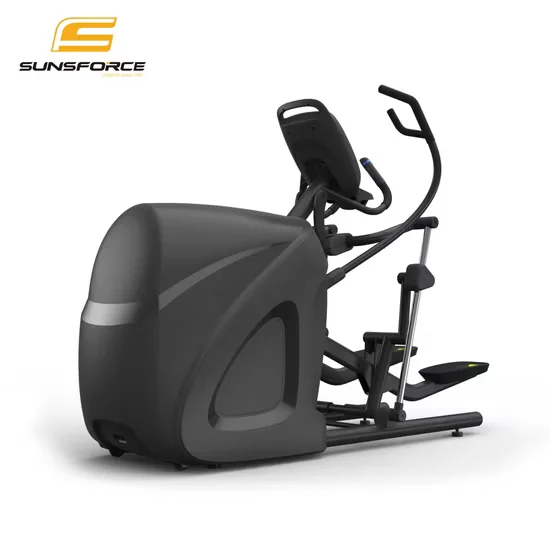
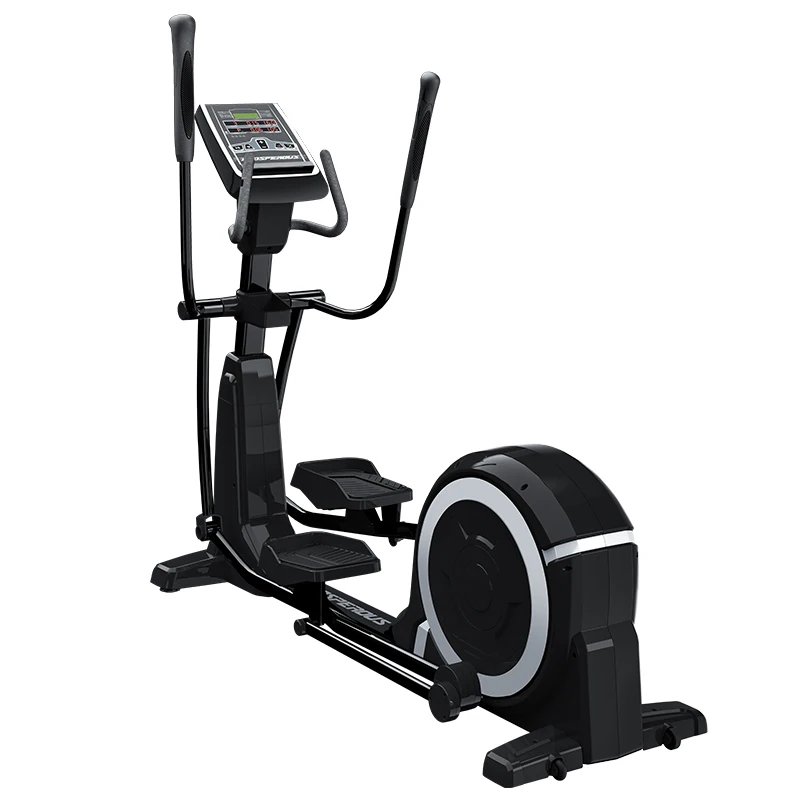
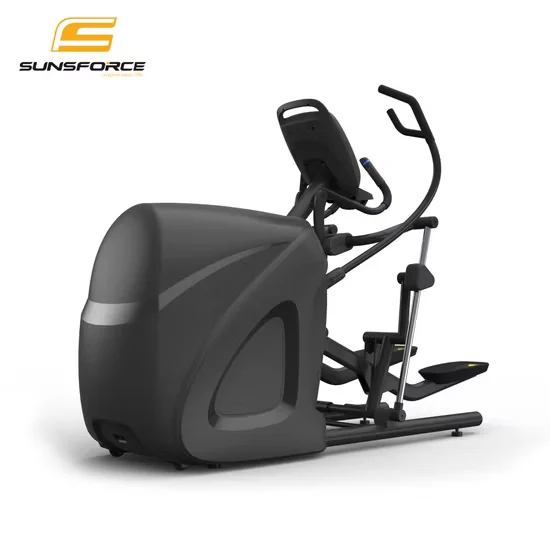
![Lifefitness Commercial Gym Elliptical Trainer Cross Trainer Equipment[WARN] draft identifier mismatch](https://bicksport.com/wp-content/uploads/2026/08/lifefitness-commercial-gym-elliptical-trainer-cross-trainer-equipmentwarn-draft-identifier-mismatch-b4489e.webp)
Whisper-Quiet Magnetic Drive — Sub-35dB operation verified across hotel guest floor deployments, eliminating noise complaints from adjacent occupied rooms.
Technical Specifications
| Parameter | Value |
|---|---|
| Designation | CTC60 AI3 |
| Product Type | Elliptical Trainer |
| Resistance Type | Magnetic |
| Resistance Levels | 25 (1-25) |
| Stride Grade | 1-10 |
| Step Depth Grade | 1-15 |
| Pedal Center Distance | 230mm |
| Console Type | LED |
| Max User Weight | 180kg |
| Net Weight | 240kg |
| Product Dimensions | 21207901680mm |
| Foldable | Unfolded |
| Certification | ISO, RoHS, CE, EN 957 |
Application Suitability
| Deployment Scenario | Typical Use |
|---|---|
| Hotel fitness center on guest room floors | 24-hour access cardio with sub-35dB operation preventing noise transmission to adjacent rooms |
| Chain gym cardio zone | High-frequency cross-training under continuous member traffic with 240kg frame stability |
| Corporate wellness room | Low-impact conditioning for employee fitness programs with minimal acoustic footprint |
| High-end residential home gym | Shared-space cardiovascular training where quiet magnetic resistance avoids household disturbance |
| Sports performance training center | Athlete conditioning with precise 25-level resistance control and structured interval programming |
Why Front Desk Logs Elliptical Trainer Complaints Before Maintenance Catches Them
Magnetic resistance eliminates the friction noise that friction-based systems amplify over months of use.
When a commercial elliptical trainer magnetic resistance 25 levels system sits on the same floor as occupied guest rooms, every decibel matters. Facility managers often discover the problem only after the third noise complaint in a week — by then, the damage to guest satisfaction scores is already recorded [NEED_CITE: acoustic impact thresholds for cardio equipment on occupied floors]. Friction-based resistance systems degrade audibly as brake pads wear, generating progressively louder operation that maintenance schedules rarely catch in time. The CTC60 AI3 addresses this through contact-free magnetic braking, where resistance changes without any physical surface touching the flywheel, keeping acoustic output consistently low throughout the machine’s operational life.
How This Elliptical Trainer Fits Within a Mixed Cardio Floor
The CTC60 AI3 occupies the low-impact, full-body conditioning segment of a commercial cardio layout, complementing treadmills and stair climbers that target lower-body dominant movement patterns. Its 25-level magnetic resistance range and independent stride grade adjustment from 1 to 10 allow users to progress from rehabilitation-grade gentle motion through to high-intensity interval sessions. The 230mm pedal center distance supports natural hip alignment across a broad user population, while the 180kg maximum user weight accommodates athletes and larger-frame members without structural compromise. This commercial elliptical trainer magnetic resistance 25 levels configuration pairs logically beside recumbent bikes and rowing machines, creating a cardio zone that addresses every joint-sensitivity and intensity requirement from a single equipment family.
Continuous Operation Demands and Environmental Factors
A hotel fitness center running 24 hours requires equipment rated for sustained duty cycles far beyond what home-grade specifications cover [NEED_CITE: continuous duty cycle standards for commercial cardio equipment]. The 240kg net weight of the CTC60 AI3 provides the inertial mass necessary to remain stable under back-to-back user sessions without frame resonance or drift. Deployment on upper floors demands attention to structural vibration transmission — the magnetic resistance system generates minimal harmonic vibration compared to friction alternatives, reducing the need for specialized isolation platforms. Adequate clearance around the 21207901680mm footprint ensures proper airflow for thermal management during sustained use. Voltage requirements must be confirmed against local supply standards before container loading to avoid costly rewiring upon arrival.
Magnetic Braking, Stride Geometry, and LED Feedback Architecture
Magnetic resistance operates on the principle of eddy current braking, where a magnet array adjusts proximity to the flywheel without physical contact. This eliminates the wear surfaces inherent in friction systems, removing the need for periodic brake pad replacement that takes machines offline. The 25 discrete resistance levels provide granular progression suitable for both cardiac rehabilitation protocols and athletic power output training. The stride grade range of 1-10 and step depth grade of 1-15 allow independent adjustment of movement geometry, letting users alter muscle recruitment patterns without changing resistance load. The LED console delivers real-time feedback on these parameters with high visibility under varied lighting conditions, from dim hotel gym environments to brightly lit commercial gym floors. Heart rate monitoring through integrated sensors provides the biometric data necessary for structured training, though chest-strap telemetry remains the reference standard for clinical accuracy during high-intensity intervals [NEED_CITE: heart rate monitoring accuracy across sensor modalities in commercial fitness equipment].
The Operational Cost of Underspecified Cardio Purchases
Facilities that select cardio equipment based on upfront price rather than duty-cycle specifications encounter predictable failure patterns. Friction-based resistance systems in continuous-use environments generate increasing noise as wear surfaces degrade, eventually requiring wholesale replacement of the braking assembly. Light-frame machines deployed in high-traffic zones develop audible resonance within months as fasteners loosen under repetitive loading cycles. LED consoles without standardized data interfaces create information silos where usage metrics cannot feed into facility management dashboards, leaving operators blind to actual utilization patterns [NEED_CITE: data integration requirements for modern facility management systems]. Voltage mismatches discovered post-delivery force expensive transformer installations or complete equipment returns, disrupting planned opening timelines and damaging supplier relationships.
Why This Product Line Addresses the Selection Gap
The sub-35dB acoustic performance of the CTC60 AI3 has been validated through hotel deployments where cardio equipment operates on floors directly above or beside sleeping quarters. Every unit undergoes 10,000-hour continuous operation testing on motors, frames, and bearing assemblies before production release, ensuring the commercial elliptical trainer magnetic resistance 25 levels system meets the endurance demands of 24/7 facility access. The LED console supports data output formats compatible with facility management integration, closing the loop between individual workout sessions and operational analytics. OEM customization extends to console UI configuration, allowing branded interfaces that match facility identity requirements. The free 3D cardio zone layout service addresses spatial planning at the equipment selection stage, ensuring the CTC60 AI3’s 2120*790mm footprint integrates with proper member flow corridors and equipment sightlines. Technical support availability around the clock addresses commissioning questions and maintenance diagnostics across time zones.
Documentation & Test Records
- CE declaration of conformity confirming European market compliance for the CTC60 AI3
- EN 957 test report validating safety and performance under commercial load conditions
- ISO 9001 certificate covering manufacturing quality management processes
- RoHS compliance documentation confirming restricted substance limits
- Noise level test report with measured acoustic output under operational load
- Durability test record documenting 10,000-hour continuous operation validation
Installation, Commissioning & Maintenance
- Maintain minimum 600mm clearance on all sides of the 21207901680mm frame for user access and airflow
- Level the 240kg frame on vibration-dampening pads when deploying above occupied floors
- Confirm voltage compatibility and dedicated circuit capacity before initial power connection
- Calibrate magnetic resistance range and stride grade sensors during first commissioning sequence
- Inspect pedal bearings and crank assemblies per the maintenance schedule in the installation guide
- Update LED console firmware to enable data interface connectivity with facility management systems
Pre-Selection Information Needed for Accurate Quotation
Provide your cardio zone floor area and planned equipment count to receive a 3D layout incorporating the CTC60 AI3’s footprint with proper spacing and airflow planning. Specify daily operational hours and expected member throughput so the duty-cycle match can be confirmed against the magnetic resistance system’s continuous rating. Identify the deployment floor level and adjacent room types to validate the sub-35dB acoustic specification against your environment. State the destination market voltage standard and plug type to ensure electrical compatibility upon delivery. Indicate whether console data integration with existing facility management software is required.
Frequently Asked Questions
Q: How does magnetic resistance compare to air resistance for commercial elliptical deployment?
A: Magnetic resistance generates resistance through adjustable magnet proximity without physical contact, producing minimal operational noise and requiring no wear-part replacement. Air resistance increases with pedaling speed, creating noise levels that scale with user effort — problematic in shared acoustic environments. For hotel fitness centers and residential facilities where noise transmission is a primary concern, the magnetic system maintains consistent acoustic performance regardless of training intensity.
Q: How do 25 resistance levels serve different user populations in a shared facility?
A: The 1-25 range covers rehabilitation-grade minimal resistance through to athletic conditioning loads within a single machine. Cardiac recovery patients access the lowest settings for gentle circulation work, while trained athletes use upper ranges for power interval sessions. Independent stride grade adjustment from 1 to 10 further diversifies the movement pattern without requiring resistance changes, allowing a single unit to serve the full spectrum of members in a commercial gym or corporate wellness center.
Q: Can the LED console data connect to facility management software?
A: The LED console on the CTC60 AI3 supports data output capabilities for integration with facility management systems. The specific communication protocol and data format depend on the console firmware version and the receiving software’s compatibility requirements. During the specification phase, confirm the data interface documentation matches your facility management platform’s input specifications to ensure successful integration without custom middleware development.
Q: What deployment factors influence noise transmission from elliptical trainers?
A: Floor construction type, ceiling insulation of the room below, and equipment isolation from structural contact points all affect noise propagation. The 240kg frame mass of the CTC60 AI3 provides inherent stability that reduces vibration transmission, but deployment on suspended floors above occupied spaces may require additional isolation pads. Maintaining specified clearance around the unit prevents contact with walls or adjacent equipment that could create sympathetic resonance paths for acoustic energy transfer.
Q: What maintenance does the magnetic resistance system require over its operational life?
A: Magnetic resistance systems eliminate the brake pad wear and adjustment that friction-based systems demand regularly. Primary maintenance focuses on pedal bearing inspection, crank bolt torque verification, and console connection integrity checks. The sealed magnetic array itself requires no periodic adjustment or replacement under normal commercial use conditions. Refer to the supplied maintenance schedule for specific inspection intervals calibrated to continuous-operation duty cycles.