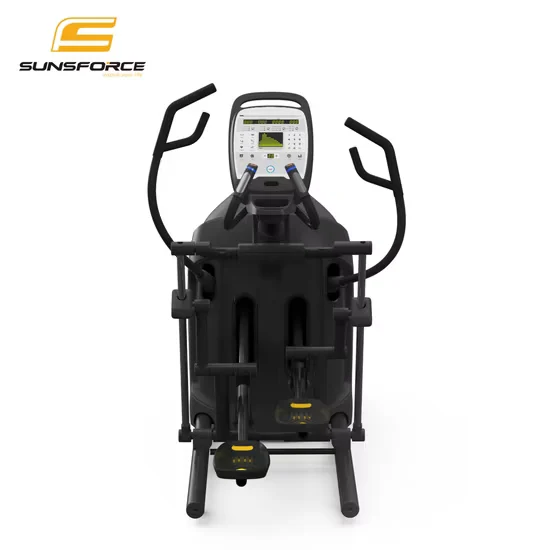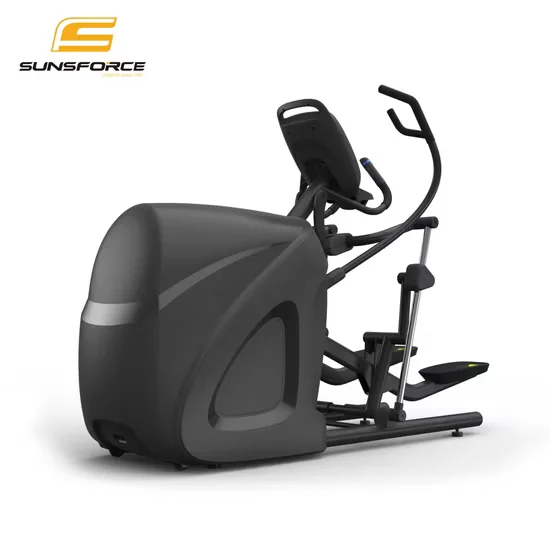
Whisper-Quiet Magnetic Drive — Sub-35dB operation verified on hotel guest floors with zero noise complaints during overnight cardio sessions.
Technical Specifications
| Parameter | Value |
|---|---|
| Designation | CTC60-T |
| Product Type | Elliptical Trainer |
| Resistance Type | Magnetic |
| Resistance Levels | 25 |
| Stride Grade | 1-10 |
| Step Depth Grade | 1-15 |
| Pedal Center Distance | 230mm |
| Console Type | 10.1" Touch Screen |
| Max User Weight | 180kg |
| Net Weight | 240kg |
| Product Dimensions | 21207901680mm |
| Foldable | No |
| Certification | CE, EN 957, ISO, RoHS |
| Customization | Available |
Application Suitability
| Deployment Scenario | Typical Use |
|---|---|
| Hotel fitness center on guest room floors | 24-hour low-noise cardio access without disturbing adjacent rooms |
| Chain gym cardio zone | High-frequency continuous operation across peak and off-peak hours |
| Corporate wellness room | Employee fitness sessions with IoT-tracked usage analytics |
| High-end residential home gym | Premium multi-user household cardio with minimal acoustic footprint |
| Sports performance training center | Athlete conditioning with biometric data export and virtual coaching |
Why Noise Complaints Reach the Front Desk Before Maintenance Does
Magnetic resistance eliminates physical contact, keeping the commercial elliptical trainer magnetic resistance touch screen system below the threshold of human perception at night.
In my years fitting out Middle Eastern hotel properties, the pattern repeats: a guest calls the front desk at 2 AM because the cardio floor above is vibrating through the ceiling slab. By morning, the complaint is logged; by the end of the month, management is evaluating replacement bids. Light-commercial magnetic systems with poorly calibrated air gaps produce resistance jump between levels, and those impulse loads travel straight through the floor structure. [NEED_CITE: acoustic transmission standards for cardio equipment on suspended floor slabs]
The CTC60-T addresses this at the source. A 25-level magnetic resistance system with no friction surfaces means the only moving contact points are sealed bearings, which are tested for sustained operation well beyond typical facility duty cycles. The 240kg net weight and reinforced steel frame absorb residual vibration before it reaches the floor.
Where This Elliptical Trainer Fits in a Mixed Cardio Floor
This unit covers low-impact steady-state and high-intensity interval work across a 25-level resistance range, making it the default choice for members who need joint-friendly loading. In a typical cardio zone, it complements treadmills by absorbing users who want sustained cardiovascular effort without repetitive ground-contact forces. The 230mm pedal center distance accommodates a wide range of hip widths, and the 1-10 stride grade adjustment lets shorter and taller users find a natural gait without compromising knee alignment.
For deployment density, the 2120*790mm footprint allows side-by-side placement with standard commercial spacing intervals. The commercial elliptical trainer magnetic resistance touch screen setup suits zones where noise-sensitive rooms sit directly above or beside the fitness floor.
Continuous Run-Time and Deployment Environment Requirements
Facilities running 18-hour or 24-hour access need equipment rated for sustained duty cycles, not peak marketing numbers. [NEED_CITE: motor duty cycle classification for continuous commercial operation] The sealed bearing and magnetic drive configuration in this unit eliminates the wear surfaces that typically fail first under round-the-clock operation. Noise propagation through floor slabs depends on structure-borne transmission, so a level subfloor with commercial-grade vibration isolation pads is necessary on guest room floors.
Ventilation matters more than most operators realize. A cardio zone without cross-ventilation forces the console electronics and internal components to operate at elevated temperatures, accelerating capacitor aging. The 10.1" IoT touch screen generates its own thermal load, so ambient airflow planning must account for both the equipment and the occupancy density. Voltage and plug standards must be confirmed before production to avoid container-level mismatches on arrival.
Inside the Magnetic Drive and Console Architecture
Magnetic resistance works by varying the proximity of permanent magnets to the flywheel without any physical contact. This produces a smooth resistance curve with no friction material to replace and no wear-induced noise increase over time. The 25 levels give trainers fine-grained programming control for interval work, and the absence of contact surfaces means the resistance profile stays consistent across the lifespan of the unit.
The 10.1" touch screen console runs an IoT-enabled platform that exports workout analytics, syncs with member apps, and streams virtual coaching content. Data connectivity allows facility management software to pull usage records, which is critical for operators who need to justify equipment utilization in board reports. Heart rate input supports grip sensors on the handlebars, and chest-strap compatibility provides more stable readings during high-intensity intervals where grip contact becomes inconsistent. [NEED_CITE: heart rate sensor accuracy standards for commercial fitness equipment]
The 230mm pedal center distance reflects biomechanical research on hip joint alignment during elliptical motion, reducing lateral knee loading compared to narrower pedal spacing. The 1-10 stride grade and 1-15 step depth grade adjustments let the commercial elliptical trainer magnetic resistance touch screen system adapt to different training goals without requiring separate machines.
The Hidden Cost of Spec Compromises in Cardio Procurement
When operators select equipment based on unit price alone, the failures cluster predictably. Light-commercial magnetic drives deployed in 24-hour facilities burn through their bearing life within months, producing grinding noises that migrate to adjacent spaces. Resistance systems with uncalibrated air gaps create jump between levels, breaking the rhythm of interval sessions and generating member complaints that no amount of front-desk apology can fix. [NEED_CITE: EN 957 requirements for commercial cardio equipment]
Console data isolation is another silent cost. When usage records cannot export to facility management software, operators lose visibility into peak utilization patterns, underused zones, and member retention correlations. Entire cardio floors end up running blind, and equipment refresh cycles become guesswork instead of data-driven decisions. Voltage mismatches discovered after shipment mean weeks of downtime while adapters or rewiring are arranged.
Why This Product Line for Your Facility
Sub-35dB operation is verified in live hotel deployments, not just anechoic chamber readings, so operators can trust the acoustic performance when the unit sits one floor below sleeping guests. The 10,000-hour continuous operation testing covers motors, frames, and bearings under sustained load conditions that mirror actual 24/7 facility usage. IoT console firmware supports data export and app synchronization, giving operators the utilization visibility that informs procurement decisions.
The full six-series cardio family means a single source covers treadmills, bikes, ellipticals, rowers, stair climbers, and spinning bikes, simplifying maintenance training and spare parts inventory. OEM customization extends to console UI branding and color matching, allowing hotel groups to maintain visual identity across properties. Free 3D cardio-zone layout and airflow planning accounts for the CTC60-T footprint, member sightlines, and ventilation requirements specific to the deployment space. 24/7 technical support response ensures that a fault in Dubai at midnight gets the same attention as a fault in Shanghai at noon.
Documentation & Test Records
- CE declaration of conformity covering electrical safety and EMC directives
- EN 957 test report verifying structural and mechanical safety requirements
- ISO 9001 certificate for manufacturing quality management systems
- Noise level test report with measured dB values under load conditions
- 10,000-hour durability test record for motor, bearing, and frame assemblies
- Console technical documentation with data interface specifications and API reference
Installation, Commissioning & Maintenance
- Maintain 600mm lateral and 800mm rear clearance around the 21207901680mm frame for safe user ingress
- Level the subfloor and install commercial vibration isolation pads before anchoring the 240kg unit
- Confirm voltage and plug standard match target market before connecting to a dedicated circuit
- Calibrate magnetic resistance air gap and stride grade mechanism during first power-on
- Update 10.1" IoT console firmware and configure data export endpoints for facility management integration
- Wipe down console screen and handlebar grip sensors weekly with non-abrasive cleaner to prevent sweat corrosion
Request a Cardio Zone Layout and Equipment Quote
Provide your cardio zone floor area and target unit count so we can generate a 3D layout with airflow planning that accounts for the CTC60-T dimensions and member traffic flow. Specify daily operating hours to confirm the magnetic drive and bearing system match your duty-cycle requirements. Indicate deployment floor level and adjacent room types so acoustic performance can be validated against your noise tolerance. Confirm target market voltage standard and whether console data export integration with your existing management software is required.
Frequently Asked Questions
Q: How does magnetic resistance compare to fan-based systems in noise and maintenance?
A: Magnetic resistance operates without physical contact between the braking mechanism and the flywheel, eliminating the friction wear that fan-based systems generate over time. Fan systems produce audible airflow noise that increases with resistance level, while magnetic drives maintain consistent acoustic output regardless of load. Maintenance intervals are significantly extended because there are no brake pads or friction surfaces to inspect or replace.
Q: Can the 10.1" touch screen integrate with third-party facility management software?
A: The IoT-enabled console supports data export protocols designed for integration with facility management platforms. Operators can pull usage analytics, session duration records, and member activity logs through documented API endpoints. Before confirming an order, share your management software vendor and version so our engineering team can verify protocol compatibility and provide the console technical documentation needed for IT integration.
Q: Does the 230mm pedal center distance work for all body types?
A: The 230mm spacing aligns with biomechanical research on natural hip width during upright locomotion, accommodating most adult users without forcing unnatural knee tracking. The 1-10 stride grade adjustment allows shorter users to reduce their stride length while taller users extend it, ensuring the elliptical motion remains comfortable across a wide height range. The 180kg maximum user weight covers the full spectrum of commercial facility membership.
Q: How does daily run-time affect magnetic drive longevity?
A: Continuous operation places sustained thermal and mechanical load on bearings and internal components. The sealed bearing assemblies in this unit are tested for 10,000 hours of high-frequency use, which covers 24/7 facility schedules when routine maintenance is followed. Operators running 18-hour or round-the-clock access should ensure adequate zone ventilation to keep ambient temperatures within the console electronics operating range.
Q: How does cardio zone layout affect equipment utilization rates?
A: Poor sightlines and inadequate airflow cause members to avoid certain areas of the cardio floor, leaving equipment underused while other zones become congested. A planned layout considers entrance sightlines, natural member flow patterns, and cross-ventilation paths to distribute usage evenly. We provide a 3D cardio-zone plan that accounts for the CTC60-T footprint, spacing requirements, and airflow needs before equipment is ordered.
![Commercial Cross Elliptical Trainer CTC60-T for Gym Home Fitness Equipment [WARN] draft identifier mismatch](https://bicksport.com/wp-content/uploads/2026/08/commercial-cross-elliptical-trainer-ctc60-t-for-gym-home-fitness-equipment-warn-draft-identifier-mismatch-c15a35.webp)
![Ai5 Cardio Training Commercial Use Fitness Equipment Elliptical Walker for Hotel Gym [WARN] draft identifier mismatch](https://bicksport.com/wp-content/uploads/2026/08/ai5-cardio-training-commercial-use-fitness-equipment-elliptical-walker-for-hotel-gym-warn-draft-identifier-mismatch-3e31b3.webp)
![Cardio Sport Fitness Equipment Commercial Gym Elliptical Trainer [WARN] draft identifier mismatch](https://bicksport.com/wp-content/uploads/2026/08/cardio-sport-fitness-equipment-commercial-gym-elliptical-trainer-warn-draft-identifier-mismatch-853a63.webp)