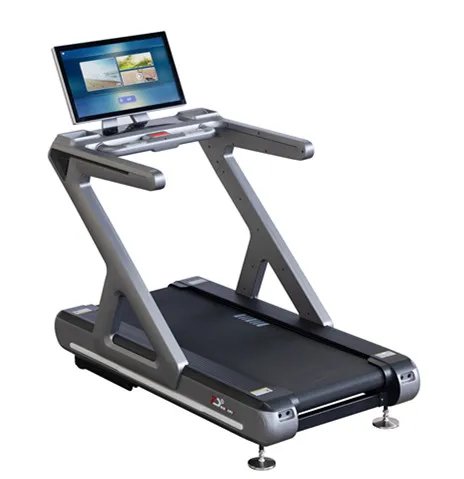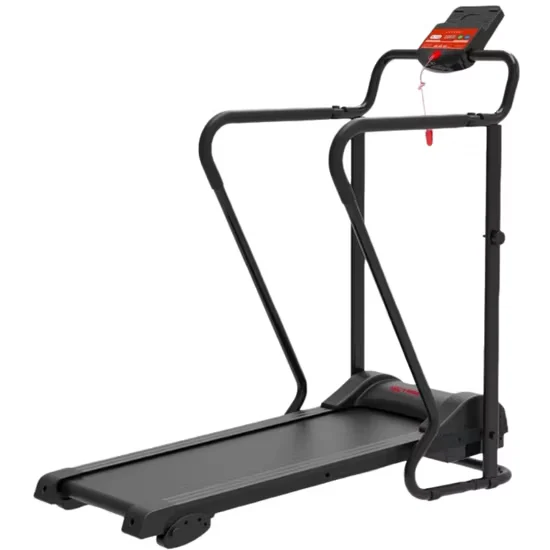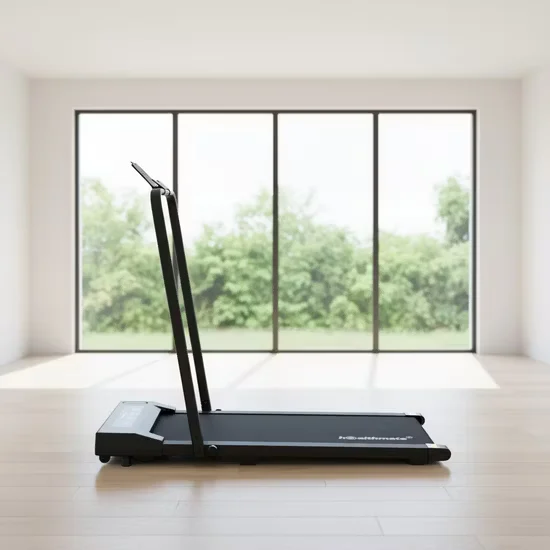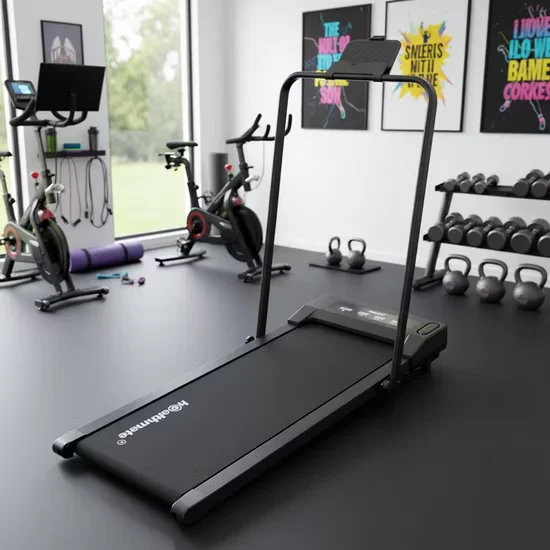
Motorized Walking Efficiency — Foldable commercial walking treadmill built with a motorized drive system, LED console tracking, and space-saving design for continuous light-duty deployment.
Technical Specifications
| Parameter | Value |
|---|---|
| Product Type | Foldable Treadmill |
| Motor Type | Motorized |
| Speed Range | 1–12 km/h |
| Maximum Speed | <15 km/h |
| Running Surface | 1000 x 400 mm |
| Console Type | LED Screen (Speed / Distance / Time / Calories) |
| Programs | 6 preset programs |
| Product Dimensions | 1250 x 590 x 1080 mm |
| Net Weight | 100–160 kg |
| Foldable | Yes |
| Certification | CE, RoHS |
| Color Options | Multicolor / Customized |
| Customization | Available (logo, packaging) |
| Age Group | Adult |
Application Suitability
| Deployment Scenario | Typical Use |
|---|---|
| Hotel fitness center on guest room floors | Compact cardio for walking and light jogging within limited square footage |
| Corporate wellness room | Employee health programs focused on low-impact walking routines |
| High-end residential home gym | Motorized walking solution with foldable storage for private fitness spaces |
| Light-commercial fitness center | Dedicated walking zone complementing higher-intensity cardio equipment |
Why Light-Commercial Treadmills Fail in Shared Spaces
Continuous operation demands exceed the thermal limits of undersized motors.
When a hotel installs residential-grade treadmills in a guest fitness room, the motors often run far beyond their rated duty cycles. We have seen units fail within months when exposed to eight or more hours of daily walking traffic. The commercial walking treadmill motorized foldable design addresses this by matching motor output to the expected runtime of shared wellness environments. Operators frequently discover that noise and heat buildup become secondary complaints only after the primary motor has already degraded [NEED_CITE: motor duty cycle classification for continuous commercial operation].
Walking-Focused Deployment Within Mixed Cardio Zones
This unit serves as a dedicated low-impact station within a broader cardio layout, handling walking and light jogging at speeds up to 12 km/h. In a mixed configuration, it complements ellipticals and rowing machines by offering a straightforward motorized walking experience without complex interface requirements. The commercial walking treadmill motorized foldable footprint fits compact wellness rooms, and its 1000 x 400 mm running surface accommodates adult users focused on steady-pace movement rather than sprint training.
Operational Runtime and Facility Environment Requirements
Deploying motorized walking equipment in hotel floors or residential buildings requires attention to vibration transfer and electrical load. The unit draws standard single-phase power, but facilities should confirm voltage and plug compatibility with the target market before shipment. Adequate clearance around the 1250 x 590 mm base supports airflow for motor cooling during extended sessions. Floor leveling and anti-vibration pads reduce structure-borne noise transmission to adjacent occupied rooms [NEED_CITE: EN 957 requirements for commercial cardio equipment deployment].
Motor and Drive System Engineering Notes
The motorized drive delivers speeds from 1 to 12 km/h, a range calibrated for walking and light jogging rather than high-intensity running. DC motors in this class prioritize consistent torque at lower speeds, which aligns with the continuous low-load profile of walking traffic. Unlike AC motors found on heavy-duty running treadmills, the DC configuration here keeps electrical consumption moderate while maintaining belt movement stability. The LED console displays speed, distance, time, and calorie estimates across six preset programs, providing users with essential feedback without requiring network connectivity or touchscreen interaction.
The Cost of Underspecified Walking Equipment
Facilities that deploy home-grade walking treadmills in commercial settings often face cascading failures. Motors rated for intermittent home use overheat and burn out under continuous guest traffic. Noise levels that seem acceptable in a showroom become disruptive on a quiet hotel floor at night. Operators end up replacing entire batches rather than repairing individual units, incurring downtime and procurement delays. Voltage mismatches discovered after container arrival force costly rewiring or adapter installations that compromise electrical safety [NEED_CITE: continuous duty motor failure rates in light-commercial fitness deployments].
Why This Product Line Supports Facility Planning
Biketon Sport engineers walking and cardio equipment with verified noise performance, having deployed sub-35dB units in hotel environments where guest rooms sit directly above the fitness floor. Components undergo 10,000-hour durability testing to confirm motor and bearing longevity under high-frequency use. The foldable frame design supports flexible space planning, and the 3D cardio zone layout service accounts for this unit’s footprint and clearance requirements alongside complementary equipment. Full OEM customization extends to logo application, packaging, and console interface adjustments. Technical support remains available around the clock for commissioning and spare parts coordination.
Documentation & Test Records
- CE declaration of conformity for commercial walking treadmill export markets
- EN 957 test report covering structural and operational safety requirements
- ISO 9001 certificate confirming quality management in manufacturing
- RoHS compliance documentation for restricted substance verification
- Motor specification sheet detailing continuous duty and thermal ratings
- LED console technical documentation with program and display parameters
Installation, Commissioning & Maintenance
- Maintain minimum clearance around the 1250 x 590 mm base for motor ventilation and user safety
- Level the running surface and install anti-vibration pads to minimize floor-transmitted noise
- Verify single-phase voltage and plug type match the facility electrical standard before first power-on
- Run the belt at low speed during initial commissioning to check tracking and tension alignment
- Inspect belt tension and deck lubrication at intervals specified in the maintenance guide
- Wipe the LED console and handrails daily to prevent sweat corrosion on electronic contacts
Equipment Selection and Facility Matching
Provide your cardio zone square footage and intended unit count to receive a 3D layout with airflow and sightline planning. Specify the expected daily runtime so we can confirm the motor duty cycle matches your operational profile. Indicate the deployment floor and adjacent room types to verify noise transmission compatibility. Confirm your target market voltage and plug standard to ensure electrical readiness upon arrival. State whether the LED console data needs to interface with any facility management or member tracking systems.
Frequently Asked Questions
Q: What is the difference between continuous and peak motor power on a walking treadmill?
A: Peak power describes the maximum output a motor can sustain for brief bursts, while continuous power reflects what it can deliver indefinitely under load. Commercial walking environments require motors rated for continuous duty because guests use the equipment throughout the day. Selecting a unit based only on peak ratings risks premature motor failure under sustained operation.
Q: How does a foldable treadmill compare to a fixed-frame model for daily commercial use?
A: Foldable frames offer space efficiency for compact hotel and residential fitness rooms, allowing the unit to be stored when the area serves other functions. Fixed-frame models generally provide greater structural rigidity for high-volume running. For walking-focused, light-commercial deployment where floor space is limited, the foldable design offers practical flexibility without compromising walking performance.
Q: Can the LED console on this treadmill connect to facility management software?
A: The standard LED console displays speed, distance, time, and calories across six preset programs without built-in network connectivity. Facilities requiring data integration with management systems should discuss console customization options during the specification phase. Alternative console configurations may be available to support app synchronization or usage tracking depending on project requirements.
Q: What noise considerations apply when deploying this treadmill on a hotel guest floor?
A: Motorized walking treadmills generate both airborne and structure-borne noise during operation. Proper floor leveling, anti-vibration pads, and adequate clearance around the unit help minimize transmission to adjacent rooms. Requesting a noise level test report before procurement allows operators to verify that the unit meets the acoustic expectations of quiet guest floor environments.
Q: How do I confirm voltage and plug compatibility before ordering?
A: Specify the target market and facility electrical standard during the inquiry stage so the correct voltage configuration and plug type can be built into the unit. Mismatches discovered after shipment require costly adapters or rewiring that may compromise safety certifications. The manufacturer can provide a motor specification sheet confirming the electrical configuration before production begins.