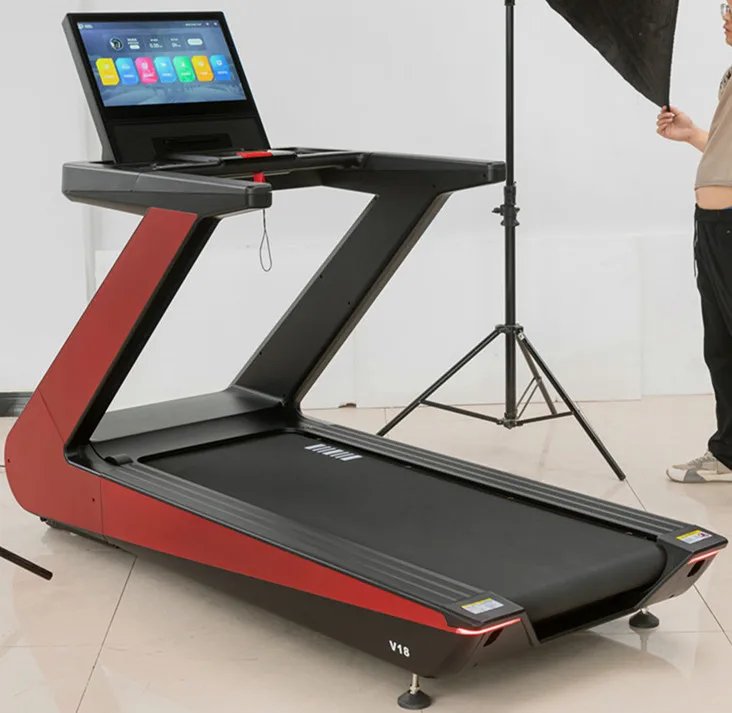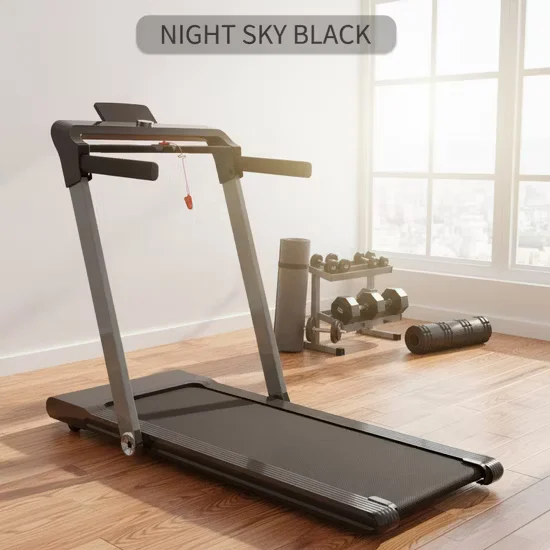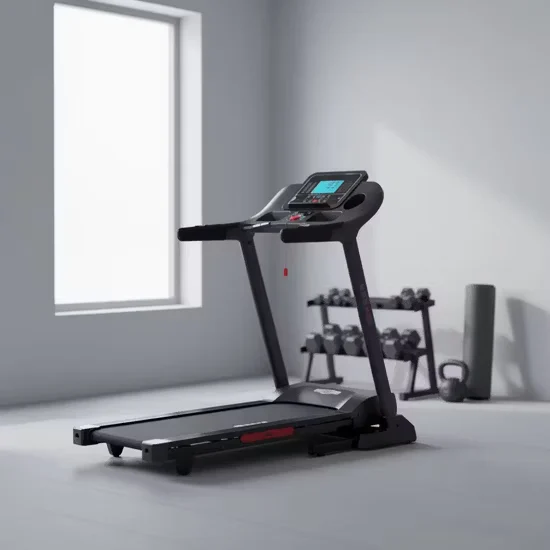
MT296 ABS Electric Home Treadmill for Professional Training
Acoustic and Space Optimization — A foldable DC motor platform engineered for shared residential and light-commercial fitness spaces where noise and footprint dictate deployment choices.
Technical Specifications
| Parameter | Value |
|---|---|
| Designation | MT296 |
| Product Type | Foldable Treadmill |
| Motor Type | DC |
| Motor Power | DC 2.0 HP (peak or continuous not specified in source) |
| Speed Range | 1-20 km/h |
| Running Surface | 1200 x 520 mm |
| Console Type | LCD (Speed / Distance / Time / Calories / Pulse) |
| Programs | 16 |
| Product Unfold Size | 1580 x 865 x 1300 mm |
| Product Folded Size | 910 x 865 x 1345 mm |
| Net Weight | 64.0 kg |
| Material | ABS |
| Foldable | Yes |
| Certification | CE, RoHS |
Application Suitability
| Deployment Scenario | Typical Use |
|---|---|
| High-end residential home gym | Daily personal training with space-efficient folding storage when the room serves multiple functions. |
| Corporate wellness room | Supplementary cardio equipment in multi-use facilities where permanent floor commitment is restricted. |
| Boutique fitness studio | Auxiliary treadmill capacity alongside primary strength or group-training zones without fixed installation. |
| Light-commercial fitness facility | Moderate daily duty cycle cardio deployment in community centers or residential clubhouses. |
Why Noise Complaints Reach the Front Desk Before Maintenance Does
A DC motor paired with a foldable frame targets the exact environments where acoustic pressure and spatial limits collide.
When treadmills are placed on guest room floors or inside shared residential buildings, the low-frequency hum from an underspecified drive system travels through concrete before anyone notices a mechanical fault. Maintenance teams receive the noise complaint, not the engineering department. The MT296 addresses this operational reality with a DC motor architecture that keeps acoustic output manageable in noise-sensitive zones, while the foldable frame allows the equipment to be stored vertically when the room transitions to other uses. [NEED_CITE: acoustic propagation of treadmill vibration through multi-story concrete structures]
Positioning the MT296 in a Compact Cardio Zone
This foldable commercial treadmill DC motor configuration serves moderate-intensity steady-state and interval walking or running within a speed envelope that accommodates most recreational fitness users. In a mixed cardio layout, it pairs well with stationary bikes and ellipticals to provide impact-based locomotion variety without demanding the permanent footprint of a heavy commercial unit. The 1200 x 520 mm running surface supports a range of user statures for walking and controlled running sessions.
Continuous Duty and Deployment Environment Requirements
Operating a treadmill in a shared residential or boutique environment means the motor experiences intermittent use patterns rather than the non-stop cycles of a large chain gym, but the duty cycle still exceeds typical household assumptions. Proper ventilation around the motor housing prevents thermal buildup during consecutive user sessions. Facility managers should verify that the power supply matches the local voltage standard before deployment to avoid premature motor stress. A level floor with vibration-damping matting reduces structural transmission of impact noise to adjacent rooms. [NEED_CITE: motor thermal management requirements for intermittent commercial cardio operation]
Interpreting the Drive and Control Specifications
The DC motor in this unit is suited for moderate daily use rather than continuous high-frequency commercial operation, where AC motors typically sustain higher thermal loads over extended run-times. The distinction between peak and continuous horsepower matters here — a rating that does not specify continuous duty may reflect momentary output rather than sustained load capacity, and buyers should verify this against the manufacturer specification sheet before finalizing procurement. The LCD console provides real-time readouts for speed, distance, time, calories, and pulse, giving users foundational workout feedback across 16 preset programs. Pulse measurement through handlebar sensors offers convenience, though users performing high-intensity intervals may experience reading lag compared to chest-strap monitors. The 16-program selection covers varied pacing structures for users who prefer guided sessions over manual speed adjustment.
The Hidden Cost of Specification Compromise
Deploying a treadmill with a motor rated for household duty cycles in a facility that sees consecutive daily users leads to thermal degradation and eventual motor failure long before the expected service interval. Noise that seems acceptable during a showroom demonstration becomes a source of tenant or guest complaints once the unit operates in a living environment above occupied rooms. Equipment selected without verifying voltage compatibility arrives in-market requiring transformer solutions or complete replacement, delaying facility opening and inflating project costs beyond the initial procurement budget. [NEED_CITE: failure rate comparison between residential and light-commercial treadmill motors in shared facilities]
Why This Product Line Exists
Every unit in this cardio range undergoes durability verification protocols that extend beyond standard factory run-tests, including extended motor and bearing endurance cycles. The sub-35dB acoustic target applies across the product family, validated in hotel deployments where equipment operates directly above occupied guest rooms. IoT-enabled console options are available across the broader lineup for facilities requiring member tracking and usage analytics integration. The six-series cardio catalog means a single product line covers treadmills, bikes, ellipticals, rowers, stair climbers, and spin bikes, reducing the number of vendor relationships a facility must manage. OEM customization extends to console interface design, allowing branded user experiences. Free 3D cardio-zone layout planning addresses sightlines, member flow, and equipment spacing specific to the foldable footprint of units like this one.
Documentation & Test Records
- CE declaration of conformity for market entry compliance
- EN 957 test report covering structural and safety requirements
- ISO 9001 certificate for manufacturing quality management
- RoHS compliance documentation for restricted substance verification
- Noise level test report confirming acoustic performance in operational conditions
- Motor specification sheet detailing duty cycle and thermal ratings
Installation, Commissioning & Maintenance
- Position the 1580 x 865 mm footprint with adequate clearance behind the deck for safe user mounting and dismounting.
- Install vibration-damping matting beneath the 64 kg frame to limit structural noise transfer to floors below.
- Confirm voltage compatibility and dedicate a circuit to prevent power fluctuation affecting the DC motor controller.
- Calibrate the LCD console speed and distance readings during initial commissioning before opening to users.
- Inspect the running belt tension and alignment at scheduled intervals to prevent uneven wear on the 1200 x 520 mm surface.
- Wipe down the ABS housing and console after each operating day to prevent sweat corrosion on electronic contacts.
Equipment Selection and Next Steps
Provide the cardio zone dimensions and target unit count to receive a 3D layout that accounts for the foldable storage positions and operational clearance this model requires. Specify the expected daily operating hours so the motor duty cycle can be matched to actual facility usage patterns. Confirm the deployment floor level and adjacent room types to validate the acoustic suitability for your specific environment. State the target market voltage and plug standard to ensure production configuration matches on-site electrical infrastructure.
Frequently Asked Questions
Q: What is the difference between continuous duty and peak horsepower in DC treadmill motors?
A: Peak horsepower reflects the maximum output a motor can produce momentarily during acceleration or heavy load, while continuous duty describes the sustained output it can maintain without thermal degradation. A motor rated only for peak output may overheat during extended use in commercial settings. Buyers should request the manufacturer specification sheet to confirm whether the published rating reflects continuous duty or peak output before committing to volume procurement.
Q: How does a foldable treadmill frame affect structural rigidity and running stability?
A: Foldable frames incorporate hinge mechanisms that introduce potential flex points compared to fixed-frame commercial units. Engineering quality determines whether the hinge maintains rigidity under dynamic running loads or develops lateral movement over time. The MT296 uses a foldable architecture designed for moderate-intensity use in space-constrained environments, balancing storage flexibility with the structural demands of regular walking and running sessions.
Q: Can the LCD console data be integrated with facility management or member tracking software?
A: The standard LCD console on this model displays speed, distance, time, calories, and pulse for individual workout feedback. Facilities requiring automated data capture and integration with management systems should explore the IoT-enabled console options available across the broader product range, which support workout analytics and application synchronization for member tracking and usage reporting.
Q: What noise level considerations apply when deploying treadmills in residential or shared spaces?
A: Treadmill noise includes motor hum, belt friction, and footstrike impact transmitted through the frame into the floor structure. Deployments above occupied rooms require attention to vibration isolation through damping mats and proper floor leveling. Requesting a noise level test report from the manufacturer helps verify acoustic performance under operational conditions before installing equipment in noise-sensitive environments such as hotel guest floors or apartment-adjacent fitness rooms.
Q: How does running surface size influence user comfort and long-term joint impact?
A: A running surface measuring 1200 x 520 mm provides adequate width for comfortable walking and controlled running for most users. Narrower or shorter belts force gait adjustments that increase joint stress over extended sessions. Users with longer strides or those performing higher-speed running may prefer larger commercial surfaces, but this dimension suits the moderate-intensity profiles typical of residential and light-commercial deployments.