Frequently Asked Questions
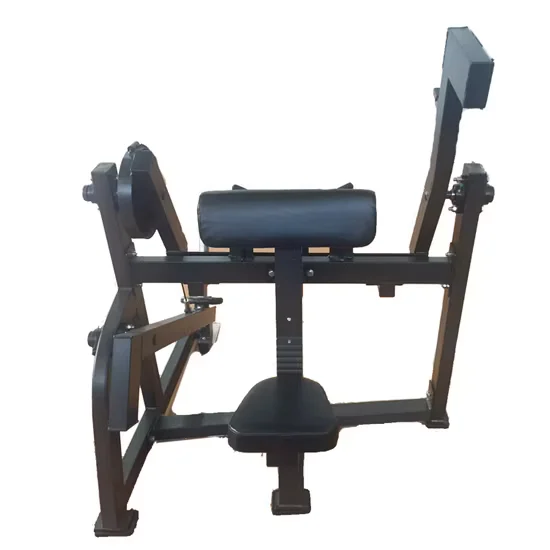
Q: How does an ISO lateral press differ from a standard flat bench press in movement path?
A: A standard flat bench requires the lifter to stabilize the barbell freely, engaging significant shoulder and triceps synergy. The ISO lateral press guides the arms along a fixed converging arc, isolating the pectoral muscles more strictly and reducing shear forces on the glenohumeral joint. This makes it suitable for members training without a spotter or those managing shoulder sensitivity.
Q: How should I evaluate frame rigidity when comparing commercial strength equipment?
A: Request the tube wall thickness and cross-section dimensions rather than relying on total machine weight alone. A heavier frame built with thin-walled large-diameter tubing may feel solid initially but develops flex over thousands of cycles. Ask for the manufacturer’s cyclic load test record to see how the frame performs under repeated loading.
Q: Does the 170 kg machine weight eliminate the need for floor anchoring?
A: In most commercial environments, the 170 kg self-weight combined with a level floor and rubber matting provides adequate stability without anchor bolts. However, facilities on elevated floors or those subject to seismic codes should consult a structural engineer. The installation guide specifies anchor-point locations if bolting is required by local regulations.
Q: What is the minimum order for custom frame color and logo placement?
A: Customization covers powder-coat color, logo application on the frame, and pad upholstery selection. Minimum order quantities are flexible and depend on the scope of changes requested. Contact the sales team with your facility’s color codes and artwork files to receive a customization scoping quotation.
Q: How should I plan the spacing between multiple plate-loaded units in a strength zone?
A: Allow a minimum of 800 mm between adjacent units to accommodate plate loading and member movement. The 3D layout service calculates exact spacing based on your room dimensions, pillar locations, and member traffic patterns, ensuring that loaded bars and plates do not encroach on neighboring stations or walkways.

![Commercial Strength Back Extension Machine for Gym Equipment [WARN] draft identifier mismatch](https://bicksport.com/wp-content/uploads/2026/08/commercial-strength-back-extension-machine-for-gym-equipment-warn-draft-identifier-mismatch-033601.webp)
![Plate Loaded Hammer Strength Utility Bench 75 Degree Sports Equipment for Commercial Gyms [WARN] draft identifier mismatch](https://bicksport.com/wp-content/uploads/2026/08/plate-loaded-hammer-strength-utility-bench-75-degree-sports-equipment-for-commercial-gyms-warn-draft-identifier-mismatch-010c0c.webp)