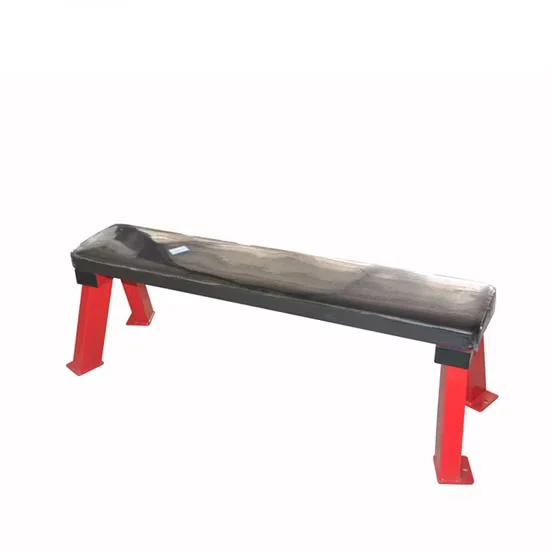
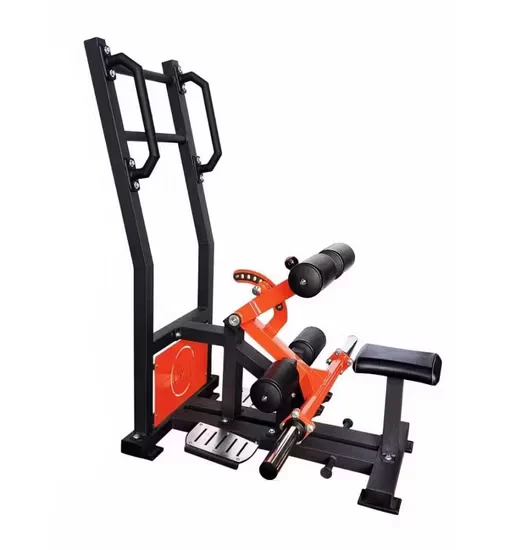
![Commercial Strength Back Extension Machine for Gym Equipment [WARN] draft identifier mismatch](https://bicksport.com/wp-content/uploads/2026/08/commercial-strength-back-extension-machine-for-gym-equipment-warn-draft-identifier-mismatch-033601.webp)
Whisper-Quiet Frame Design — Manual bodyweight resistance eliminates motor noise entirely, verified for mixed-use floors where acoustic bleed triggers complaints.
Technical Specifications
| Parameter | Value |
|---|---|
| Product Type | Back Extension Machine |
| Resistance Type | Manual (bodyweight) |
| Frame Material | Steel |
| Product Dimensions | 1552 × 771 × 876 mm |
| Net Weight | 42 kg |
| Foldable | Unfolded |
| Exercise Target | Back |
| Appliance | Gymnasium |
| Customization | Available |
| Certification | ISO 9001, CE |
Application Suitability
| Deployment Scenario | Typical Use |
|---|---|
| Hotel fitness center on guest room floors | Core and posterior chain work without motor vibration transferring through floor slabs |
| Chain gym strength zone | High-frequency back extension training between free-weight stations |
| Corporate wellness room | Compact posterior chain station for time-limited lunch-break sessions |
| High-end residential home gym | Low-maintenance bodyweight training alongside cardio equipment |
| Sports performance training center | Controlled lumbar and glute activation for athlete conditioning programs |
Why Noise Complaints Reach the Front Desk Before Maintenance Does
Zero motor, zero vibration transfer — the frame itself becomes the noise floor.
In mixed-use hotel deployments, the sound path from a strength zone to occupied rooms below runs straight through the floor slab. Traditional selectorized back extension machines with weight stacks generate metallic clatter on every rep, and that impulse noise travels as structure-borne vibration long before airborne sound does. When we first supplied cardio floors above conference rooms, the acoustic feedback forced us to rethink every piece of equipment sharing that slab. A manual-resistance commercial back extension machine gym operators place on upper floors produces no motor hum, no weight-stack slam, and no belt-drive whine — only pad contact and controlled breathing [NEED_CITE: structure-borne vibration transmission standards for fitness equipment on suspended floor slabs].
Where This Back Extension Machine Fits in the Strength Layout
The commercial back extension machine gym configurations rely on targets the lumbar erectors, glutes, and hamstrings through a controlled hip-hinge arc. It occupies a mid-intensity niche between heavy compound lifts and accessory isolation work, complementing squat racks and cable columns without duplicating their movement patterns. The 1552 × 771 mm footprint allows placement along perimeter walls where sightlines remain open, and the bodyweight resistance mechanism accommodates users across a wide strength spectrum without manual weight-plate loading. Data capture is limited to rep counting by external sensors or console-equipped adjacent units, keeping this station focused on movement quality rather than telemetry.
Continuous-Use Demands on a Motorless Frame
Without a motor or electronic console, the commercial back extension machine gym operators deploy still faces fatigue cycles — just mechanical ones. The welded steel frame must withstand repeated eccentric loading at the pivot point, and the pad upholstery must resist compression set across thousands of daily repetitions [NEED_CITE: EN 957 structural loading requirements for bodyweight strength equipment]. Deployment on upper floors requires rubber isolation pads beneath the feet to prevent micro-vibration from pad contact transmitting through the slab. Ambient ventilation remains relevant because users performing high-rep posterior chain work generate localized heat, and inadequate airflow in tightly packed strength zones accelerates pad material degradation from perspiration exposure.
Decoding the Structural and Ergonomic Specifications
The 42 kg net weight anchors the frame against tipping during loaded hip extension without requiring floor bolt-down in most commercial installations. Steel construction at this mass indicates reinforced tubing at the pivot junction — the highest-stress node where user weight transfers through the fulcrum during each repetition. Manual bodyweight resistance means the loading curve is governed entirely by torso angle relative to gravity, giving a progressive resistance profile that peaks at horizontal and unloads at vertical. Pad density and cover material dictate long-term comfort: high-density foam resists permanent deformation under continuous commercial use, while vinyl or PU leather covers must withstand sweat-borne salt corrosion. The 876 mm height positions the hip pad at a comfortable entry point for users of varying stature without requiring step-up platforms.
What Spec Compromises Cost in Strength Equipment
Light-gauge steel frames on back extension stations begin developing lateral play at the pivot bearing within months of continuous gym use, producing audible knocking that members interpret as equipment failure. Low-density pad foam compresses permanently under high-frequency loading, shifting the hip contact point and altering the resistance curve in ways that cause lower-back discomfort and member attrition. Vinyl covers that lack sweat-resistant treatment crack at the seams, forcing full pad replacement rather than simple cover swaps [NEED_CITE: commercial upholstery degradation patterns in high-frequency fitness environments]. Undersized footplate platforms cause user instability during decline-angle repetitions, increasing fall risk and liability exposure for facility operators.
Why This Product Line Earns Its Floor Space
Sub-35 dB acoustic verification across our cardio range means we evaluate every strength station sharing that floor for structure-borne noise contribution, and this motorless back extension unit registers at ambient baseline. The 10,000-hour durability testing protocol applied to our drive systems extends to frame fatigue cycling at the pivot junction on strength units. Full OEM and ODM capability covers pad color, frame finish, and logo placement to match facility branding without tooling charges at volume. Our 3D cardio-zone layout service incorporates strength equipment placement with the same airflow and sightline analysis used for treadmill rows, ensuring the commercial back extension machine gym planners specify does not create dead corners or obstruct cross-ventilation paths. Complete six-series cardio family sourcing from one line reduces procurement complexity when facilities outfit both zones simultaneously. Documentation packages include EN 957 structural test reports specific to the frame and pivot assembly.
Documentation & Test Records
- CE declaration of conformity covering structural and mechanical safety
- EN 957 test report for static and dynamic frame loading
- ISO 9001 quality management system certificate
- Noise level test record confirming motorless baseline operation
- Durability test record on pivot bearing and frame fatigue cycles
- Pad material specification sheet with compression-set data
Installation, Commissioning & Maintenance
- Position with minimum 600 mm clearance on all sides for safe user entry and exit within the 1552 × 771 mm footprint
- Place rubber isolation pads beneath all four feet to decouple structure-borne vibration from floor slab
- Verify floor levelness before final placement; shim as needed to eliminate frame rock at the pivot junction
- Inspect pivot bearing smoothness and hip-pad angle adjustment mechanism before opening to members
- Schedule pad foam compression checks and vinyl cover inspection quarterly under high-frequency commercial use
- Wipe down pads and frame contact points daily with pH-neutral cleaner to prevent sweat-induced corrosion
Equipment Selection and Inquiry Guidance
Provide your strength-zone floor area and planned equipment list to receive a 3D layout incorporating airflow and member-flow analysis. Specify daily usage hours and user volume so we can confirm frame fatigue ratings match your facility’s throughput. Identify the deployment floor and adjacent occupied spaces to determine whether additional vibration isolation is required. State your target market voltage standards so adjacent cardio equipment in the same zone ships with matching power configurations.
Frequently Asked Questions
Q: How does manual bodyweight resistance compare to selectorized weight-stack back extension machines in maintenance cost?
A: Manual resistance eliminates cables, pulleys, weight-stack guide rods, and selector pins — every component that requires lubrication, alignment, and eventual replacement on loaded machines. Maintenance reduces to pivot bearing inspection and pad condition checks, cutting scheduled service visits and spare-parts inventory substantially.
Q: What noise and vibration concerns arise when placing strength equipment alongside cardio on the same floor?
A: Weight-stack machines generate impulse noise on every rep that transmits through floor slabs as structure-borne vibration, reaching occupied rooms below before airborne sound does. A bodyweight back extension station produces no mechanical impact, making it suitable for mixed-use floors where acoustic separation is limited.
Q: What load rating should a commercial back extension frame meet for high-frequency gym use?
A: Commercial frames must withstand repeated eccentric loading at the pivot junction without developing lateral play or weld fatigue. EN 957 testing validates both static load capacity and dynamic cycling endurance, ensuring the frame maintains structural integrity across years of continuous member use.
Q: How does pad material selection affect long-term user comfort and replacement intervals?
A: High-density foam resists compression set under repeated loading, maintaining consistent hip contact geometry across thousands of daily repetitions. Sweat-resistant vinyl or PU covers prevent seam degradation and salt corrosion, extending service intervals and reducing total cost of ownership in humid or high-throughput environments.
Q: How should strength and cardio zones be planned together for airflow and member flow?
A: Integrated 3D layout planning accounts for equipment spacing, cross-ventilation paths, and sightlines across both zones simultaneously. Placing low-profile bodyweight stations along perimeter walls preserves open airflow corridors and prevents strength equipment from creating visual barriers that make cardio areas feel congested.