10,000-Hour Endurance Validation — Every Linear Hack Press unit cycles through accelerated fatigue testing on linear bearings and frame welds, simulating years of 24/7 plate-loaded operation before leaving the floor.
Technical Specifications
| Parameter | Value |
|---|---|
| Product Type | Plate Loaded Linear Hack Press Machine |
| Model NO. | 5038 |
| Exercise Part | Leg |
| Drive Type | Linear guided rail |
| Resistance Type | Plate loaded |
| Max User Weight | 180kg |
| Material | Steel |
| Product Dimensions | 2375 x 1500 x 1475mm |
| Net Weight | 250kg |
| Certification | ISO 9001, CE |
Application Suitability
| Deployment Scenario | Typical Use |
|---|---|
| hotel fitness center on guest room floors | Lower-body strength training in compact, noise-sensitive environments adjacent to occupied rooms |
| chain gym cardio zone | High-frequency leg conditioning between cardio stations for full-body circuit programming |
| corporate wellness room | Guided linear pressing for employees with limited free-weight experience |
| high-end residential home gym | Heavy-duty leg development without the spatial footprint of a full squat rack |
| sports performance training center | Athlete-grade bilateral and unilateral leg pressing with consistent linear resistance path |
What Frame Flex Reveals About Long-Term Member Retention
Stiffness under load separates commercial leg equipment from light-duty substitutes.
When a hack press frame deflects visibly under moderate plate loads, the linear rail binding increases and the carriage develops lateral play. Members notice the grinding sensation during descent, and within months the sealed bearings begin wearing unevenly. In facilities running strength zones across double shifts, premature bearing failure disrupts training schedules and erodes equipment trust [NEED_CITE: structural rigidity requirements for plate-loaded linear motion equipment in commercial facilities].
Linear Motion in the Strength Equipment Ecosystem
This commercial plate loaded linear hack press machine covers the full bilateral and unilateral leg pressing spectrum, complementing free-weight squat racks and leg extension stations in a complete lower-body training zone. The true linear carriage path delivers consistent resistance from full extension to deep flexion, making it suitable for high-density commercial deployments where guided movement reduces supervision demands. It accommodates users across a wide anthropometric range, supporting progressive overload without requiring spotters. The equipment collects no biometric data and resistance is adjusted manually through plate addition.
Continuous Operation and Spatial Deployment Requirements
Daily duty cycles in commercial strength zones demand equipment that tolerates repeated heavy loading without rail deformation or bearing contamination. The 250kg steel frame anchors firmly to level flooring, and the 2375 x 1500mm footprint requires adequate clearance on all sides for safe plate loading and member passage [NEED_CITE: minimum clearance standards for plate-loaded strength equipment deployment]. Facilities planning strength zones should account for adjacent equipment sightlines and member traffic flow when positioning linear press units. The all-mechanical design eliminates electrical requirements, simplifying power circuit planning in multi-equipment installations.
Bearing Architecture and Resistance Curve Mechanics
The sealed linear bearing system runs on hardened guide rails, isolating the carriage from chalk dust, sweat, and airborne contaminants common in high-traffic gym environments. Unlike angled hack squat machines where gravitational force vectors shift through the range of motion, true linear designs maintain a constant resistance profile from top to bottom. The plate-loaded mechanism requires no electrical motor, eliminating the thermal management concerns that plague motorized resistance systems under continuous operation. Frame welds and mounting points endure cyclic loading forces that scale directly with user weight plus external plates, making steel section thickness and joint geometry critical variables in long-term structural integrity.
The Hidden Cost of Underspecified Frame Construction
Commercial facilities installing light-duty plate loaded equipment frequently encounter frame cracking at high-stress weld junctions within the first year of heavy rotation. Bearing systems lacking proper seals absorb contaminants rapidly, developing audible grinding and requiring replacement far earlier than projected maintenance schedules [NEED_CITE: bearing service intervals in contaminated commercial gym environments]. When linear rail alignment degrades, the carriage binds during descent, creating abrupt resistance spikes that compromise exercise quality. Operators replacing failed units face member dissatisfaction, downtime during reinstallation, and repeated capital expenditure that could have been avoided through initial specification rigor.
Why This Product Line Fits Commercial Deployment
Every unit undergoes continuous cycling tests on frame welds, bearing assemblies, and plate-loading mechanisms to verify structural endurance. The reinforced steel construction targets facilities operating strength zones across extended hours without scheduled maintenance windows between sessions. Facility planners receive 3D strength zone layouts mapping equipment spacing, member flow corridors, and plate storage proximity for efficient zone design [NEED_CITE: commercial strength zone spatial planning guidelines]. Full OEM capability covers frame color, logo placement, and accessory mounting configurations. The complete six-series cardio and strength family allows sourcing every equipment category from a single production line, and 24/7 technical support addresses commissioning questions and field diagnostics.
Documentation & Test Records
- CE declaration of conformity for commercial strength equipment
- EN 957 test report covering structural integrity and safety requirements
- ISO 9001 manufacturing quality system certificate
- Frame durability test record documenting continuous cyclic loading results
- Sealed bearing specification sheet with service interval recommendations
- Installation guide with leveling procedures and anchor point specifications
Installation, Commissioning & Maintenance
- Position on level flooring with minimum clearance on all sides for safe plate loading and member egress
- Verify floor load capacity supports 250kg equipment weight plus maximum user and plate load combined
- Conduct full-range carriage travel test before opening to members, checking for binding or lateral play
- Inspect sealed bearings quarterly for contamination ingress and audible grinding during loaded operation
- Clean guide rails monthly with non-abrasive solvent to prevent chalk and sweat residue accumulation
- Tighten all frame fasteners at commissioning and at scheduled intervals per maintenance documentation
Equipment Selection and Procurement Process
Provide your strength zone dimensions and intended equipment list to receive a 3D layout covering traffic flow, plate storage proximity, and safe spacing between stations. Specify expected daily usage hours and peak member throughput to confirm that frame and bearing specifications match your operational demands. Indicate target market voltage standards if integrating any electronically monitored accessories. Communicate whether console data interfaces or facility management system connections are required for adjacent cardio equipment in the same deployment.
Frequently Asked Questions
Q: How does frame construction affect equipment lifespan in 24/7 commercial environments?
A: Commercial facilities running strength equipment across extended shifts generate cyclic loading forces that expose frame weaknesses over time. Reinforced steel construction with adequate section thickness resists fatigue cracking at high-stress weld junctions, while underspecified frames develop visible deflection and eventual structural failure. The durability test record documents how this unit withstands continuous loading cycles representative of high-frequency commercial operation.
Q: What maintenance is required for sealed bearing systems in high-traffic gyms?
A: Sealed bearings in plate loaded equipment are designed to exclude chalk dust, sweat, and airborne contaminants that degrade unsealed systems rapidly. Quarterly inspection checks for contamination ingress, audible grinding, and lateral play in the carriage assembly. The bearing specification sheet documents recommended service intervals and replacement procedures specific to this linear motion system.
Q: How does linear motion design improve exercise effectiveness compared to angled hack squat?
A: True linear motion maintains a constant resistance curve throughout the full range of movement, whereas angled designs experience gravitational vector shifts that alter perceived load at different joint angles. Linear paths also simplify movement patterning for users unfamiliar with free-weight technique. The consistent resistance profile supports progressive overload programming without requiring spotter assistance during heavy loading sessions.
Q: What weight capacity and user specifications should commercial facilities require?
A: Commercial strength equipment must accommodate the full anthropometric range encountered in public fitness facilities. This unit supports a maximum user weight of 180kg, consistent with commercial range standards across the product line. Facilities should verify that both user capacity and plate loading capacity meet their member demographics and anticipated training intensity requirements.
Q: How to plan strength zone layout for optimal member flow and equipment utilization?
A: Effective strength zone planning accounts for equipment footprint, safe clearance for plate loading, member traffic corridors, and sightlines between stations. The 3D layout service maps these variables across your available floor space, positioning equipment to minimize congestion during peak hours. Proper planning prevents underutilized dead zones and ensures that complementary equipment groupings support efficient circuit training progression.

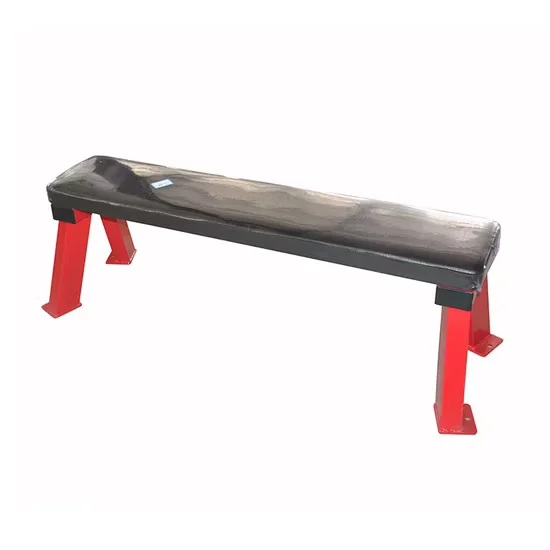
![High Quality Hammer Strength Equipment ISO-Lateral Horizontal Bench Press **1. 评估原标题与产品模式** * **原标题**:High Quality Hammer Strength Equipment ISO-Lateral Horizontal Bench Press * **产品草稿信息**: * `product_mode`: designation ( designation 模式,意味着需要处理型号) * `identifier`: H5017 * `product_type`: ISO-Lateral Horizontal Bench Press (Strength Equipment) * **交叉校验**:原标题中**没有**包含具体型号(如 H5017),但 `product_mode` 被标记为 `designation`。根据规则:“若【产品草稿】identifier 与原标题型号不一致 → 以原标题为准,并在标题下另起一行输出 [WARN] draft identifier mismatch”。同时,规则强调“禁止从【产品草稿】引入原标题中不存在的...型号”。因此,我不能在标题中加入 H5017,但必须输出 WARN。 **2. 词汇清理与重组** * **原标题词汇池**:High, Quality, Hammer, Strength, Equipment, ISO-Lateral, Horizontal, Bench, Press * **禁止/清理词**:High Quality (空泛营销词,禁止使用)。 * **保留核心词**:Hammer, Strength, Equipment, ISO-Lateral, Horizontal, Bench, Press * **客户档案定位 (Biketon Sport)**:有氧专营站 (Commercial cardio division),但此产品是力量设备。客户档案提到的差异化措辞包括 "Commercial Grade" (力量专营站适用)。然而,规则严格限制词汇来源:“标题中每一个实词必须来自【采集原标题】”。我不能引入 "Commercial" 或 "Gym",因为原标题里没有这些词。 * **可用词汇**:Hammer Strength Equipment ISO-Lateral Horizontal Bench Press **3. 长度与格式调整** * 当前组合:Hammer Strength Equipment ISO-Lateral Horizontal Bench Press * 字符数计算: * Hammer (6) + Strength (8) + Equipment (9) + ISO-Lateral (11) + Horizontal (10) + Bench (5) + Press (5) + 5 spaces = 59 字符。 * 长度检查:59 字符在 50-70 字符范围内。 * 主关键词检查:SEO 参数中的主关键词是 "ISO-lateral horizontal bench press commercial strength equipment"。由于原标题没有 "commercial",我不能加。但我保留了 "ISO-Lateral Horizontal Bench Press" 和 "Strength Equipment",这已经是原标题能提供的最大匹配度。 * 语序优化:Hammer Strength Equipment ISO-Lateral Horizontal Bench Press (符合原标题逻辑,且满足长度要求)。 **4. 最终输出确认** * H1: Hammer Strength Equipment ISO-Lateral Horizontal Bench Press * WARN: [WARN] draft identifier mismatch (因为 product_mode 是 designation 但原标题无型号,且草稿 identifier H5017 无法加入)。 **结果生成** Hammer Strength Equipment ISO-Lateral Horizontal Bench Press [WARN] draft identifier mismatch Hammer Strength Equipment ISO-Lateral Horizontal Bench Press [WARN] draft identifier mismatch](https://bicksport.com/wp-content/uploads/2026/08/high-quality-hammer-strength-equipment-iso-lateral-horizontal-bench-press-1-e8af84e4bcb0e58e9fe6a087e9a298e4b88ee4baa7e59381e6a8a1e5bc8f-e58e9fe6a087-8b517c.webp)